Unwelcome Gifts to Immigrants

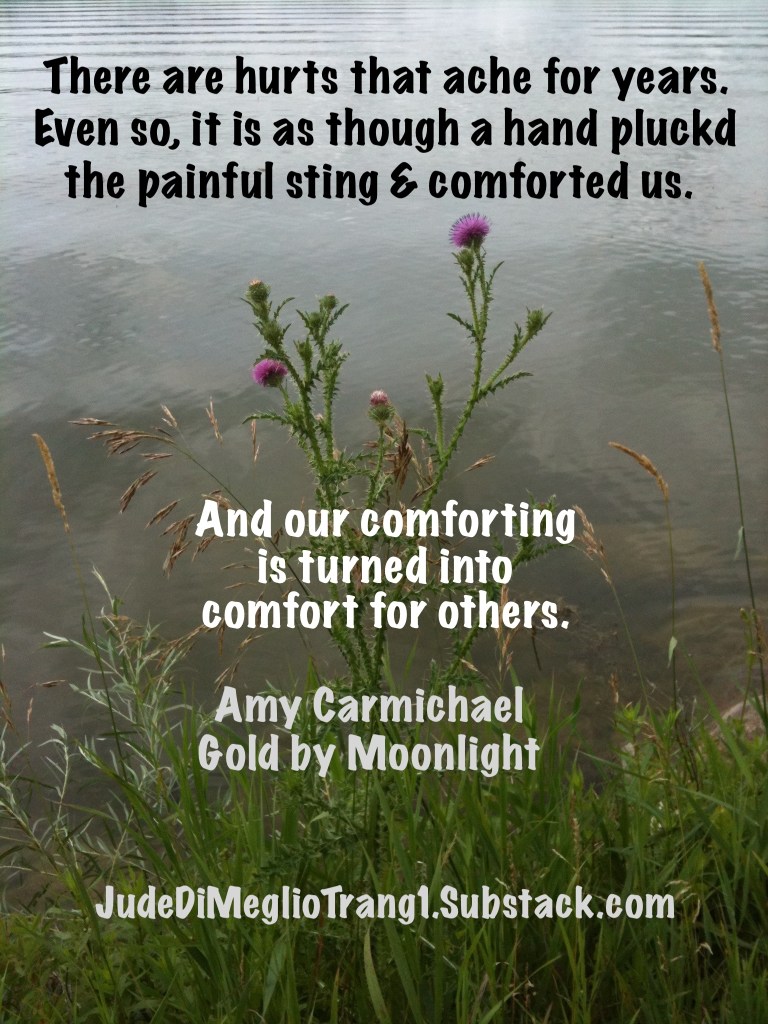
There are hurts that ache for years.

Yet even so, it is as though a hand plucked the painful sting 

And comforted us. 

And our comforting is turned into comfort for others.

~ Amy Carmichael, Gold By Moonlight, Chpt 17
(Translation into most languages at tab to the right)

Most readers of the Opiate Nation Blog know that my 25-year-old son, John Leif, died of an accidental heroin overdose after fighting opioid addiction for a decade.

The over-prescribing of pain medications and the ease with which adolescents could experiment with something that was highly addictive and “not your parents’ marijuana” caused massive, unprecedented death rates – especially for Millennials (1981-1996). But even Baby Boomers (1946-1964) and Gen X’ers (1965-1980) suffer life-destroying addiction due to being prescribed those pills. The crisis has caused a “sustained life expectancy decline” not seen since WWI and the Spanish Flu (1915-1918).

 Now we have a new generation of young people, those born since 1996, who are living with the bane of fentanyl and a host of extremely powerful synthetic drugs. The precursor chemicals are made in China and exported around the globe to places like Mexico where clandestine labs are mixing them in with everything from pot to LSD to cocaine to meth. Then they are exported to America – to unsuspecting young people who want to get in on the “fun.” But sadly, the fun turns deadly more times than we care to consider. As my friend author and journalist Sam Quinones (Dreamland, The Least of Us) has documented, just like the prescription opioid crisis, synthetic opioids and tranquilizers are a supply issue – not demand. Read his and others work to understand why. Of course, at the same time, we must educate ourselves and young people about the real dangers and consequences of drug experimentation.

Sadly, immigrants to our country are not escaping this new wave of overdose deaths. My friend just went to sit in mourning with a Sudanese mother of three and her community. She had just lost her 22-year-old daughter to overdose.  Abigail (not her real name) was at a birthday party and it seems someone brought out cocaine. Within a few minutes of trying this drug with friends, she and a friend were dead while another struggled for her life.

This Sudanese family escaped from their war-torn country with just the clothes on their backs. These Uduk people regularly suffered from slave raiding and were forced to flee their homes during the Second Sudanese Civil War (1983) and subsequent conflicts. All the Uduk elders had to be left behind. The family was then held in refugee camps. When they came to America, they learned our language, studied and trained for jobs, and have been working hard to provide for their families.

This loss is especially disturbing to me when I think about immigrants who come to America with so much hope: hope in our welcome, hope in freedom and our Democracy, hope in law and order, hope in safety. To be subject to an epidemic of preventable deaths for young people seems like a hidden and cruel trap. Not only have we let our own children down but others as well. Yes, we need to educate young people about the dangers – but they are young, and the young take chances and experiment. As the adults in our society, it is our responsibility to press our leaders to make political decisions to keep the supplies from entering our country. And make no mistake about it: the majority of illegal drugs that enter the USA from Mexican-based transnational criminal organizations and come through official ports of entry and are hidden in commercial or passenger vehicles – not via migrants as fake news would have us believe. (see articles below)

Of course I can empathize with the tragic loss this family is suffering because of the loss our family suffered. And like the opening quote, the comfort I received from friends and family – and as a person of faith I experienced comfort from the hand of God too – I want to turn into comfort for others.

I trust that this information will help us all practice compassion and comfort especially to those who have come to our country out of desperation and with hope. And to those around us who are experiencing loss of a loved one due to using a deadly drug or living with a loved one who is already addicted and needs help.

To see what one father is doing as a tribute to his son’s life, and to help educate young people, go to:

Instagram: @thezachprojectsud

References:

As a result, there is little evidence to suggest migrants are bringing fentanyl across the border on foot—or that migration is linked to fentanyl at all. While some have speculated that high levels of irregular migration provide an opportunity for drug smuggling (on the logic that border agents are distracted), the data provides no support for this theory. Migration has risen and fallen with no correlation between drug seizures. (1)

As in prior years, CBP seizes more than 85 percent of drugs at the U.S.-Mexico border’s ports of entry: the official border crossings, where people, vehicles, and cargo undergo inspection. The only exception is marijuana, which is seized chiefly in the areas between ports of entry, where Border Patrol operates.(2)

  1. https://www.americanimmigrationcouncil.org/fact-sheet/fentanyl-smuggling/#:~:text=Background,cars%20(see%20Figure%201)

Australian Real Drug Talk

Translation into most languages at tab to the right.

One of the things I have come to appreciate about the Australian way is their straightforward approach to life. They are easy-going yet they say what they mean and you know where you stand. A lack of pretense – with a large dose of slightly off-color humor added in.

I think that is why they are more advanced in their drug policies and treatments than America – they are more honest and have less taboos. They benefit from having had comprehensive public health for decades which has facilitated progressive drug policies such as clean needle exchanges, safe-injecting sites, and medication assisted treatment.

John and I had an interesting conversation a few weeks ago here in Australia with Jack Nagel. Jack does the “Real Drug Talk” podcast from Melbourne and also runs the Connection Based Living Recovery Programs. We were preparing to record a podcast with Jack – see links below – and were asking about his experiences and what the current trends are here with drugs of abuse.

https://podcasts.apple.com/us/podcast/saying-goodbye-to-my-son-in-a-body-bag/id1507177011?i=1000533422150

In discussing opioids, I wondered why methamphetamines seems to be the main drug of choice and why heroin is not as common here as it is in the States. Jack said that in the 1990’s there was a big problem with heroin coming in from the Golden Triangle of SE Asia and lots of overdose deaths. And the heroin use was IV, not smoking. So, there is a collective memory of street people using heroin and dying which created a lot of stigma and fear associated with IV use.

After that trend slowed, people began using meth – young people like Jack –because smoking or snorting meth seems more innocuous and a less intrusive way to take a powerful drug than IV. Jack said that there is a huge cohort of people who don’t live on the streets and who smoke meth for years. Sadly, they don’t seek help because the public messaging that portrays meth addicts as homeless people with sores and missing teeth doesn’t apply to them. But meth addiction will eventually burst that bubble and ruin their lives too.

There is also a growing problem with cocaine. While once considered the drug of the wealthy city dweller with some high-flying users in Australia spending $10-$20K per week, statistics reveal cocaine usage has now spread much further. Consumption has grown in other areas and demographics where prosperity has increased such as middle-class teachers, tradesmen, etc. Australia is now the highest per capita user of the drug in the world. And the rise in use is being driven by men aged in their 20’s, with Sydney leading the country in use. The most recent stats reveal that there are nearly 1 million weekly cocaine users in Australia out of a population of 26 million. (1,2,3)

We also talked with Jack about what the entry drugs are for kids here in Australia. After alcohol and pot, they usually begin with hard “party” drugs used at house parties and concerts like ecstasy/MDMA, benzodiazepines, GHB/GBL. All mood-altering drugs that create different types of euphoria, but which are dangerous because many times they are mixed with alcohol and other drugs, sometimes without the user’s knowledge.

Even though heroin is in the background in Australia, it is still available and becoming more dangerous due to fentanyl being mixed in to the supply of much of the heroin, and all opioids, along with other drugs of abuse. (4)

When our son, JL, began using Oxy’s he never thought he would even try heroin. Then, as Oxy’s became more expensive and heroin was cheaper, he started smoking heroin. He then swore he would never stick a needle in his vein – the danger and stigma to him was clear. Eventually, just like 95% of heroin users, he did just that. He was living under the delusion that smoking opioids – or any drug – would never lead him to become a “junkie”, an IV drug user.

My concern for the young people and families of Australia is that, as The Age reported in 2020, pain management with opioids has increased here too, although not to the degree it had in the States. Opioid-related deaths have increased in the past decade and today at least three people die from opioid harm each day and 150 are hospitalized. (5) Fentanyl is showing up in wastewater testing and drug overdoses of cocaine and meth, drugs where the users are not expecting a potent narcotic. Because it is synthetic and cheaper to produce in China and India, it brings its criminal networks a greater profit margin.

As I’ve said before and will continue to say: We will not treat our way out of the opioid/drug epidemic. Prevention is key. Let’s continue to stay aware and educated about what we all can do to keep our children and their future safe and healthy.

http://www.RealDrugTalk.com.au

1. Why cocaine is most used drug in Australia behind cannabis

https://www.heraldsun.com.au/news/national/why-cocaine-is-most-used-drug-in-australia-behind-cannabis/news-story/0fa9bbcec60dfe0ecfb52a5cb58a38f5

2. Australia the highest per capita cocaine user in the world

https://www.news.com.au/national/australia-the-highest-per-capita-cocaine-user-in-the-world/news-story/c91869d4e2b2adeef266917d82f705e0

3. Sydney and cocaine: an illicit love affair for the ages

https://www.smh.com.au/national/nsw/sydney-and-cocaine-an-illicit-love-affair-for-the-ages-20210225-p575uz.html

4. Fentanyl in the Australian illicit drug market

https://adf.org.au/insights/fentanyl-australian-illicit-drug/

5. Australia’s opioid crisis: How pain management got out of control

Malcolm Guite

Blog for poet and singer-songwriter Malcolm Guite

The Gift of Need

How Need Can Strengthen Individuals and Communities

Memoirs and Musings

David Bradley Such

Dave Barnhart

Church planter, pastor, author, coach

RecoveryLife101

Just another WordPress.com site

Abbie In Wondrland

life...on Gods' terms.

Living In Graceland

"..learn the unforced rhythms of grace" matt 11:28

Janaburson's Blog

All about opioid addiction and its treatment with medication

Breaking In News Network

Seeking the truth and bypassing the MSM

Junkbox Diaries

Trauma, PTSD, Mental Health, Addiction, and Recovery

Ohio Society of Addiction Medicine

The Ohio Society of Addiction Medicine is a chapter of ASAM - A professional society actively seeking to define and expand the field of addiction medicine.

traceyh415

Addiction, Recovery, Loss, Grief

WordPress.com News

The latest news on WordPress.com and the WordPress community.