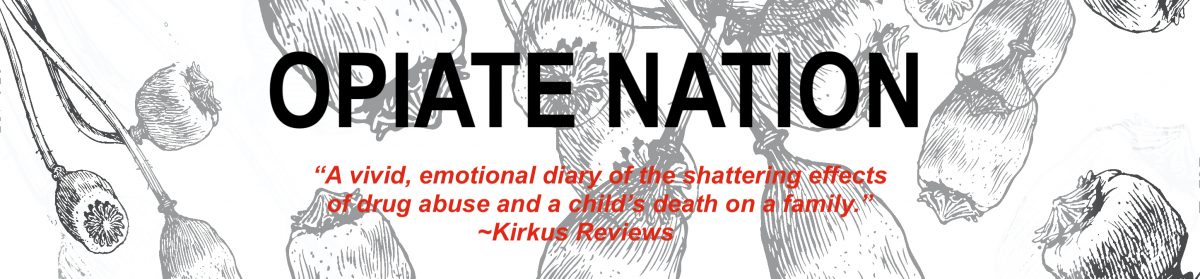
There are hurts that ache for years.
Yet even so, it is as though a hand plucked the painful sting
And comforted us.
And our comforting is turned into comfort for others.
~ Amy Carmichael, Gold By Moonlight, Chpt 17
(Translation into most languages at tab to the right)
Most readers of the Opiate Nation Blog know that my 25-year-old son, John Leif, died of an accidental heroin overdose after fighting opioid addiction for a decade.
The over-prescribing of pain medications and the ease with which adolescents could experiment with something that was highly addictive and “not your parents’ marijuana” caused massive, unprecedented death rates – especially for Millennials (1981-1996). But even Baby Boomers (1946-1964) and Gen X’ers (1965-1980) suffer life-destroying addiction due to being prescribed those pills. The crisis has caused a “sustained life expectancy decline” not seen since WWI and the Spanish Flu (1915-1918).
Now we have a new generation of young people, those born since 1996, who are living with the bane of fentanyl and a host of extremely powerful synthetic drugs. The precursor chemicals are made in China and exported around the globe to places like Mexico where clandestine labs are mixing them in with everything from pot to LSD to cocaine to meth. Then they are exported to America – to unsuspecting young people who want to get in on the “fun.” But sadly, the fun turns deadly more times than we care to consider. As my friend author and journalist Sam Quinones (Dreamland, The Least of Us) has documented, just like the prescription opioid crisis, synthetic opioids and tranquilizers are a supply issue – not demand. Read his and others work to understand why. Of course, at the same time, we must educate ourselves and young people about the real dangers and consequences of drug experimentation.
Sadly, immigrants to our country are not escaping this new wave of overdose deaths. My friend just went to sit in mourning with a Sudanese mother of three and her community. She had just lost her 22-year-old daughter to overdose. Abigail (not her real name) was at a birthday party and it seems someone brought out cocaine. Within a few minutes of trying this drug with friends, she and a friend were dead while another struggled for her life.
This Sudanese family escaped from their war-torn country with just the clothes on their backs. These Uduk people regularly suffered from slave raiding and were forced to flee their homes during the Second Sudanese Civil War (1983) and subsequent conflicts. All the Uduk elders had to be left behind. The family was then held in refugee camps. When they came to America, they learned our language, studied and trained for jobs, and have been working hard to provide for their families.
This loss is especially disturbing to me when I think about immigrants who come to America with so much hope: hope in our welcome, hope in freedom and our Democracy, hope in law and order, hope in safety. To be subject to an epidemic of preventable deaths for young people seems like a hidden and cruel trap. Not only have we let our own children down but others as well. Yes, we need to educate young people about the dangers – but they are young, and the young take chances and experiment. As the adults in our society, it is our responsibility to press our leaders to make political decisions to keep the supplies from entering our country. And make no mistake about it: the majority of illegal drugs that enter the USA from Mexican-based transnational criminal organizations and come through official ports of entry and are hidden in commercial or passenger vehicles – not via migrants as fake news would have us believe. (see articles below)
Of course I can empathize with the tragic loss this family is suffering because of the loss our family suffered. And like the opening quote, the comfort I received from friends and family – and as a person of faith I experienced comfort from the hand of God too – I want to turn into comfort for others.
I trust that this information will help us all practice compassion and comfort especially to those who have come to our country out of desperation and with hope. And to those around us who are experiencing loss of a loved one due to using a deadly drug or living with a loved one who is already addicted and needs help.
To see what one father is doing as a tribute to his son’s life, and to help educate young people, go to:
Instagram: @thezachprojectsud
References:
As a result, there is little evidence to suggest migrants are bringing fentanyl across the border on foot—or that migration is linked to fentanyl at all. While some have speculated that high levels of irregular migration provide an opportunity for drug smuggling (on the logic that border agents are distracted), the data provides no support for this theory. Migration has risen and fallen with no correlation between drug seizures. (1)
As in prior years, CBP seizes more than 85 percent of drugs at the U.S.-Mexico border’s ports of entry: the official border crossings, where people, vehicles, and cargo undergo inspection. The only exception is marijuana, which is seized chiefly in the areas between ports of entry, where Border Patrol operates.(2)

 Opiate Nation