Born Imperfect, Complex, & Unique

(Translation into most languages at tab to the right.)

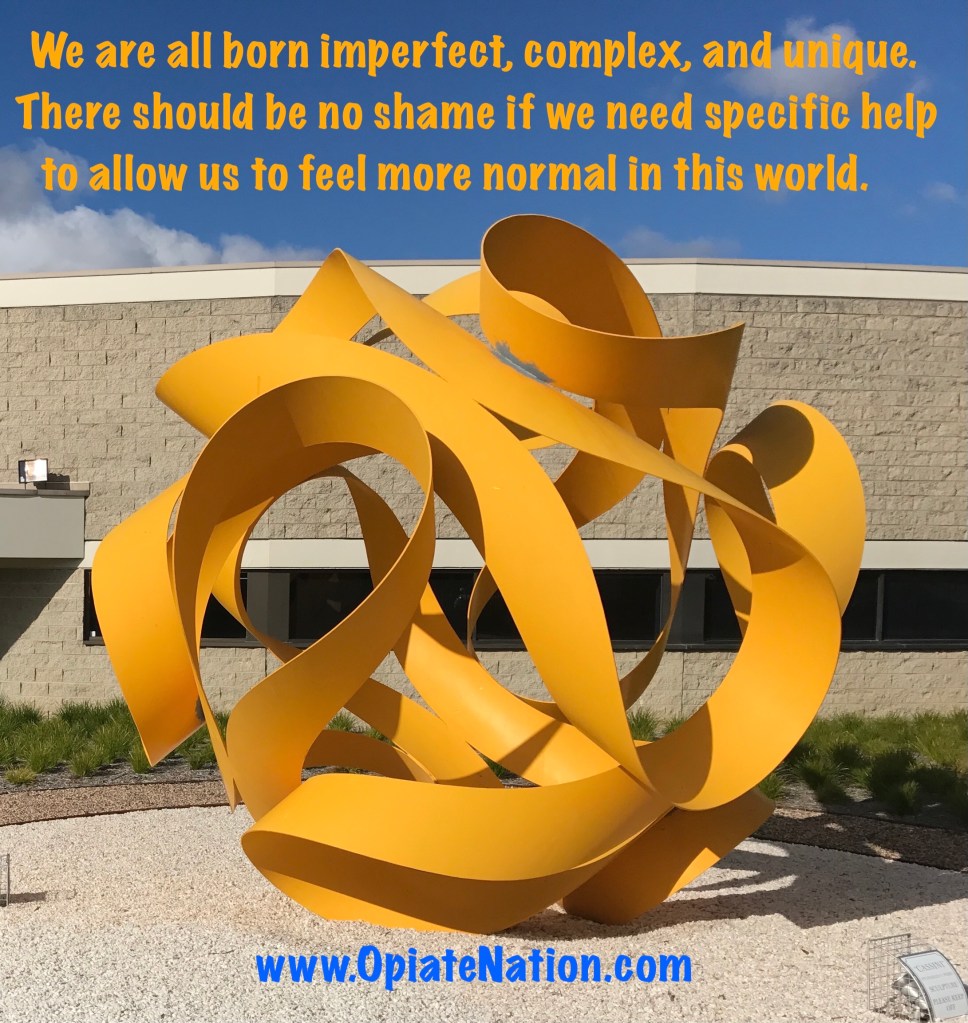
I think we would all agree that each and every one of us is born imperfect. There are so many complex and unique aspects to the human body which generations of genes have contributed. The things that make up our physical and mental attributes. One example is our face. It is estimated that only 2% of the world’s population has a truly symmetrical face. The right side usually appears larger than the left and eyes, nose and ears are not perfectly aligned. When you see a photo of a face with both sides exactly the same, its actually creepy. They lack character and look like AI.

Some of us are born with deficiencies that make life difficult and challenging, like being born blind, or deaf, or with a physical deformity. Because of amazing advances in science and medicine in the last century, many of these problems can be corrected. I had crowded teeth when I was young and am so thankful I was able to get braces and have a normal smile. We would not understand if someone had the opportunity to receive this kind of help and didn’t access it because they or others in their community thought they should just live as they are. We all want to feel comfortable and that we belong, are ‘normal’ in this world.

What about when someone is born with an internal deficiency such as a heart condition or kidney problem or blood disorder? We never think twice about having medical help or drugs and lifestyle changes to remediate the problem if it is possible. So why is there any discussion on whether someone who is born with an imbalance of normal brain chemicals or hormones should live in constant struggle and not access medication?

This thought came up as I considered the reasons behind why some people seem to need something like drugs to make them feel ‘normal’ to themselves and to the people around them. When everyone else seems to easily roll with the ups and downs of life while they get stuck on the downs. When how they think and process input and information is not the same as others. When their ability to be at peace or sleep is chronically unobtainable.

I’m not at all suggesting that individuals who seek drugs all have legitimate genetic or biochemical voids. As we know, many young people start drug use because of peer pressure and the environment that surrounds them. But underlying mental struggles or health conditions may be the determining factor that pushes them into, rather than away from, repeated use. I found it interesting that among my son’s high school and college friends, many tried all the drugs – uppers, downers, hallucinogenic – and some went on to addiction to uppers like cocaine and meth while others to downers like opioids and benzos and some walked away from all of them.

But once repeated and continual use happens, the chemicals and receptors in the brain are changed and more than ever, medication and therapy are going to be a big part of recovery from use and restoration of normalized brain signals. The need for medication may be short term or lifelong. Regardless, we all need to remember that just like shaming someone because they have a physical deformity is totally unacceptable, shaming someone who is struggling with mental health and/or addiction problems is also unacceptable. 

This does not mean we enable destructive behavior or stop supporting someone to get professional medical and psychological help along with a supportive community. Never. If we want to see someone who is struggling become as healthy as possible, our love and support are crucial. And we know that in a country where public health care is a privilege rather than part of a foundation of society, finding the right care can be daunting. Let us be there to help our family, friends, and community receive the care they need by being encouraging and supportive.

Stigma of Addiction: The Effects, The Reasons, and How to Reduce Stigma

by Chris Elkins, MA

https://www.drugrehab.com/addiction/stigma/

Cognitive Behavioral Therapy Info Hazelden Betty Ford:

https://www.hazeldenbettyford.org/mental-health-services/cognitive-behavioral-therapy#:~:text=Learn%20more%20about%20this%20popular,techniques%20in%20working%20with%20patients.

Prescriptions in Adolescence and Future Opioid Misuse

(Translation into most languages at tab to the right)

We recently spent some time with a young man who was a close friend and fellow opioid user with our son. While he has survived dying from an overdose and has been clean on and off for almost 20 years, he has been on Suboxone for the past nine months, trying once again to be clean after one more cycle of opioid addiction. He has tried many ways to get free of the stranglehold that opioids have on his brain, to no avail. How did this happen?

Our son, like millions of other adolescents, were prescribed opioids for some type of pain: oral surgeries, sports injuries, accidents, etc. John Leif (JL) had his first experience with opioids at 12 when he had teeth extracted before wearing braces. What we didn’t know then (2001) were the facts about opioids and addiction. Why we didn’t know – and most doctors and dentists didn’t either – was due to Purdue Pharma and other drug companies’ propaganda on the safety of oral opioids: “Opioids are not addictive if a person is in pain.” That, of course, is a lie and one they knew perfectly well. The opioid epidemic is the result of their lies.

The more recent information from multiple drug studies is what we wish we would have known 20 years ago: Legitimate use of prescribed opioids before the 12th grade is independently associated with a 33% increase in the risk of future opioid misuse after high school by age 23 compared to those with no history of an opioid prescription. This was among patients with little drug experience and who disapprove of illegal drug use. (1)

Why does an opioid prescription predict future opioid misuse most strongly among individuals with little to no experience with use of illegal drugs – i.e., adolescents? For drug-naïve individuals, an opioid prescription is likely to be their first experience with an addictive substance. Most likely the pain relief is pleasurable, and a safe initial experience with opioids may reduce perceived risk. A pleasurable and safe initial experience with a psychotropic drug is a central factor in theories of who goes on to misuse drugs. (2)

Continue reading “Prescriptions in Adolescence and Future Opioid Misuse”

Adrenaline Junkie or High Sensation Seeker? Part 1

(Translation into most languages at tab to right)

Have you ever pondered how different people drive and approach the objective of getting from one place to another? Are there certain people you would rather not get into a car with when they are driving? I was thinking about this the other day when John and I were driving to meet friends and the same scenario played out when he is driving: the race is on. It’s not that John exceeds the speed limit too much – he’s only ever had a few tickets in his entire life – although he drives on the high end of the limit. But it is the way he views the entire undertaking.

This is nothing new. Years ago, we had rented a car to drive across Italy with our kids. We were on unfamiliar freeways where the speed limit was more of a suggestion than a limitation. Not much time passed before I, as the navigator in the front seat, was looking for anything I could hold on to in fear of my life as John joined in the race. After my repeated shrieks of “Slow down!” and exclamations of “Watch out!”, we decided that I needed to be in the back seat and close my eyes while someone with steadier nerves took my place. 

His adrenaline was flowing and so was mine. But the difference was that for John, this was exciting. For me, it was terrifying. I am a risk-averse person and tend to avoid risks in most areas of my life as much as possible. Yet, I am also an anxious person and my adrenaline can flow when there is no real threat. But the ways it affects my life are different. One thing we all have in common is that these predispositions have a physiologic base and are most likely passed down to us from preceding generations.

What is adrenaline and what role does it play in our bodies and lives?

Adrenaline (epinephrine) is a hormone our adrenal glands make to help us prepare for stressful, threatening, or dangerous situations. Adrenaline rush is the name for the quick release of adrenaline into our bloodstream and turns on our sympathetic nervous system which gets our body ready for a “fight or flight” response to a real or perceived danger.

An Adrenaline Junkie is someone who seeks activities that give them that “rush” which is addictive. Recent studies have shown that dopamine and serotonin, neurotransmitters that regulate risk-taking and impulsivity, are downregulated in people with substance use disorders. (1) This means that if we constantly stimulate our adrenal glands, dopamine and serotonin are no longer able to help protect us from high-risk and impulsive decisions. We are then in need of, craving, more adrenaline, a vicious cycle.

But when I looked at the characteristics of an adrenaline junkie and thought about the things my husband seeks out and enjoys, he didn’t quite fit the pattern of seeking one-off thrills like skydiving, bungee jumping, hang gliding. He instead seems to regularly engage in high-risk activities and behaviors. How is this different than being an adrenaline junkie?

What I discovered in my search to understand is another type of adrenaline-seeking personality, High Sensation Seekers. When I looked at those characteristics, they fit him much more closely. I will go into them in Part Two of the next blog. 

For others like me with minds that race full of thoughts and worry, adrenaline and other stress-related hormones like cortisol are released. The anxiety can be most pronounced when we are lying in bed and keep focusing on what has happened or what might happen in the future. That extra boost of energy has no use and instead leaves us restless and unable to sleep. The parasympathetic nervous system relaxes us and predominates in quiet and rest and drives our “rest and digest” systems. It conserves our energy for when it is needed. So, any type of adrenaline-using behavior depletes our adrenal glands and overrides our parasympathetic system leaving us exhausted.

In relation to addictions, we can easily see how risk-taking and thrill-seeking behaviors include heavy or binge drinking, using drugs, high-risk sex, gambling etc. Adrenaline addiction of any type brings with it withdrawal symptoms like cravings, decreased interest in other activities, and negative emotions and restlessness.

Regardless of how we deplete our adrenaline reservoir, here are some suggestions to help us respond to unhealthy urges or stress in our lives and to help restore our sense of well-being and peace:

  • prayer and meditation
  • deep breathing and muscle relaxation
  • regular exercise – which releases endorphins (3)
  • balanced diet– low in refined sugars and carbs, high in protein
  • avoid cellphones, bright lights, computers, loud music, and TV right before bedtime
  • leisure activities
  • listening to peaceful or positive music 
  • creativity
  • social support
  • practicing gratitude
  • counseling/therapy

If you would like to receive my blogs but do not want to join WordPress you can sign up for email notifications. Joining WordPress is like other social media platforms where you need a free account in order to connect with others on WordPress.

  1. https://www.verywellmind.com/how-to-tell-if-youre-an-adrenaline-junkie-3145035

Our Electric Elastic Amazing Brains

 Translation to most languages available at tab to the right.

The human brain is a miracle – there is nothing on earth that comes close to its capabilities. Although the brain and the heart are the only two organs that can’t regenerate, our brain can form new connections and pathways. Neuroplasticity is this amazing ability of our neural networks to grow and reorganize – to change and adapt as a result of experiences.

Until recently, it was thought that neuroplasticity stops after about 25, but with new research, we now know that it isn’t all downhill from there. Neuroplasticity can be facilitated by physical exercise, paying attention, and learning new things.

Physical exercise that increases blood flow to the brain is now a no-brainer. Paying attention is when we are doing something that is not out of habit – when we switch off autopilot and pay attention to what is happening. This is called mindfulness. Learning new things and being open to change becomes harder the older we get – and it will become increasingly more difficult if we don’t intentionally challenge ourselves mentally.

But what happens when drugs – any drug really, but drugs/substances of abuse are my topic here – enter the scene? Neuroplasticity then becomes the facilitator of addiction as our brain learns to adapt to the new stimulus, increasingly over time.

Continue reading “Our Electric Elastic Amazing Brains”
Malcolm Guite

Blog for poet and singer-songwriter Malcolm Guite

The Gift of Need

How Need Can Strengthen Individuals and Communities

Memoirs and Musings

David Bradley Such

Dave Barnhart

Church planter, pastor, author, coach

RecoveryLife101

Just another WordPress.com site

Abbie In Wondrland

life...on Gods' terms.

Living In Graceland

"..learn the unforced rhythms of grace" matt 11:28

Janaburson's Blog

All about opioid addiction and its treatment with medication

Breaking In News Network

Seeking the truth and bypassing the MSM

Junkbox Diaries

Trauma, PTSD, Mental Health, Addiction, and Recovery

Ohio Society of Addiction Medicine

The Ohio Society of Addiction Medicine is a chapter of ASAM - A professional society actively seeking to define and expand the field of addiction medicine.

traceyh415

Addiction, Recovery, Loss, Grief

WordPress.com News

The latest news on WordPress.com and the WordPress community.