(Translation into most languages at tab to the right.)
Eleven years ago today my husband John and I woke up thinking it would be just another normal, hot August Saturday morning. But when the sheriff knocked on the door, the day – and our lives – were no longer normal. It is surprising how quickly our lives can go from normal to abnormal.
I was sorting through some files and found a drawing that our son, John Leif (JL) had done when he was around nine. It was obviously of Van Gogh’s “Starry Night” but it was also obviously done by a normal nine-year-old – not an artistic prodigy. And it made me think about how JL was just like any other normal kid growing up in middle-class America in the 1990’s-2000’s. He learned to ride a 2-wheel bike at around five, he played with Lego’s, he took swimming lessons, he loved monster trucks and lasagna and macaroni & cheese with ketchup. But something so abnormal for normal young teenagers ended up ruining some of what should have been the best years of his life and ultimately taking his life – and the lives of many of his friends and hundreds of thousand other normal kids.
What was abnormal was the criminal promotion and availability of highly addictive medicine to young kids by Purdue Pharmaceuticals and the Sackler family. Never before had American kids been exposed to legal drugs (that were promoted as “non-addictive”) that they experimented with as if they were simply trying a joint. And the results were the devastation of the Opioid Epidemic. Which is not over, especially for the once normal kids who are still alive and living with the cancer of addictions. We see many of them on the street corners and under bridges, living from hand to mouth, barely surviving, living anything but a normal life.
Sadly, seeing these shells of once normal kids has become a “new normal” as our society doesn’t seem to agree on how to best provide lasting recovery options with a continuum of care – or whether we even should. In my last Substack podcast and article with special guest Sam Quinones we discuss some ideas from his book “The Least of Us” for how to help get these once normal kids from normal families the help they need to try to return to something like a normal life. (1) Let’s not forget that those addicted people were once normal kids.
(Translation into most languages at tab to the right.)
How do clean and sober friends stay involved with a friend who is in active addiction and/or alcoholism? I ended last month’s blog asking this question. In particular, I want to discuss ways that teens and young adults can deal with this difficult and at times very frustrating problem.
What does being a good friend to someone who is addicted look like?
The first thing is to not pretend you don’t know about their addiction. Talk about it openly but without judgment. Understand that they may deny any problem, so you may have to cite specifics that have made you concerned. Express that you care about them and don’t think less of them as a person because of their struggles. Risk your comfort zone. “Greater love has no one than this: to lay down your life for your friends.” (1)
Be a good listener. A problem with drugs or alcohol may start from just experimenting with drugs at a party or concert. It may then turn into addiction and be fueled by problems at home or with friends or underlying mental health issues. When your friend feels cared for and accepted and not confronted with more guilt or shame, they will be willing to open up. Nobody planned to become addicted and nobody wants to be an addict. Here’s links to good info on how to help someone trapped in addiction. (2,3)
But, if you remain a good friend to someone who is living a self-destructive life, how do you help them without enabling their addiction? For young people who are good friends, enabling might be keeping secrets for them about their problem, especially from adults who may need to know in order to take life-saving action. It may be loaning them money or driving them to get drugs. The pressure would sound something like: “If you’re my real friend, you won’t tell…” Or “If you really want to help me you would…” Basically, when you support their problematic behavior in the name of ‘helping’ them, you are actually keeping them from living with the consequences of their poor choices. And this will only prolong their problems and delay change. (4)
Encourage them to get help through programs like SMART Recovery groups or AA for alcohol and NA for narcotics. Very few people overcome addictive behaviors alone. Community is key. Go with them if you can or drive them. And remember, drug and alcohol recovery take lots of time and most people don’t succeed the first time they try to quit. Dr. John F. Kelly, clinical psychologist and addiction medicine expert, says it can take 8 years and 4-5 treatment attempts at recovery to achieve one year of sobriety from opioid and other drug addiction. It can take years to achieve stable recovery and Medication Assisted Treatment (MAT) is an important aspect. Gone are the times when a 30-day detox/treatment was seen as the solution to addiction. It may be an important first step in the process of ongoing recovery. People can and do recover, but it will likely be a lifetime journey. Here’s a YouTube 2025 video of Dr. Kelly giving a session on: The New Science on Addiction Recovery. (5)
You can encourage your friend with each small step and success, even through relapses. In our son’s recovery program, we ended each session by saying together: “Keep coming back ‘cause it works if you work it.” It takes hard work and it can be very discouraging for your friend to relapse because your friend wants to be free. No one wants to live controlled by addiction. No one. Encouragement to stick with it is vital.
If your friend or family member is using opioids, you should get naloxone (a medicine that can temporarily reverse the effects of an opioid overdose) and keep it handy. Available through local community-based programs or pharmacies.
It’s worth saying again: Friends are SO important for people in active addiction.
Don’t ever give up on your friends trapped in addiction. They need friends more than ever, friends who love them and will invest in their lives and let them know they are a worthwhile human – while you also need to encourage them to seek help in order to become sober and stable. And to remind them by example of what a normal and joy-filled life is like and one that they too can have.
(Translation into most language at tab to the right.)
Approaching what would be my son’s 36th birthday, I thought about the last year of his life. I don’t think about it often because it is painful – so many wishes that things had gone differently for him.
One sadness is that when in active addiction, he was very alone. It’s not that JL didn’t have lots of friends – he did. He was friendly and likeable and the large group of friends who came to his memorial is a testament to that. But most of his high school and university-era friends were not involved in his life during the last few years of his life, and the last year in particular. After his accidental fall and relapse to opiates in 2008 and the next seven years in and out of recovery programs, his life became narrower and something he was ashamed of.
An event that stands out was during a time of heroin use that we were not fully aware of as he lived in our rental house, and we thought he was attending his classes at university. We received an urgent call from two of his friends telling us that they knew he was back to spending all his time with his friend that used heroin with him and they were not getting an answer to their calls. They were at his house and he wasn’t responding to their knocks on his door – did they have our permission to break his door down? Our frightened response was “Yes!” They found him deep in drugged sleep and alive but very startled when they burst in. They confronted him with what they knew and their concern about his drug use. He of course was defensive and pretended that nothing was wrong.
Gradually, these friends, along with others, were no longer part of his life. JL did make a good friend or two in his recovery programs, but he always kept his addicted friends and dealers separate from his sober friends who were mostly not aware of his use and relapses – he had a pretty good poker face. Most of them were shocked to hear of his overdose death because he had been in a sober living house for six months and doing well.
Many of the friends who had such good times together when JL was clean (although not necessarily sober, as they enjoyed drinking with him not realizing how that always led back to drugs for JL) felt guilt after his death. Guilt because he called several of them the week before his death when he had just relapsed. It seems he wanted a friend to talk to and perhaps perceive that he was struggling. And guilt because they wished they had stayed in touch with JL and not distanced themselves from him when he continued to struggle with addiction.
But there’s the rub: How do sober friends stay involved with a friend who is in active addiction? I think it is especially difficult for young people, who don’t know what they can do, who may be more concerned with their own lives and issues, and who are not yet mature. This is not to suggest that any human is ever totally selfless regardless of how old we are – I know myself too well to hold this delusion. But the passing of years does bring relational experience and can help us focus more on those around us.
Next month I will try to share some insights and ideas for teens and young adults for how to truly be a friend to someone who is struggling with addiction and sobriety. Just remember:
Don’t ever give up on your friends or family who are trapped in addiction. They need good friends more than ever. King Solomon gave this wise insight 3,000 years ago: Two are better than one, because they have a good return for their labor: If either of them falls down, one can help the other up. But pity anyone who falls and has no one to help them up. (1)
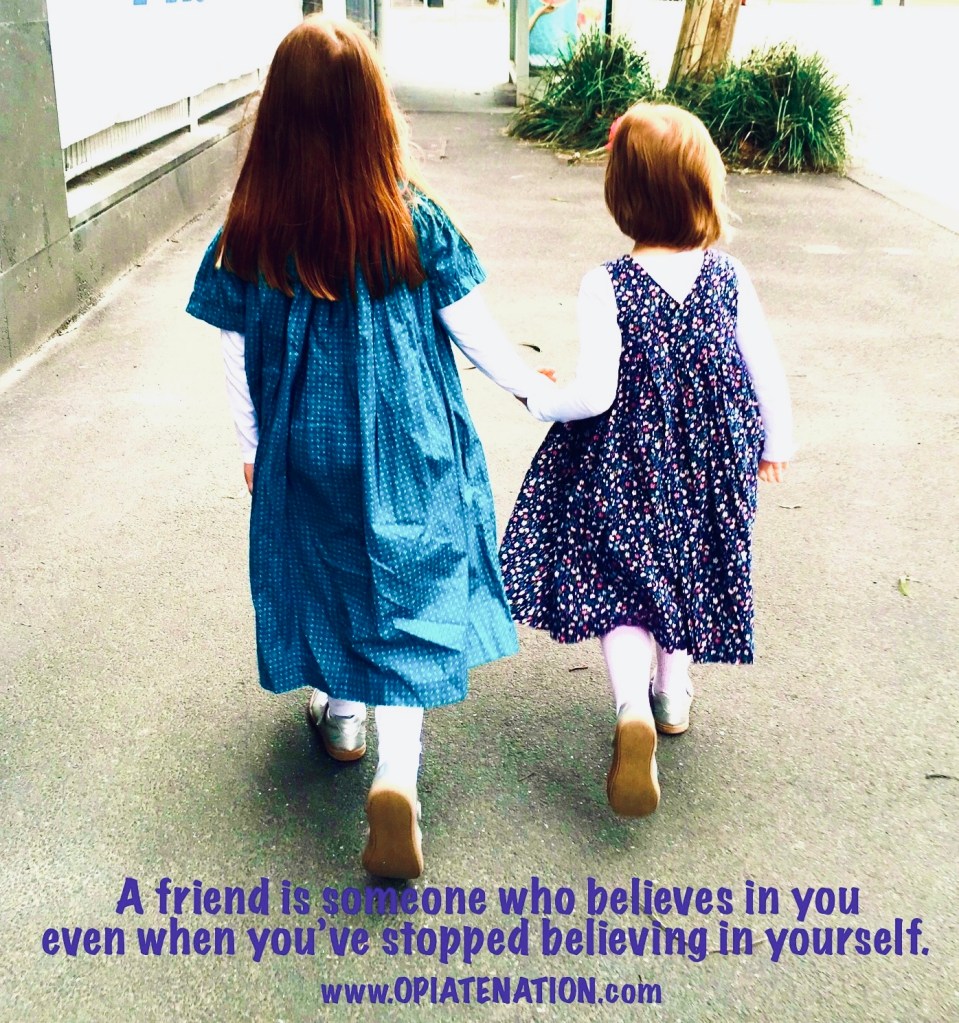
Many people will walk in and out of your life,
but only true friends will leave footprints in your heart.
(Translation into most languages at tab to the right)
I want to continue with the thoughts from my November blog on The Cycle of Harm and how we now know that the War on Drugs has failed miserably. And especially in attempting to dissuade teens and young adults from using drugs, a punitive approach to drug use has failed spectacularly. There are many reasons for this: the development of the teen brain, the growing need for autonomy, and the influence of culture and their friends, among other things.
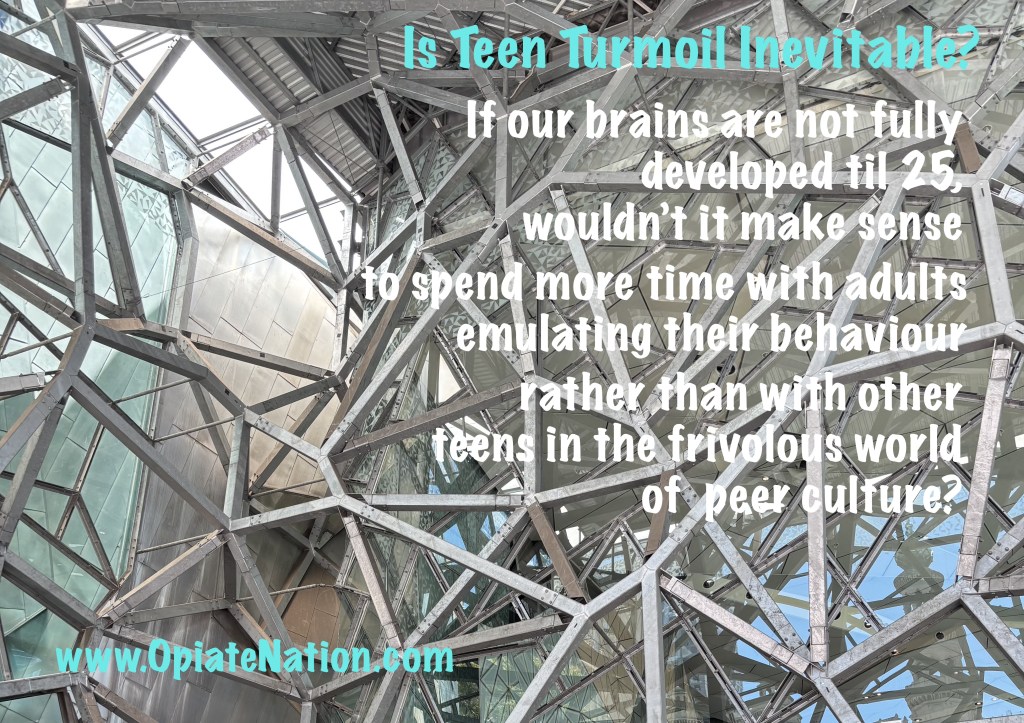
There have been innumerable research studies on the teen brain. “The rational part of a teen’s brain isn’t fully developed and won’t be until age 25 or so. In fact, recent research has found that adult and teen brains work differently. Adults think with the prefrontal cortex, the brain’s rational part. This is the part of the brain that responds to situations with good judgment and an awareness of long-term consequences. Teens process information with the amygdala. This is the emotional part.” (1)
While the teen years are when our brains can comprehend and store new information at its highest rates, the ability to process that information in light of future consequences just isn’t there yet. And during these years there is a need to separate from our parents and begin the process of becoming an adult.
David Robson, in an article for the BBC, says, “Adolescents often desperately crave the approval and acceptance of their parents. So while they certainly do want independence, it is not at any cost. Brain imaging studies show that the regions of the brain associated with reward generally develop more quickly than those associated with inhibition and self-control. They have greater activity in their dopamine signaling – a neurotransmitter associated with pleasure and curiosity – compared to both adults and younger children, with bigger spikes when they experience something that is novel or exciting. In this light, it’s little wonder that teens are more likely to be tempted to try new experiences…with impulsive and risky decision making.” (2)
Just when we thought everyone was aware of the fatal danger of fentanyl and it being mixed into every drug of abuse available on the street, a new threat arises. Nitazene or Isotonitazene (ISO) or Protonitazene, new lab-made opioids, are showing up at hospitals and morgues around the world in the bodies of people thinking they were taking their drug-of-choice only to find it was laced with one more deadly drug. It is being mixed in with cocaine, or formulated into fake Oxy’s and other pills. In the US, it first showed up in 2019 in the Midwest and spread rapidly.
Nitazenes were developed in the 1950’s by pharmaceutical companies as an alternative to morphine but shelved due to the risks of overdose. There is still no approved medical use for nitazenes today. Another ‘Designer Drug’ being made in illicit labs around the world, Nitazenes are up to 40 times stronger than fentanyl. Fentanyl is already 50 times more powerful than heroin and up to 800 times more powerful than morphine.
No wonder these drugs are referred to as ‘Frankenstein Opioids’ – only an insane, evil intentioned scientist would work to create such a drug. But in reality, the motivation is greed more than insanity because synthetic drugs are cheap to make and easy to ship and deliver – and highly profitable. But evil is the correct description for the immoral heads of the drug syndicates and cartels around the world whose entire life and business is dealing death.
What can be done?
For parents with children still at home, community connection and education are the best preventative measures. As I have said before, my husband and I were totally unaware of what substances were readily available to our middle school son in the early 2000’s. Our concern was smoking and marijuana. Little did we know. General discussions about drug abuse were the extent of our educational conversations. But we would have been much better prepared and had much more information if we had been involved with our kids’ school community. Instead, we were insulated from vital resources because we spent so much time with our church community. But make no mistake. Many of the families at church with kids in youth group were just like us – unaware and ill prepared and sadly many of them suffered the same loss as we did.
There are other important aspects in raising self-reliant kids who are not subject to the lures of the “cool” kids or “in” crowd. Below is a link to a previous blog dedicated to the perils modern teens and their parents face with important resources. I hope it will be helpful to you and those you love.
(Translation in most languages available at tab on right)
Int’l Overdose Awareness Day Sale on eBook & Paperback through Sept 1st
Most of us have heard that the category of “teenager” came about after WWII. Before that, in a mostly agrarian society, you were either a child or an adult and the demarcation was when you went from being directed and cared for by your parents to being responsible for yourself and caring for others.
The word “teen” was introduced as early as 1818 referring to a person who was 13-19, “teener” from 1894, and “teen-ager” from 1922 (1). But the terms didn’t stick and didn’t carry a sociological group identity until after WWII. Being a teenager became its own sub-culture that revolved around like-ness, popularity and a fear of being on the outside.
Increasingly, the modern teenager relies more on peer-pressure than family relationships and values. And, peer pressure and group dynamics is known to be one of the highest risks for adolescent drug and alcohol experimentation and use. In one chapter of Hit Makers: The Science of Popularity in an Age of Distraction, Derek Thompson discusses teenagers at length (2). He writes, “Psychologist Laurence Steinberg, put people of various ages in a simulated driving game. Adults drove the same, whether or not they had an audience. But teenagers took twice as many “chances” when their friends were watching. Teenagers are exquisitely sensitive to the influence of their peers.”
The Ohio Society of Addiction Medicine is a chapter of ASAM - A professional society actively seeking to define and expand the field of addiction medicine.




 Opiate Nation