International Overdose Awareness Day – August 31, 2023

(Translation into most languages at tab to the right)

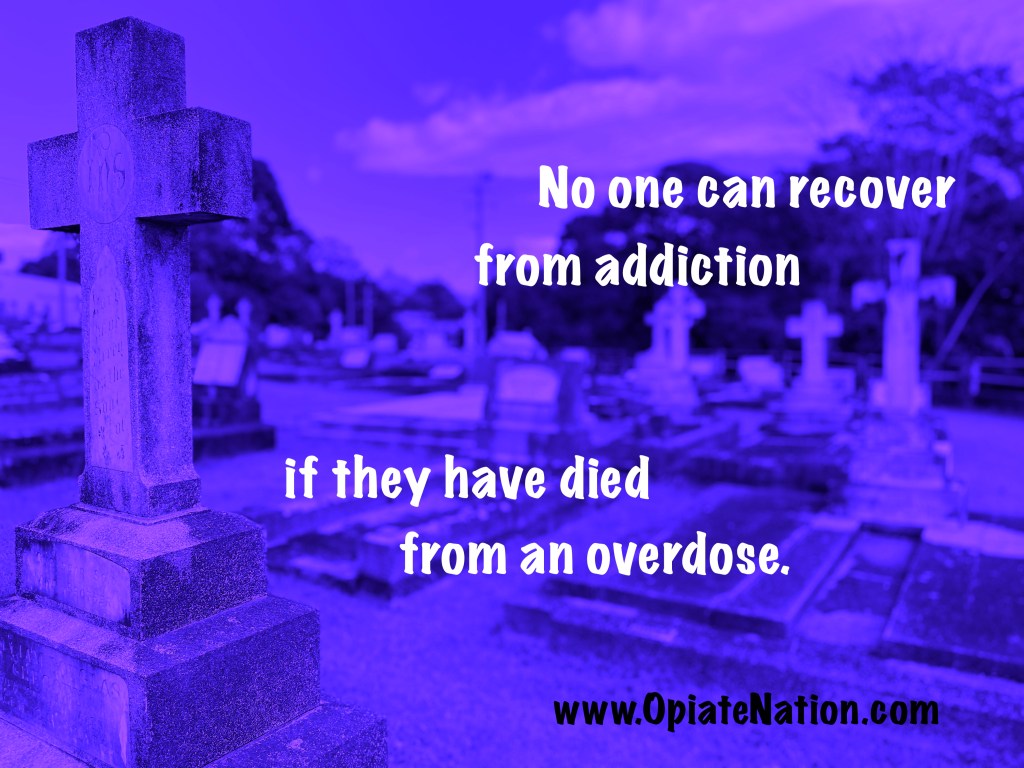
No one can recover from addiction if they have died from an overdose.

International Overdose Awareness Day (IOAD) is the world’s largest annual campaign to end overdose. It is a day to raise awareness about the risks of overdose, honor the individuals whose lives have been lost, and acknowledge the grief felt by families, friends, and the community

With synthetic drugs made from chemicals in China and added into illicit drugs around the world, the need has never been more urgent to alert us all to the risk of overdose facing millions of people worldwide. What can we do to help prevent further loss of lives for those already struggling with addiction?

Prof. Dan Lubman (Australia) shared a thought that stuck in my mind because it brought up memories of conversations I had with my son while he was addicted. Instead of asking, “Why are you taking drugs?” A more engaging question would be, “What put you in this vulnerable position?”

This question shows the understanding that addiction is not just a matter of choice or will-power but that it is a complex problem that will not be helped with simplistic answers such as “Just Say No.” When a person feels less stigma, that they are not being judged, and that there is hope for them, they are increasingly likely to consider treatment.

So, what does put people into the vulnerable position where drugs/alcohol are helping them cope with life? The 5 main factors that contribute to addiction are:
genetics, mental illness, home and social environment, stress, trauma/abuse.

We can’t do anything about our genes although if you know there is alcoholism/addiction in your family tree there is need for extra awareness and precautions. Mental illness once recognized and diagnosed properly, can be treated with therapy, education, and medication. Home and social environments, stress, and trauma and abuse are absolutely within parents, extended family, and society’s control. This is where raising our children as “a village” is so important, but it is in peril with our upwardly-mobile lifestyles of frequently moving house, not enough time together, and not engaging with our community. Educating our families and involvement in healthy and safe support networks such as service organizations and faith and school communities are a good place to start.

Once someone is using substances to self-medicate, what can we do? First, we need to look for, and reach out to, people struggling with addiction. There may be some in your circle of friends – even in affluent communities. If we truly understand that those individuals will shrivel in shame from stigma, we can start by changing how we speak about them and to them – we’ve changed our language for things a lot less deadly. Building trust over time is critical to someone feeling they can openly discuss their problems. We can find out more about what is being done in our community to support recovery efforts and get involved with clean needle exchanges, Narcan training and distribution, opioid substitution therapy, food distribution, safe injection and health facilities, etc.

In a report from Norway discussing housing for people who are addicted, Jon Storaas, manager of RIO, an organization in Norway working to help substance abusers, said, “We need to provide residences to ensure that addicts can live with neighbors who don’t share their drug problems…meet with them, talk about their problems…this kind of experience and openness can strip people of their ordinary prejudices. You need to create these encounters so people can see that drug addicts are human, too. Extreme examples of ordinary people, you might say. But ordinary nevertheless.” (1)

In 2018 Time reported that in the 1990’s, Portugal was in the grip of heroin addiction. An estimated 1% of the population—bankers, students, socialites—were hooked on heroin and Portugal had the highest rate of HIV infection in the entire EU. But in 2001, Portugal took a radical step. It became the first country in the world to decriminalize the consumption of all drugs… while drug dealers still go to prison.

The results? The drug-induced death rate has plummeted to five times lower than the EU average and stands at one-fiftieth of the United States’. Its rate of HIV infection has dropped dramatically. Drug use has declined overall among 15-24 yr-olds, those most at risk of initiating drug use. And, by eliminating the threat of criminal penalties—and along with it, a great deal of stigma—it has become easier for people to seek treatment.

“What America and other countries can learn from Portugal is to treat people with more dignity.” Portugal has showed that, without spending significant sums, governments can give drug users the tools to put their lives back on track. But to do so, it will have to stop treating them like criminals. (2)

Ultimately, what IOAD is about, what this blog is about, is Awareness: Becoming aware of a problem is the first step towards solving that problem. For this August 31st, I want to remember all those who have died from drug or alcohol overdose, my son included. Remember that they were precious individuals who were loved by their parents, family, friends and God. And although we live in a world where death is something that happens to every person who is born, premature and preventable death is a tragedy that each and every one of us should work diligently to prevent. Let’s find our arena and fight for the lives of those we love.

No one can recover from addiction if they have died from an overdose.

(1)

Addicts Want Sober Neighbours by Georg Mathisen
Saturday 11. January 2014, Norway
https://sciencenorway.no/addiction-drug-rehab-drug-use/addicts-want-sober-neighbours/1395274

(2)

WANT TO WIN THE WAR ON DRUGS? PORTUGAL MIGHT HAVE THE ANSWER By Naina Bajekal | Photos by Gonçalo Fonseca – August 1, 2018
https://time.com/longform/portugal-drug-use-decriminalization/
Death: Painful or Beautiful?

(Translation into most languages at tab to right)

My husband and I recently watched the streaming memorial service for his niece who died of cancer at 51 years old. Her mother, husband, children, sister and extended family all mourning the inescapable truth that there is now a gaping hole in their hearts and lives where once a beautiful woman had lived. She has been torn from their lives like when a thief grabs a bag from your hand and you struggle and try to hang on to it but, in the end, it’s gone. Weeping is the only thing that feels appropriate.

Although it’s been nine years since our son JL died from an accidental heroin overdose, the sense of him being torn away from us remains. Whether it was the death of our son, my siblings, our parents, or friends, the undeniable fact remains that death is painful. Almost always painful for the person dying, especially with a protracted illness or debilitating condition. But always painful for those left to live with the empty space where the person they knew and loved used to reside. We will never forget the Sherriff’s knock at our door that Saturday morning and hearing him say, “I’m sorry to have to tell you…”

We all naturally focus on our loved one’s beautiful life and the memories we have of them. This is only right and good. And there can be beauty in the way someone dies – this I have seen, and this has been recorded throughout history. Regardless of the kind of death – whether by illness, accident, torture, or plain old age – history tells us about those who have faced pain and death with grace. How? Because they saw beyond this world and had hope for life in the next.

What I bristle against is the thought that death is somehow beautiful. There is nothing beautiful about the tearing away and finality of death. Sentimental and romanticized thoughts about death have never helped me when I have had to stare into the cold face of a dead loved one. I have watched people facing the intense and unpredictable emotions after the death of a loved one as they try to make sense of something senseless. Those who have no hope of seeing their loved one again and who do not have the hope of existence in another realm, often try to transform death into something else – as if the only way to survive their pain is to imbue death itself with beauty. Or perhaps attempt to ignore it altogether.

For me, I believe that there is a good God who will one day put this world back to the way he created it. In my view, death and the tearing separation and sadness that accompany it are a temporary condition of living in a fallen world. We are told that death is an enemy and that one day it will be abolished. Yet, knowing I will see my son and siblings and parents and beloved friends again one day, where there will be no more sickness or pain or tears, doesn’t change the sorrow and grief that I feel now. I am a mortal living in a physical body in a physical world facing real physical triumphs and tragedies. And until this life is over and this world is made new, death will be painful. Our response to pain, suffering, and death is what concerns us now. And comforting those who mourn and offering compassion, regardless of the circumstances surrounding their death, is something tangible that does not minimize or romanticize the pain of death.

UPDATE:

This morning, August 2nd, I just happened to find and listen to an affirming podcast on Hope In The Face of Death by Dr. Timothy Keller. It is well worth the 40 minutes of your time. He says what I am trying to communicate more eloquently and thoroughly.

https://podcast.gospelinlife.com/e/hope-in-the-face-of-death/

Slavery or Freedom?

(Translation into most languages at tab to the right)

I’ve been thinking about slavery and the people throughout the millennia who have been slaves – and the estimated 50 million people worldwide who are currently enslaved. (1) Every empire from the beginning of recorded history has functioned and prospered on the backs of slaves: people captured during war or kidnapped, enslaved against their will.

In the modern world, people can end up in ‘slavery’ in a variety of ways: economic, sexual, labor, etc. They may have been enticed or tricked into their captivity by promises of adventure or money, coerced or blackmailed because of a past circumstance, or forced into it due to poverty and debt.

How does it feel to be enslaved? Much of the time, it destroys one’s sense of personhood. Your ability to exercise your will and make choices has been stolen from you. Control and exploitation by another person or entity has robbed you of your dignity and ability to determine the direction of your life. It can feel like being on endless stairways that lead nowhere.

One thing is certain: no one ever consciously chooses to be enslaved. No one. But the many lures currently dangling in front of young people to have fun and feel free and to be in control of their own life and happiness can be so deceptive. Yet they are not mature enough to be capable of discerning that they are actually making a choice to become imprisoned – whether it is with alcohol, drugs, promiscuity, gambling, power, success, etc.

I think it is safe to say that anyone who has struggled with any type of addiction knows they are enslaved. They are in servitude to an all-consuming, dominating, master. Their world is restricted due to the demands their addiction places on them. I saw this play out in pitiful detail in our son’s long struggle with heroin and alcohol. I didn’t understand why he would want to cut a trip short or not go at all if we were flying. It was due to needing to use and/or maintain a supply of illegal drugs. As he became unable to focus on his university classes, he had to drop out and work at jobs frustratingly inconsistent with his interests and well below his God-given abilities.

He was not free in any sense of the word.

What is real freedom? Is it to be ‘a free agent’ able to do whatever one wants regardless of society or others’ thoughts or needs? To not be responsible to anyone? To chant the modern mantra that individual freedom is our right and supersedes all other claims? Or is it something more, something that starts in our mind and soul and that results in the ability to make good choices in order to be healthy and safe and productive and of service to others? Webster’s Dictionary describes freedom as “the absence of necessity, coercion, or constraint in choice or action; liberation from slavery.” Liberty is not the power of doing what we like, but the right to do what we ought. (John Dalberg-Acton)

Once someone is addicted, how can they escape the slavery of addiction? We need reformers and abolitionists who know specifics of ‘the slave trade’ and how to liberate individuals. And also, how to reform not only the laws and principles of society but how we think about addiction in order to accurately view those who are enslaved. In the past, in whatever culture slavery was embraced, the way a society could justify its policies was to consider those people as ‘less than’ – less than human, less than worthy of normal rights, even less than deserving of wanting another way of living. And even further, that these slaves should be content with their bondage.

I love this song by Kim Hill, She’ll Come Around. It speaks to this point.

https://www.youtube.com/watch?v=uwf6rQnqkXQ

We all know that is not true because if we put ourselves in their place for a moment – walk a mile in their shoes – we would do anything to be free. But do we all understand and admit that most people who are living in addiction, if given a choice and a viable option, would choose to be free? If so, let’s get rid of denigrating thoughts and words and help change public policies to teach preventative measures to parents and young people and provide restorative solutions to those fighting addiction. (2) And may each of us encourage those who struggle by helping them find real, lasting solutions to the weight of bondage they stagger under.

Our freedom can be measured by the number of things we can walk away from.
Vernon Howard

  1. https://www.antislavery.org/slavery-today/modern-slavery/
  2. https://www.washingtonpost.com/health/2023/02/05/drug-deaths-prevention/

Mark Heard’s Victims of the Age is a song all about what young people have been and continue to be struggling with growing up in the modern world.

Learning Compassion

(Translation into most languages at tab to the right.)

The other day, I was thinking back over the tragic deaths of many of my family members. And I thought about how I felt towards people a few decades ago when they suffered various illnesses or struggled with disease or addiction. I didn’t have much compassion because I hadn’t ever experienced those types of painful and heart-wrenching needs myself or in anyone I loved.

But in 2000, when my younger brother was in intensive care for two months on a ventilator and in a coma, I began to learn about the sorrow and desperation that hover around situations like this – for the one who is ill and for those who love them and who cannot do a thing to help or change the outcome. His diagnosis of HIV/AIDS and slow but impending death broke my heart – maybe for the first time in my life.

Continue reading “Learning Compassion”

Addiction Constriction

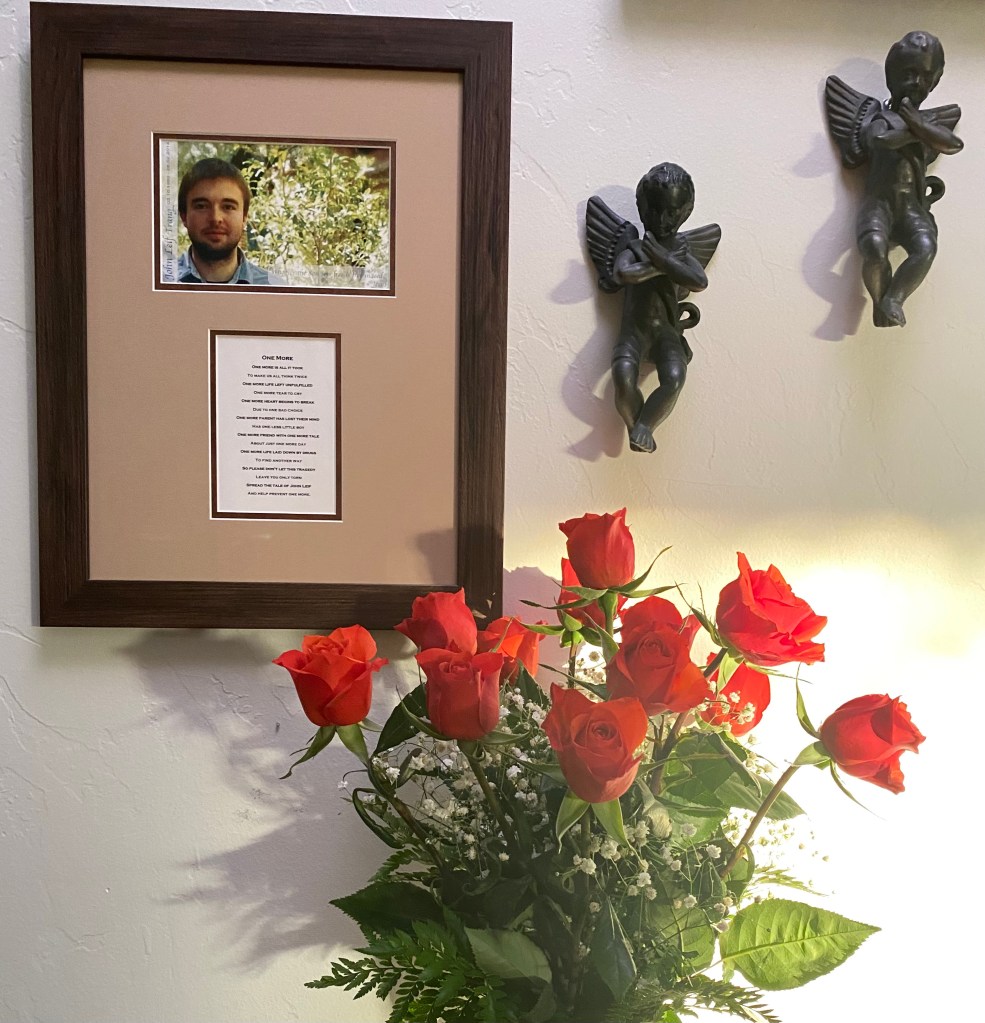
John Leif Trang – March 10, 1989 – August 2, 2014

(Translation into most languages at tab on right)

On March 10th, our son would have been celebrating his 33rd birthday. That day is now a painful reminder of all the potentials and possibilities that a young person should be experiencing in the 4th decade of their life.

After JL died of a heroin overdose in 2014, I began the dreaded process of sorting through his belongings – which included his computer and phone. Many of the photos on his phone I had never seen and some have now become permanently seared into my visual memory. One is of JL with a Boa wrapped around his shoulders and neck.

Boas are constrictors. Constrictors don’t chase their prey. They are ambush hunters. A boa grabs its prey with its teeth, then quickly coils its body around the prey and squeezes. It doesn’t break the bones – it constricts so tightly that its prey can’t breathe. With each exhale, it tightens its coils until its prey dies slowly from an overwhelmed circulatory system due to blood not getting to the brain. Once dead, the snake swallows its prey whole.

Continue reading “Addiction Constriction”

Who Is My Neighbor?

(Sixteenth in a series of topical blogs based on chapter by chapter excerpts from Opiate Nation. Translation into most languages is available to the right.)

(I am re-posting this blog due to a glitch on some platforms in January)

In 2020, overdose deaths have increased worldwide, and by as much as 25% in the US. Deaths from acute intoxication have also increased dramatically. People are isolated and anxious, their treatment and recovery programs have been disrupted, and the illicit drug supply has become dangerous. Health officials believe that the majority of these deaths have occurred because hospitals are full and emergency services are overwhelmed with Covid-19 patients, thus removing the urgent, lifesaving care of overdose reversal that has been established in the past few years. Funding for all mental health services has also been diverted to pandemic care, which has complicated access to basic resources. Suicides are rising at an alarming rate.

A conversation that I believe is relevant to the current times came to mind this week. A lawyer asked Jesus “Who is my neighbor?” as he was trying to wriggle out of the command to “Love your neighbor as yourself.” Jesus told him about a man beaten and robbed while on a journey. As the man lay almost dead on the road, he was passed by several religious leaders who refused to help him. Then a man, who was not the same nationality or religion, came and bandaged and rescued him and paid for his care until he was well. Jesus asked the lawyer, “Which of these men proved to be a neighbor?” The lawyer replied, “The one who showed compassion.” Jesus responded, “Go and do the same.” *

Continue reading “Who Is My Neighbor?”
Malcolm Guite

Blog for poet and singer-songwriter Malcolm Guite

The Gift of Need

How Need Can Strengthen Individuals and Communities

Memoirs and Musings

David Bradley Such

Dave Barnhart

Church planter, pastor, author, coach

RecoveryLife101

Just another WordPress.com site

Abbie In Wondrland

life...on Gods' terms.

Living In Graceland

"..learn the unforced rhythms of grace" matt 11:28

Janaburson's Blog

All about opioid addiction and its treatment with medication

Breaking In News Network

Seeking the truth and bypassing the MSM

Junkbox Diaries

Trauma, PTSD, Mental Health, Addiction, and Recovery

Ohio Society of Addiction Medicine

The Ohio Society of Addiction Medicine is a chapter of ASAM - A professional society actively seeking to define and expand the field of addiction medicine.

traceyh415

Addiction, Recovery, Loss, Grief

WordPress.com News

The latest news on WordPress.com and the WordPress community.