(Translation into most languages at tab to the right.)
It’s a new year around the world. Most developed and industrialized nations have similar hopes and concerns. Yet when one travels outside of the USA, we find some striking differences in how other leading countries in the world govern themselves. This is obvious in one particular area – when it comes to what substances are legal, allowed, or illegal.
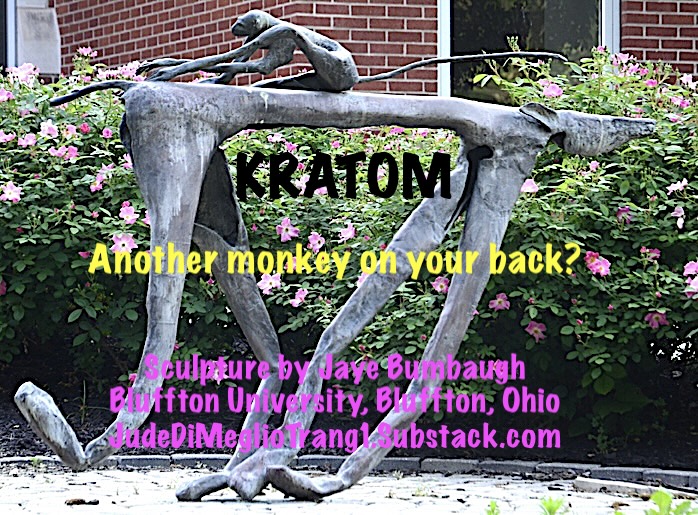
Kratom is a good example. It is a Thai traditional medicine. The plant is in the coffee family and when used traditionally – i.e., chewed or dried for tea – it can produce mild stimulant or sedative-like effects. (1) But in the last decade, people driven by greed and profit (it is a billion-dollar industry), have once again figured out how to chemically super-charge the derivatives in Kratom in order to create a market with a highly addictive substance in the guise of a “natural” product sold at convenience stores and gas stations in all but six states in the USA. These concentrated derivatives contain 7-hydroxymitragynine (7-OH), a powerful psychoactive compound that occurs naturally in tiny amounts in kratom. 7-OH affects the same receptors in the brain as morphine and heroin – thus, the same effects that people seek in those drugs. And in these new potencies, kratom has the same strong potential for addiction.
If access to health care is considered a human right, who is considered human enough to have that right?
I critique market-based medicine not because I haven’t seen its heights but because I’ve seen its depths.
~Paul Farmer, M.D., Ph.D. (1)
In sorting through bins of old notes and letters, I knew one bin in particular would bring up painful memories. It was our son, JL’s. It was difficult, as I had imagined. And one of the – no, THE – most painful reminder related to his death from an overdose. It was the fact that we played a role in his preventable death. And so does the American capitalistic healthcare debacle.
The previous New Year’s eve, he was with two of his friends who overdosed and one died. It shook him to his core and he came to us and asked for help. We went together to his addiction doctor and after separate sessions, we then talked together. His doctor said: “This young man cannot start using again because if he does, he will die.” This came from his years of experience working with young people who had been inadverntently caught up in the opioid epidemic of the 2000’s. He felt JL would need to be on Suboxone for a long period of time and maybe for the rest of his life.
JL was hesitant because he had been on Suboxone years ago when it was very expensive and being prescribed at 32 mg a day – a huge amount that left patients feeling like they were drugged. And the worse part was trying to get off it. Tapering off was extremely difficult and took forever – like extended withdrawals.
Aside from the physical hurdles was the cost. It was very expensive and, guess what? It was, of course, not covered by our private health insurance (which cost us almost $1000/mo as self-employed workers) because addiction was not considered a healthcare issue. As a matter of fact, if a person said they had an illegal drug addiction, they would likely be dropped from health insurance coverage and be reported to the police.
What is so painful for us now is that we made the decision that January to drop JL from our costly policy and to not cover his getting Suboxone due to the expenses (it would have been hundreds of dollars a month for the Rx). And in the mistaken belief that he just needed to try harder. We thought this would force him to stay clean – good old fashioned will power and hard work. He did go into a detox program for a month and then into a great sober living program where he did so well we thought we had turned the corner in his 10-year struggle with opioid addiction (which had started when he was 14 and experimenting with Oxy’s).
What we didn’t understand at that time was that opioid addiction is not overcome by willpower. The result was after 6 months, he finally had impacted wisdom teeth surgery and weeks of opioid pain meds – because we thought there was no other option and we thought he could handle it. Within 3 weeks he began using heroin again and after a few days, overdosed and died. August 2, 2014.
What our family did not have as an option was what was finally put into law in 2014: The Affordable Care Act (ACA). This law mandates that all new individual and small-group plans cover substance use disorder (SUD) treatment as one of the ten essential health benefits. It also prevents insurers from denying coverage or charging more because of a pre-existing condition, including addiction.
Sadly, there are politicians who want to revoke the ACA or limit much of its coverage. As the supposed leading nation in the developed world, we are the only one without universal health care for every person from cradle to grave. All of our peer nations have it. Some systems work better than others. Regardless, health care is not seen as an option or a privilege for those who can afford it. It is considered part of a healthy and egalitarian society.
But in order for our government to save money (since our elected officials don’t want to tax millionaires and billionaires equitably), there have been significant cuts to Medicaid and SNAP and changes to the Affordable Care Act (ACA), that are projected to increase costs and reduce coverage for millions. There are too many details to go into here, but the bottom line to me is this:
Why are we even debating how much coverage these programs and health insurance companies offer when we should be pressing for complete health care coverage for all Americans – especially for the least of us who can barely afford food?
If we consider ourselves a nation built on Judeo-Christian principles, how can we not believe that as a society it is our responsibility to care for the sick – as people of faith have always done?
If how we viewed health care changed – as a basic need instead of a privilege – then the necessary changes to our taxing structure and health insurance would change. Where there is a will, there is a way.
(Translation into most languages at tab to the right.)
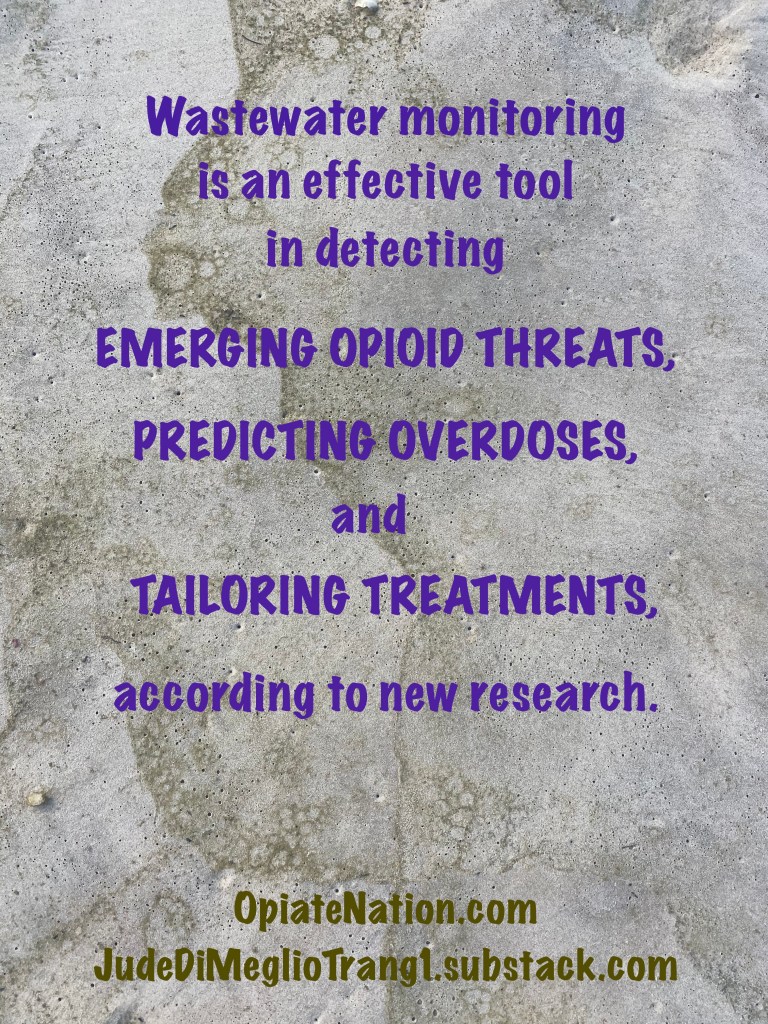
Wastewater monitoring is an effective tool in detecting emerging opioid threats, predicting overdoses, and tailoring treatments, according to new research from Biobot Analytics, Mathematica, and the Washington/Baltimore High Intensity Drug Trafficking Area (W/B HIDTA) program. (1)
My husband and I live in Melbourne, Australia part of the year so we can be close to our daughter and family. We love Australians and their friendly and balanced way of approaching life and politics. It is a federal parliamentary democracy similar to England.
One area where they are ahead of the USA is in their approach to illicit drugs. As a nation with comprehensive health care for all from cradle to grave, they have a more communal attitude than our American individualistic posture. They view caring for each other as part of being a healthy and functioning society.
This necessarily affects how they treat people who use illicit drugs. They aggressively pursue educational and preventative measures while also working to keep those who use drugs as safe as possible until they are ready to seek recovery. While they don’t have a fluid border with a drug-producing country like we do with Mexico, they still have a problem with illicit drugs arriving from China and Asia.
One area that they use as a public health strategy is wastewater surveillance such as was used during the Covid-19 pandemic. Samples are collected from wastewater treatment plants, sewer systems, or targeted populations such as college dorms or prisons. When pooled together, they provide a community view of drugs circulating in the population. The samples are analyzed and the data is calculated through very sophisticated methods. The data then give objective, community-wide information on drug use trends. This is of great benefit in tracking changes and identifying new drug use and outbreaks and as an early warning tool. In the US, Biobot Analytics and Mathematica are leading the way with the “Drug-Surge” algorithm. (1) In a study involving five counties across four states, the algorithm correctly flagged between 71% and 100% of drug overdoses.
The US Drug Enforcement Agency (DEA) uses this wastewater testing to detect trends in illicit substances well in advance of reported overdoses. Xylazine was detectable a month before suspected overdoses from it were reported. Geographic and socioeconomic trends can be tracked also. If put to use, a national alert system would give early warning of at least a week in order to alert the public to a new or more potent drug threat.
In the US, the National Wastewater Surveillance System (NWSS) that is run by the CDC began in response to the Covid-19 pandemic. The CDC coordinates a national system primarily for infectious disease monitoring. While drug consumption can also be targeted, a national program does not yet exist. (3,4) Meanwhile, the National Institute on Drug Abuse (NIDA) is working with Biobot and Mathematica and has regional programs focusing on illicit drug use as a response to the opioid crisis.
With the CDC in the midst of worrisome changes, let’s be vocal proponents for increased national coordinated surveillance of illicit drugs in our wastewater and the use of that information to help prevent overdoses and deaths.
Wastewater Data Offers Powerful Tool in Confronting Opioid Epidemic
(Translation into most langugages at tab to the right.)
Recently, I connected with Christina Dent, Founder & President of End It For Good. The mutual connection came through a drug advocacy organization in Australia where they also promote options other than incarceration for drug addiction.
The End It For Good website is a treasure worth exploring (see below). Although Christina has been mainly focused on her home state of Mississippi, they are now expanding and reaching out across the United States. Their website states:
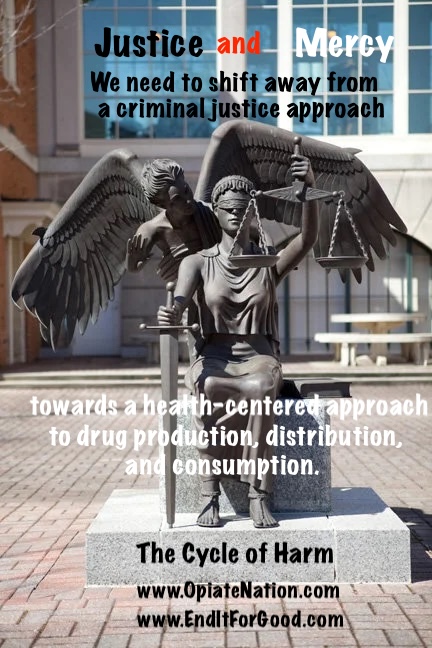
Our goal is a future where fewer people are harmed by drugs. To get there, we need to shift away from a criminal justice approach and towards a health-centered approach to drug production, distribution, and consumption. As a 501(c)(3), we educate citizens, advocates, and policymakers to elevate solutions that prioritize life, health, strong families, and safe communities. This is the path to a world where more people have an opportunity to thrive.
In her TED Talk, Christina shares her learning journey about the destructive impact of a criminal justice approach to drugs and addiction, as well as the mounting evidence that a health-centered approach would be much more effective.
And Christina has written an award winning and very favorably reviewed book:
CURIOUS: A Foster Mom’s Discovery of an Unexpected Solution to Drugs and Addiction. It gives a vision for unexpected solutions that save lives, heal families, and promote public safety.
The reason I used this particular statue for the blog graphic this month relates perfectly to this subject. Justice & Mercy was designed by sculptor L. Glynn Acree III and stands in front of the Cumberland School of Law at Samford University in Birmingham, Alabama. Justice is blindfolded and the scales she holds are perfectly balanced. The angel, Mercy, is whispering in Justice’s ear. An important reminder that in order for justice to be true and impartial, mercy and kindness must temper her decisions – because as humans, we are all imperfect and fail in many ways.
(Translation into most languages at tab to the right)
I’ve been thinking about slavery and the people throughout the millennia who have been slaves – and the estimated 50 million people worldwide who are currently enslaved. (1) Every empire from the beginning of recorded history has functioned and prospered on the backs of slaves: people captured during war or kidnapped, enslaved against their will.
In the modern world, people can end up in ‘slavery’ in a variety of ways: economic, sexual, labor, etc. They may have been enticed or tricked into their captivity by promises of adventure or money, coerced or blackmailed because of a past circumstance, or forced into it due to poverty and debt.
How does it feel to be enslaved? Much of the time, it destroys one’s sense of personhood. Your ability to exercise your will and make choices has been stolen from you. Control and exploitation by another person or entity has robbed you of your dignity and ability to determine the direction of your life. It can feel like being on endless stairways that lead nowhere.
One thing is certain: no one ever consciously chooses to be enslaved. No one. But the many lures currently dangling in front of young people to have fun and feel free and to be in control of their own life and happiness can be so deceptive. Yet they are not mature enough to be capable of discerning that they are actually making a choice to become imprisoned – whether it is with alcohol, drugs, promiscuity, gambling, power, success, etc.
I think it is safe to say that anyone who has struggled with any type of addiction knows they are enslaved. They are in servitude to an all-consuming, dominating, master. Their world is restricted due to the demands their addiction places on them. I saw this play out in pitiful detail in our son’s long struggle with heroin and alcohol. I didn’t understand why he would want to cut a trip short or not go at all if we were flying. It was due to needing to use and/or maintain a supply of illegal drugs. As he became unable to focus on his university classes, he had to drop out and work at jobs frustratingly inconsistent with his interests and well below his God-given abilities.
He was not free in any sense of the word.
What is real freedom? Is it to be ‘a free agent’ able to do whatever one wants regardless of society or others’ thoughts or needs? To not be responsible to anyone? To chant the modern mantra that individual freedom is our right and supersedes all other claims? Or is it something more, something that starts in our mind and soul and that results in the ability to make good choices in order to be healthy and safe and productive and of service to others? Webster’s Dictionary describes freedom as “the absence of necessity, coercion, or constraint in choice or action; liberation from slavery.” Liberty is not the power of doing what we like, but the right to do what we ought. (John Dalberg-Acton)
Once someone is addicted, how can they escape the slavery of addiction? We need reformers and abolitionists who know specifics of ‘the slave trade’ and how to liberate individuals. And also, how to reform not only the laws and principles of society but how we think about addiction in order to accurately view those who are enslaved. In the past, in whatever culture slavery was embraced, the way a society could justify its policies was to consider those people as ‘less than’ – less than human, less than worthy of normal rights, even less than deserving of wanting another way of living. And even further, that these slaves should be content with their bondage.
I love this song by Kim Hill, She’ll Come Around. It speaks to this point.
We all know that is not true because if we put ourselves in their place for a moment – walk a mile in their shoes – we would do anything to be free. But do we all understand and admit that most people who are living in addiction, if given a choice and a viable option, would choose to be free? If so, let’s get rid of denigrating thoughts and words and help change public policies to teach preventative measures to parents and young people and provide restorative solutions to those fighting addiction. (2) And may each of us encourage those who struggle by helping them find real, lasting solutions to the weight of bondage they stagger under.
Our freedom can be measured by the number of things we can walk away from. Vernon Howard
(Translation into most language at tab to the right)
Sam Quinones is a quintessential storyteller in an investigative journalists’ body. And he uses his skill to weave in stories from families and communities along with the “true tales” from recent history of greed, corruption, deceit, and the politics surrounding the drug epidemic we are living with today. It is his reason for hope that I want to focus on now. Heaven knows we need some hope for The Least of Us… In the Time of Fentanyl and Meth. (1)
Part of the hope he feels comes from positive changes beginning in how drugs and addiction are viewed now compared to previous decades. ‘…greatly expanded drug treatment is part of what America needs…recovering addicts face scary odds as long as the drugs that torment them are widely available, potent, and almost free. The now-cliché is “We can’t arrest our way out of this.” We can’t treat our way out of it, either, as long as supply is so potent and cheap.’ (2) He discusses the mistake of drug criminalization, the possibilities and problems associated with drug legalization and drug decriminalization – all very well thought through and discussed. He traveled across America and interviewed professionals in every field to gain insights into this nightmare that is swallowing lives from every socio-economic group. (For those unclear about what opiates or meth do to our brains, there are detailed explanations woven in throughout the book.)
But his biggest reason for hope came from when Quinones traveled and also extensively interviewed another segment of American society: the addicted, their families, and those working in the many fields who are trying to restore the lives of those taken captive by these powerful substances. I have to say, many of the stories were hard to read, but it is from these people in the trenches and their stories that Quinones began to have hope.
Drug courts are one reason to hope. Because synthetic dope today does not allow users to hit rock bottom before seeking treatment – because ‘Today, rock bottom is death. We can use arrests – but not as a reason to send someone to prison. Instead, criminal charges are leverage we can use to pry users from the dope that will consume them otherwise.’ (3) It helps to put some space between their brain and dope so they can embrace sobriety where life repair can begin. Drug courts are not a luxury – they are a necessity.
Yet Quinones found that ‘…our best defense, perhaps our only defense, lies in bolstering community. America is strongest when we understand that we cannot succeed alone, and weakest when it’s every man for himself…That’s why the lesson we must learn is that we’re only as strong as the most vulnerable, as people who are in pain.’ (4)
As he traveled and listened, Quinones saw that it was people who loved those who are ‘the least of us’ who were making the sacrifices on a daily basis to help in ways they could. But they need help and support – from others and from the policies that are in place in our country.
Recently, I was sharing with a woman the contrast we experienced while we lived in Australia with our daughter and family for two years from the beginning of the Covid pandemic. I said that we were struck by the self-centered mentality – in private life and politics – we encountered when we returned to America and how different it is from the sense of being part of a community and responsibility to others that pervades Australian society. She responded: ‘I’d rather be selfish and self-centered than have my rights and freedoms taken away.’ I was literally speechless. What have we become?
Bolstering community will take a change from our self-centered culture where we who have plenty think we don’t have enough. Where we at the top of the food chain, instead of helping to maintain our communities, have corroded them in isolating and insulating ourselves by abandoning the places where we used to come together like neighborhood parks and community gatherings. ‘We need to again make policy of the belief that we can’t go it alone. The spirit of community needs to be built out, collectively, not just a shift of heart, which is necessary, but in taxation, in health care, in improved infrastructure – in other words, a shift in where the resources go…much of what neuroscience has learned about our brain confirms religion’s truths:humans need love, purpose, compassion, patience, forgiveness, and engagement with others. We’re built for simple things – for empathy and community. That is our defense.’ (5)
He ends his book, his plea to all of us, with this:
‘Community reconstruction doesn’t have to always be complex. It comes down to the unnoticed “constant habit of kindness” that French observer Alexis de Tocqueville, in the mid-1800’s, saw strengthened us locally and kept Americans from destructive isolation and the worst of individualism…The lessons are that we are strongest in community, as weak as our most vulnerable, and the least of us lie within us all.’ (6)
Thank you, Sam.
The Least of Us: True Tales of America and Hope in the Time of Fentanyl and Meth by Sam Quinones
(Translation into most languages at tab to the right)
I wish everyone could read the penultimate chapter of The Least of Us by Sam Quinones. Its title is the same as that of the book. I have almost every line underlined and starred. In it, he describes the dire state we in Western society are in with addiction, the well-thought out reasons many of our public policies are still getting it wrong, and the slivers of hope that encourage us that the world could look differently for the next generation of young people. Some poignant quotes:
“Underground chemists seem to be searching the chemistry literature for drugs that might be molecularly modified to be more potent…The world Gary Henderson predicted when he coined the term ‘designer drugs’ in 1988 is now with us. Counterfeit pills laced with fentanyl (and new synthetics every day) and made in Mexico now dominate the market…There seems now no way to stop all the bizarre drugs devised by those whose own brain chemistry has been twisted by the profits of the underworld’s free market…recovering addicts face scary odds as long as the drugs that torment them are widely available, potent, and almost free. The now-cliché is ‘We can’t arrest our way out of this.’ We can’t treat our way out of it either, as long as supply is so potent and cheap.”
(Twenty-ninth in a series of topical blogs based on chapter by chapter excerpts from Opiate Nation. Translation into most languages is available to the right.)
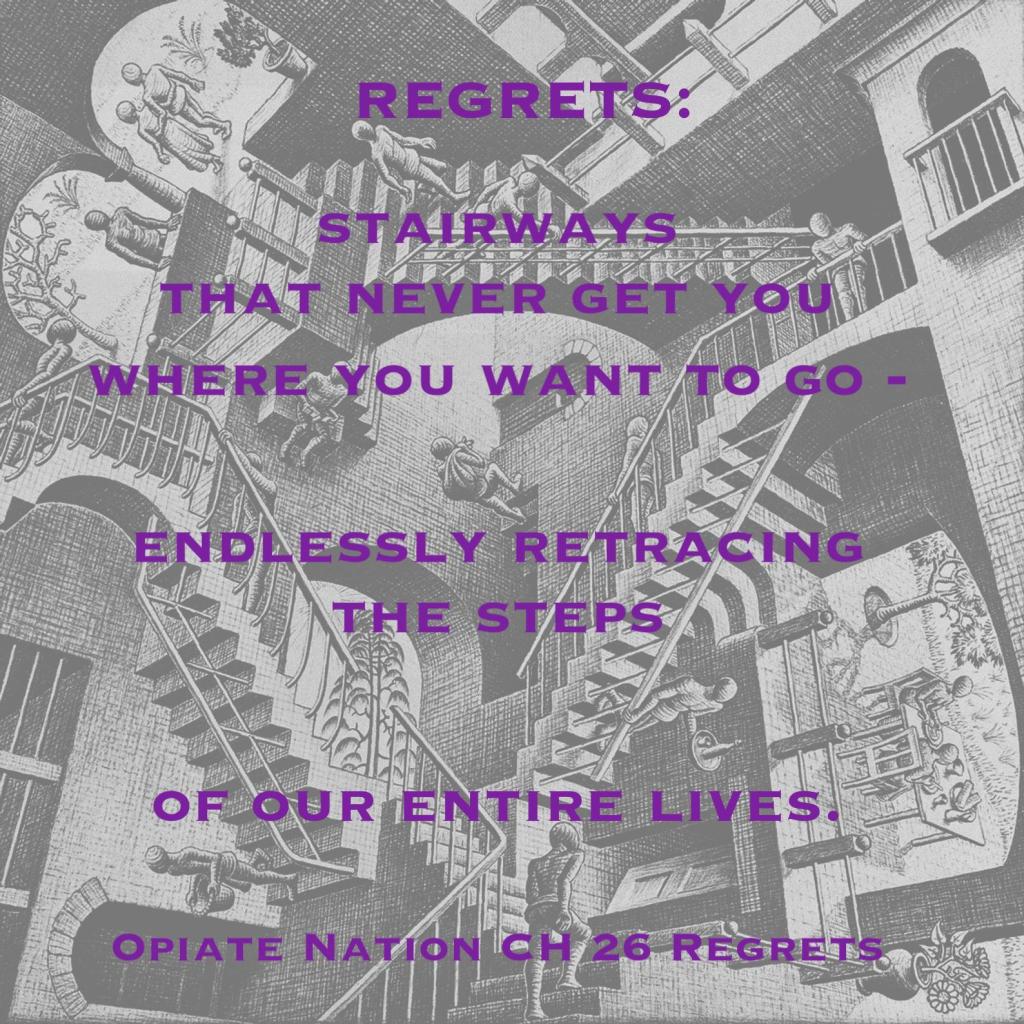
Our family loves the art of Dutch mathematician and artist M. C. Escher: the buildings that open into themselves, the school of fish that become a flock of birds, the circuitous stairways that go up and down throughout multiple buildings without an end point. Yes, stairways that never get you where you want to go, but keep you endlessly retracing your steps. They are no longer interesting art to wonder at. They now mirror how John and I have felt many times since August 2nd—regrets—retracing the steps of our entire lives.
The Ohio Society of Addiction Medicine is a chapter of ASAM - A professional society actively seeking to define and expand the field of addiction medicine.


 Opiate Nation