(Translation into most languages at tab to the right.)
Eleven years ago today my husband John and I woke up thinking it would be just another normal, hot August Saturday morning. But when the sheriff knocked on the door, the day – and our lives – were no longer normal. It is surprising how quickly our lives can go from normal to abnormal.
I was sorting through some files and found a drawing that our son, John Leif (JL) had done when he was around nine. It was obviously of Van Gogh’s “Starry Night” but it was also obviously done by a normal nine-year-old – not an artistic prodigy. And it made me think about how JL was just like any other normal kid growing up in middle-class America in the 1990’s-2000’s. He learned to ride a 2-wheel bike at around five, he played with Lego’s, he took swimming lessons, he loved monster trucks and lasagna and macaroni & cheese with ketchup. But something so abnormal for normal young teenagers ended up ruining some of what should have been the best years of his life and ultimately taking his life – and the lives of many of his friends and hundreds of thousand other normal kids.
What was abnormal was the criminal promotion and availability of highly addictive medicine to young kids by Purdue Pharmaceuticals and the Sackler family. Never before had American kids been exposed to legal drugs (that were promoted as “non-addictive”) that they experimented with as if they were simply trying a joint. And the results were the devastation of the Opioid Epidemic. Which is not over, especially for the once normal kids who are still alive and living with the cancer of addictions. We see many of them on the street corners and under bridges, living from hand to mouth, barely surviving, living anything but a normal life.
Sadly, seeing these shells of once normal kids has become a “new normal” as our society doesn’t seem to agree on how to best provide lasting recovery options with a continuum of care – or whether we even should. In my last Substack podcast and article with special guest Sam Quinones we discuss some ideas from his book “The Least of Us” for how to help get these once normal kids from normal families the help they need to try to return to something like a normal life. (1) Let’s not forget that those addicted people were once normal kids.
Translation into most languages at tab to the right.
A generation is usually considered the years during which children are born, grow up, become adults, and begin to have children of their own. Approximately 20-30 years, averaging 25 years. Each generation becomes known by what characterizes the lives of those in it – what they do and how they impact society.
I’ve been thinking about my son, who would be 36 this year – if he had survived the opioid plague that began in the 1990’s with the prescribing of opioids for every ache and pain. What Purdue Pharma did is old news and well documented. But the effect of the immorality of the Sackler family set a course that destroyed the lives of an entire generation – the “Millennials” generation of my son and his contemporaries.
Far more than a million Americans have died due to a drug overdose in the past 25 years and the majority of those deaths are from opioids. (1) Initially it was prescription opioids, then heroin, then fentanyl. And now a daily variation of synthetic opioids mixed in with every variety of street drug. These are made from precursor chemicals from China and shipped around the globe where they are “formulated” into fake prescription pills or street drugs in jungle or backyard labs. Quality control is non-existent.
Beyond the deaths, there are millions of Americans who are suffering from life-threatening addiction. They will either be another statistic or live the life of an empty shell surviving from one fix to the next just to not feel “dope sick.” Many are homeless and jobless. All experience despair and hopelessness. It will take years to gain long-term recovery if they can access health care and programs.
There has been some good news. After the peak years of the Covid pandemic, when the rates of addiction and deaths from overdoses rose substantially, the statistics for 2024 finally show a decline in both. (2) It may be due to less anxiety and depression since the pandemic ended. It may also be due to more awareness of Medicated Assisted Treatment and better access to Harm Reduction tools such as pill testing and overdose reversal medication naloxone.
I think the best area for hope is the common knowledge the “Gen Z” kids are growing up with about the deadly dangers of drug addiction. That their parents are also more aware of the drug supply than parents of Millennials like me. The 2023 National Survey on Drug Use & Health found that the majority of adolescents (12-17 yrs. old) in the USA are not using substances, alcohol, tobacco products or vaping. (3) But ongoing effort is imperative. “Continued prevention programming, education, and public messaging focused on adolescents can delay or prevent substance use and avoid the negative impacts of substance use that have been widely documented.”
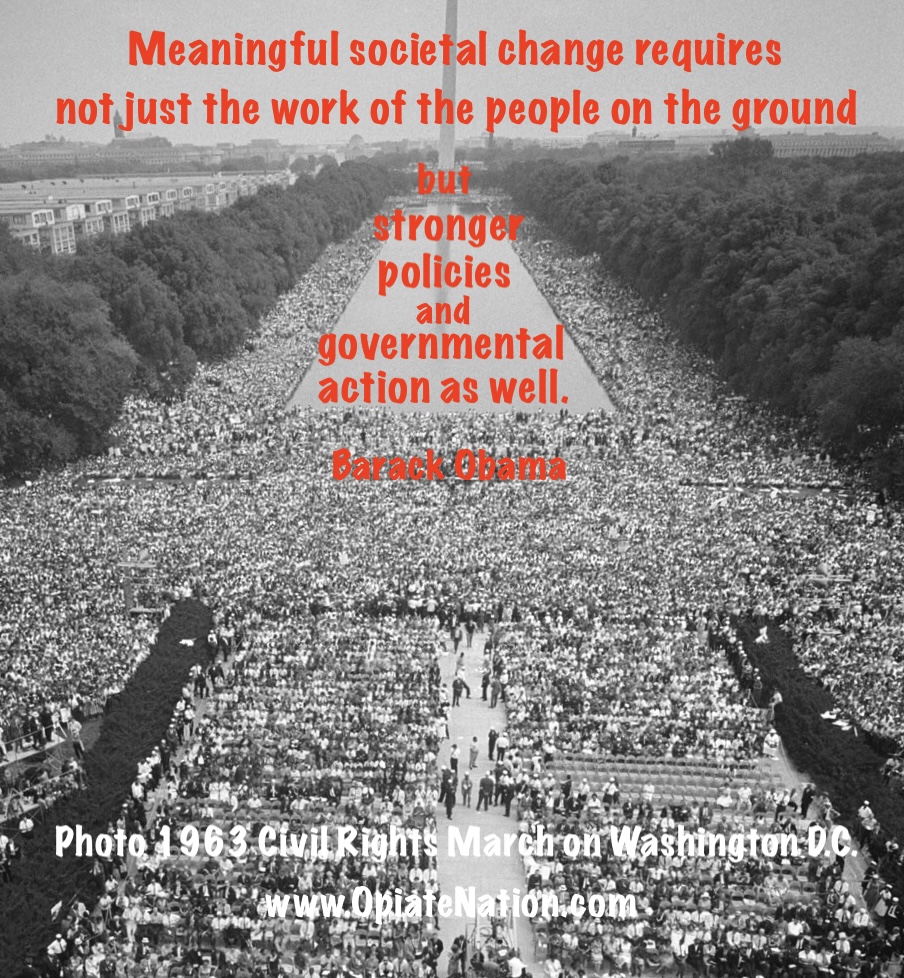
If we truly want to see future generations of children have the opportunity to grow up without the continual pull to use drugs, we need to keep our relationships with them open and healthy. Every year we can delay experimentation with addictive substances allows children’s brains to develop more fully in the area of judgment. We must all stay informed and aware and work in whatever arena we are able. As Barack Obama told Michelle when he was working for her as an intern, that he was in law school because grass roots organizing had shown him that meaningful societal change requires not just the work of the people on the ground, but stronger policies and governmental action as well. (4)
(Translation into most langugages at tab to the right.)
Recently, I connected with Christina Dent, Founder & President of End It For Good. The mutual connection came through a drug advocacy organization in Australia where they also promote options other than incarceration for drug addiction.
The End It For Good website is a treasure worth exploring (see below). Although Christina has been mainly focused on her home state of Mississippi, they are now expanding and reaching out across the United States. Their website states:
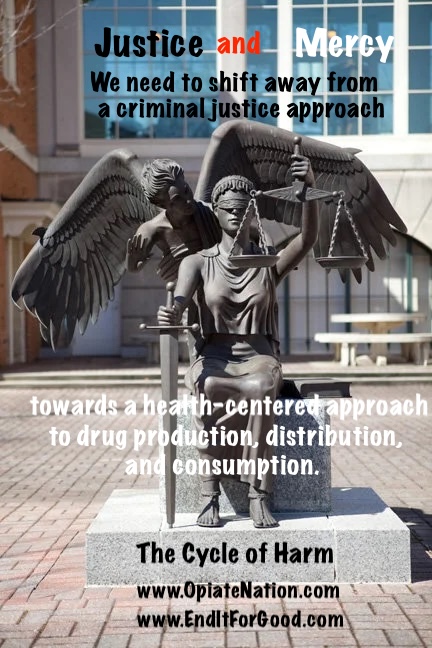
Our goal is a future where fewer people are harmed by drugs. To get there, we need to shift away from a criminal justice approach and towards a health-centered approach to drug production, distribution, and consumption. As a 501(c)(3), we educate citizens, advocates, and policymakers to elevate solutions that prioritize life, health, strong families, and safe communities. This is the path to a world where more people have an opportunity to thrive.
In her TED Talk, Christina shares her learning journey about the destructive impact of a criminal justice approach to drugs and addiction, as well as the mounting evidence that a health-centered approach would be much more effective.
And Christina has written an award winning and very favorably reviewed book:
CURIOUS: A Foster Mom’s Discovery of an Unexpected Solution to Drugs and Addiction. It gives a vision for unexpected solutions that save lives, heal families, and promote public safety.
The reason I used this particular statue for the blog graphic this month relates perfectly to this subject. Justice & Mercy was designed by sculptor L. Glynn Acree III and stands in front of the Cumberland School of Law at Samford University in Birmingham, Alabama. Justice is blindfolded and the scales she holds are perfectly balanced. The angel, Mercy, is whispering in Justice’s ear. An important reminder that in order for justice to be true and impartial, mercy and kindness must temper her decisions – because as humans, we are all imperfect and fail in many ways.
(Translation into most languages at tab to the right)
We recently spent some time with a young man who was a close friend and fellow opioid user with our son. While he has survived dying from an overdose and has been clean on and off for almost 20 years, he has been on Suboxone for the past nine months, trying once again to be clean after one more cycle of opioid addiction. He has tried many ways to get free of the stranglehold that opioids have on his brain, to no avail. How did this happen?
Our son, like millions of other adolescents, were prescribed opioids for some type of pain: oral surgeries, sports injuries, accidents, etc. John Leif (JL) had his first experience with opioids at 12 when he had teeth extracted before wearing braces. What we didn’t know then (2001) were the facts about opioids and addiction. Why we didn’t know – and most doctors and dentists didn’t either – was due to Purdue Pharma and other drug companies’ propaganda on the safety of oral opioids: “Opioids are not addictive if a person is in pain.” That, of course, is a lie and one they knew perfectly well. The opioid epidemic is the result of their lies.
The more recent information from multiple drug studies is what we wish we would have known 20 years ago: Legitimate use of prescribed opioids before the 12th grade is independently associated with a 33% increase in the risk of future opioid misuse after high school by age 23 compared to those with no history of an opioid prescription. This wasamong patients with little drug experience and who disapprove of illegal drug use. (1)
Why does an opioid prescription predict future opioid misuse most strongly among individuals with little to no experience with use of illegal drugs – i.e., adolescents? For drug-naïve individuals, an opioid prescription is likely to be their first experience with an addictive substance. Most likely the pain relief is pleasurable, and a safe initial experience with opioids may reduce perceived risk. A pleasurable and safe initial experience with a psychotropic drug is a central factor in theories of who goes on to misuse drugs. (2)
(Translation into most languages at tab to the right)
I have been thinking about temptation recently and how differently we each respond when we face something that is hard for us to resist. How do we resist something that is alluring and that we have repeatedly succumbed to in the past? Something that we are addicted to like lying or shoplifting, alcohol or drugs, gossip or gambling, social media or overeating? The list of behaviors that can derail our lives in one way or the other is endless. It’s not just how an addiction can cause us harm, but also how it can debilitate or destroyour relationships, that makes learning how to beat temptation important.
So, when we are tempted to indulge in our pet addiction, what do we do?
I read an article on Medium about temptation and willpower that supports the thoughts I’ve held throughout my life. Riikka Iivanainen (1) confesses that she has high self-control and discusses her research into why some people succeed at resisting temptation while others don’t.
She says, High self-control does predict many positive life outcomes: People who’re good at self-control do better in school, have fewer mental health problems, have better relationships with friends and family, and generally exhibit fewer impulsive behaviors like binge eating and alcohol abuse. They’re even happier.
From the many scientific studies she researched, she goes on to say, Having good self-control doesn’t mean a constant battle against temptations. The kind of self-control that gets you all those good outcomes is more effortless than what’s commonly suggested by the term’s “willpower” and “self-discipline.”
Psychologists tell us that constantly resisting temptation is exhausting and will soon leave us with ego-depletion. Relying on self-control in the face of temptation is destined to fail. So what kind of self-control is “more effortless”? Riikka says, The people who reported fewer problematic desires and less conflict related to those desires were good at avoiding temptation, not resisting it.
Isn’t this insight what the basis of what most recovery programs are built upon? The acronym HALT is a tool to remind us to take a moment and avoid temptation by being aware of the primary things that can lead us to it: Hungry, Angry, Lonely, Tired. We are susceptible to self-destructive behaviors, temptations, and relapse when these basic human needs are unmet. HALT is a reminder, an early warning system. Being self-aware helps us recognize our needs and address them in a positive way before turning to harmful habits or destructive people.
Hungry – being hungry can be physical or emotional hunger
Angry – being angry at someone else or at yourself
Lonely – being lonely can be while in a crowd or from self-isolation
Tired – being tired affects our body, mind, and spirit
We need to know ourselves and be honest about what our problematic desires are and avoid them rather than flirt with them. Desires are matters of the heart and we need to do all we can to support the healthy, life-affirming desires we have. I’ll end with pertinent insights from some of my favorite sources:
There are several good protections against temptation, but the surest is cowardice.(2)
Strength comes prior to temptation, not during it. Overcoming is a prior act. It involves making a decision to remain pure before the temptation comes. (3)
Rather than waiting for temptation to raise its inevitable head and struggling to resist it, researchers at the University of Wyoming say it’s more effective to plan in advance to manage those temptations with well-thought-out self-control strategies. (4)
It is easier to prevent bad habits than to break them. (5)
Paul repeatedly told the early Christians in their very pagan cultures to “flee” temptation. (6)
Learning takes us through many states of life, but it fails utterly in the hour of danger and temptation. Then faith alone saves. (7)
But for persons needlessly to expose themselves to temptation, and to do those things that tend to sin, is unwarrantable, and contrary to that excellent example set before us. (8)
Jesus showed us by example when we are confronted with unavoidable temptation to speak the truth in order to help us resist until we are able to escape. (9)
Temptations, of course, cannot be avoided, but because we cannot prevent the birds from flying over our heads, there is no need that we should let them nest in our hair. (10)
(Translation into most languages at tab to the right)
I’ve been thinking about slavery and the people throughout the millennia who have been slaves – and the estimated 50 million people worldwide who are currently enslaved. (1) Every empire from the beginning of recorded history has functioned and prospered on the backs of slaves: people captured during war or kidnapped, enslaved against their will.
In the modern world, people can end up in ‘slavery’ in a variety of ways: economic, sexual, labor, etc. They may have been enticed or tricked into their captivity by promises of adventure or money, coerced or blackmailed because of a past circumstance, or forced into it due to poverty and debt.
How does it feel to be enslaved? Much of the time, it destroys one’s sense of personhood. Your ability to exercise your will and make choices has been stolen from you. Control and exploitation by another person or entity has robbed you of your dignity and ability to determine the direction of your life. It can feel like being on endless stairways that lead nowhere.
One thing is certain: no one ever consciously chooses to be enslaved. No one. But the many lures currently dangling in front of young people to have fun and feel free and to be in control of their own life and happiness can be so deceptive. Yet they are not mature enough to be capable of discerning that they are actually making a choice to become imprisoned – whether it is with alcohol, drugs, promiscuity, gambling, power, success, etc.
I think it is safe to say that anyone who has struggled with any type of addiction knows they are enslaved. They are in servitude to an all-consuming, dominating, master. Their world is restricted due to the demands their addiction places on them. I saw this play out in pitiful detail in our son’s long struggle with heroin and alcohol. I didn’t understand why he would want to cut a trip short or not go at all if we were flying. It was due to needing to use and/or maintain a supply of illegal drugs. As he became unable to focus on his university classes, he had to drop out and work at jobs frustratingly inconsistent with his interests and well below his God-given abilities.
He was not free in any sense of the word.
What is real freedom? Is it to be ‘a free agent’ able to do whatever one wants regardless of society or others’ thoughts or needs? To not be responsible to anyone? To chant the modern mantra that individual freedom is our right and supersedes all other claims? Or is it something more, something that starts in our mind and soul and that results in the ability to make good choices in order to be healthy and safe and productive and of service to others? Webster’s Dictionary describes freedom as “the absence of necessity, coercion, or constraint in choice or action; liberation from slavery.” Liberty is not the power of doing what we like, but the right to do what we ought. (John Dalberg-Acton)
Once someone is addicted, how can they escape the slavery of addiction? We need reformers and abolitionists who know specifics of ‘the slave trade’ and how to liberate individuals. And also, how to reform not only the laws and principles of society but how we think about addiction in order to accurately view those who are enslaved. In the past, in whatever culture slavery was embraced, the way a society could justify its policies was to consider those people as ‘less than’ – less than human, less than worthy of normal rights, even less than deserving of wanting another way of living. And even further, that these slaves should be content with their bondage.
I love this song by Kim Hill, She’ll Come Around. It speaks to this point.
We all know that is not true because if we put ourselves in their place for a moment – walk a mile in their shoes – we would do anything to be free. But do we all understand and admit that most people who are living in addiction, if given a choice and a viable option, would choose to be free? If so, let’s get rid of denigrating thoughts and words and help change public policies to teach preventative measures to parents and young people and provide restorative solutions to those fighting addiction. (2) And may each of us encourage those who struggle by helping them find real, lasting solutions to the weight of bondage they stagger under.
Our freedom can be measured by the number of things we can walk away from. Vernon Howard
(Translation into most languages at tab to the right)
I wish everyone could read the penultimate chapter of The Least of Us by Sam Quinones. Its title is the same as that of the book. I have almost every line underlined and starred. In it, he describes the dire state we in Western society are in with addiction, the well-thought out reasons many of our public policies are still getting it wrong, and the slivers of hope that encourage us that the world could look differently for the next generation of young people. Some poignant quotes:
“Underground chemists seem to be searching the chemistry literature for drugs that might be molecularly modified to be more potent…The world Gary Henderson predicted when he coined the term ‘designer drugs’ in 1988 is now with us. Counterfeit pills laced with fentanyl (and new synthetics every day) and made in Mexico now dominate the market…There seems now no way to stop all the bizarre drugs devised by those whose own brain chemistry has been twisted by the profits of the underworld’s free market…recovering addicts face scary odds as long as the drugs that torment them are widely available, potent, and almost free. The now-cliché is ‘We can’t arrest our way out of this.’ We can’t treat our way out of it either, as long as supply is so potent and cheap.”
On March 10th, our son would have been celebrating his 33rd birthday. That day is now a painful reminder of all the potentials and possibilities that a young person should be experiencing in the 4th decade of their life.
After JL died of a heroin overdose in 2014, I began the dreaded process of sorting through his belongings – which included his computer and phone. Many of the photos on his phone I had never seen and some have now become permanently seared into my visual memory. One is of JL with a Boa wrapped around his shoulders and neck.
Boas are constrictors. Constrictors don’t chase their prey. They are ambush hunters. A boa grabs its prey with its teeth, then quickly coils its body around the prey and squeezes. It doesn’t break the bones – it constricts so tightly that its prey can’t breathe. With each exhale, it tightens its coils until its prey dies slowly from an overwhelmed circulatory system due to blood not getting to the brain. Once dead, the snake swallows its prey whole.
(Translation into most languages at tab to right.)
In the Greek and Roman worlds, a stigma was a tattoo or brand, especially for a slave, identifying the person as “inferior.” As stigma moved into English, it referred to a mark you couldn’t actually see but which was nonetheless powerful. Social stigmas are based on perceivable characteristics, associated with certain behaviors that distinguish a person from other members of society. They convey disapproval and disgrace. Dis-approval. Non-approval. Dis-grace. Non-grace.
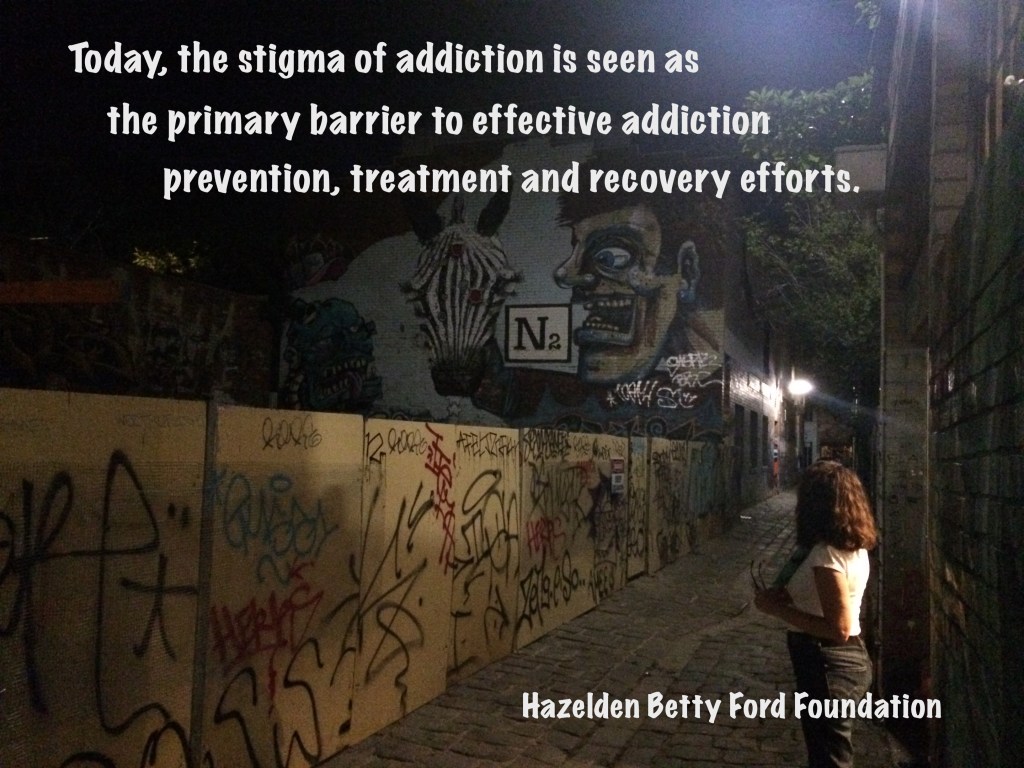
In an article on The Stigma of Addiction from Hazelden Recovery we learn: “The stigma of addiction stems from behavioral symptoms of substance use disorder…which can result in negative consequences including legal, occupational and relationship problems. Understandably, these consequences cause embarrassment and shame among those affected. They also create stigmatized attitudes and perceptions among the wider public, a response that perpetuates and exacerbates the private shame associated with drug addiction. For generations, this combination of personal shame and public stigma has produced tremendous obstacles to addressing the problem of alcoholism and addiction. Today, the stigma of addiction is seen as a primary barrier to effective addiction prevention, treatment and recovery efforts at the individual, family, societal levels. Addiction stigma prevents too many people from getting the help they need.” Yes, only one in 10 people struggling with addiction receive treatment. The article goes on to discuss the irony that many of these stigmatizing behaviors diminish and/or disappear when a person is appropriately treated in recovery.
When talking recently with some of our son’s friends, they have been unwilling to let their past drug use become public knowledge because of the potential negative repercussions they justifiably fear in their careers and relationships. How much worse would it be if they were still living with addiction? What does this say about us as individuals, communities, employers, and society in general? When an individual is seen as having a moral failure instead of a chronic health condition, stigma is the logical result. But no one makes the decision about how their brain will react to a substance and whether they will become addicted after minimal use or hate how it makes them feel and never use it again.
Negative labels stick like glue to our hearts and soul and, for those struggling with addiction and alcoholism, the personal shame becomes how they define themselves. The public stigma that follows is the tattoo they never asked to have. If we can reject stigmatizing and instead provide a safe and listening ear to those struggling with addiction, inviting them to share their stories and encourage them to consider recovery options, they may be willing to join the many people who do learn to manage their disease and successfully recover. Let’s remember that they are just as valuable and able and worthy of love – and as human – as you and me.
Translation into most languages at tab to the right.
One of the things I have come to appreciate about the Australian way is their straightforward approach to life. They are easy-going yet they say what they mean and you know where you stand. A lack of pretense – with a large dose of slightly off-color humor added in.
I think that is why they are more advanced in their drug policies and treatments than America – they are more honest and have less taboos. They benefit from having had comprehensive public health for decades which has facilitated progressive drug policies such as clean needle exchanges, safe-injecting sites, and medication assisted treatment.
John and I had an interesting conversation a few weeks ago here in Australia with Jack Nagel. Jack does the “Real Drug Talk” podcast from Melbourne and also runs the Connection Based Living Recovery Programs. We were preparing to record a podcast with Jack – see links below – and were asking about his experiences and what the current trends are here with drugs of abuse.
In discussing opioids, I wondered why methamphetamines seems to be the main drug of choice and why heroin is not as common here as it is in the States. Jack said that in the 1990’s there was a big problem with heroin coming in from the Golden Triangle of SE Asia and lots of overdose deaths. And the heroin use was IV, not smoking. So, there is a collective memory of street people using heroin and dying which created a lot of stigma and fear associated with IV use.
After that trend slowed, people began using meth – young people like Jack –because smoking or snorting meth seems more innocuous and a less intrusive way to take a powerful drug than IV. Jack said that there is a huge cohort of people who don’t live on the streets and who smoke meth for years. Sadly, they don’t seek help because the public messaging that portrays meth addicts as homeless people with sores and missing teeth doesn’t apply to them. But meth addiction will eventually burst that bubble and ruin their lives too.
There is also a growing problem with cocaine. While once considered the drug of the wealthy city dweller with some high-flying users in Australia spending $10-$20K per week, statistics reveal cocaine usage has now spread much further. Consumption has grown in other areas and demographics where prosperity has increased such as middle-class teachers, tradesmen, etc. Australia is now the highest per capita user of the drug in the world. And the rise in use is being driven by men aged in their 20’s, with Sydney leading the country in use. The most recent stats reveal that there are nearly 1 million weekly cocaine users in Australia out of a population of 26 million. (1,2,3)
We also talked with Jack about what the entry drugs are for kids here in Australia. After alcohol and pot, they usually begin with hard “party” drugs used at house parties and concerts like ecstasy/MDMA, benzodiazepines, GHB/GBL. All mood-altering drugs that create different types of euphoria, but which are dangerous because many times they are mixed with alcohol and other drugs, sometimes without the user’s knowledge.
Even though heroin is in the background in Australia, it is still available and becoming more dangerous due to fentanyl being mixed in to the supply of much of the heroin, and all opioids, along with other drugs of abuse. (4)
When our son, JL, began using Oxy’s he never thought he would even try heroin. Then, as Oxy’s became more expensive and heroin was cheaper, he started smoking heroin. He then swore he would never stick a needle in his vein – the danger and stigma to him was clear. Eventually, just like 95% of heroin users, he did just that. He was living under the delusion that smoking opioids – or any drug – would never lead him to become a “junkie”, an IV drug user.
My concern for the young people and families of Australia is that, as The Age reported in 2020, pain management with opioids has increased here too, although not to the degree it had in the States. Opioid-related deaths have increased in the past decade and today at least three people die from opioid harm each day and 150 are hospitalized. (5) Fentanyl is showing up in wastewater testing and drug overdoses of cocaine and meth, drugs where the users are not expecting a potent narcotic. Because it is synthetic and cheaper to produce in China and India, it brings its criminal networks a greater profit margin.
As I’ve said before and will continue to say: We will not treat our way out of the opioid/drug epidemic. Prevention is key. Let’s continue to stay aware and educated about what we all can do to keep our children and their future safe and healthy.
The Ohio Society of Addiction Medicine is a chapter of ASAM - A professional society actively seeking to define and expand the field of addiction medicine.