HEALTHCARE – Privilege or Basic Need?

(Translation into most languages at tab to right)

If access to health care is considered a human right, who is considered human enough to have that right?

I critique market-based medicine not because I haven’t seen its heights but because I’ve seen its depths.

~Paul Farmer, M.D., Ph.D. (1)

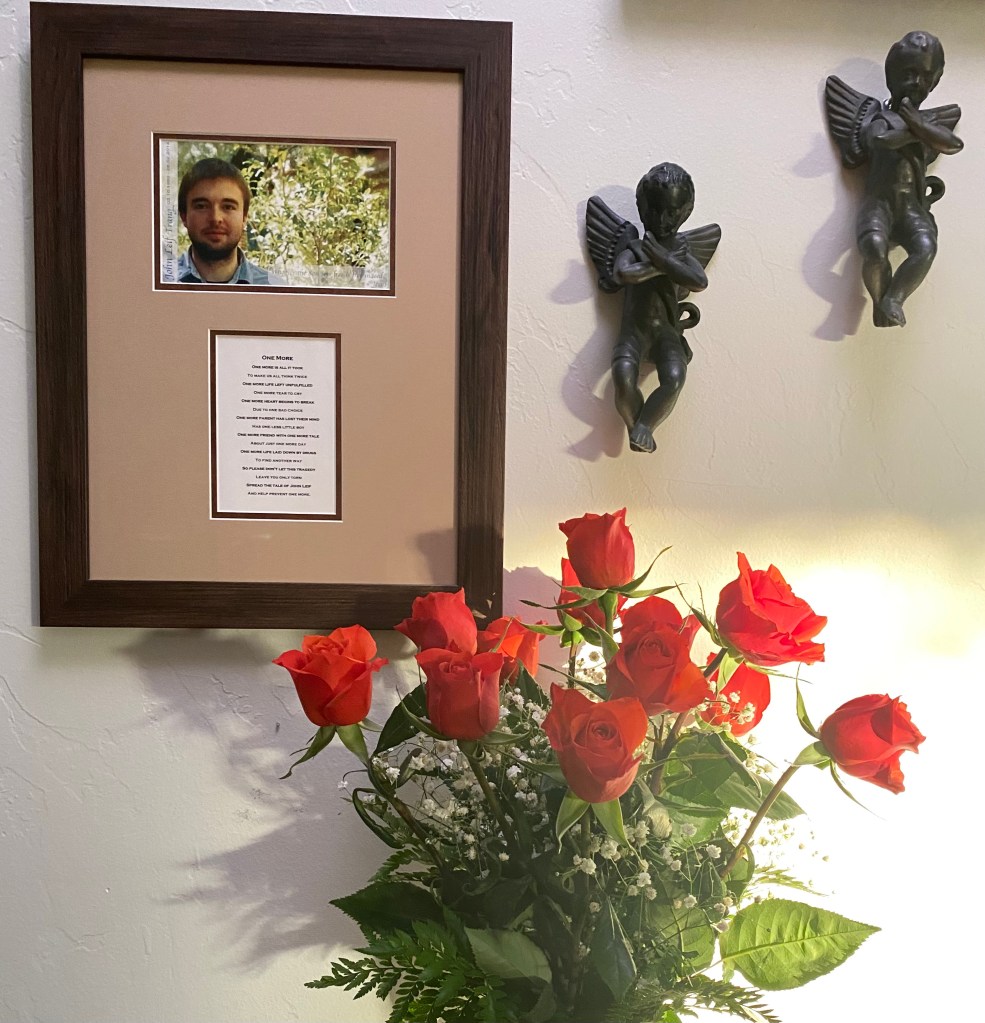
In sorting through bins of old notes and letters, I knew one bin in particular would bring up painful memories. It was our son, JL’s. It was difficult, as I had imagined. And one of the – no, THE – most painful reminder related to his death from an overdose. It was the fact that we played a role in his preventable death. And so does the American capitalistic healthcare debacle.

The previous New Year’s eve, he was with two of his friends who overdosed and one died. It shook him to his core and he came to us and asked for help. We went together to his addiction doctor and after separate sessions, we then talked together. His doctor said: “This young man cannot start using again because if he does, he will die.” This came from his years of experience working with young people who had been inadverntently caught up in the opioid epidemic of the 2000’s. He felt JL would need to be on Suboxone for a long period of time and maybe for the rest of his life.

JL was hesitant because he had been on Suboxone years ago when it was very expensive and being prescribed at 32 mg a day – a huge amount that left patients feeling like they were drugged. And the worse part was trying to get off it. Tapering off was extremely difficult and took forever – like extended withdrawals.

Aside from the physical hurdles was the cost. It was very expensive and, guess what? It was, of course, not covered by our private health insurance (which cost us almost $1000/mo as self-employed workers) because addiction was not considered a healthcare issue. As a matter of fact, if a person said they had an illegal drug addiction, they would likely be dropped from health insurance coverage and be reported to the police.

What is so painful for us now is that we made the decision that January to drop JL from our costly policy and to not cover his getting Suboxone due to the expenses (it would have been hundreds of dollars a month for the Rx). And in the mistaken belief that he just needed to try harder. We thought this would force him to stay clean – good old fashioned will power and hard work. He did go into a detox program for a month and then into a great sober living program where he did so well we thought we had turned the corner in his 10-year struggle with opioid addiction (which had started when he was 14 and experimenting with Oxy’s).

What we didn’t understand at that time was that opioid addiction is not overcome by willpower. The result was after 6 months, he finally had impacted wisdom teeth surgery and weeks of opioid pain meds – because we thought there was no other option and we thought he could handle it. Within 3 weeks he began using heroin again and after a few days, overdosed and died. August 2, 2014.

What our family did not have as an option was what was finally put into law in 2014: The Affordable Care Act (ACA). This law mandates that all new individual and small-group plans cover substance use disorder (SUD) treatment as one of the ten essential health benefits. It also prevents insurers from denying coverage or charging more because of a pre-existing condition, including addiction.

Sadly, there are politicians who want to revoke the ACA or limit much of its coverage. As the supposed leading nation in the developed world, we are the only one without universal health care for every person from cradle to grave. All of our peer nations have it. Some systems work better than others. Regardless, health care is not seen as an option or a privilege for those who can afford it. It is considered part of a healthy and egalitarian society.

But in order for our government to save money (since our elected officials don’t want to tax millionaires and billionaires equitably), there have been significant cuts to Medicaid and SNAP and changes to the Affordable Care Act (ACA), that are projected to increase costs and reduce coverage for millions. There are too many details to go into here, but the bottom line to me is this:

Why are we even debating how much coverage these programs and health insurance companies offer when we should be pressing for complete health care coverage for all Americans – especially for the least of us who can barely afford food?

If we consider ourselves a nation built on Judeo-Christian principles, how can we not believe that as a society it is our responsibility to care for the sick – as people of faith have always done?

 If how we viewed health care changed – as a basic need instead of a privilege –  then the necessary changes to our taxing structure and health insurance would change. Where there is a will, there is a way.

  1. Dr. Paul Farmer. https://www.pih.org/paul
International Overdose Awareness Day – August 31, 2023

(Translation into most languages at tab to the right)

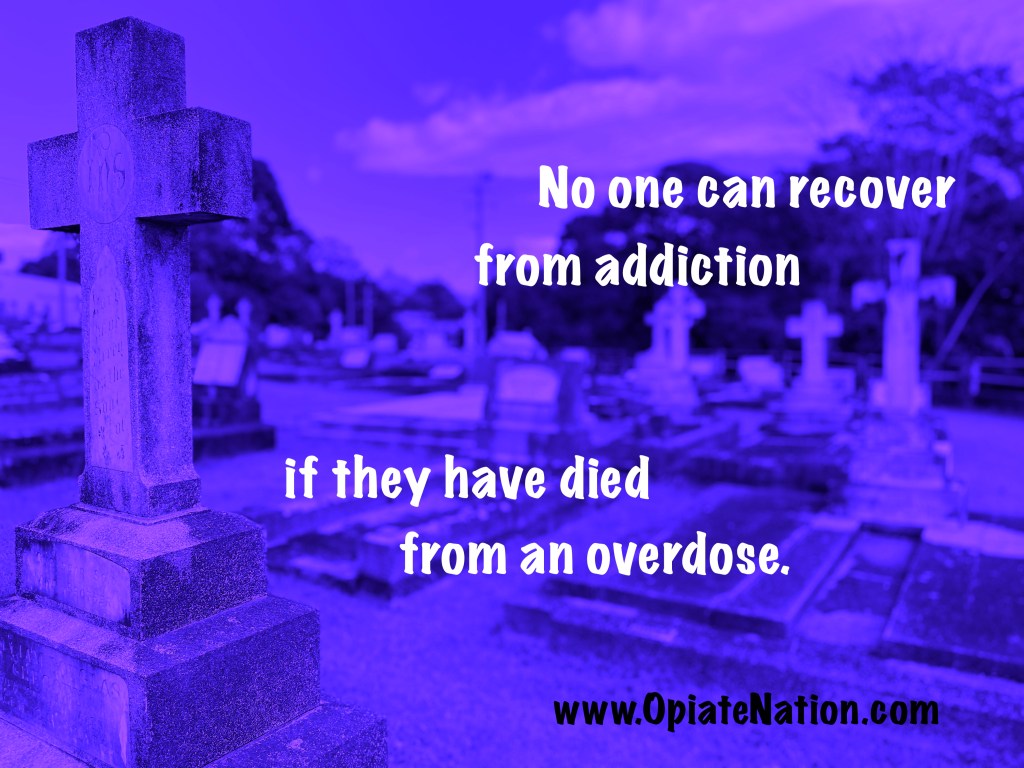
No one can recover from addiction if they have died from an overdose.

International Overdose Awareness Day (IOAD) is the world’s largest annual campaign to end overdose. It is a day to raise awareness about the risks of overdose, honor the individuals whose lives have been lost, and acknowledge the grief felt by families, friends, and the community

With synthetic drugs made from chemicals in China and added into illicit drugs around the world, the need has never been more urgent to alert us all to the risk of overdose facing millions of people worldwide. What can we do to help prevent further loss of lives for those already struggling with addiction?

Prof. Dan Lubman (Australia) shared a thought that stuck in my mind because it brought up memories of conversations I had with my son while he was addicted. Instead of asking, “Why are you taking drugs?” A more engaging question would be, “What put you in this vulnerable position?”

This question shows the understanding that addiction is not just a matter of choice or will-power but that it is a complex problem that will not be helped with simplistic answers such as “Just Say No.” When a person feels less stigma, that they are not being judged, and that there is hope for them, they are increasingly likely to consider treatment.

So, what does put people into the vulnerable position where drugs/alcohol are helping them cope with life? The 5 main factors that contribute to addiction are:
genetics, mental illness, home and social environment, stress, trauma/abuse.

We can’t do anything about our genes although if you know there is alcoholism/addiction in your family tree there is need for extra awareness and precautions. Mental illness once recognized and diagnosed properly, can be treated with therapy, education, and medication. Home and social environments, stress, and trauma and abuse are absolutely within parents, extended family, and society’s control. This is where raising our children as “a village” is so important, but it is in peril with our upwardly-mobile lifestyles of frequently moving house, not enough time together, and not engaging with our community. Educating our families and involvement in healthy and safe support networks such as service organizations and faith and school communities are a good place to start.

Once someone is using substances to self-medicate, what can we do? First, we need to look for, and reach out to, people struggling with addiction. There may be some in your circle of friends – even in affluent communities. If we truly understand that those individuals will shrivel in shame from stigma, we can start by changing how we speak about them and to them – we’ve changed our language for things a lot less deadly. Building trust over time is critical to someone feeling they can openly discuss their problems. We can find out more about what is being done in our community to support recovery efforts and get involved with clean needle exchanges, Narcan training and distribution, opioid substitution therapy, food distribution, safe injection and health facilities, etc.

In a report from Norway discussing housing for people who are addicted, Jon Storaas, manager of RIO, an organization in Norway working to help substance abusers, said, “We need to provide residences to ensure that addicts can live with neighbors who don’t share their drug problems…meet with them, talk about their problems…this kind of experience and openness can strip people of their ordinary prejudices. You need to create these encounters so people can see that drug addicts are human, too. Extreme examples of ordinary people, you might say. But ordinary nevertheless.” (1)

In 2018 Time reported that in the 1990’s, Portugal was in the grip of heroin addiction. An estimated 1% of the population—bankers, students, socialites—were hooked on heroin and Portugal had the highest rate of HIV infection in the entire EU. But in 2001, Portugal took a radical step. It became the first country in the world to decriminalize the consumption of all drugs… while drug dealers still go to prison.

The results? The drug-induced death rate has plummeted to five times lower than the EU average and stands at one-fiftieth of the United States’. Its rate of HIV infection has dropped dramatically. Drug use has declined overall among 15-24 yr-olds, those most at risk of initiating drug use. And, by eliminating the threat of criminal penalties—and along with it, a great deal of stigma—it has become easier for people to seek treatment.

“What America and other countries can learn from Portugal is to treat people with more dignity.” Portugal has showed that, without spending significant sums, governments can give drug users the tools to put their lives back on track. But to do so, it will have to stop treating them like criminals. (2)

Ultimately, what IOAD is about, what this blog is about, is Awareness: Becoming aware of a problem is the first step towards solving that problem. For this August 31st, I want to remember all those who have died from drug or alcohol overdose, my son included. Remember that they were precious individuals who were loved by their parents, family, friends and God. And although we live in a world where death is something that happens to every person who is born, premature and preventable death is a tragedy that each and every one of us should work diligently to prevent. Let’s find our arena and fight for the lives of those we love.

No one can recover from addiction if they have died from an overdose.

(1)

Addicts Want Sober Neighbours by Georg Mathisen
Saturday 11. January 2014, Norway
https://sciencenorway.no/addiction-drug-rehab-drug-use/addicts-want-sober-neighbours/1395274

(2)

WANT TO WIN THE WAR ON DRUGS? PORTUGAL MIGHT HAVE THE ANSWER By Naina Bajekal | Photos by Gonçalo Fonseca – August 1, 2018
https://time.com/longform/portugal-drug-use-decriminalization/

Death: Painful or Beautiful?

(Translation into most languages at tab to right)

My husband and I recently watched the streaming memorial service for his niece who died of cancer at 51 years old. Her mother, husband, children, sister and extended family all mourning the inescapable truth that there is now a gaping hole in their hearts and lives where once a beautiful woman had lived. She has been torn from their lives like when a thief grabs a bag from your hand and you struggle and try to hang on to it but, in the end, it’s gone. Weeping is the only thing that feels appropriate.

Although it’s been nine years since our son JL died from an accidental heroin overdose, the sense of him being torn away from us remains. Whether it was the death of our son, my siblings, our parents, or friends, the undeniable fact remains that death is painful. Almost always painful for the person dying, especially with a protracted illness or debilitating condition. But always painful for those left to live with the empty space where the person they knew and loved used to reside. We will never forget the Sherriff’s knock at our door that Saturday morning and hearing him say, “I’m sorry to have to tell you…”

We all naturally focus on our loved one’s beautiful life and the memories we have of them. This is only right and good. And there can be beauty in the way someone dies – this I have seen, and this has been recorded throughout history. Regardless of the kind of death – whether by illness, accident, torture, or plain old age – history tells us about those who have faced pain and death with grace. How? Because they saw beyond this world and had hope for life in the next.

What I bristle against is the thought that death is somehow beautiful. There is nothing beautiful about the tearing away and finality of death. Sentimental and romanticized thoughts about death have never helped me when I have had to stare into the cold face of a dead loved one. I have watched people facing the intense and unpredictable emotions after the death of a loved one as they try to make sense of something senseless. Those who have no hope of seeing their loved one again and who do not have the hope of existence in another realm, often try to transform death into something else – as if the only way to survive their pain is to imbue death itself with beauty. Or perhaps attempt to ignore it altogether.

For me, I believe that there is a good God who will one day put this world back to the way he created it. In my view, death and the tearing separation and sadness that accompany it are a temporary condition of living in a fallen world. We are told that death is an enemy and that one day it will be abolished. Yet, knowing I will see my son and siblings and parents and beloved friends again one day, where there will be no more sickness or pain or tears, doesn’t change the sorrow and grief that I feel now. I am a mortal living in a physical body in a physical world facing real physical triumphs and tragedies. And until this life is over and this world is made new, death will be painful. Our response to pain, suffering, and death is what concerns us now. And comforting those who mourn and offering compassion, regardless of the circumstances surrounding their death, is something tangible that does not minimize or romanticize the pain of death.

UPDATE:

This morning, August 2nd, I just happened to find and listen to an affirming podcast on Hope In The Face of Death by Dr. Timothy Keller. It is well worth the 40 minutes of your time. He says what I am trying to communicate more eloquently and thoroughly.

https://podcast.gospelinlife.com/e/hope-in-the-face-of-death/

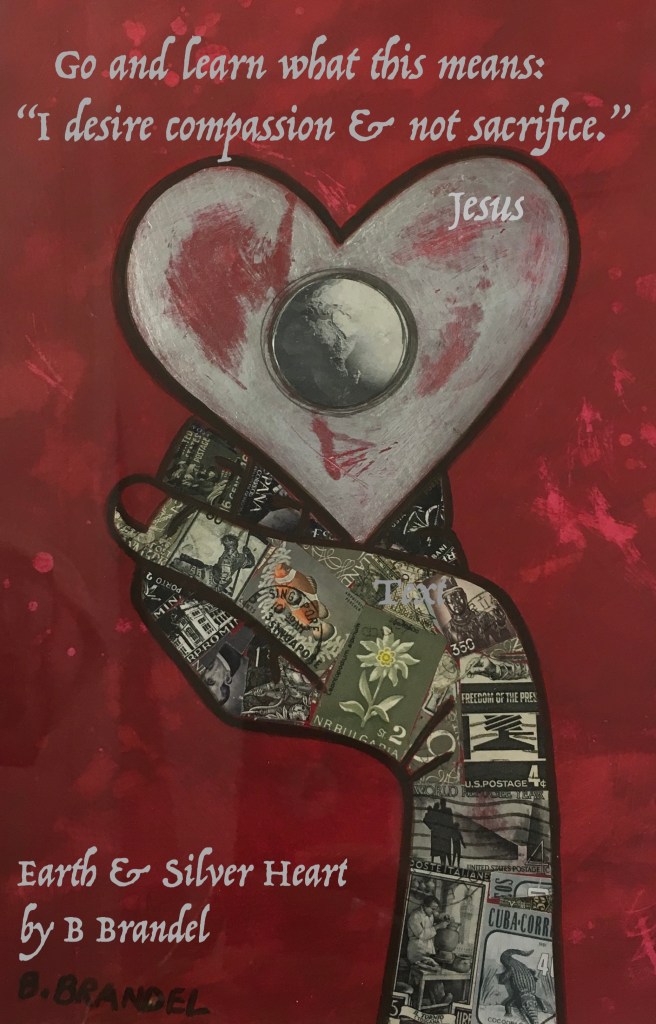
Learning Compassion

(Translation into most languages at tab to the right.)

The other day, I was thinking back over the tragic deaths of many of my family members. And I thought about how I felt towards people a few decades ago when they suffered various illnesses or struggled with disease or addiction. I didn’t have much compassion because I hadn’t ever experienced those types of painful and heart-wrenching needs myself or in anyone I loved.

But in 2000, when my younger brother was in intensive care for two months on a ventilator and in a coma, I began to learn about the sorrow and desperation that hover around situations like this – for the one who is ill and for those who love them and who cannot do a thing to help or change the outcome. His diagnosis of HIV/AIDS and slow but impending death broke my heart – maybe for the first time in my life.

Continue reading “Learning Compassion”

Hopes & Dreams

(Twenty-first in a series of topical blogs based on chapter by chapter excerpts from Opiate Nation. Translation into most languages is available to the right.)

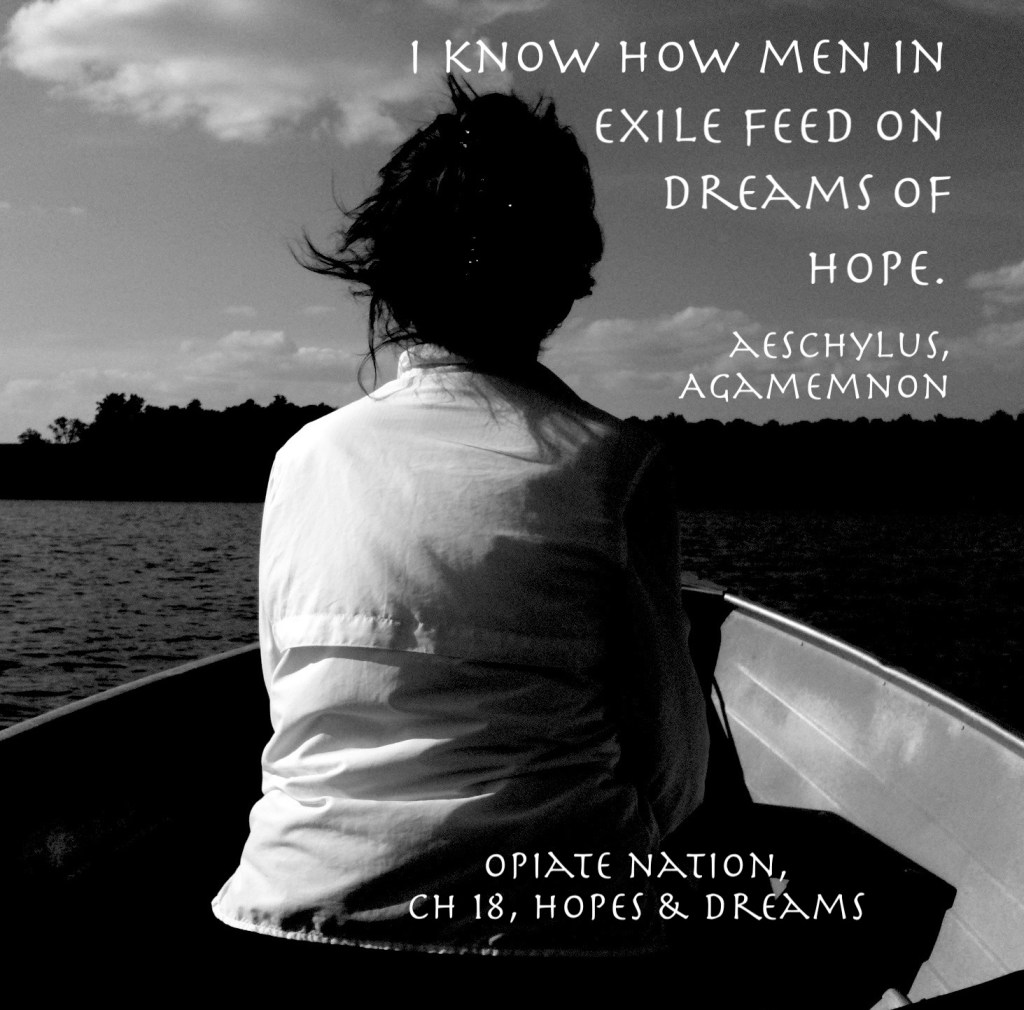
I know how men in exile feed on dreams of hope.

–Aeschylus, Agamemnon

After our son’s death from overdose, John and I truly felt like “men in exile,” forced into separation from our son, banished from each other’s’ lives. We are not just on different continents, but in different worlds, different dimensions. And hope? Any hope would have been just that—a dream, a mirage.

His untimely death took all hope of a sober and content son in this life away. Lost hope is what crushes parents when their child dies a needless death, an ignoble death to many. Had he fought in a war and been killed in action, to society it would have been a noble death. Most people who are separated from the life-and-death battle with addiction can’t see the struggle that this generation of young people are fighting on a moment-by-moment basis against an enemy that is in their brain, in their body—not outside it—one they can’t shoot and kill or put in prison. But we, as parents and friends, see it and wonder how much longer can they fight before they lose?

Continue reading “Hopes & Dreams”

Who Is My Neighbor?

(Sixteenth in a series of topical blogs based on chapter by chapter excerpts from Opiate Nation. Translation into most languages is available to the right.)

(I am re-posting this blog due to a glitch on some platforms in January)

In 2020, overdose deaths have increased worldwide, and by as much as 25% in the US. Deaths from acute intoxication have also increased dramatically. People are isolated and anxious, their treatment and recovery programs have been disrupted, and the illicit drug supply has become dangerous. Health officials believe that the majority of these deaths have occurred because hospitals are full and emergency services are overwhelmed with Covid-19 patients, thus removing the urgent, lifesaving care of overdose reversal that has been established in the past few years. Funding for all mental health services has also been diverted to pandemic care, which has complicated access to basic resources. Suicides are rising at an alarming rate.

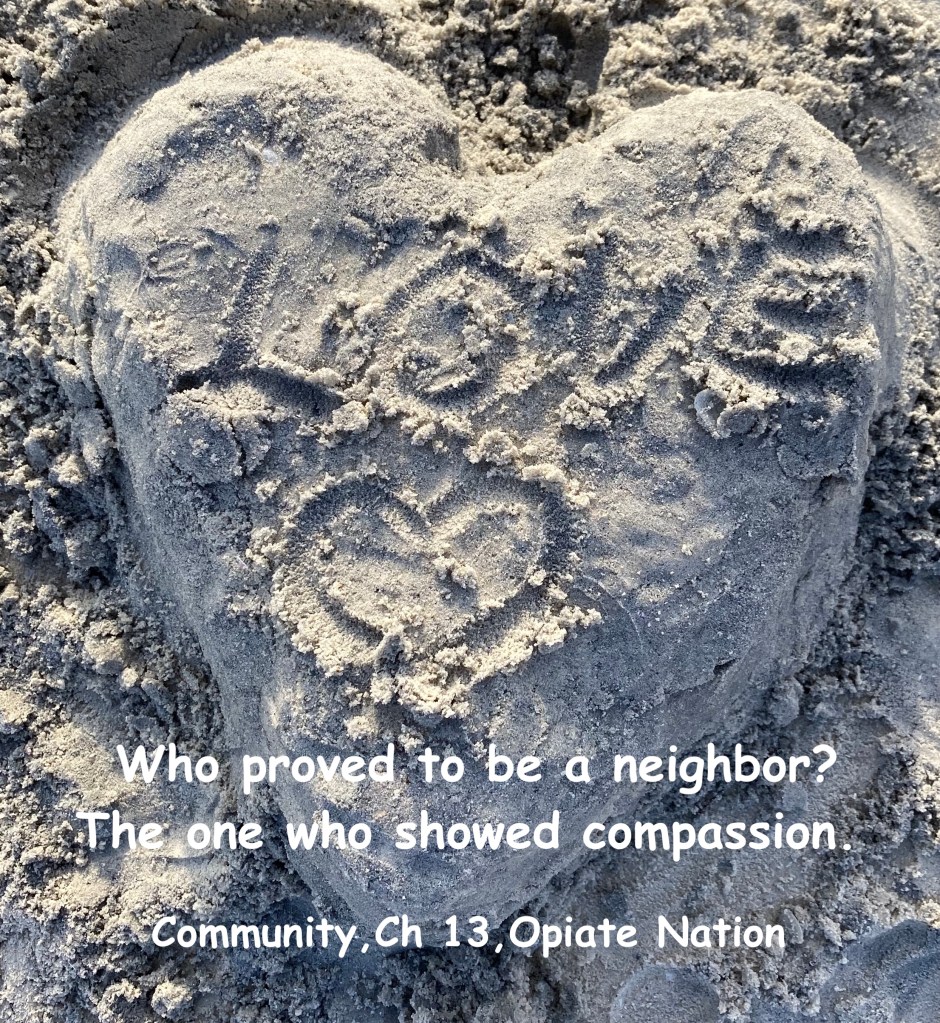
A conversation that I believe is relevant to the current times came to mind this week. A lawyer asked Jesus “Who is my neighbor?” as he was trying to wriggle out of the command to “Love your neighbor as yourself.” Jesus told him about a man beaten and robbed while on a journey. As the man lay almost dead on the road, he was passed by several religious leaders who refused to help him. Then a man, who was not the same nationality or religion, came and bandaged and rescued him and paid for his care until he was well. Jesus asked the lawyer, “Which of these men proved to be a neighbor?” The lawyer replied, “The one who showed compassion.” Jesus responded, “Go and do the same.” *

Continue reading “Who Is My Neighbor?”

Missing Community

(Fifteenth in a series of topical blogs based on chapter by chapter excerpts from Opiate Nation. Translation into most languages is available to the right.)

(This blog was posted on December 27, 2020, but due to technical glitches, it was not shared on some platforms – here it is again for those who missed it.)

For much of the world, Christmas and the holiday season this year has been nothing like our normal times of celebrating with family and friends. Togetherness is dangerous in most countries due to Covid-19. Yet, despite all the health and safety warnings, many have travelled and gathered with their loved ones. Why would people risk the well-being of themselves and their beloveds just to spend a few hours or days together?

Community. We all need it and ultimately cannot live without it. Communities may seem optional when all is well, but they become indispensable during hard times, whether personally or corporately. They can be small or large and most of us have several different sizes and types that we are part of: our family, school, sports, church, work, etc. What communities have in common are shared interests, beliefs, and needs, even while the individuals may have diverse characteristics. They are united and working towards a common goal and understand that they can achieve it because of, and with, the support and encouragement of others.

Continue reading “Missing Community”
Malcolm Guite

Blog for poet and singer-songwriter Malcolm Guite

The Gift of Need

How Need Can Strengthen Individuals and Communities

Memoirs and Musings

David Bradley Such

Dave Barnhart

Church planter, pastor, author, coach

RecoveryLife101

Just another WordPress.com site

Abbie In Wondrland

life...on Gods' terms.

Living In Graceland

"..learn the unforced rhythms of grace" matt 11:28

Janaburson's Blog

All about opioid addiction and its treatment with medication

Breaking In News Network

Seeking the truth and bypassing the MSM

Junkbox Diaries

Trauma, PTSD, Mental Health, Addiction, and Recovery

Ohio Society of Addiction Medicine

The Ohio Society of Addiction Medicine is a chapter of ASAM - A professional society actively seeking to define and expand the field of addiction medicine.

traceyh415

Addiction, Recovery, Loss, Grief

WordPress.com News

The latest news on WordPress.com and the WordPress community.