(Translation into most languages at tab to the right.)
It’s a new year around the world. Most developed and industrialized nations have similar hopes and concerns. Yet when one travels outside of the USA, we find some striking differences in how other leading countries in the world govern themselves. This is obvious in one particular area – when it comes to what substances are legal, allowed, or illegal.
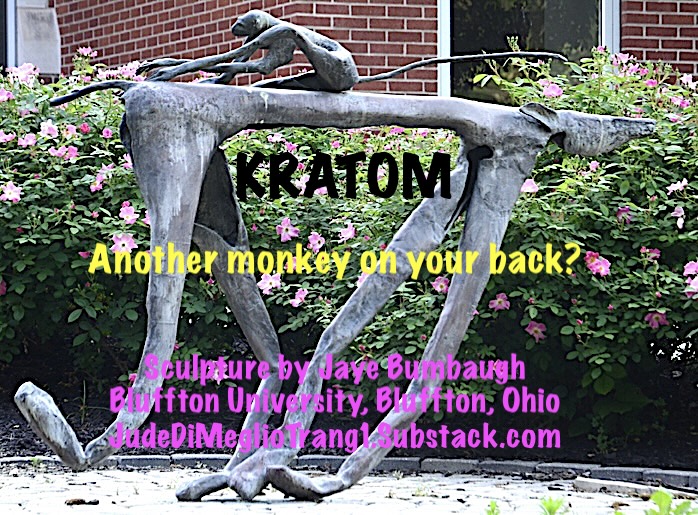
Kratom is a good example. It is a Thai traditional medicine. The plant is in the coffee family and when used traditionally – i.e., chewed or dried for tea – it can produce mild stimulant or sedative-like effects. (1) But in the last decade, people driven by greed and profit (it is a billion-dollar industry), have once again figured out how to chemically super-charge the derivatives in Kratom in order to create a market with a highly addictive substance in the guise of a “natural” product sold at convenience stores and gas stations in all but six states in the USA. These concentrated derivatives contain 7-hydroxymitragynine (7-OH), a powerful psychoactive compound that occurs naturally in tiny amounts in kratom. 7-OH affects the same receptors in the brain as morphine and heroin – thus, the same effects that people seek in those drugs. And in these new potencies, kratom has the same strong potential for addiction.
If access to health care is considered a human right, who is considered human enough to have that right?
I critique market-based medicine not because I haven’t seen its heights but because I’ve seen its depths.
~Paul Farmer, M.D., Ph.D. (1)
In sorting through bins of old notes and letters, I knew one bin in particular would bring up painful memories. It was our son, JL’s. It was difficult, as I had imagined. And one of the – no, THE – most painful reminder related to his death from an overdose. It was the fact that we played a role in his preventable death. And so does the American capitalistic healthcare debacle.
The previous New Year’s eve, he was with two of his friends who overdosed and one died. It shook him to his core and he came to us and asked for help. We went together to his addiction doctor and after separate sessions, we then talked together. His doctor said: “This young man cannot start using again because if he does, he will die.” This came from his years of experience working with young people who had been inadverntently caught up in the opioid epidemic of the 2000’s. He felt JL would need to be on Suboxone for a long period of time and maybe for the rest of his life.
JL was hesitant because he had been on Suboxone years ago when it was very expensive and being prescribed at 32 mg a day – a huge amount that left patients feeling like they were drugged. And the worse part was trying to get off it. Tapering off was extremely difficult and took forever – like extended withdrawals.
Aside from the physical hurdles was the cost. It was very expensive and, guess what? It was, of course, not covered by our private health insurance (which cost us almost $1000/mo as self-employed workers) because addiction was not considered a healthcare issue. As a matter of fact, if a person said they had an illegal drug addiction, they would likely be dropped from health insurance coverage and be reported to the police.
What is so painful for us now is that we made the decision that January to drop JL from our costly policy and to not cover his getting Suboxone due to the expenses (it would have been hundreds of dollars a month for the Rx). And in the mistaken belief that he just needed to try harder. We thought this would force him to stay clean – good old fashioned will power and hard work. He did go into a detox program for a month and then into a great sober living program where he did so well we thought we had turned the corner in his 10-year struggle with opioid addiction (which had started when he was 14 and experimenting with Oxy’s).
What we didn’t understand at that time was that opioid addiction is not overcome by willpower. The result was after 6 months, he finally had impacted wisdom teeth surgery and weeks of opioid pain meds – because we thought there was no other option and we thought he could handle it. Within 3 weeks he began using heroin again and after a few days, overdosed and died. August 2, 2014.
What our family did not have as an option was what was finally put into law in 2014: The Affordable Care Act (ACA). This law mandates that all new individual and small-group plans cover substance use disorder (SUD) treatment as one of the ten essential health benefits. It also prevents insurers from denying coverage or charging more because of a pre-existing condition, including addiction.
Sadly, there are politicians who want to revoke the ACA or limit much of its coverage. As the supposed leading nation in the developed world, we are the only one without universal health care for every person from cradle to grave. All of our peer nations have it. Some systems work better than others. Regardless, health care is not seen as an option or a privilege for those who can afford it. It is considered part of a healthy and egalitarian society.
But in order for our government to save money (since our elected officials don’t want to tax millionaires and billionaires equitably), there have been significant cuts to Medicaid and SNAP and changes to the Affordable Care Act (ACA), that are projected to increase costs and reduce coverage for millions. There are too many details to go into here, but the bottom line to me is this:
Why are we even debating how much coverage these programs and health insurance companies offer when we should be pressing for complete health care coverage for all Americans – especially for the least of us who can barely afford food?
If we consider ourselves a nation built on Judeo-Christian principles, how can we not believe that as a society it is our responsibility to care for the sick – as people of faith have always done?
If how we viewed health care changed – as a basic need instead of a privilege – then the necessary changes to our taxing structure and health insurance would change. Where there is a will, there is a way.
(Translation into most languages at tab to the right.)
Wastewater monitoring is an effective tool in detecting emerging opioid threats, predicting overdoses, and tailoring treatments, according to new research from Biobot Analytics, Mathematica, and the Washington/Baltimore High Intensity Drug Trafficking Area (W/B HIDTA) program. (1)
My husband and I live in Melbourne, Australia part of the year so we can be close to our daughter and family. We love Australians and their friendly and balanced way of approaching life and politics. It is a federal parliamentary democracy similar to England.
One area where they are ahead of the USA is in their approach to illicit drugs. As a nation with comprehensive health care for all from cradle to grave, they have a more communal attitude than our American individualistic posture. They view caring for each other as part of being a healthy and functioning society.
This necessarily affects how they treat people who use illicit drugs. They aggressively pursue educational and preventative measures while also working to keep those who use drugs as safe as possible until they are ready to seek recovery. While they don’t have a fluid border with a drug-producing country like we do with Mexico, they still have a problem with illicit drugs arriving from China and Asia.
One area that they use as a public health strategy is wastewater surveillance such as was used during the Covid-19 pandemic. Samples are collected from wastewater treatment plants, sewer systems, or targeted populations such as college dorms or prisons. When pooled together, they provide a community view of drugs circulating in the population. The samples are analyzed and the data is calculated through very sophisticated methods. The data then give objective, community-wide information on drug use trends. This is of great benefit in tracking changes and identifying new drug use and outbreaks and as an early warning tool. In the US, Biobot Analytics and Mathematica are leading the way with the “Drug-Surge” algorithm. (1) In a study involving five counties across four states, the algorithm correctly flagged between 71% and 100% of drug overdoses.
The US Drug Enforcement Agency (DEA) uses this wastewater testing to detect trends in illicit substances well in advance of reported overdoses. Xylazine was detectable a month before suspected overdoses from it were reported. Geographic and socioeconomic trends can be tracked also. If put to use, a national alert system would give early warning of at least a week in order to alert the public to a new or more potent drug threat.
In the US, the National Wastewater Surveillance System (NWSS) that is run by the CDC began in response to the Covid-19 pandemic. The CDC coordinates a national system primarily for infectious disease monitoring. While drug consumption can also be targeted, a national program does not yet exist. (3,4) Meanwhile, the National Institute on Drug Abuse (NIDA) is working with Biobot and Mathematica and has regional programs focusing on illicit drug use as a response to the opioid crisis.
With the CDC in the midst of worrisome changes, let’s be vocal proponents for increased national coordinated surveillance of illicit drugs in our wastewater and the use of that information to help prevent overdoses and deaths.
Wastewater Data Offers Powerful Tool in Confronting Opioid Epidemic
(Translation into most languages at tab to the right.)
Eleven years ago today my husband John and I woke up thinking it would be just another normal, hot August Saturday morning. But when the sheriff knocked on the door, the day – and our lives – were no longer normal. It is surprising how quickly our lives can go from normal to abnormal.
I was sorting through some files and found a drawing that our son, John Leif (JL) had done when he was around nine. It was obviously of Van Gogh’s “Starry Night” but it was also obviously done by a normal nine-year-old – not an artistic prodigy. And it made me think about how JL was just like any other normal kid growing up in middle-class America in the 1990’s-2000’s. He learned to ride a 2-wheel bike at around five, he played with Lego’s, he took swimming lessons, he loved monster trucks and lasagna and macaroni & cheese with ketchup. But something so abnormal for normal young teenagers ended up ruining some of what should have been the best years of his life and ultimately taking his life – and the lives of many of his friends and hundreds of thousand other normal kids.
What was abnormal was the criminal promotion and availability of highly addictive medicine to young kids by Purdue Pharmaceuticals and the Sackler family. Never before had American kids been exposed to legal drugs (that were promoted as “non-addictive”) that they experimented with as if they were simply trying a joint. And the results were the devastation of the Opioid Epidemic. Which is not over, especially for the once normal kids who are still alive and living with the cancer of addictions. We see many of them on the street corners and under bridges, living from hand to mouth, barely surviving, living anything but a normal life.
Sadly, seeing these shells of once normal kids has become a “new normal” as our society doesn’t seem to agree on how to best provide lasting recovery options with a continuum of care – or whether we even should. In my last Substack podcast and article with special guest Sam Quinones we discuss some ideas from his book “The Least of Us” for how to help get these once normal kids from normal families the help they need to try to return to something like a normal life. (1) Let’s not forget that those addicted people were once normal kids.
(Translation into most languages a tab to the right.)
Resting on your laurels is as dangerous as resting when you are walking in the snow. You doze off and die in your sleep.
― Ludwig Wittgenstein, Culture and Value
In ancient Greece, when athletes competed and won, they were given a laurel wreath as a crown to show off their success. The idiom “resting on one’s laurels” refers to being content with our past accomplishments and not working towards any further improvement. Not exerting any effort and becoming complacent.
I am concerned that we might become complacent after hearing the recent encouraging news from the CDC that drug-related deaths among young people under the age of 35 are finally declining. This after more than two decades of year after year grim news about young people dying from opioid overdoses. And especially from the last 10 years from fentanyl. “Provisional data from the CDC’s National Center for Health Statistics indicate there were an estimated 80,391 drug overdose deaths in the United States during 2024—a decrease of 26.9% from the 110,037 deaths estimated in 2023.Annual drug overdose deaths are projected to reach their lowest level since 2019.” (1)
NPR’s Morning Edition discussed the possible reasons for this decline. (2) In Gen Z young people, the fear of overdose has caused a change in what they experiment with as opposed to Millennials like my son. When he was at the age of experimentation in middle school, highly addictive prescription opioids were the drug of choice. Now, Gen Z experimentation is mostly with weed and psychoactive drugs which normally won’t cause death, although they can be laced with fentanyl which may lead to a new and more deadly addiction. But those age 35 and older who are still living desperate lives addicted to ever-stronger synthetic opioids and/or meth are still dying from overdoses.
And then there is Narcan, the opioid overdose reversal medication that is now widely available and is attributed with saving thousands of lives. Parents and advocates have been working for a decade to make it easy to obtain and administer. But it is not the silver bullet many people hail it as. For opioid addicted people, many have been brought back from overdose only to continue using drugs and thinking they have a quick solution to their long-term problem. But repeated overdoses are causing serious brain injuries from oxygen deprivation, as Sam Quinones writes (3).
Author of Dreamland: True Tales of America’s Opiate Epidemic (2015) and The Least of Us: True Tales of America and Hope in the Time of Fentanyl and Meth (2022), Sam says, “By leaving people on the street to suffer more overdoses, believing that with Narcan they’ll be revived and return to ‘normal,’ we are creating a population of people less able to make rational decisions, more given to erratic behavior, and more at the mercy of the street and its trauma…(Narcan) has great benefits, but also serious limits, particularly in a time of fentanyl and meth, and particularly when it is used virtually without any other tool.”
What’s the answer to this blight that was unleashed on our young people?
Sam continues, “After reporting on this for more than a decade, I believe the solution must start with getting people off those lethal streets and — crucially — into places they cannot leave when the drugs insist that they must. That way, their brains will have a fighting chance to heal. When that happens, readiness for treatment is far more likely to emerge than it will on those streets, where drugs and brain injury so easily conspire and lead to death.”
I encourage you to read Sam’s article for other great insights and pass it along to others. We need to be informed with a perspective gained from all the facts and then work for comprehensive reforms in policies and health care.
U.S. Overdose Deaths Decrease Almost 27% in 2024. May 14, 2025
Translation into most languages at tab to the right.
A generation is usually considered the years during which children are born, grow up, become adults, and begin to have children of their own. Approximately 20-30 years, averaging 25 years. Each generation becomes known by what characterizes the lives of those in it – what they do and how they impact society.
I’ve been thinking about my son, who would be 36 this year – if he had survived the opioid plague that began in the 1990’s with the prescribing of opioids for every ache and pain. What Purdue Pharma did is old news and well documented. But the effect of the immorality of the Sackler family set a course that destroyed the lives of an entire generation – the “Millennials” generation of my son and his contemporaries.
Far more than a million Americans have died due to a drug overdose in the past 25 years and the majority of those deaths are from opioids. (1) Initially it was prescription opioids, then heroin, then fentanyl. And now a daily variation of synthetic opioids mixed in with every variety of street drug. These are made from precursor chemicals from China and shipped around the globe where they are “formulated” into fake prescription pills or street drugs in jungle or backyard labs. Quality control is non-existent.
Beyond the deaths, there are millions of Americans who are suffering from life-threatening addiction. They will either be another statistic or live the life of an empty shell surviving from one fix to the next just to not feel “dope sick.” Many are homeless and jobless. All experience despair and hopelessness. It will take years to gain long-term recovery if they can access health care and programs.
There has been some good news. After the peak years of the Covid pandemic, when the rates of addiction and deaths from overdoses rose substantially, the statistics for 2024 finally show a decline in both. (2) It may be due to less anxiety and depression since the pandemic ended. It may also be due to more awareness of Medicated Assisted Treatment and better access to Harm Reduction tools such as pill testing and overdose reversal medication naloxone.
I think the best area for hope is the common knowledge the “Gen Z” kids are growing up with about the deadly dangers of drug addiction. That their parents are also more aware of the drug supply than parents of Millennials like me. The 2023 National Survey on Drug Use & Health found that the majority of adolescents (12-17 yrs. old) in the USA are not using substances, alcohol, tobacco products or vaping. (3) But ongoing effort is imperative. “Continued prevention programming, education, and public messaging focused on adolescents can delay or prevent substance use and avoid the negative impacts of substance use that have been widely documented.”
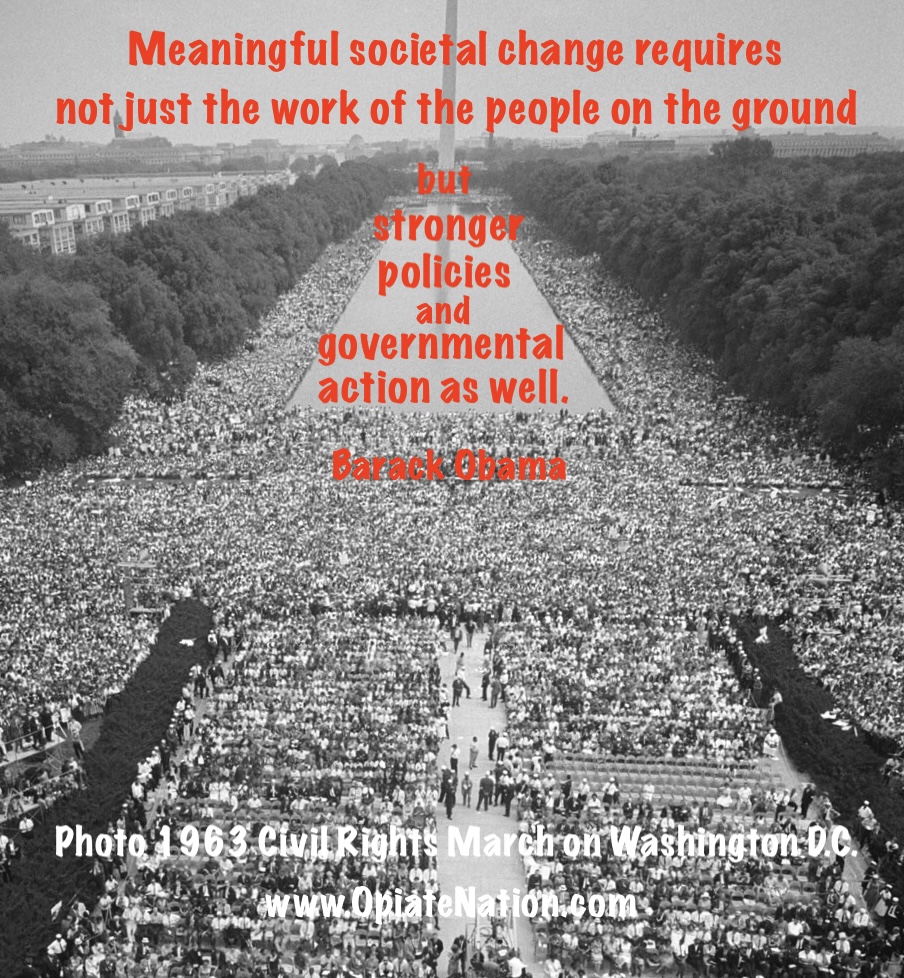
If we truly want to see future generations of children have the opportunity to grow up without the continual pull to use drugs, we need to keep our relationships with them open and healthy. Every year we can delay experimentation with addictive substances allows children’s brains to develop more fully in the area of judgment. We must all stay informed and aware and work in whatever arena we are able. As Barack Obama told Michelle when he was working for her as an intern, that he was in law school because grass roots organizing had shown him that meaningful societal change requires not just the work of the people on the ground, but stronger policies and governmental action as well. (4)
(Translation into most languages at tab to the right.)
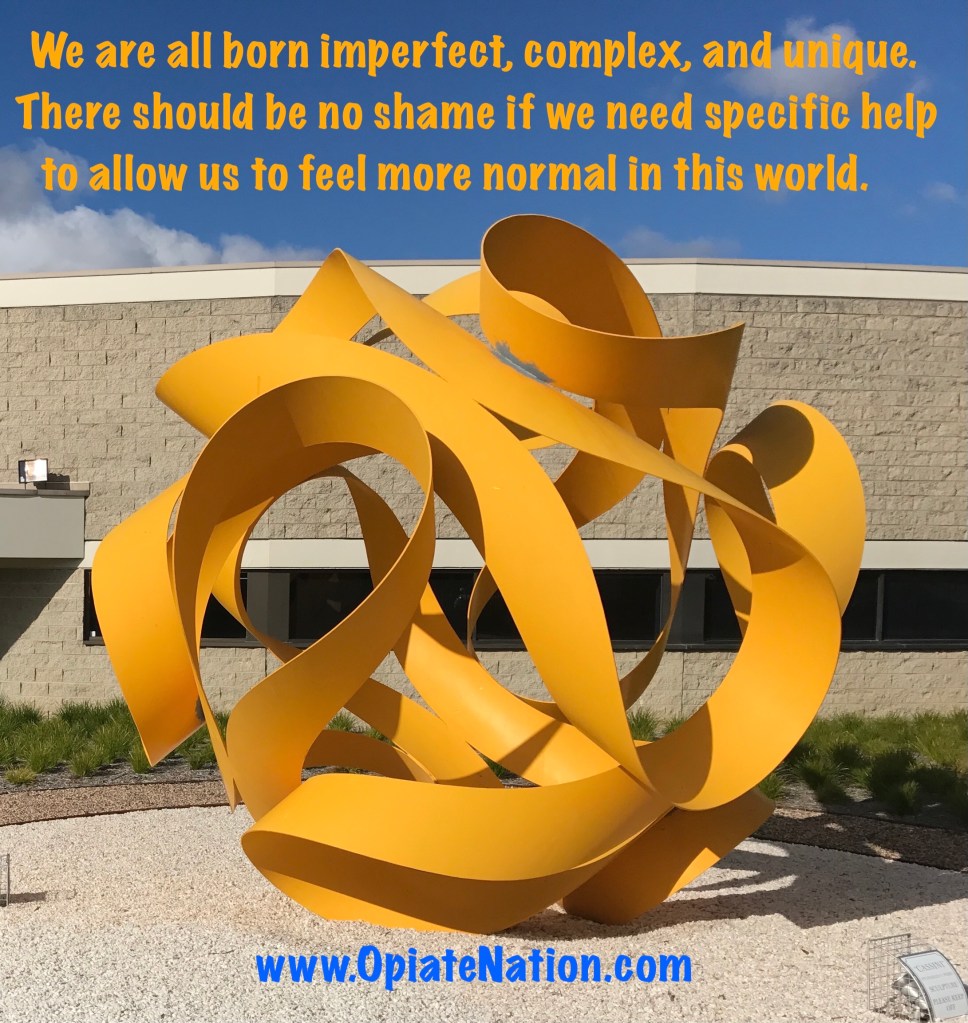
I think we would all agree that each and every one of us is born imperfect. There are so many complex and unique aspects to the human body which generations of genes have contributed. The things that make up our physical and mental attributes. One example is our face. It is estimated that only 2% of the world’s population has a truly symmetrical face. The right side usually appears larger than the left and eyes, nose and ears are not perfectly aligned. When you see a photo of a face with both sides exactly the same, its actually creepy. They lack character and look like AI.
Some of us are born with deficiencies that make life difficult and challenging, like being born blind, or deaf, or with a physical deformity. Because of amazing advances in science and medicine in the last century, many of these problems can be corrected. I had crowded teeth when I was young and am so thankful I was able to get braces and have a normal smile. We would not understand if someone had the opportunity to receive this kind of help and didn’t access it because they or others in their community thought they should just live as they are. We all want to feel comfortable and that we belong, are ‘normal’ in this world.
What about when someone is born with an internal deficiency such as a heart condition or kidney problem or blood disorder? We never think twice about having medical help or drugs and lifestyle changes to remediate the problem if it is possible. So why is there any discussion on whether someone who is born with an imbalance of normal brain chemicals or hormones should live in constant struggle and not access medication?
This thought came up as I considered the reasons behind why some people seem to need something like drugs to make them feel ‘normal’ to themselves and to the people around them. When everyone else seems to easily roll with the ups and downs of life while they get stuck on the downs. When how they think and process input and information is not the same as others. When their ability to be at peace or sleep is chronically unobtainable.
I’m not at all suggesting that individuals who seek drugs all have legitimate genetic or biochemical voids. As we know, many young people start drug use because of peer pressure and the environment that surrounds them. But underlying mental struggles or health conditions may be the determining factor that pushes them into, rather than away from, repeated use. I found it interesting that among my son’s high school and college friends, many tried all the drugs – uppers, downers, hallucinogenic – and some went on to addiction to uppers like cocaine and meth while others to downers like opioids and benzos and some walked away from all of them.
But once repeated and continual use happens, the chemicals and receptors in the brain are changed and more than ever, medication and therapy are going to be a big part of recovery from use and restoration of normalized brain signals. The need for medication may be short term or lifelong. Regardless, we all need to remember that just like shaming someone because they have a physical deformity is totally unacceptable, shaming someone who is struggling with mental health and/or addiction problems is also unacceptable.
This does not mean we enable destructive behavior or stop supporting someone to get professional medical and psychological help along with a supportive community. Never. If we want to see someone who is struggling become as healthy as possible, our love and support are crucial. And we know that in a country where public health care is a privilege rather than part of a foundation of society, finding the right care can be daunting. Let us be there to help our family, friends, and community receive the care they need by being encouraging and supportive.
Stigma of Addiction: The Effects, The Reasons, and How to Reduce Stigma
(Translation into most language at tab to the right.)
Approaching what would be my son’s 36th birthday, I thought about the last year of his life. I don’t think about it often because it is painful – so many wishes that things had gone differently for him.
One sadness is that when in active addiction, he was very alone. It’s not that JL didn’t have lots of friends – he did. He was friendly and likeable and the large group of friends who came to his memorial is a testament to that. But most of his high school and university-era friends were not involved in his life during the last few years of his life, and the last year in particular. After his accidental fall and relapse to opiates in 2008 and the next seven years in and out of recovery programs, his life became narrower and something he was ashamed of.
An event that stands out was during a time of heroin use that we were not fully aware of as he lived in our rental house, and we thought he was attending his classes at university. We received an urgent call from two of his friends telling us that they knew he was back to spending all his time with his friend that used heroin with him and they were not getting an answer to their calls. They were at his house and he wasn’t responding to their knocks on his door – did they have our permission to break his door down? Our frightened response was “Yes!” They found him deep in drugged sleep and alive but very startled when they burst in. They confronted him with what they knew and their concern about his drug use. He of course was defensive and pretended that nothing was wrong.
Gradually, these friends, along with others, were no longer part of his life. JL did make a good friend or two in his recovery programs, but he always kept his addicted friends and dealers separate from his sober friends who were mostly not aware of his use and relapses – he had a pretty good poker face. Most of them were shocked to hear of his overdose death because he had been in a sober living house for six months and doing well.
Many of the friends who had such good times together when JL was clean (although not necessarily sober, as they enjoyed drinking with him not realizing how that always led back to drugs for JL) felt guilt after his death. Guilt because he called several of them the week before his death when he had just relapsed. It seems he wanted a friend to talk to and perhaps perceive that he was struggling. And guilt because they wished they had stayed in touch with JL and not distanced themselves from him when he continued to struggle with addiction.
But there’s the rub: How do sober friends stay involved with a friend who is in active addiction? I think it is especially difficult for young people, who don’t know what they can do, who may be more concerned with their own lives and issues, and who are not yet mature. This is not to suggest that any human is ever totally selfless regardless of how old we are – I know myself too well to hold this delusion. But the passing of years does bring relational experience and can help us focus more on those around us.
Next month I will try to share some insights and ideas for teens and young adults for how to truly be a friend to someone who is struggling with addiction and sobriety. Just remember:
Don’t ever give up on your friends or family who are trapped in addiction. They need good friends more than ever. King Solomon gave this wise insight 3,000 years ago: Two are better than one, because they have a good return for their labor: If either of them falls down, one can help the other up. But pity anyone who falls and has no one to help them up. (1)
Many people will walk in and out of your life,
but only true friends will leave footprints in your heart.
Statue by Gustav Vigeland, Vigeland Park in Oslo, Norway.
(Translation into most languages at tab to the right.)
Understanding the teenage brain was the topic of my last post: Is Teenage Turmoil Inevitable? It is important to digest before parents consider a recovery program for their teen. Knowing that adolescents and teens feel and process information differently than adults is why they require a different approach to addiction and recovery.
Regardless of the type of program considered, the one absolute necessity is that the family be involved in the process – because family dynamics are an integral part of a young persons’ sober and addicted life. And the best place to start this discussion is to focus on the CRAFT model.
The American Psychological Association has an informative article, below. (1) In it they point to studies discussing how programs like Al-Anon for family members with an addicted loved one “may improve the well-being of friends and family members, they are not effective in getting the addicted person into treatment.”
Intervention programs, designed to help “family and friends work with a counselor to confront a substance user and urge him or her to get treatment” is only used by 30 percent of families due to discomfort with confrontation. And treatment is only the first step on the long road to recovery. After that, the family still needs other tools.
CRAFT (Community Reinforcement Approach to Family Training) originated at the University of New Mexico and was developed by Robert Meyers, Ph.D. and colleagues. Research on CRAFT shows that approximately 70% of families who receive CRAFT are able to help their loved ones start treatment within a year (Miller, Meyers, & Tonigan, 1999). CRAFT also helps family members improve their own lives, whether their loved one ends up seeking treatment or not.
CRAFT teaches real life skills to use connection to encourage positive change, because CRAFT is rooted in the belief that connection is the opposite of addiction. It teaches positive communications skills to foster the connection that is desired by the person who is struggling with addiction and their loved ones.
Helping Families Help is a great non-profit website resource for CRAFT information. (2)
SMART Recovery was established in 1994, here in the USA, to meet the increasing demand of those seeking a secular and evidence-informed alternative to the widespread 12-Step addiction recovery program. It is intended for adults over 18 and those seeking flexibility and independence, while AA offers structure and strong community support. It may be best for young adults in their 20’s, as most 18- to 25-year-olds who struggle with addiction are not yet “adult” in their thinking and coping skills. Smart Recovery is now in 23 countries. See info below. (3)
Basically, the steps in helping your teen who is addicted are this:
Getting them into treatment
Choose a program – inpatient or outpatient
Detox
Individual Therapy
Family Therapy
Contingency Management
Getting your loved one into treatment: sign up for CRAFT 10-week email training course through Helping Families Help or investigate other options.
Choose a program: based on the drugs involved and length of time used.
Detox: Most drugs will still be in your child’s system. Detox flushes them out. Detoxing under the care of professionals ensures that it’s done safely out of reach from harmful substances. Your teen will likely experience withdrawal symptoms as well.
Individual Therapy: To understand a teen’s problem and to address it comprehensively. The first course of action in rehab is one or more types of therapy, both one-on-one and group settings. Motivational Interviewing uses a person-centered, non-confrontational style where the teen is encouraged to examine the pros and cons of their use and to create goals to help them achieve a healthier lifestyle. This helps them gradually realize the consequences of their actions. Cognitive Behavioral Therapy (CBT) is goal-oriented therapy that helps teens express and understand their feelings and cope with difficult emotions. They learn to replace negative behaviors (such as using substances) with positive ones (like sports or art or service endeavors).
Family Therapy: Based on the premise that family carries the most profound and long-lasting influence on development, and in modeling both good and bad behaviors and beliefs. These sessions bring together those closest to an addicted teen and address issues such as poor family communication, cohesiveness and problem solving. Again, CRAFT is crucial here.
Contingency Management: This form of therapy tracks each patient’s progress in rehab, including each day they succeed in staying sober, and rewards them with a prize. The more teens feel satisfied with their rewards, not only will they continue striving to stay sober, but their brain will relearn how to appreciate rewards that aren’t drugs or alcohol. Following rehab, a teenager is thrust back into the world. Temptations lie around every corner and their problem stays with them for years after treatment. After you’ve helped your child kick their habit you must help prepare them with a plan to prevent relapse – or for all of you to know what to do when relapse occurs, which is likely especially for certain drugs like opioids. MAT (Medication Assisted Treatment) is vital for opioid addiction and the long-lasting changes in the brain that will continue to undermine all the best plans and determination to stay clean and sober. Our son and many of the hundreds of thousands of young people who died from opioids are the sad evidence of this truth.
I do not offer these steps and advice as a medical or addiction professional. I can only offer my opinion based on our personal experience and the stories from others, along with the research I’ve done over the past 20 years since my husband and I first discovered that our 15 year old son was using heroin. What we wish we had known I share with you in the hope that your story will end differently than ours.
1. An underappreciated intervention
The CRAFT model is giving family and friends the skills they need to help get loved one’s treatment for substance use problems By Katherine Lee – December 2017, Vol 48, No. 11
(Translation into most languages at tab to the right.)
The holidays are upon us. Some believe that it’s our perspective that makes all the difference in how we feel about them. Looking ahead may fill a person with joyful anticipation of what’s planned, dogged determination to make it through, or a feeling of dread and desire to escape. But are these situations only just a matter of one’s perspective or one’s prospects? Is much of how we feel based on what is happening in our life: are we living with abundance, security, good health, and healthy relationships? Unsatisfying work, too much debt, illness, and strained relationships? Or is our income irregular or non-existent, our housing insecure or non-existent, and our relationships like vampires or non-existent?
The Ohio Society of Addiction Medicine is a chapter of ASAM - A professional society actively seeking to define and expand the field of addiction medicine.





 Opiate Nation