Isolation Loneliness

It has been said thatthe opposite of addiction is not sobriety, it is connection – to others, to a community.The Coronavirus pandemic has brought disconnection and magnified loneliness and stress for people the world over due to social isolation, economic instability, reduced access to spiritual communities, and overall national anxiety and fear of the future. “We certainly have data from years of multiple studies showing that social isolation and social stress plays a significant role in relapse…relapsing to drug use can play a role in overdose.” Dr. Wilson Compton, deputy director NIDA.

The acronym HALT: Hungry, Angry, Lonely, Tired, is used in Alcoholics Anonymous and most recovery programs. It is a simple reminder that when our basic human needs are not met, one is susceptible to toxic thoughts and self-destructive behaviors including relapse and suicide.

Regardless of where you live, there have likely been restrictions imposed to limit the number of people who can gather together – from dozens in some countries to only the members of your immediate household in others – in order to slow down the high-speed train that is Covid-19. For many of us, we have been able to maintain our emotional equilibrium because we know this is for a limited time and we can look forward with hope to the future.

But what about those vulnerable members of society who already struggle on a daily basis with insecure housing and food supplies and to maintain their mental health, sobriety, or recovery? In the midst of one of the most isolating crises the modern world has known, it is no surprise then that cities across America, and around the world, are reporting dramatic increases in drug overdoses, alcohol relapses, and suicides.

In-person community meetings are at the foundation of recovery programs. And no wonder. It is in community where individuals become part of something greater than themselves. And I believe it is in the breakdown of communal life in individualistic American ideology that has, to a great degree, contributed to the anxiety, insecurity, and depression that so characterizes our national psyche and has led to the pursuit of finding relief in so many unhealthy ways.

A friend of our son who is an alcoholic who has been working his recovery for the past 8 years, put it this way: 

“Self-isolation breeds relapse for people in recovery. With quarantine, people are losing the accountability they have relied on from in-person meetings and it’s a lot easier for people to further isolate and close off their emotions. Attending virtual meetings keeps me grounded and gets the message across as much as regular in-person meetings but lacks the fellowship aspect. This will no doubt expose many in recovery to loneliness.”

Even though increasing numbers of people around the world are vaccinated, it will not stop some of the isolation and loneliness. Is there anything those of us who are not isolated emotionally can do to help? The one thing my husband and I have made as a priority in our weekly schedule is to check in with friends around the world via texts, emails, letters, phone or video calls – including our young friends who are in recovery and elderly friends who just need to know they are not forgotten. With our social networks and finances, we can support organizations that are working the front lines to serve the addiction/mental health population. We can make or purchase masks, buy food and basic supplies, to give to those in need and support recovery programs in our area.

Recovery Communities

(Translation into most languages at tab to the right)

What is a recovery community and what should it look like?

The answer to these questions is not simple – real solutions to real problems rarely are.

To recover means to return to a normal state of health or strength. When someone is injured in an accident or undergone surgery, they usually recover in hospital for a period of time where they can receive the special medical care that is required to keep them alive. If the injury or illness was severe or life-threatening, after hospitalization they would be moved to a rehabilitation facility where they receive appropriate and specialized care and therapy as they convalesce – they wouldn’t just go home. Convalescing is the recovery process of returning to health.

Recovery can also refer to the process of regaining possession or control of something lost or stolen. In a real sense, those who have become addicted to a substance or damaging behavior have had something stolen. That’s not a cop-out if we consider what happens to a person’s brain when addiction takes over. The chemical changes that take place in the brain steadily decrease the individual’s original ability to think clearly and make logical choices. Especially with substances, I consider that capacity to have been stolen.

Continue reading “Recovery Communities”

Reaction Recovery

Translation into most languages at tab to the right.

A few weeks ago, John and I were interviewed by Jeff Simone for his Surviving the Opioid Epidemic podcast (see YouTube link). We had a really great conversation about our family living with a teenage son with opioid addiction and how his death from overdose affected us and changed our lives. Jeff serves the addiction community with a coaching service called Reaction Recovery.

https://reactionrecovery.com

Here are some insights into his recovery approach.

Reaction Recovery is a private coaching service designed to help individuals thrive in their life of recovery from substance use disorders. It is a one to one, intensive behavioral approach to help individuals identify areas to make focused and intentional lifestyle modifications. Dr. Simone has been formally trained in clinical pharmaceutical and dietary supplementation advisory and management. He has earned degrees in nutrition, physiology, is a certified life coach, and has personally worked with over 200 people recovering from substance addictions.

Why ‘Reaction’ Recovery? Who is reacting and to what?

Reaction Recovery was started as a “reaction” to the current treatment approach to addiction. The medical community is doing a good job offering short-term acute care crisis management for addictive disorders, but are doing poorly offering long-term treatment for those who have become abstinent but not yet stabilized. This describes our son’s – and most others we know – situation perfectly. Addiction needs long-term care and support.

The basic coaching approach addresses the physiology of the addiction, post-acute withdrawal syndromes, nutritional interventions, dietary supplementation, and how this all can safely integrate with other pharmaceutical treatment strategies that might already be on board.

Based on what Dr. Simone has called the ’12 Daily Rules for Recovery,’ their coaching techniques will systematically and methodically help the individual identify specific areas to be adjusted and then develop individually tailored strategies to affect real change.

The 12 Rules focus on building up a support community – first and foremost – then developing a healthy and consistent morning routine, understanding the importance of full-day nutrition, ensuring the body is receiving all nutrients necessary to support a strong and optimal brain and body, establishing a safe and appropriate dietary supplement regimen, expanding the mind with helpful books and information, developing a realistic exercise routine, carefully auditing the external distractions in our lives, constructing a regular nighttime routine, and more.

When these considerations get repeated across thousands of iterations, and with a little guidance and accountability, they become a foundation upon which the rest of the individual’s recovery will be built. Eventually – through ruthless repetition – new neural pathways begin to form until eventually this life of abstinence doesn’t feel so difficult and a sustainable, meaningful recovery is able to take shape.

Jeff’s approach of community as essential and creating new, healthy habits to replace old, destructive ones has been the topic of several of my blogs (see below). Whatever habits we create will become automatic and will serve us and our life-goals well as we go through each day.  

2021 Aug 15, Connection is Crucial

2021 March 28, The Freedom of Habits

2021 Jan 03, Who is My Neighbor?

2020 Dec 27, Missing Community

2020 Aug 15 & 22, Loneliness

Connection is Crucial

(Translation into most languages is available to the right.)

During a recent podcast on Straight from the Source (1), David Higham (founder of The Well, a peer-run alcohol and other drug service in the northwest of England) spoke about his life.

For more than 20 years, David was a habitual heroin user more accustomed to life in prison than the outside world. He joined a 12-step program during his final stint. Upon release, he found that sustained well-being and recovery was rare and he knew he had to help change that. What interested me most from his story was this insight:

“Drug treatment is trying to find a solution for my solution…But what’s the solution for my problem?”

Continue reading “Connection is Crucial”

Looking Back to See the Future

(Translation into most languages is available to the right.)

When I am doing research for an upcoming blog post, I can get lost. There is so much information now on drug addiction and the opioid epidemic that I suddenly look at the clock and realize I’ve been wandering virtually around the world and becoming more discouraged with each new article or report: Scotland has more drug overdose deaths per capita than any European country (1); Fentanyl is  flooding California with overdose deaths skyrocketing (2); the use of over-the-counter codeine (an opiate) cough medicine among eighth graders in the US has increased (3); and, Australia now has the eighth-highest per-capita opioid consumption in the world (4).

Continue reading “Looking Back to See the Future”

What Would They Say?

(Short topical blog based on Opiate Nation – translation into most languages in tab on right.)

August 2nd is the seventh anniversary of our son’s death. JL died of a heroin overdose in the early morning hours of that Saturday in 2014. He was 25 years old.

In 2020 alone, 93,000 people died of drug overdoses in the USA – hundreds of thousands more worldwide. Millions in the past few decades. These were beloved daughters, sons, partners, parents, friends, relatives. I think I can confidently say they did not want to be addicted and if they could have turned back the clock to the time before they began using drugs, they would have.

Continue reading “What Would They Say?”

Ghost Stories

(Short topical blogs based on Opiate Nation – translation into most languages in tab on right.)

When we hear the phrase “ghost stories” most of us think of scary and spooky stories shared around a campfire with the intended, and predicable, consequence of keeping us awake at night.

But when H Lee (aka Harris Insler) decided to call his new podcast series “These Ghosts Must Be Heard”, it wasn’t because he would be interviewing people with paranormal experiences. And although the stories his guests share aren’t scary in the ghoulish sense, they have kept their narrators awake at night for days, weeks, and months on end. John and I included. (To hear our interview with Harris, see links below for Podbean, Amazon, Spotify.)

https://theseghostsmustbeheard.podbean.com/

https://music.amazon.com/podcasts/3392919b-b8bc-46b4-a486-5e34b7d8dd1d/episodes/580578a3-691f-418a-a179-8bc5f72dd138/these-ghosts-must-be-heard-episode-2-jl

These are real-life experiences and these “ghosts” are the spirits of our deceased loved ones: children, friends, partners who have succumbed to premature and preventable deaths from opioid overdoses.

Continue reading “Ghost Stories”

Regrets: Endless Stairways

(Twenty-ninth in a series of topical blogs based on chapter by chapter excerpts from Opiate Nation. Translation into most languages is available to the right.)

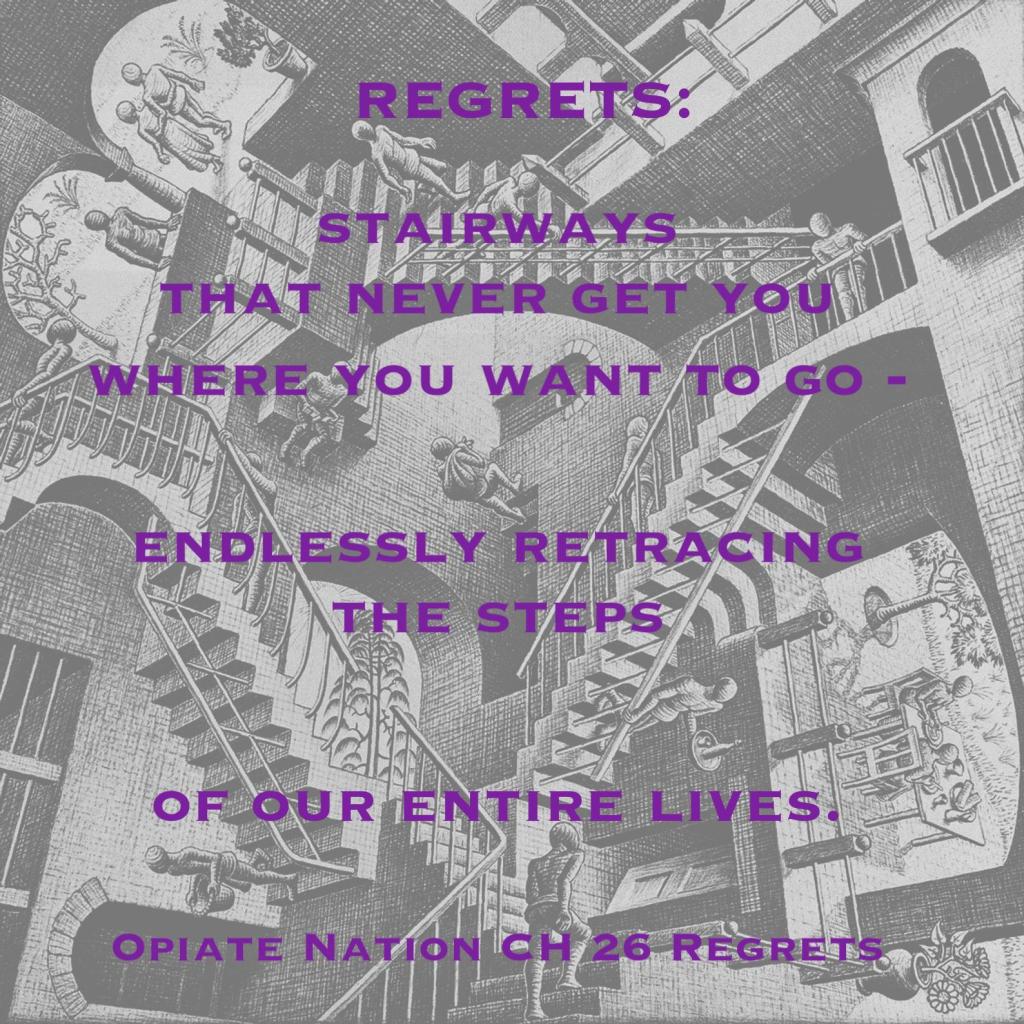
Our family loves the art of Dutch mathematician and artist M. C. Escher: the buildings that open into themselves, the school of fish that become a flock of birds, the circuitous stairways that go up and down throughout multiple buildings without an end point. Yes, stairways that never get you where you want to go, but keep you endlessly retracing your steps. They are no longer interesting art to wonder at. They now mirror how John and I have felt many times since August 2nd—regrets—retracing the steps of our entire lives.

Continue reading “Regrets: Endless Stairways”

The Paradox of Memories

(Twenty-eighth in a series of topical blogs based on chapter by chapter excerpts from Opiate Nation. Translation into most languages is available to the right.)

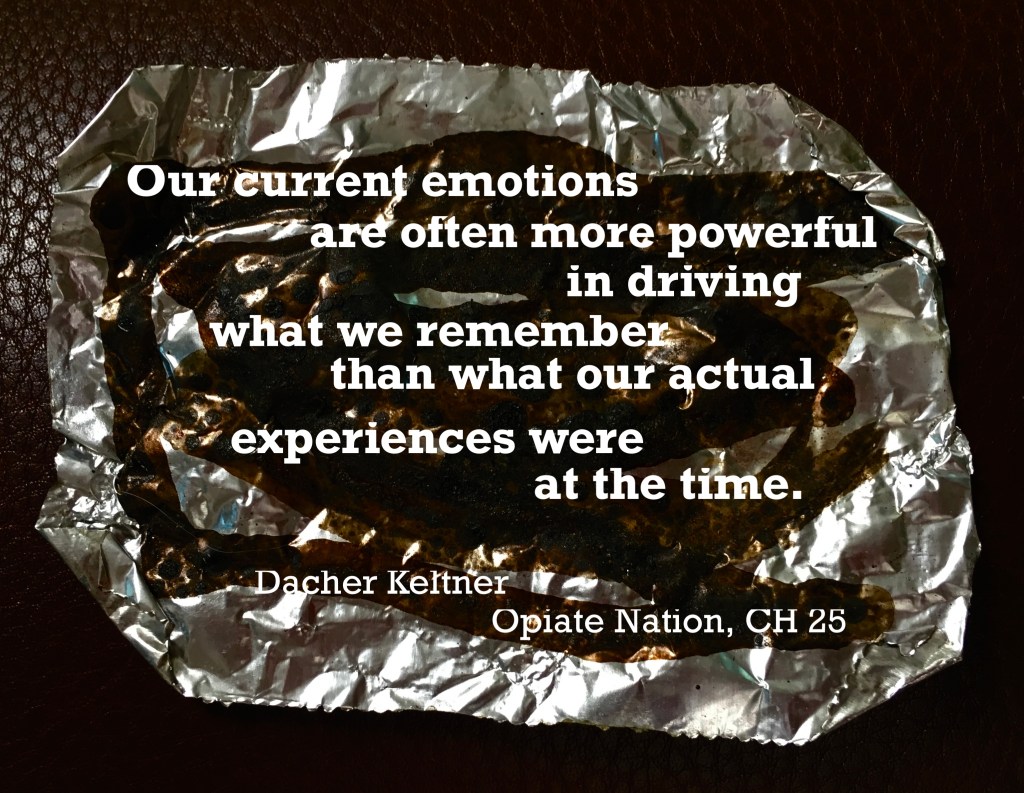
Memories are strange things. How much control do we have over them? What triggers bring up which memories? How do triggers differ with each individual personality? Does grief affect memory? I know it does mine because I continue to experience new associations and memories being formed from what were once familiar items with no particular memory attached before—which now, after my son’s battle with addiction and death, have a specific memory related to him.

Like aluminum foil.

Continue reading “The Paradox of Memories”

Time & Eternity

(Twenty-seventh in a series of topical blogs based on chapter by chapter excerpts from Opiate Nation. Translation into most languages is available to the right.)

Death naturally brings up thoughts and questions about existence beyond this life, this earthly existence. I love how John Milton said it: “Death is the golden key that opens the palace of eternity.” For us, after a death so intimate as our son’s, one can imagine how often we thought about it, particularly in the subsequent months.

One thought that continues to captivate John and I is the possibility that others can look into our time while they are in eternity, in heaven, like someone looking into a cell under a microscope at us, the human specimens. Or are they frozen in time, like being in a time capsule?

Six weeks after JL’s death, my journal entry highlights these questionings:

JL,

Mom here. I’ve been wondering, and wishing I knew the answer for sure, if you and others who are gone can hear us and are conscious of what is happening on earth and in our lives. Can you hear when Dad and I talk to you? If you can, I think you would be crying for us many times as you see and hear our pain. I hope we are not causing you any more pain…

Dad and I went out to dinner and talked about this. What he brought up was that eternity, by definition, is the absence of time as we know it here on earth. So, if those of you who are dead are also in “no time,” even though present with the Lord, you may not experience any consciousness between death and the final resurrection we believe in—it may just be a flash. Hmmm…I don’t like that concept. I want to know you hear me and my apologies and love and thoughts towards you.

Singer-songwriter Phil Keaggy’s song “Time” from his album Love Broke Thru expresses the limits in which Father Time exists:

My friend, David Such (a mechanical engineer, writer, artist) wrote a blog about the Elasticity of Time. Here is a relevant thought from that blog:

Most of us human beings are locked into “earth time” so it can sometimes be difficult to understand, but Einstein taught that “time” is elastic depending on one’s position, perspective, and velocity. I am merely a mechanical engineer and do not fully understand all the physics or all the mathematics, but I do understand the concept as follows. As we increase our velocity, we reduce the difference between our own speed and the speed of light. This is insignificant unless our velocity is extremely high. As we approach the speed of light, “time” slows to a standstill (and apparently, even “matter” takes on different shapes and densities).

Genesis One and the Elasticity of Time

In 1676, the Danish astronomer, Olaus Roemer, first successfully measured the speed of light: Lightspeed. For those of us who believe in God and that his intelligence designed the Universe, his words “Let there be light” have much significance. Eternity must at least be full of light, beyond time, beyond darkness and death. In death do we instantaneously exist in lightspeed and the absence of time?

If so, is JL zipping and zooming around the universe at lightspeed now, with all the other souls who have left this earthly constraint of time? I have no clue, but I smile at the thought.

Malcolm Guite

Blog for poet and singer-songwriter Malcolm Guite

The Gift of Need

How Need Can Strengthen Individuals and Communities

Memoirs and Musings

David Bradley Such

Dave Barnhart

Church planter, pastor, author, coach

RecoveryLife101

Just another WordPress.com site

Abbie In Wondrland

life...on Gods' terms.

Living In Graceland

"..learn the unforced rhythms of grace" matt 11:28

Janaburson's Blog

All about opioid addiction and its treatment with medication

Breaking In News Network

Seeking the truth and bypassing the MSM

Junkbox Diaries

Trauma, PTSD, Mental Health, Addiction, and Recovery

Ohio Society of Addiction Medicine

The Ohio Society of Addiction Medicine is a chapter of ASAM - A professional society actively seeking to define and expand the field of addiction medicine.

traceyh415

Addiction, Recovery, Loss, Grief

WordPress.com News

The latest news on WordPress.com and the WordPress community.