Making Use of Wastewater Surveillance

(Translation into most languages at tab to the right.)

Wastewater monitoring is an effective tool in detecting emerging opioid threats, predicting overdoses, and tailoring treatments, according to new research from Biobot Analytics, Mathematica, and the Washington/Baltimore High Intensity Drug Trafficking Area (W/B HIDTA) program. (1)

My husband and I live in Melbourne, Australia part of the year so we can be close to our daughter and family. We love Australians and their friendly and balanced way of  approaching life and politics. It is a federal parliamentary democracy similar to England.

One area where they are ahead of the USA is in their approach to illicit drugs. As a nation with comprehensive health care for all from cradle to grave, they have a more communal attitude than our American individualistic posture. They view caring for each other as part of being a healthy and functioning society.

This necessarily affects how they treat people who use illicit drugs. They aggressively pursue educational and preventative measures while also working to keep those who use drugs as safe as possible until they are ready to seek recovery. While they don’t have a fluid border with a drug-producing country like we do with Mexico, they still have a problem with illicit drugs arriving from China and Asia.

One area that they use as a public health strategy is wastewater surveillance such as was used during the Covid-19 pandemic. Samples are collected from wastewater treatment plants, sewer systems, or targeted populations such as college dorms or prisons. When pooled together, they provide a community view of drugs circulating in the population. The samples are analyzed and the data is calculated through very sophisticated methods. The data then give objective, community-wide information on drug use trends. This is of great benefit in tracking changes and identifying new drug use and outbreaks and as an early warning tool. In the US, Biobot Analytics and Mathematica are leading the way with the “Drug-Surge” algorithm. (1) In a study involving five counties across four states, the algorithm correctly flagged between 71% and 100% of drug overdoses.

The US Drug Enforcement Agency (DEA) uses this wastewater testing to detect trends in illicit substances well in advance of reported overdoses. Xylazine was detectable a month before suspected overdoses from it were reported. Geographic and socioeconomic trends can be tracked also. If put to use, a national alert system would give early warning of at least a week in order to alert the public to a new or more potent drug threat.

In the US, the National Wastewater Surveillance System (NWSS) that is run by the CDC began in response to the Covid-19 pandemic. The CDC coordinates a national system primarily for infectious disease monitoring. While drug consumption can also be targeted, a national program does not yet exist. (3,4) Meanwhile, the National Institute on Drug Abuse (NIDA) is working with Biobot and Mathematica and has regional programs focusing on illicit drug use as a response to the opioid crisis. 

With the CDC in the midst of worrisome changes, let’s be vocal proponents for increased national coordinated surveillance of illicit drugs in our wastewater and the use of that information to help prevent overdoses and deaths.

  1. Wastewater Data Offers Powerful Tool in Confronting Opioid Epidemic

https://www.mathematica.org/news/wastewater-data-offers-powerful-tool-in-confronting-opioid-epidemic#:~:text=Wastewater%20monitoring%20is%20an%20effective,early%20warning%20for%20new%20threats.

2. DEA Releases 2025 National Drug Threat Assessment

https://www.dea.gov/press-releases/2025/05/15/dea-releases-2025-national-drug-threat-assessment

3. Correlation between wastewater-based substance use prevalence and syringe distribution in a harm reduction program in the United States

https://www.sciencedirect.com/science/article/abs/pii/S0048969725018261#:~:text=In%20the%20U.S.%2C%20although%20the,2019;%20NFLIS%2C%202024).

4. Wastewater-based monitoring could help guide responses to the USA opioid epidemic

https://www.nature.com/articles/s44221-023-00082-9

Not the Time to Rest on Our Laurels

(Translation into most languages a tab to the right.)

Resting on your laurels is as dangerous as resting when you are walking in the snow. You doze off and die in your sleep.

― Ludwig Wittgenstein, Culture and Value

In ancient Greece, when athletes competed and won, they were given a laurel wreath as a crown to show off their success. The idiom “resting on one’s laurels” refers to being content with our past accomplishments and not working towards any further improvement. Not exerting any effort and becoming complacent. 

         I am concerned that we might become complacent after hearing the recent encouraging news from the CDC that drug-related deaths among young people under the age of 35 are finally declining. This after more than two decades of year after year grim news about young people dying from opioid overdoses. And especially from the last 10 years from fentanyl. “Provisional data from the CDC’s National Center for Health Statistics indicate there were an estimated 80,391 drug overdose deaths in the United States during 2024—a decrease of 26.9% from the 110,037 deaths estimated in 2023.Annual drug overdose deaths are projected to reach their lowest level since 2019.” (1)

         NPR’s Morning Edition discussed the possible reasons for this decline. (2) In Gen Z young people, the fear of overdose has caused a change in what they experiment with as opposed to Millennials like my son. When he was at the age of experimentation in middle school, highly addictive prescription opioids were the drug of choice. Now, Gen Z experimentation is mostly with weed and psychoactive drugs which normally won’t cause death, although they can be laced with fentanyl which may lead to a new and more deadly addiction. But those age 35 and older who are still living desperate lives addicted to ever-stronger synthetic opioids and/or meth are still dying from overdoses.

         And then there is Narcan, the opioid overdose reversal medication that is now widely available and is attributed with saving thousands of lives. Parents and advocates have been working for a decade to make it easy to obtain and administer. But it is not the silver bullet many people hail it as. For opioid addicted people, many have been brought back from overdose only to continue using drugs and thinking they have a quick solution to their long-term problem. But repeated overdoses are causing serious brain injuries from oxygen deprivation, as Sam Quinones writes (3).

Author of Dreamland: True Tales of America’s Opiate Epidemic (2015) and The Least of Us: True Tales of America and Hope in the Time of Fentanyl and Meth (2022), Sam says, “By leaving people on the street to suffer more overdoses, believing that with Narcan they’ll be revived and return to ‘normal,’ we are creating a population of people less able to make rational decisions, more given to erratic behavior, and more at the mercy of the street and its trauma…(Narcan) has great benefits, but also serious limits, particularly in a time of fentanyl and meth, and particularly when it is used virtually without any other tool.”

What’s the answer to this blight that was unleashed on our young people?

Sam continues, “After reporting on this for more than a decade, I believe the solution must start with getting people off those lethal streets and — crucially — into places they cannot leave when the drugs insist that they must. That way, their brains will have a fighting chance to heal. When that happens, readiness for treatment is far more likely to emerge than it will on those streets, where drugs and brain injury so easily conspire and lead to death.” 

         I encourage you to read Sam’s article for other great insights and pass it along to others. We need to be informed with a perspective gained from all the facts and then work for comprehensive reforms in policies and health care.

  1. U.S. Overdose Deaths Decrease Almost 27% in 2024. May 14, 2025

https://www.cdc.gov/nchs/pressroom/nchs_press_releases/2025/20250514.htm

2. Drug deaths plummet among young Americans as fentanyl carnage eases.

Morning Edition June 10, 2025

3. Sam Quinones. The Limits of Narcan Alone. June 04, 2025.

https://samquinones.substack.com/p/the-limits-of-narcan-alone

Recovery Options for Teens

 Statue by Gustav Vigeland, Vigeland Park in Oslo, Norway.

(Translation into most languages at tab to the right.)

Understanding the teenage brain was the topic of my last post: Is Teenage Turmoil Inevitable? It is important to digest before parents consider a recovery program for their teen. Knowing that adolescents and teens feel and process information differently than adults is why they require a different approach to addiction and recovery.

Regardless of the type of program considered, the one absolute necessity is that the family be involved in the process – because family dynamics are an integral part of a young persons’ sober and addicted life. And the best place to start this discussion is to focus on the CRAFT model.

The American Psychological Association has an informative article, below. (1) In it they point to studies discussing how programs like Al-Anon for family members with an addicted loved one “may improve the well-being of friends and family members, they are not effective in getting the addicted person into treatment.”

Intervention programs, designed to help “family and friends work with a counselor to confront a substance user and urge him or her to get treatment” is only used by 30 percent of families due to discomfort with confrontation. And treatment is only the first step on the long road to recovery. After that, the family still needs other tools.

CRAFT (Community Reinforcement Approach to Family Training) originated at the University of New Mexico and was developed by Robert Meyers, Ph.D. and colleagues. Research on CRAFT shows that approximately 70% of families who receive CRAFT are able to help their loved ones start treatment within a year (Miller, Meyers, & Tonigan, 1999). CRAFT also helps family members improve their own lives, whether their loved one ends up seeking treatment or not.

CRAFT teaches real life skills to use connection to encourage positive change, because CRAFT is rooted in the belief that connection is the opposite of addiction. It teaches positive communications skills to foster the connection that is desired by the person who is struggling with addiction and their loved ones.

Helping Families Help is a great non-profit website resource for CRAFT information. (2)

SMART Recovery was established in 1994, here in the USA, to meet the increasing demand of those seeking a secular and evidence-informed alternative to the widespread 12-Step addiction recovery program. It is intended for adults over 18 and those seeking flexibility and independence, while AA offers structure and strong community support. It may be best for young adults in their 20’s, as most 18- to 25-year-olds who struggle with addiction are not yet “adult” in their thinking and coping skills. Smart Recovery is now in 23 countries. See info below. (3) 

Basically, the steps in helping your teen who is addicted are this:

  1. Getting them into treatment
  2. Choose a program – inpatient or outpatient
  3. Detox 
  4. Individual Therapy
  5. Family Therapy 
  6. Contingency Management
  1. Getting your loved one into treatment: sign up for CRAFT 10-week email training course through Helping Families Help or investigate other options.
  2. Choose a program: based on the drugs involved and length of time used.
  3. Detox: Most drugs will still be in your child’s system. Detox flushes them out. Detoxing under the care of professionals ensures that it’s done safely out of reach from harmful substances. Your teen will likely experience withdrawal symptoms as well.
  4. Individual Therapy: To understand a teen’s problem and to address it comprehensively. The first course of action in rehab is one or more types of therapy, both one-on-one and group settings. Motivational Interviewing uses a person-centered, non-confrontational style where the teen is encouraged to examine the pros and cons of their use and to create goals to help them achieve a healthier lifestyle. This helps them gradually realize the consequences of their actions. Cognitive Behavioral Therapy (CBT) is goal-oriented therapy that helps teens express and understand their feelings and cope with difficult emotions. They learn to replace negative behaviors (such as using substances) with positive ones (like sports or art or service endeavors).
  5. Family Therapy: Based on the premise that family carries the most profound and long-lasting influence on development, and in modeling both good and bad behaviors and beliefs. These sessions bring together those closest to an addicted teen and address issues such as poor family communication, cohesiveness and problem solving. Again, CRAFT is crucial here.
  6. Contingency Management: This form of therapy tracks each patient’s progress in rehab, including each day they succeed in staying sober, and rewards them with a prize. The more teens feel satisfied with their rewards, not only will they continue striving to stay sober, but their brain will relearn how to appreciate rewards that aren’t drugs or alcohol. Following rehab, a teenager is thrust back into the world. Temptations lie around every corner and their problem stays with them for years after treatment. After you’ve helped your child kick their habit you must help prepare them with a plan to prevent relapse – or for all of you to know what to do when relapse occurs, which is likely especially for certain drugs like opioids. MAT (Medication Assisted Treatment) is vital for opioid addiction and the long-lasting changes in the brain that will continue to undermine all the best plans and determination to stay clean and sober. Our son and many of the hundreds of thousands of young people who died from opioids are the sad evidence of this truth.

I do not offer these steps and advice as a medical or addiction professional. I can only offer my opinion based on our personal experience and the stories from others, along with the research I’ve done over the past 20 years since my husband and I first discovered that our 15 year old son was using heroin. What we wish we had known I share with you in the hope that your story will end differently than ours.

1. An underappreciated intervention

The CRAFT model is giving family and friends the skills they need to help get loved one’s treatment for substance use problems  By Katherine Lee – December 2017, Vol 48, No. 11

https://www.apa.org/monitor/2017/12/underappreciated-intervention

2. Helping Families Help – CRAFT Information

https://helpingfamilieshelp.com/about-craft

https://www.npr.org/sections/health-shots/2018/08/10/636556573/families-choose-empathy-over-tough-love-to-rescue-loved-ones-from-opioids

3. SMART Recovery

https://smartrecovery.org/what-is-smart-recovery

4. The Different Types of Adolescent Treatment Programs

New Horizons Recovery Centers (USA)

https://www.newhorizonscenters.com/blog/the-different-types-of-adolescent-addiction-treatment-programs

The Cycle of Harm – End It For Good 

(Translation into most langugages at tab to the right.)

Recently, I connected with Christina Dent, Founder & President of End It For Good. The mutual connection came through a drug advocacy organization in Australia where they also promote options other than incarceration for drug addiction.

The End It For Good website is a treasure worth exploring (see below). Although Christina has been mainly focused on her home state of Mississippi, they are now expanding and reaching out across the United States. Their website states:

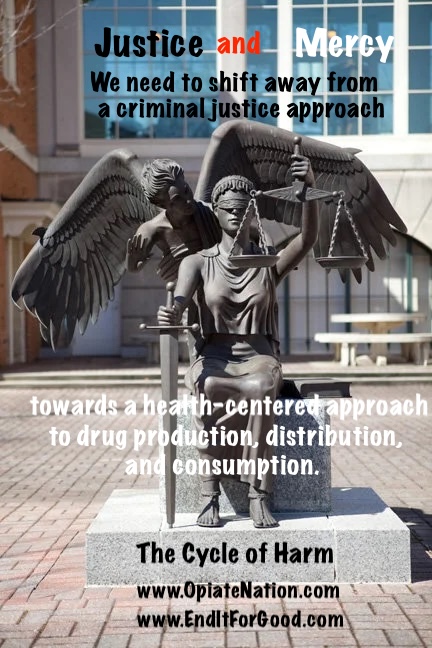
Our goal is a future where fewer people are harmed by drugs. To get there, we need to shift away from a criminal justice approach and towards a health-centered approach to drug production, distribution, and consumption. As a 501(c)(3), we educate citizens, advocates, and policymakers to elevate solutions that prioritize life, health, strong families, and safe communities. This is the path to a world where more people have an opportunity to thrive.

In her TED Talk, Christina shares her learning journey about the destructive impact of a criminal justice approach to drugs and addiction, as well as the mounting evidence that a health-centered approach would be much more effective.

And Christina has written an award winning and very favorably reviewed book: 

CURIOUS: A Foster Mom’s Discovery of an Unexpected Solution to Drugs and Addiction. It gives a vision for unexpected solutions that save lives, heal families, and promote public safety.

The reason I used this particular statue for the blog graphic this month relates perfectly to this subject. Justice & Mercy was designed by sculptor L. Glynn Acree III and stands in front of the Cumberland School of Law at Samford University in Birmingham, Alabama. Justice is blindfolded and the scales she holds are perfectly balanced. The angel, Mercy, is whispering in Justice’s ear. An important reminder that in order for justice to be true and impartial, mercy and kindness must temper her decisions – because as humans, we are all imperfect and fail in many ways. 

Frankenstein Opioids

(Translation into most languages at tab to right)

Just when we thought everyone was aware of the fatal danger of fentanyl and it being mixed into every drug of abuse available on the street, a new threat arises. Nitazene or Isotonitazene (ISO) or Protonitazene, new lab-made opioids, are showing up at hospitals and morgues around the world in the bodies of people thinking they were taking their drug-of-choice only to find it was laced with one more deadly drug. It is being mixed in with cocaine, or formulated into fake Oxy’s and other pills. In the US, it first showed up in 2019 in the Midwest and spread rapidly.

Nitazenes were developed in the 1950’s by pharmaceutical companies as an alternative to morphine but shelved due to the risks of overdose. There is still no approved medical use for nitazenes today. Another ‘Designer Drug’ being made in illicit labs around the world, Nitazenes are up to 40 times stronger than fentanyl. Fentanyl is already 50 times more powerful than heroin and up to 800 times more powerful than morphine.

No wonder these drugs are referred to as ‘Frankenstein Opioids’ – only an insane, evil intentioned scientist would work to create such a drug. But in reality, the motivation is greed more than insanity because synthetic drugs are cheap to make and easy to ship and deliver – and highly profitable. But evil is the correct description for the immoral heads of the drug syndicates and cartels around the world whose entire life and business is dealing death. 

What can be done?

For parents with children still at home, community connection and education are the best preventative measures. As I have said before, my husband and I were totally unaware of what substances were readily available to our middle school son in the early 2000’s. Our concern was smoking and marijuana. Little did we know. General discussions about drug abuse were the extent of our educational conversations. But we would have been much better prepared and had much more information if we had been involved with our kids’ school community. Instead, we were insulated from vital resources because we spent so much time with our church community. But make no mistake. Many of the families at church with kids in youth group were just like us – unaware and ill prepared and sadly many of them suffered the same loss as we did.

There are other important aspects in raising self-reliant kids who are not subject to the lures of the “cool” kids or “in” crowd. Below is a link to a previous blog dedicated to the perils modern teens and their parents face with important resources. I hope it will be helpful to you and those you love.

https://www.dea.gov/stories/2022/2022-06/2022-06-01/new-dangerous-synthetic-opioid-dc-emerging-tri-state-area

Prescriptions in Adolescence and Future Opioid Misuse

(Translation into most languages at tab to the right)

We recently spent some time with a young man who was a close friend and fellow opioid user with our son. While he has survived dying from an overdose and has been clean on and off for almost 20 years, he has been on Suboxone for the past nine months, trying once again to be clean after one more cycle of opioid addiction. He has tried many ways to get free of the stranglehold that opioids have on his brain, to no avail. How did this happen?

Our son, like millions of other adolescents, were prescribed opioids for some type of pain: oral surgeries, sports injuries, accidents, etc. John Leif (JL) had his first experience with opioids at 12 when he had teeth extracted before wearing braces. What we didn’t know then (2001) were the facts about opioids and addiction. Why we didn’t know – and most doctors and dentists didn’t either – was due to Purdue Pharma and other drug companies’ propaganda on the safety of oral opioids: “Opioids are not addictive if a person is in pain.” That, of course, is a lie and one they knew perfectly well. The opioid epidemic is the result of their lies.

The more recent information from multiple drug studies is what we wish we would have known 20 years ago: Legitimate use of prescribed opioids before the 12th grade is independently associated with a 33% increase in the risk of future opioid misuse after high school by age 23 compared to those with no history of an opioid prescription. This was among patients with little drug experience and who disapprove of illegal drug use. (1)

Why does an opioid prescription predict future opioid misuse most strongly among individuals with little to no experience with use of illegal drugs – i.e., adolescents? For drug-naïve individuals, an opioid prescription is likely to be their first experience with an addictive substance. Most likely the pain relief is pleasurable, and a safe initial experience with opioids may reduce perceived risk. A pleasurable and safe initial experience with a psychotropic drug is a central factor in theories of who goes on to misuse drugs. (2)

Continue reading “Prescriptions in Adolescence and Future Opioid Misuse”

10th Anniversary Tribute

(Translation in most languages at tab to the right)

August 2, 2024

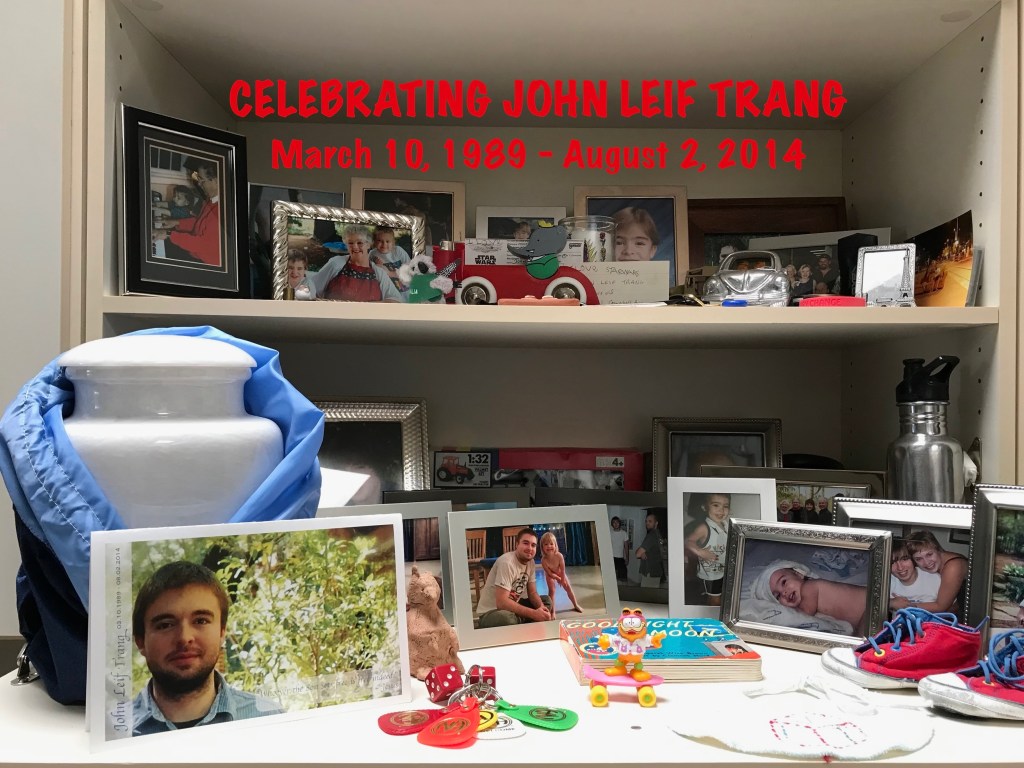
It has been 10 years since we woke up on a hot Saturday morning in August not thinking about anything in particular – other than the house projects we wanted to focus on for the day. Little did we know what had happened in the wee hours of the morning or how a knock on the door at 11am would change our lives forever.

John Leif (J.L.) had many friends in high school and university, many whom we stay in touch with. We have asked them to write their thoughts in remembrance of him on this 10th anniversary of his death. Three of the tributes are the people who wrote the “Stories of Hope” at the end of Opiate Nation. Some of the tributes below are from friends that JL started using alcohol and Oxy’s with in middle or high school – before there was any open discussion about opioids and before their brains were mature enough to understand the deadly consequences of this particular addiction. And many went through years of struggling to get free from how opioids changed the neurological pathways in their brains. We are proud of them and love and thank them for their openness in sharing their stories and for all these heartfelt tributes expressing love for our son and for us.

Here is the YouTube link (or you can watch a mini version on the sidebar) for the photo/video tribute of JL’s life that Johanna and her cousins made: https://youtu.be/70rg4dqfFxU

My Brother

I have so many fond memories of my childhood growing up with John Leif. Our parents created an idyllic environment for us to grow up in; our mornings were spent doing our homeschool work and our afternoons were free for playing. JL and I spent many hours creating imaginary worlds with characters in Lego and Playmobil, racing his Hot Wheels cars or digging in the dirt with his Tonka Trucks. When he was little, he would also happily play baby dolls or dress ups with me, and we would create puppet shows or build forts in the living room or back yard. JL shared my love of animals, and we spent a lot of time playing with and caring for our many pets: cats, rats, hermit crabs, frogs and fish. While we had plenty of sibling fights over the years, he was the playmate I had been waiting for and I cherish the carefree time we were so privileged to have together. I wish that we could have continued growing up together into adulthood, sharing even more adventures and exploring new places. I miss him very much.

Johanna

You Are Always With Me 

J. L. – It’s been 10 years – a full decade since your passing. My memory of your face is slightly fading. Your voice and your laugh aren’t as crisp in my mind anymore. Your appearances in my dreams have become less and less over the years. While I’m scared of forgetting about you, I’m relieved that I’m finally moving on. Your death has affected me tremendously, and there has been a hole in my heart that has felt bottomless for so long. Fortunately that has changed and that hole has been filled. Although I lost you – my best friend – I found another. Man, I wish you could meet her. You’d laugh because she’s exactly who I used to describe as my “perfect woman” during our long rooftop conversations while watching the sun rise after a long, rowdy night. 

I have a full life though I still can’t delete your number from my phone contacts or your gamertag on Xbox (which I haven’t played in years). Life still doesn’t quite feel complete without you around. Memories of you, however, are becoming more a feeling of pleasant remembrance rather than a haunting reminder of your absence in this world. I like to think that this comes from your soul telling mine of your acceptance of the afterlife. Whatever the reason, you’ll always be with me as I enter the next chapters of my life. While I wish we were experiencing them together, I know you’re looking out and guiding me from above. I love you, my brother.

Kyle Thornton 

His Death Changed Me

J.L. had an infectious laugh and smile, and a sort of curiosity like a coyote – a twinkle in his eye always. He was really damn smart and twice as funny. Also, very loyal to friends and those close to him. His death changed me, has forever changed me. The seriousness of addiction was clear before – but him suddenly being gone shook me to my core. 

He’s missed, and I speak of him often to not forget him – to newcomers and men I take through the twelve steps, and to my friends and family.

Benjamin W.

He Was a Gift

John & Jude – Everyone you meet in life is someone you have no idea what effect they will have on you until you get to know them. And sometimes, people show up and blow you away. That was JL for me.

In high school, a lot was happening, and a lot went wrong for me. When I went to Social Studies with JL though, he made my day better. I can still clearly see the high school hallway during our breaks, and how I wanted to be around JL because he always made us laugh.

On weekends, when everyone went to parties, if I saw JL I felt safe – plain and simple. We talked and joked – there was never a negative part to being around him. I really loved the friendship I had with your son. I also really, really appreciate the respect he showed me as a friend. Although I wasn’t a best friend to him, he did impact my life and I hope you know that, because that’s due to you. JL was my friend, and I still think about him all the time.

He is happy where he is though – I know you know that – but just remember it when things get hard. I can’t even imagine the pain you go through every day. He was a gift.

Brittney Kline

Grateful for the Perspective You’ve Given Me

John & Jude – I have thought about JL often over the course of these past 10 years. Honestly, I find myself thinking about him more now that he is gone. I think about how much I have grown and changed over the last decade and wonder what changes and season of life he would be in if he were still with us. It makes me smile to think of JL having a wife and a kid and observing him being in that role.

J.L. – I miss you and I am grateful for what you’ve given me. The perspective you’ve given me, the thoughts you’ve brought to the surface, the memories you are part of and the reminder of just how fortunate we all are to still be fighting the good fight.

Rich Jacome

I Wish He Was Here

Ten years ago, news of JL’s death was unreal. I knew he was getting help for his addiction and had been clean for many months. Everything seemed like life was getting better for him. It did not seem real that he passed away. There was no tragic car accident, but a single slip of willpower. A moment of weakness, and poof! Like a vapor in the wind, he was gone.

I have many regrets with my end of our relationship. The biggest one was that I did not take the time to really get to know him as a teen and as a young adult. He was my kid-cousin, and I always assumed he’d be fine, just like myself. We were young, after all. I assumed he would have a long life and we’d have plenty of time to connect. But life is short. For him, much shorter. 

His death opened my eyes to the extreme danger of self-medication and opiate addiction. I used to think of drug use as “bad decisions.” Now I understand it’s a lethal death sentence, especially now with even minor drugs laced with fentanyl. No one knows if “their pill” is the one pill that will end their life. 

I wish he was here. I wish he knew how much he is loved. I wish he was not missing out on this beautiful world. I miss you JL. 

Love, Cousin Justine

My Best Friend

Not a single day goes by that I don’t think about my best friend and my brother JL he was easily the closest bond that I’ve ever had in life. I have so many fun stories of JL and I find myself telling stories of him and I on a weekly basis. 

JL taught me how to embrace life – he really knew how to have fun and he knew how to express how he felt about things. I would argue that he lived more in his life than most people could ever dream to do. 

His intelligent and mischievous thoughts resonate through all my life’s great decisions. When I find myself talking to my own subconscious I don’t see me. I see JL.

William Skylar Helfrich

No Other Friend Like You

Dear J.L. – I’ll start this by saying the obvious which is you are dearly missed. I can’t believe I haven’t talked to you in almost 10 years. Some days it feels so long ago. Other days it feels like it was yesterday I was in culinary school, and we would talk at night and text. No matter where I was living you were my best friend. No judgment ever between us. Such a rare thing. We completely understood each other on every level. I had never had a friend I connected with on the level I did with you. I haven’t since either. 

Your funeral was so surreal to me. It still hurts so bad, so often. I think of you and the things we will never get to do. Losing you and my father so close together is a wound that will never heal, no matter the time passed. I wish you could see my life today and share it with me. I think of you often and still say to myself a lot of the phrases we always said to each other. The memories we made together will always live within me. I hope to see you again one day.  

Love, Matt

A Significant Impact

I never knew John Leif, but his life had an impact on me that has been significant. I met Jude & John Trang through their friendship with my own parents, and I heard their story with addiction, which so closely mirrored what I had put my parents through with my own substance dependence. When I met the Trang’s, I didn’t know any other families like mine. John Leif and I had a lot in common. We had two parents who loved us, we had a nice home life, we had options and opportunities, we were the same age. And we did heroin anyway. John Leif lost his life, but I did not. Why? 

The Trang’s are deeply religious, spiritual people, whose beliefs guide them through life’s joys and sorrows. I have witnessed the power of their faith as it illuminates the space around them wherever they go. As for me, the question of “why?” has no answer. Why him, and not me? Why should I be so lucky? Why couldn’t he have been saved? Why should the Trang’s be the ones with broken hearts, while I get to sing and dance with my parents today, almost 12 years since I used a syringe? Neither my belief system nor my experience of life has provided any kind of reason. It is part of the great mystery. To me, the question itself is where the lesson resides: be grateful. Appreciate life’s beautiful moments and be present when life is challenging. 

Through knowing the Trang’s, I remind myself to feel ALL my feelings without trying to numb, distract, or turn to harmful habits. I am deeply connected to the Trang family because of our shared experiences. My life is enriched because of them, and I keep John Leif in my meditations. 

Mattea Tampio

Adrenaline Junkie or High Sensation Seeker? Part 2

(Translation into most languages at tab to the right)

In Part One, the May 2024 blog, I discussed the characteristics of an Adrenaline Junkie: those who seek out activities that give them an adrenaline rush. Now I’d like to look at High Sensation Seekers (HSS): those who look for thrills in all areas of their lives. It’s a compulsive need for sensation. (1) Being addicted to stimulation in our everyday lives. 

Characteristics of HSS can masquerade as something other than pursuing “a thrill.” It can be an unconscious need for stimulation, but sensation seeking is there, nonetheless. Perhaps it is how we live without margins in our daily lives or manage our time and deadlines or the people we choose to regularly interact with. It will certainly influence the type of career we choose.

As I shared in the last blog, my husband fits the HSS descriptors rather than those of the adrenaline junkie. What helped me zero in on this were two things: his career choice and his tendency to procrastinate. John chose to leave the safety of a tenured professorship to begin independent research and consulting, which brought with it a lot of daily stress. And, as he diligently strives to meet his business deadlines, he consistently ends up working feverishly to finish his projects at the eleventh hour. I’ve never understood this – as someone who works to finish ahead of schedule – because it seems so self-defeating. But now I understand. He gets something out of it – the surge of adrenaline as he races to completion and then the elation of finishing. He is also a life-long motorcycle rider.

Some people may create drama or crises in their family or professional lives just for the sensation of adrenaline and stress – which releases the hormones that bring excitement and dispel negative moods. This rang a bell with me as I have pondered for decades why some families like mine seem to always have some type of drama emanating from them while others don’t. Although sensation-seeking types of behaviors are not currently listed as a mental disorder, they are related to many mental health conditions.

Let’s consider HSS addictions to regular, repeated, high-risk behaviors such as gambling, shoplifting, pornography, illicit dalliances, etc. Why engage in such behaviors, usually done in secret, when there is every likelihood of eventually being caught? The thrill of avoiding discovery is part of what keeps the up the behavior. Remember, it is a compulsive need for continual sensation that drives the HSS person. But we need to also remember that addiction in a medical/chemical sense is a distinct diagnosis separate from personality types. Our personality may lead us into addictions that others would wisely see as dangerous and avoid, but the addiction itself with its underlying issues and resultant mental and physical complications can develop in any person regardless of personality type. 

Nathan Falde, a freelance writer on personality-types, has an excellent article on HSS (1). In it he says,

“The concept of the high sensation-seeking (HSS) person was conceived by University of Delaware psychologist Marvin Zuckerman. He identified four distinct personality traits these people shared:

•        Thrill and adventure seeking

•        Disinhibition

•        Experience seeking

•        Boredom susceptibility

The need to be stimulated is a normal human characteristic. However, it can get HSS personalities in trouble if they indulge their urges too readily and with little or no reflection. Research shows that unhealthy HSS’s are prone to developing substance addictions and self-destructive behaviors. Well-adjusted sensation-seekers, on the other hand, are known for their bold, daring and inventive initiatives. They bring an infectious sense of possibility to their environment – and that can be a very good thing.” John is a great example of this last HSS. My life has been enriched by his sense of adventure and spontaneity. 

Falde goes on to discuss how personality tests and typing will reveal HSS people in several significant areas. The important take away is to be self-aware and well-informed so that you can live your life wisely and avoid the pitfalls that your natural inclinations for stimulation could steer you towards. 

Warning bells should be ringing if your life, and the lives of those close to you, is chaotic or unstable or always on the verge of emotional or physical disaster. Partners, children, families need physical and emotional stability to thrive. 

If you, or a loved one, are dealing with HSS behaviors that are negatively impacting your life and the lives of those around you, review the list of suggestions from the last blog for ways to respond to unhealthy urges or stress in our lives and to help restore our sense of well-being and peace.

  1. https://www.truity.com/blog/what-are-high-sensation-seeking-personalities#:~:text=An%20adrenaline%20junkie%20seeks%20out,high%2Drisk%20hobbies%20and%20sports

Adrenaline Junkie or High Sensation Seeker? Part 1

(Translation into most languages at tab to right)

Have you ever pondered how different people drive and approach the objective of getting from one place to another? Are there certain people you would rather not get into a car with when they are driving? I was thinking about this the other day when John and I were driving to meet friends and the same scenario played out when he is driving: the race is on. It’s not that John exceeds the speed limit too much – he’s only ever had a few tickets in his entire life – although he drives on the high end of the limit. But it is the way he views the entire undertaking.

This is nothing new. Years ago, we had rented a car to drive across Italy with our kids. We were on unfamiliar freeways where the speed limit was more of a suggestion than a limitation. Not much time passed before I, as the navigator in the front seat, was looking for anything I could hold on to in fear of my life as John joined in the race. After my repeated shrieks of “Slow down!” and exclamations of “Watch out!”, we decided that I needed to be in the back seat and close my eyes while someone with steadier nerves took my place. 

His adrenaline was flowing and so was mine. But the difference was that for John, this was exciting. For me, it was terrifying. I am a risk-averse person and tend to avoid risks in most areas of my life as much as possible. Yet, I am also an anxious person and my adrenaline can flow when there is no real threat. But the ways it affects my life are different. One thing we all have in common is that these predispositions have a physiologic base and are most likely passed down to us from preceding generations.

What is adrenaline and what role does it play in our bodies and lives?

Adrenaline (epinephrine) is a hormone our adrenal glands make to help us prepare for stressful, threatening, or dangerous situations. Adrenaline rush is the name for the quick release of adrenaline into our bloodstream and turns on our sympathetic nervous system which gets our body ready for a “fight or flight” response to a real or perceived danger.

An Adrenaline Junkie is someone who seeks activities that give them that “rush” which is addictive. Recent studies have shown that dopamine and serotonin, neurotransmitters that regulate risk-taking and impulsivity, are downregulated in people with substance use disorders. (1) This means that if we constantly stimulate our adrenal glands, dopamine and serotonin are no longer able to help protect us from high-risk and impulsive decisions. We are then in need of, craving, more adrenaline, a vicious cycle.

But when I looked at the characteristics of an adrenaline junkie and thought about the things my husband seeks out and enjoys, he didn’t quite fit the pattern of seeking one-off thrills like skydiving, bungee jumping, hang gliding. He instead seems to regularly engage in high-risk activities and behaviors. How is this different than being an adrenaline junkie?

What I discovered in my search to understand is another type of adrenaline-seeking personality, High Sensation Seekers. When I looked at those characteristics, they fit him much more closely. I will go into them in Part Two of the next blog. 

For others like me with minds that race full of thoughts and worry, adrenaline and other stress-related hormones like cortisol are released. The anxiety can be most pronounced when we are lying in bed and keep focusing on what has happened or what might happen in the future. That extra boost of energy has no use and instead leaves us restless and unable to sleep. The parasympathetic nervous system relaxes us and predominates in quiet and rest and drives our “rest and digest” systems. It conserves our energy for when it is needed. So, any type of adrenaline-using behavior depletes our adrenal glands and overrides our parasympathetic system leaving us exhausted.

In relation to addictions, we can easily see how risk-taking and thrill-seeking behaviors include heavy or binge drinking, using drugs, high-risk sex, gambling etc. Adrenaline addiction of any type brings with it withdrawal symptoms like cravings, decreased interest in other activities, and negative emotions and restlessness.

Regardless of how we deplete our adrenaline reservoir, here are some suggestions to help us respond to unhealthy urges or stress in our lives and to help restore our sense of well-being and peace:

  • prayer and meditation
  • deep breathing and muscle relaxation
  • regular exercise – which releases endorphins (3)
  • balanced diet– low in refined sugars and carbs, high in protein
  • avoid cellphones, bright lights, computers, loud music, and TV right before bedtime
  • leisure activities
  • listening to peaceful or positive music 
  • creativity
  • social support
  • practicing gratitude
  • counseling/therapy

If you would like to receive my blogs but do not want to join WordPress you can sign up for email notifications. Joining WordPress is like other social media platforms where you need a free account in order to connect with others on WordPress.

  1. https://www.verywellmind.com/how-to-tell-if-youre-an-adrenaline-junkie-3145035

TEMPTATION: Fight it or Heed the warning signs?

(Translation into most languages at tab to the right)

I have been thinking about temptation recently and how differently we each respond when we face something that is hard for us to resist. How do we resist something that is alluring and that we have repeatedly succumbed to in the past? Something that we are addicted to like lying or shoplifting, alcohol or drugs, gossip or gambling, social media or overeating? The list of behaviors that can derail our lives in one way or the other is endless. It’s not just how an addiction can cause us harm, but also how it can debilitate or destroy our relationships, that makes learning how to beat temptation important.

So, when we are tempted to indulge in our pet addiction, what do we do? 

I read an article on Medium about temptation and willpower that supports the thoughts I’ve held throughout my life. Riikka Iivanainen (1) confesses that she has high self-control and discusses her research into why some people succeed at resisting temptation while others don’t. 

She says, High self-control does predict many positive life outcomes: People who’re good at self-control do better in school, have fewer mental health problems, have better relationships with friends and family, and generally exhibit fewer impulsive behaviors like binge eating and alcohol abuseThey’re even happier.

From the many scientific studies she researched, she goes on to say, Having good self-control doesn’t mean a constant battle against temptations. The kind of self-control that gets you all those good outcomes is more effortless than what’s commonly suggested by the term’s “willpower” and “self-discipline.”

Psychologists tell us that constantly resisting temptation is exhausting and will soon leave us with ego-depletion. Relying on self-control in the face of temptation is destined to fail. So what kind of self-control is “more effortless”? Riikka says, The people who reported fewer problematic desires and less conflict related to those desires were good at avoiding temptation, not resisting it.

Isn’t this insight what the basis of what most recovery programs are built upon? The acronym HALT is a tool to remind us to take a moment and avoid temptation by being aware of the primary things that can lead us to it: Hungry, Angry, Lonely, Tired. We are susceptible to self-destructive behaviors, temptations, and relapse when these basic human needs are unmet. HALT is a reminder, an early warning system. Being self-aware helps us recognize our needs and address them in a positive way before turning to harmful habits or destructive people.

Hungry – being hungry can be physical or emotional hunger

Angry – being angry at someone else or at yourself

Lonely – being lonely can be while in a crowd or from self-isolation

Tired – being tired affects our body, mind, and spirit

Some ways to deal with these needs is the subject of my Opiate Nation blog post April 14, 2018, H.A.L.T. https://opiatenation.com/2018/04/14/h-a-l-t/

We need to know ourselves and be honest about what our problematic desires are and avoid them rather than flirt with them. Desires are matters of the heart and we need to do all we can to support the healthy, life-affirming desires we have. I’ll end with pertinent insights from some of my favorite sources: 

There are several good protections against temptation, but the surest is cowardice.(2)

Strength comes prior to temptation, not during it. Overcoming is a prior act. It involves making a decision to remain pure before the temptation comes. (3)

Rather than waiting for temptation to raise its inevitable head and struggling to resist it, researchers at the University of Wyoming say it’s more effective to plan in advance to manage those temptations with well-thought-out self-control strategies. (4)

It is easier to prevent bad habits than to break them. (5)

Paul repeatedly told the early Christians in their very pagan cultures to “flee” temptation. (6)

Learning takes us through many states of life, but it fails utterly in the hour of danger and temptation. Then faith alone saves. (7)

But for persons needlessly to expose themselves to temptation, and to do those things that tend to sin, is unwarrantable, and contrary to that excellent example set before us. (8)

Jesus showed us by example when we are confronted with unavoidable temptation to speak the truth in order to help us resist until we are able to escape. (9)

Temptations, of course, cannot be avoided, but because we cannot prevent the birds from flying over our heads, there is no need that we should let them nest in our hair. (10)

  1. https://riikkaiivanainen.medium.com/the-secret-life-of-people-with-high-self-control-its-easier-than-you-think-7dd26fb5282c
  2. Mark Twain
  3. The Mind of Christ by T.W. Hunt & Claude V. King, 1990
  4. https://www.psychologytoday.com/au/blog/cravings/201911/4-ways-avoid-temptation-and-reach-your-goals
  5. Benjamin Franklin
  6. I Corinthians 10:14; I Timothy 6:11; II Timothy 2:22
  7. Mahatma Gandhi, Mohandas Gandhi, Homer A. Jack (2005). “The Wit and Wisdom of Gandhi”, p.40, Courier Corporation
  8. Jonathan Edwards, https://www.biblebb.com/files/edwards/temptation.htm
  9. Matthew 4:1-11
  10. Martin Luther
Malcolm Guite

Blog for poet and singer-songwriter Malcolm Guite

The Gift of Need

How Need Can Strengthen Individuals and Communities

Memoirs and Musings

David Bradley Such

Dave Barnhart

Church planter, pastor, author, coach

RecoveryLife101

Just another WordPress.com site

Abbie In Wondrland

life...on Gods' terms.

Living In Graceland

"..learn the unforced rhythms of grace" matt 11:28

Janaburson's Blog

All about opioid addiction and its treatment with medication

Breaking In News Network

Seeking the truth and bypassing the MSM

Junkbox Diaries

Trauma, PTSD, Mental Health, Addiction, and Recovery

Ohio Society of Addiction Medicine

The Ohio Society of Addiction Medicine is a chapter of ASAM - A professional society actively seeking to define and expand the field of addiction medicine.

traceyh415

Addiction, Recovery, Loss, Grief

WordPress.com News

The latest news on WordPress.com and the WordPress community.