Born Imperfect, Complex, & Unique

(Translation into most languages at tab to the right.)

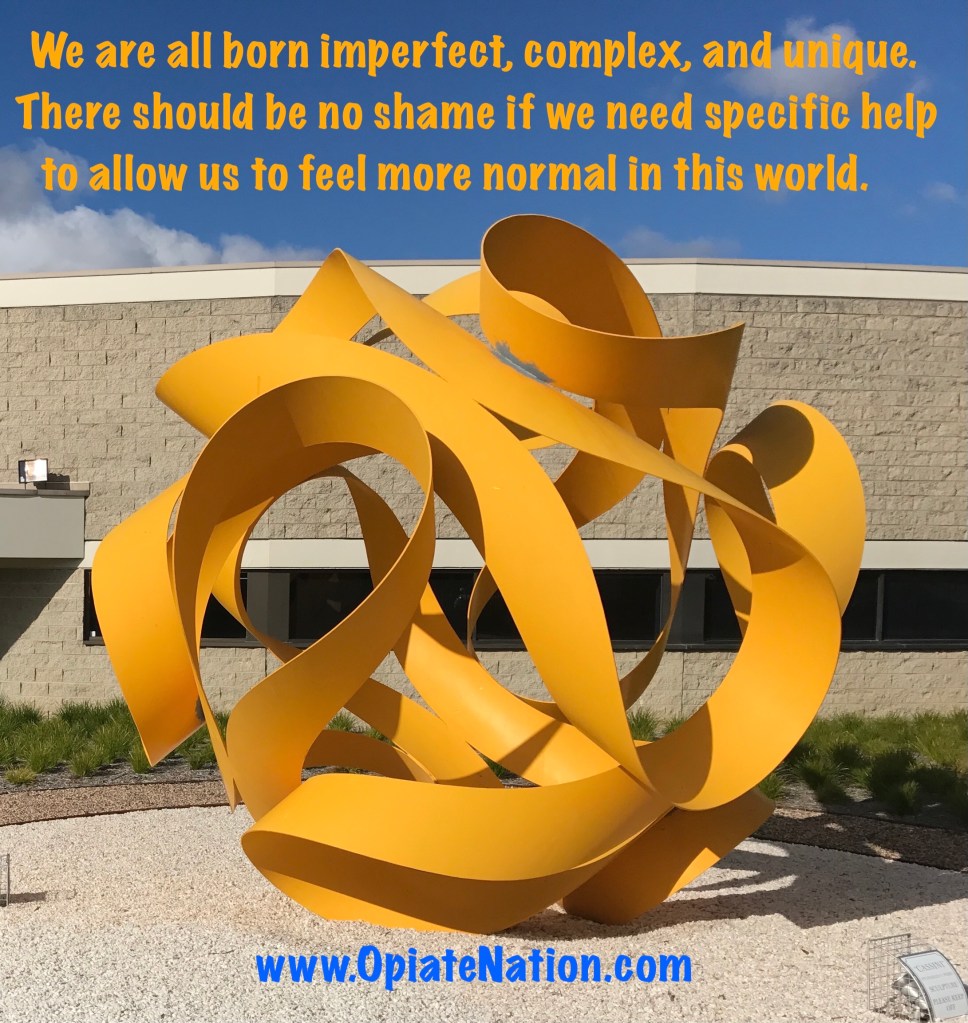
I think we would all agree that each and every one of us is born imperfect. There are so many complex and unique aspects to the human body which generations of genes have contributed. The things that make up our physical and mental attributes. One example is our face. It is estimated that only 2% of the world’s population has a truly symmetrical face. The right side usually appears larger than the left and eyes, nose and ears are not perfectly aligned. When you see a photo of a face with both sides exactly the same, its actually creepy. They lack character and look like AI.

Some of us are born with deficiencies that make life difficult and challenging, like being born blind, or deaf, or with a physical deformity. Because of amazing advances in science and medicine in the last century, many of these problems can be corrected. I had crowded teeth when I was young and am so thankful I was able to get braces and have a normal smile. We would not understand if someone had the opportunity to receive this kind of help and didn’t access it because they or others in their community thought they should just live as they are. We all want to feel comfortable and that we belong, are ‘normal’ in this world.

What about when someone is born with an internal deficiency such as a heart condition or kidney problem or blood disorder? We never think twice about having medical help or drugs and lifestyle changes to remediate the problem if it is possible. So why is there any discussion on whether someone who is born with an imbalance of normal brain chemicals or hormones should live in constant struggle and not access medication?

This thought came up as I considered the reasons behind why some people seem to need something like drugs to make them feel ‘normal’ to themselves and to the people around them. When everyone else seems to easily roll with the ups and downs of life while they get stuck on the downs. When how they think and process input and information is not the same as others. When their ability to be at peace or sleep is chronically unobtainable.

I’m not at all suggesting that individuals who seek drugs all have legitimate genetic or biochemical voids. As we know, many young people start drug use because of peer pressure and the environment that surrounds them. But underlying mental struggles or health conditions may be the determining factor that pushes them into, rather than away from, repeated use. I found it interesting that among my son’s high school and college friends, many tried all the drugs – uppers, downers, hallucinogenic – and some went on to addiction to uppers like cocaine and meth while others to downers like opioids and benzos and some walked away from all of them.

But once repeated and continual use happens, the chemicals and receptors in the brain are changed and more than ever, medication and therapy are going to be a big part of recovery from use and restoration of normalized brain signals. The need for medication may be short term or lifelong. Regardless, we all need to remember that just like shaming someone because they have a physical deformity is totally unacceptable, shaming someone who is struggling with mental health and/or addiction problems is also unacceptable. 

This does not mean we enable destructive behavior or stop supporting someone to get professional medical and psychological help along with a supportive community. Never. If we want to see someone who is struggling become as healthy as possible, our love and support are crucial. And we know that in a country where public health care is a privilege rather than part of a foundation of society, finding the right care can be daunting. Let us be there to help our family, friends, and community receive the care they need by being encouraging and supportive.

Stigma of Addiction: The Effects, The Reasons, and How to Reduce Stigma

by Chris Elkins, MA

https://www.drugrehab.com/addiction/stigma/

Cognitive Behavioral Therapy Info Hazelden Betty Ford:

https://www.hazeldenbettyford.org/mental-health-services/cognitive-behavioral-therapy#:~:text=Learn%20more%20about%20this%20popular,techniques%20in%20working%20with%20patients.

Recovery Options for Teens

 Statue by Gustav Vigeland, Vigeland Park in Oslo, Norway.

(Translation into most languages at tab to the right.)

Understanding the teenage brain was the topic of my last post: Is Teenage Turmoil Inevitable? It is important to digest before parents consider a recovery program for their teen. Knowing that adolescents and teens feel and process information differently than adults is why they require a different approach to addiction and recovery.

Regardless of the type of program considered, the one absolute necessity is that the family be involved in the process – because family dynamics are an integral part of a young persons’ sober and addicted life. And the best place to start this discussion is to focus on the CRAFT model.

The American Psychological Association has an informative article, below. (1) In it they point to studies discussing how programs like Al-Anon for family members with an addicted loved one “may improve the well-being of friends and family members, they are not effective in getting the addicted person into treatment.”

Intervention programs, designed to help “family and friends work with a counselor to confront a substance user and urge him or her to get treatment” is only used by 30 percent of families due to discomfort with confrontation. And treatment is only the first step on the long road to recovery. After that, the family still needs other tools.

CRAFT (Community Reinforcement Approach to Family Training) originated at the University of New Mexico and was developed by Robert Meyers, Ph.D. and colleagues. Research on CRAFT shows that approximately 70% of families who receive CRAFT are able to help their loved ones start treatment within a year (Miller, Meyers, & Tonigan, 1999). CRAFT also helps family members improve their own lives, whether their loved one ends up seeking treatment or not.

CRAFT teaches real life skills to use connection to encourage positive change, because CRAFT is rooted in the belief that connection is the opposite of addiction. It teaches positive communications skills to foster the connection that is desired by the person who is struggling with addiction and their loved ones.

Helping Families Help is a great non-profit website resource for CRAFT information. (2)

SMART Recovery was established in 1994, here in the USA, to meet the increasing demand of those seeking a secular and evidence-informed alternative to the widespread 12-Step addiction recovery program. It is intended for adults over 18 and those seeking flexibility and independence, while AA offers structure and strong community support. It may be best for young adults in their 20’s, as most 18- to 25-year-olds who struggle with addiction are not yet “adult” in their thinking and coping skills. Smart Recovery is now in 23 countries. See info below. (3) 

Basically, the steps in helping your teen who is addicted are this:

  1. Getting them into treatment
  2. Choose a program – inpatient or outpatient
  3. Detox 
  4. Individual Therapy
  5. Family Therapy 
  6. Contingency Management
  1. Getting your loved one into treatment: sign up for CRAFT 10-week email training course through Helping Families Help or investigate other options.
  2. Choose a program: based on the drugs involved and length of time used.
  3. Detox: Most drugs will still be in your child’s system. Detox flushes them out. Detoxing under the care of professionals ensures that it’s done safely out of reach from harmful substances. Your teen will likely experience withdrawal symptoms as well.
  4. Individual Therapy: To understand a teen’s problem and to address it comprehensively. The first course of action in rehab is one or more types of therapy, both one-on-one and group settings. Motivational Interviewing uses a person-centered, non-confrontational style where the teen is encouraged to examine the pros and cons of their use and to create goals to help them achieve a healthier lifestyle. This helps them gradually realize the consequences of their actions. Cognitive Behavioral Therapy (CBT) is goal-oriented therapy that helps teens express and understand their feelings and cope with difficult emotions. They learn to replace negative behaviors (such as using substances) with positive ones (like sports or art or service endeavors).
  5. Family Therapy: Based on the premise that family carries the most profound and long-lasting influence on development, and in modeling both good and bad behaviors and beliefs. These sessions bring together those closest to an addicted teen and address issues such as poor family communication, cohesiveness and problem solving. Again, CRAFT is crucial here.
  6. Contingency Management: This form of therapy tracks each patient’s progress in rehab, including each day they succeed in staying sober, and rewards them with a prize. The more teens feel satisfied with their rewards, not only will they continue striving to stay sober, but their brain will relearn how to appreciate rewards that aren’t drugs or alcohol. Following rehab, a teenager is thrust back into the world. Temptations lie around every corner and their problem stays with them for years after treatment. After you’ve helped your child kick their habit you must help prepare them with a plan to prevent relapse – or for all of you to know what to do when relapse occurs, which is likely especially for certain drugs like opioids. MAT (Medication Assisted Treatment) is vital for opioid addiction and the long-lasting changes in the brain that will continue to undermine all the best plans and determination to stay clean and sober. Our son and many of the hundreds of thousands of young people who died from opioids are the sad evidence of this truth.

I do not offer these steps and advice as a medical or addiction professional. I can only offer my opinion based on our personal experience and the stories from others, along with the research I’ve done over the past 20 years since my husband and I first discovered that our 15 year old son was using heroin. What we wish we had known I share with you in the hope that your story will end differently than ours.

1. An underappreciated intervention

The CRAFT model is giving family and friends the skills they need to help get loved one’s treatment for substance use problems  By Katherine Lee – December 2017, Vol 48, No. 11

https://www.apa.org/monitor/2017/12/underappreciated-intervention

2. Helping Families Help – CRAFT Information

https://helpingfamilieshelp.com/about-craft

https://www.npr.org/sections/health-shots/2018/08/10/636556573/families-choose-empathy-over-tough-love-to-rescue-loved-ones-from-opioids

3. SMART Recovery

https://smartrecovery.org/what-is-smart-recovery

4. The Different Types of Adolescent Treatment Programs

New Horizons Recovery Centers (USA)

https://www.newhorizonscenters.com/blog/the-different-types-of-adolescent-addiction-treatment-programs

Recovery Communities

(Translation into most languages at tab to the right)

What is a recovery community and what should it look like?

The answer to these questions is not simple – real solutions to real problems rarely are.

To recover means to return to a normal state of health or strength. When someone is injured in an accident or undergone surgery, they usually recover in hospital for a period of time where they can receive the special medical care that is required to keep them alive. If the injury or illness was severe or life-threatening, after hospitalization they would be moved to a rehabilitation facility where they receive appropriate and specialized care and therapy as they convalesce – they wouldn’t just go home. Convalescing is the recovery process of returning to health.

Recovery can also refer to the process of regaining possession or control of something lost or stolen. In a real sense, those who have become addicted to a substance or damaging behavior have had something stolen. That’s not a cop-out if we consider what happens to a person’s brain when addiction takes over. The chemical changes that take place in the brain steadily decrease the individual’s original ability to think clearly and make logical choices. Especially with substances, I consider that capacity to have been stolen.

Continue reading “Recovery Communities”

The Freedom of Habits

(Twenty-fifth in a series of topical blogs based on chapter by chapter excerpts from Opiate Nation. Translation into most languages is available to the right.)

I’ve heard a saying: “The chains of habit are too weak to be felt until they are too strong to be broken.” And just like chains, some habits are stronger and deadlier than others. Conversely, healthy habits can be just as strong and powerful – but instead of bondage, they bring freedom to live our lives to the fullest.  

In The Power of Habit, Charles Duhigg says, “Habits are a three-step loop: The cue, the routine, the reward. They become automatic beginning with a cue that triggers a routine and a craving for a clear reward. Craving is an essential part of the formula for creating new habits…You can never truly extinguish bad habits. So in order to change a habit, you must keep the old cue and deliver the old reward (that you are craving), BUT insert a new routine.”

Continue reading “The Freedom of Habits”

Avoiding Pain

(Thirteenth in a series of topical blogs based on chapter by chapter excerpts from Opiate Nation. Translation into most languages is available to the right.)

We are living in particularly precarious times – for people born since WWII, unprecedented problems the world over – seemingly beyond our ability to control or to deal with effectively. With the Coronavirus pandemic, complex problems have arisen for our global society to attempt to solve, from the manufacturing and transport of medical supplies and personal protective equipment to the best medical treatments and the development of a vaccine – which is viewed by many as the magic potion but only if the majority of people could be convinced to ‘get the jab.’

During this extraordinary year pain has come into most of our lives in ways we have not experienced previously: physical pain from contracting Covid19, emotional pain from being isolated or from watching those we know or care for becoming sick and dying, and mental pain from the anxiety caused by all the unknowns surrounding the pandemic. For people living in poverty, these problems are compounded.

Continue reading “Avoiding Pain”
Malcolm Guite

Blog for poet and singer-songwriter Malcolm Guite

The Gift of Need

How Need Can Strengthen Individuals and Communities

Memoirs and Musings

David Bradley Such

Dave Barnhart

Church planter, pastor, author, coach

RecoveryLife101

Just another WordPress.com site

Abbie In Wondrland

life...on Gods' terms.

Living In Graceland

"..learn the unforced rhythms of grace" matt 11:28

Janaburson's Blog

All about opioid addiction and its treatment with medication

Breaking In News Network

Seeking the truth and bypassing the MSM

Junkbox Diaries

Trauma, PTSD, Mental Health, Addiction, and Recovery

Ohio Society of Addiction Medicine

The Ohio Society of Addiction Medicine is a chapter of ASAM - A professional society actively seeking to define and expand the field of addiction medicine.

traceyh415

Addiction, Recovery, Loss, Grief

WordPress.com News

The latest news on WordPress.com and the WordPress community.