All Souls, All Saints, All of Us

(Translation into most languages at tab to the right.)

This year, the All-Souls’ Procession in Tucson, where I live, is today. The traditional date for celebrating All Souls’ Day (the Day of the Dead) is November 2nd. It was delayed this year because Halloween was on the same weekend. Tucson has one of the largest processions in the country with several hundred thousand people participating. Preceding this is All Saints Day on November 1st.

All Saints Day had its beginnings in Roman Church tradition dating back to the early centuries when Christians were martyred for their faith or who had publicly confessed and somehow survived the Roman persecution. The belief was that they were saints and immediately taken up into heaven. By the mid 800’s, Pope Gregory IV assigned Nov. 1st as the holy feast of All Saints.

All Souls’ Day evolved sometime around 1000 as a time to pray for the souls of all who had died. This is tied in directly with the Catholic Church belief in purgatory and those who are awaiting the joys of heaven. In pleading for them, we are reminded of our own offenses and so inspired to lead purer lives.

My husband, John, and I have walked many times in the procession here in Tucson although we are not Catholics and we believe that all those who have faith in and follow Jesus are saints, as the New Testament teaches.(1) Many Evangelical Christians think it is wrong to participate in All Souls’ events because it is not biblical to pray for the dead and they reject the concept of purgatory because nothing we do can alter ones destination in the afterlife. (2)

While we hold to basic New Testament beliefs, we do not find it contradictory to be part of the All-Souls’ procession in remembrance of our son, John Leif. The procession is a public ceremony to honor the dead and celebrate their lives, allowing participants to release and integrate their grief. Our son’s death from a heroin overdose – a reason many others are there – continues to be a source of sadness and regret. To remember and celebrate him as a person worthy of love is important for us. We do not want to shame him and do not want him to be forgotten. 

What is sad to us is the way in which this holiday is treated with similar vitriol that partisan politics infiltrates so many areas of American life these days. There are “Christians” who stand along the procession route shouting out ugly and sinful – yes, sinful – rebukes to those walking in remembrance of their loved ones. Sadly, many people feel it necessary to take a side on almost every issue – and supposed Christians are some of the leading voices. The unholy mixture of politics and “faith” in our country is deeply disturbing to us and absolutely un-Biblical. 

While we hold that our beliefs are true and worthy of sharing with others, we also feel it imperative that we respect others’ beliefs and faith traditions without mocking or denigrating them as all New Testament writing demonstrates. This is especially important when it comes to how people choose to remember and honor their loved ones who have died. 

In the past several decades, opioid addiction has taken the lives of hundreds of thousands of beautiful young people. We believe they are worthy of being remembered without shame and with love in whatever way their loved ones choose. And in so doing, we hope their lives stand as a warning for other young people tempted into experimenting with increasingly deadly drugs.

  1. I Corinthians 1:2, Romans 1:7, Philippians 1:1, Ephesians 2:19
  2. Hebrews 9:27
  3. History behind All Saints and All Souls:
An Entire Generation

Translation into most languages at tab to the right.

A generation is usually considered the years during which children are born, grow up, become adults, and begin to have children of their own. Approximately  20-30 years, averaging 25 years. Each generation becomes known by what characterizes the lives of those in it – what they do and how they impact society.

I’ve been thinking about my son, who would be 36 this year – if he had survived the opioid plague that began in the 1990’s with the prescribing of opioids for every ache and pain. What Purdue Pharma did is old news and well documented. But the effect of the immorality of the Sackler family set a course  that destroyed the lives of an entire generation – the “Millennials” generation of my son and his contemporaries. 

Far more than a million Americans have died due to a drug overdose in the past 25 years and the majority of those deaths are from opioids. (1) Initially it was prescription opioids, then heroin, then fentanyl. And now a daily variation of synthetic opioids mixed in with every variety of street drug. These are made from precursor chemicals from China and shipped around the globe where they are “formulated” into fake prescription pills or street drugs in jungle or backyard labs. Quality control is non-existent. 

Beyond the deaths, there are millions of Americans who are suffering from life-threatening addiction. They will either be another statistic or live the life of an empty shell surviving from one fix to the next just to not feel “dope sick.” Many are homeless and jobless. All experience despair and hopelessness. It will take years to gain long-term recovery if they can access health care and programs.

There has been some good news. After the peak years of the Covid pandemic, when the rates of addiction and deaths from overdoses rose substantially, the statistics for 2024 finally show a decline in both. (2) It may be due to less anxiety and depression since the pandemic ended. It may also be due to more awareness of Medicated Assisted Treatment and better access to Harm Reduction tools such as pill testing and overdose reversal medication naloxone.

I think the best area for hope is the common knowledge the “Gen Z” kids are growing up with about the deadly dangers of drug addiction. That their parents are also more aware of the drug supply than parents of Millennials like me. The 2023 National Survey on Drug Use & Health found that the majority of adolescents (12-17 yrs. old) in the USA are not using substances, alcohol, tobacco products or vaping. (3) But ongoing effort is imperative. “Continued prevention programming, education, and public messaging focused on adolescents can delay or prevent substance use and avoid the negative impacts of substance use that have been widely documented.”  

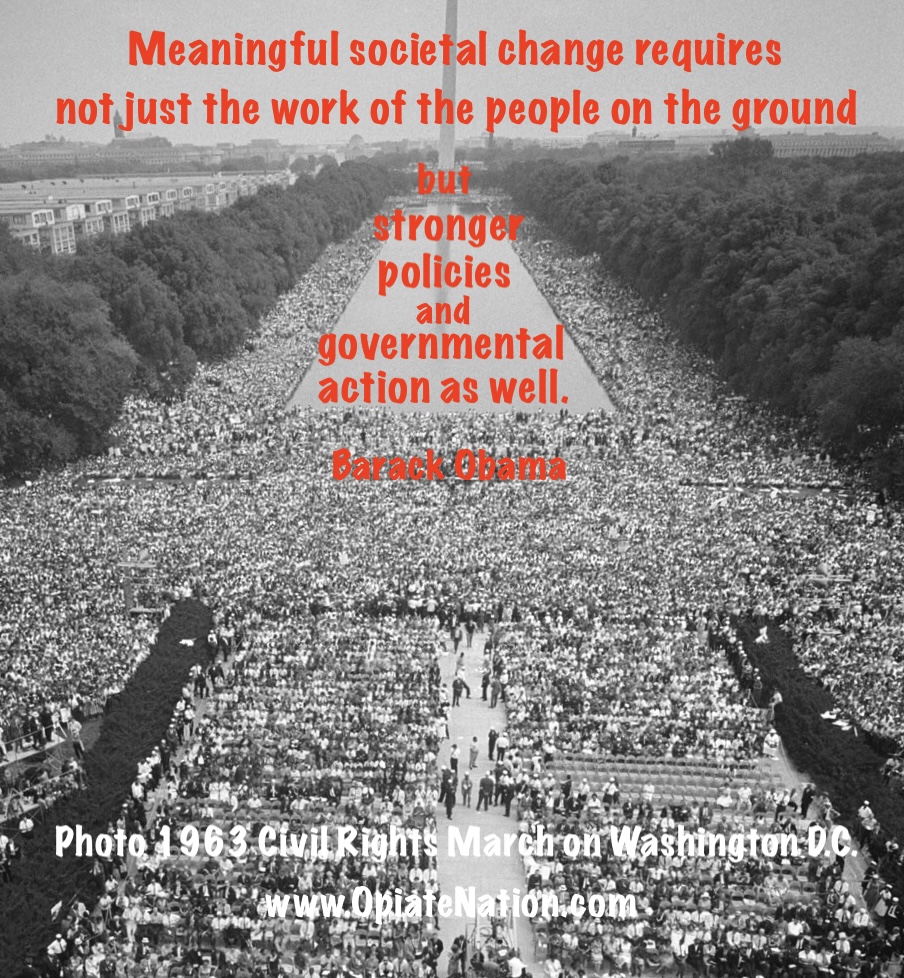
If we truly want to see future generations of children have the opportunity to grow up without the continual pull to use drugs, we need to keep our relationships with them open and healthy. Every year we can delay experimentation with addictive substances allows children’s brains to develop more fully in the area of judgment. We must all stay informed and aware and work in whatever arena we are able. As Barack Obama told Michelle when he was working for her as an intern, that he was in law school because grass roots organizing had shown him that meaningful societal change requires not just the work of the people on the ground, but stronger policies and governmental action as well. (4)

  1. Fentanyl and the U.S. Opioid Epidemic

https://www.cfr.org/backgrounder/fentanyl-and-us-opioid-epidemic

2. The Opioid Crises and The Pandemic

3. NSDUH Data Show Most Adolescents in the US Are Not Using Substances

    4. Becoming, by Michelle Obama, Chapter 8

    The Importance of Friends – Pt 2

    (Translation into most languages at tab to the right.)

    How do clean and sober friends stay involved with a friend who is in active addiction and/or alcoholism? I ended last month’s blog asking this question. In particular, I want to discuss ways that teens and young adults can deal with this difficult and at times very frustrating problem.

    What does being a good friend to someone who is addicted look like? 

    The first thing is to not pretend you don’t know about their addiction. Talk about it openly but without judgment. Understand that they may deny any problem, so you may have to cite specifics that have made you concerned. Express that you care about them and don’t think less of them as a person because of their struggles. Risk your comfort zone. “Greater love has no one than this: to lay down your life for your friends.” (1)

    Be a good listener. A problem with drugs or alcohol may start from just experimenting with drugs at a party or concert. It may then turn into addiction and be fueled by problems at home or with friends or underlying mental health issues. When your friend feels cared for and accepted and not confronted with more guilt or shame, they will be willing to open up. Nobody planned to become addicted and nobody wants to be an addict. Here’s links to good info on how to help someone trapped in addiction. (2,3)

    But, if you remain a good friend to someone who is living a self-destructive life, how do you help them without enabling their addiction? For young people who are good friends, enabling might be keeping secrets for them about their problem, especially from adults who may need to know in order to take life-saving action. It may be loaning them money or driving them to get drugs. The pressure would sound something like: “If you’re my real friend, you won’t tell…”  Or “If you really want to help me you would…” Basically, when you support their problematic behavior in the name of ‘helping’ them, you are actually keeping them from living with the consequences of their poor choices. And this will only prolong their problems and delay change. (4) 

    Encourage them to get help through programs like SMART Recovery groups or AA for alcohol and NA for narcotics. Very few people overcome addictive behaviors alone. Community is key. Go with them if you can or drive them. And remember, drug and alcohol recovery take lots of time and most people don’t succeed the first time they try to quit. Dr. John F. Kelly, clinical psychologist and addiction medicine expert, says it can take 8 years and 4-5 treatment attempts at recovery to achieve one year of sobriety from opioid and other drug addiction. It can take years to achieve stable recovery and Medication Assisted Treatment (MAT) is an important aspect. Gone are the times when a 30-day detox/treatment was seen as the solution to addiction. It may be an important first step in the process of ongoing recovery. People can and do recover, but it will likely be a lifetime journey. Here’s a YouTube 2025 video of Dr. Kelly giving a session on: The New Science on Addiction Recovery. (5)

    You can encourage your friend with each small step and success, even through relapses. In our son’s recovery program, we ended each session by saying together: “Keep coming back ‘cause it works if you work it.” It takes hard work and it can be very discouraging for your friend to relapse because your friend wants to be free. No one wants to live controlled by addiction. No one. Encouragement to stick with it is vital.

    If your friend or family member is using opioids, you should get naloxone (a medicine that can temporarily reverse the effects of an opioid overdose) and keep it handy. Available through local community-based programs or pharmacies.  

    It’s worth saying again: Friends are SO important for people in active addiction.

    Don’t ever give up on your friends trapped in addiction. They need friends more than ever, friends who love them and will invest in their lives and let them know they are a worthwhile human – while you also need to encourage them to seek help in order to become sober and stable. And to remind them by example of what a normal and joy-filled life is like and one that they too can have. 

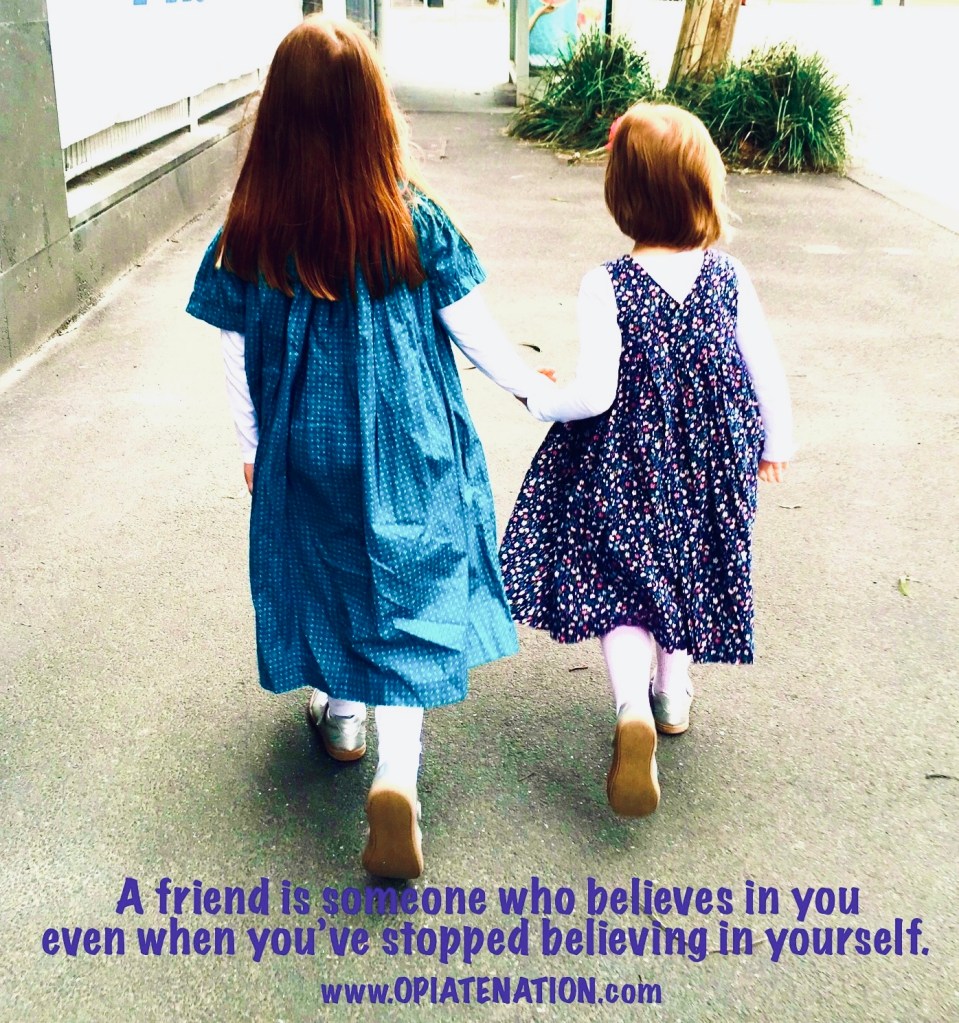
    A best friend is someone who believes in you 

    even when you’ve stopped believing in yourself.

    – Unknown

    1. John 15:13, New Testament 
    2. Helping Someone with a Drug Addiction

    https://www.helpguide.org/mental-health/addiction/helping-someone-with-drug-addiction

    • How to help someone who is misusing drugs or alcohol:

    https://www.healthdirect.gov.au/help-someone-who-is-misusing-drugs-or-alcohol#:~:text=Celebrate%20small%20successes%20and%20try,Narcotics%20Anonymous%20and%20SMART%20Recovery.

    • Four Signs of Enabling and How to Stop

    https://health.clevelandclinic.org/enabling

    • Dr. John F. Kelly, Ph.D. The New Science on Addiction Recovery (lecture)

    The Importance of Friends – Part 1

    (Translation into most language at tab to the right.)

    Approaching what would be my son’s 36th birthday, I thought about the last year of his life. I don’t think about it often because it is painful – so many wishes that things had gone differently for him.

    One sadness is that when in active addiction, he was very alone. It’s not that JL didn’t have lots of friends – he did. He was friendly and likeable and the large group of friends who came to his memorial is a testament to that. But most of his high school and university-era friends were not involved in his life during the last few years of his life, and the last year in particular. After his accidental fall and relapse to opiates in 2008 and the next seven years in and out of recovery programs, his life became narrower and something he was ashamed of.

    An event that stands out was during a time of heroin use that we were not fully aware of as he lived in our rental house, and we thought he was attending his classes at university. We received an urgent call from two of his friends telling us that they knew he was back to spending all his time with his friend that used heroin with him and they were not getting an answer to their calls. They were at his house and he wasn’t responding to their knocks on his door – did they have our permission to break his door down? Our frightened response was “Yes!” They found him deep in drugged sleep and alive but very startled when they burst in. They confronted him with what they knew and their concern about his drug use. He of course was defensive and pretended that nothing was wrong.

    Gradually, these friends, along with others, were no longer part of his life. JL did make a good friend or two in his recovery programs, but he always kept his addicted friends and dealers separate from his sober friends who were mostly not aware of his use and relapses – he had a pretty good poker face. Most of them were shocked to hear of his overdose death because he had been in a sober living house for six months and doing well.

    Many of the friends who had such good times together when JL was clean (although not necessarily sober, as they enjoyed drinking with him not realizing how that always led back to drugs for JL) felt guilt after his death. Guilt because he called several of them the week before his death when he had just relapsed. It seems he wanted a friend to talk to and perhaps perceive that he was struggling. And guilt because they wished they had stayed in touch with JL and not distanced themselves from him when he continued to struggle with addiction. 

    But there’s the rub: How do sober friends stay involved with a friend who is in active addiction? I think it is especially difficult for young people, who don’t know what they can do, who may be more concerned with their own lives and issues, and who are not yet mature. This is not to suggest that any human is ever totally selfless regardless of how old we are – I know myself too well to hold this delusion. But the passing of years does bring relational experience and can help us focus more on those around us.

    Next month I will try to share some insights and ideas for teens and young adults for how to truly be a friend to someone who is struggling with addiction and sobriety. Just remember: 

    Don’t ever give up on your friends or family who are trapped in addiction. They need good friends more than ever. King Solomon gave this wise insight 3,000 years ago: Two are better than one, because they have a good return for their labor: If either of them falls down, one can help the other up. But pity anyone who falls and has no one to help them up. (1)

    Many people will walk in and out of your life,

     but only true friends will leave footprints in your heart.

    —Eleanor Roosevelt

    1. Ecclesiastes 4:9-10

    Frankenstein Opioids

    (Translation into most languages at tab to right)

    Just when we thought everyone was aware of the fatal danger of fentanyl and it being mixed into every drug of abuse available on the street, a new threat arises. Nitazene or Isotonitazene (ISO) or Protonitazene, new lab-made opioids, are showing up at hospitals and morgues around the world in the bodies of people thinking they were taking their drug-of-choice only to find it was laced with one more deadly drug. It is being mixed in with cocaine, or formulated into fake Oxy’s and other pills. In the US, it first showed up in 2019 in the Midwest and spread rapidly.

    Nitazenes were developed in the 1950’s by pharmaceutical companies as an alternative to morphine but shelved due to the risks of overdose. There is still no approved medical use for nitazenes today. Another ‘Designer Drug’ being made in illicit labs around the world, Nitazenes are up to 40 times stronger than fentanyl. Fentanyl is already 50 times more powerful than heroin and up to 800 times more powerful than morphine.

    No wonder these drugs are referred to as ‘Frankenstein Opioids’ – only an insane, evil intentioned scientist would work to create such a drug. But in reality, the motivation is greed more than insanity because synthetic drugs are cheap to make and easy to ship and deliver – and highly profitable. But evil is the correct description for the immoral heads of the drug syndicates and cartels around the world whose entire life and business is dealing death. 

    What can be done?

    For parents with children still at home, community connection and education are the best preventative measures. As I have said before, my husband and I were totally unaware of what substances were readily available to our middle school son in the early 2000’s. Our concern was smoking and marijuana. Little did we know. General discussions about drug abuse were the extent of our educational conversations. But we would have been much better prepared and had much more information if we had been involved with our kids’ school community. Instead, we were insulated from vital resources because we spent so much time with our church community. But make no mistake. Many of the families at church with kids in youth group were just like us – unaware and ill prepared and sadly many of them suffered the same loss as we did.

    There are other important aspects in raising self-reliant kids who are not subject to the lures of the “cool” kids or “in” crowd. Below is a link to a previous blog dedicated to the perils modern teens and their parents face with important resources. I hope it will be helpful to you and those you love.

    https://www.dea.gov/stories/2022/2022-06/2022-06-01/new-dangerous-synthetic-opioid-dc-emerging-tri-state-area

    International Overdose Awareness Day – August 31, 2023

    (Translation into most languages at tab to the right)

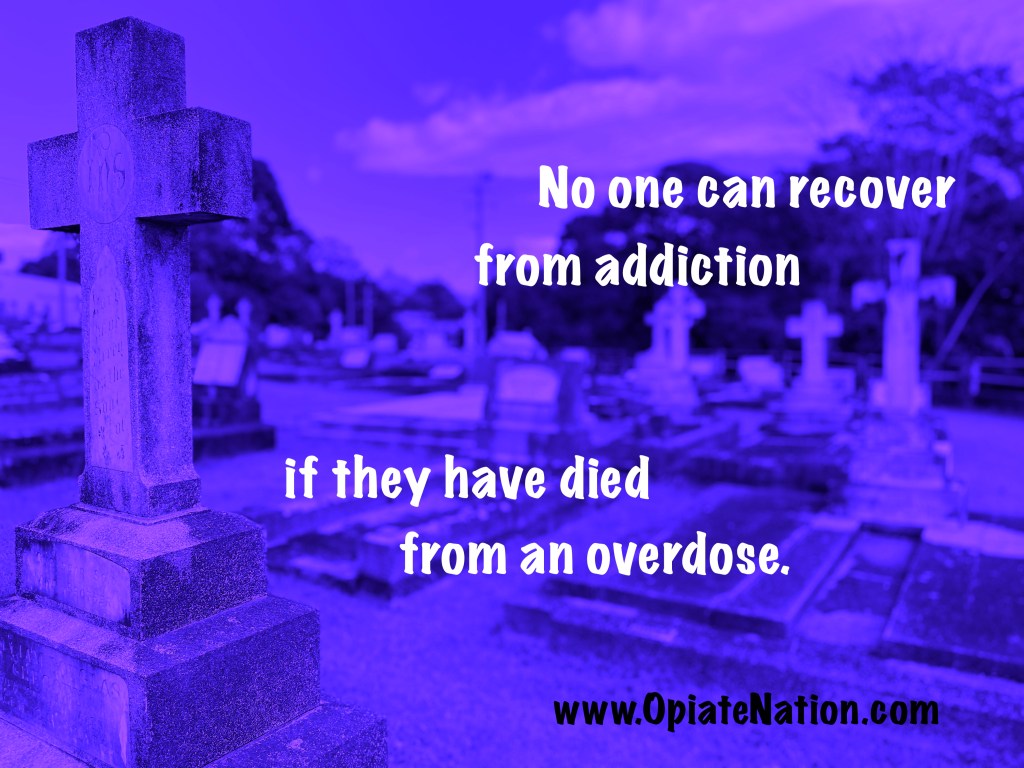
    No one can recover from addiction if they have died from an overdose.

    International Overdose Awareness Day (IOAD) is the world’s largest annual campaign to end overdose. It is a day to raise awareness about the risks of overdose, honor the individuals whose lives have been lost, and acknowledge the grief felt by families, friends, and the community

    With synthetic drugs made from chemicals in China and added into illicit drugs around the world, the need has never been more urgent to alert us all to the risk of overdose facing millions of people worldwide. What can we do to help prevent further loss of lives for those already struggling with addiction?

    Prof. Dan Lubman (Australia) shared a thought that stuck in my mind because it brought up memories of conversations I had with my son while he was addicted. Instead of asking, “Why are you taking drugs?” A more engaging question would be, “What put you in this vulnerable position?”

    This question shows the understanding that addiction is not just a matter of choice or will-power but that it is a complex problem that will not be helped with simplistic answers such as “Just Say No.” When a person feels less stigma, that they are not being judged, and that there is hope for them, they are increasingly likely to consider treatment.

    So, what does put people into the vulnerable position where drugs/alcohol are helping them cope with life? The 5 main factors that contribute to addiction are:
    genetics, mental illness, home and social environment, stress, trauma/abuse.

    We can’t do anything about our genes although if you know there is alcoholism/addiction in your family tree there is need for extra awareness and precautions. Mental illness once recognized and diagnosed properly, can be treated with therapy, education, and medication. Home and social environments, stress, and trauma and abuse are absolutely within parents, extended family, and society’s control. This is where raising our children as “a village” is so important, but it is in peril with our upwardly-mobile lifestyles of frequently moving house, not enough time together, and not engaging with our community. Educating our families and involvement in healthy and safe support networks such as service organizations and faith and school communities are a good place to start.

    Once someone is using substances to self-medicate, what can we do? First, we need to look for, and reach out to, people struggling with addiction. There may be some in your circle of friends – even in affluent communities. If we truly understand that those individuals will shrivel in shame from stigma, we can start by changing how we speak about them and to them – we’ve changed our language for things a lot less deadly. Building trust over time is critical to someone feeling they can openly discuss their problems. We can find out more about what is being done in our community to support recovery efforts and get involved with clean needle exchanges, Narcan training and distribution, opioid substitution therapy, food distribution, safe injection and health facilities, etc.

    In a report from Norway discussing housing for people who are addicted, Jon Storaas, manager of RIO, an organization in Norway working to help substance abusers, said, “We need to provide residences to ensure that addicts can live with neighbors who don’t share their drug problems…meet with them, talk about their problems…this kind of experience and openness can strip people of their ordinary prejudices. You need to create these encounters so people can see that drug addicts are human, too. Extreme examples of ordinary people, you might say. But ordinary nevertheless.” (1)

    In 2018 Time reported that in the 1990’s, Portugal was in the grip of heroin addiction. An estimated 1% of the population—bankers, students, socialites—were hooked on heroin and Portugal had the highest rate of HIV infection in the entire EU. But in 2001, Portugal took a radical step. It became the first country in the world to decriminalize the consumption of all drugs… while drug dealers still go to prison.

    The results? The drug-induced death rate has plummeted to five times lower than the EU average and stands at one-fiftieth of the United States’. Its rate of HIV infection has dropped dramatically. Drug use has declined overall among 15-24 yr-olds, those most at risk of initiating drug use. And, by eliminating the threat of criminal penalties—and along with it, a great deal of stigma—it has become easier for people to seek treatment.

    “What America and other countries can learn from Portugal is to treat people with more dignity.” Portugal has showed that, without spending significant sums, governments can give drug users the tools to put their lives back on track. But to do so, it will have to stop treating them like criminals. (2)

    Ultimately, what IOAD is about, what this blog is about, is Awareness: Becoming aware of a problem is the first step towards solving that problem. For this August 31st, I want to remember all those who have died from drug or alcohol overdose, my son included. Remember that they were precious individuals who were loved by their parents, family, friends and God. And although we live in a world where death is something that happens to every person who is born, premature and preventable death is a tragedy that each and every one of us should work diligently to prevent. Let’s find our arena and fight for the lives of those we love.

    No one can recover from addiction if they have died from an overdose.

    (1)

    Addicts Want Sober Neighbours by Georg Mathisen
    Saturday 11. January 2014, Norway
    https://sciencenorway.no/addiction-drug-rehab-drug-use/addicts-want-sober-neighbours/1395274

    (2)

    WANT TO WIN THE WAR ON DRUGS? PORTUGAL MIGHT HAVE THE ANSWER By Naina Bajekal | Photos by Gonçalo Fonseca – August 1, 2018
    https://time.com/longform/portugal-drug-use-decriminalization/

    Slavery or Freedom?

    (Translation into most languages at tab to the right)

    I’ve been thinking about slavery and the people throughout the millennia who have been slaves – and the estimated 50 million people worldwide who are currently enslaved. (1) Every empire from the beginning of recorded history has functioned and prospered on the backs of slaves: people captured during war or kidnapped, enslaved against their will.

    In the modern world, people can end up in ‘slavery’ in a variety of ways: economic, sexual, labor, etc. They may have been enticed or tricked into their captivity by promises of adventure or money, coerced or blackmailed because of a past circumstance, or forced into it due to poverty and debt.

    How does it feel to be enslaved? Much of the time, it destroys one’s sense of personhood. Your ability to exercise your will and make choices has been stolen from you. Control and exploitation by another person or entity has robbed you of your dignity and ability to determine the direction of your life. It can feel like being on endless stairways that lead nowhere.

    One thing is certain: no one ever consciously chooses to be enslaved. No one. But the many lures currently dangling in front of young people to have fun and feel free and to be in control of their own life and happiness can be so deceptive. Yet they are not mature enough to be capable of discerning that they are actually making a choice to become imprisoned – whether it is with alcohol, drugs, promiscuity, gambling, power, success, etc.

    I think it is safe to say that anyone who has struggled with any type of addiction knows they are enslaved. They are in servitude to an all-consuming, dominating, master. Their world is restricted due to the demands their addiction places on them. I saw this play out in pitiful detail in our son’s long struggle with heroin and alcohol. I didn’t understand why he would want to cut a trip short or not go at all if we were flying. It was due to needing to use and/or maintain a supply of illegal drugs. As he became unable to focus on his university classes, he had to drop out and work at jobs frustratingly inconsistent with his interests and well below his God-given abilities.

    He was not free in any sense of the word.

    What is real freedom? Is it to be ‘a free agent’ able to do whatever one wants regardless of society or others’ thoughts or needs? To not be responsible to anyone? To chant the modern mantra that individual freedom is our right and supersedes all other claims? Or is it something more, something that starts in our mind and soul and that results in the ability to make good choices in order to be healthy and safe and productive and of service to others? Webster’s Dictionary describes freedom as “the absence of necessity, coercion, or constraint in choice or action; liberation from slavery.” Liberty is not the power of doing what we like, but the right to do what we ought. (John Dalberg-Acton)

    Once someone is addicted, how can they escape the slavery of addiction? We need reformers and abolitionists who know specifics of ‘the slave trade’ and how to liberate individuals. And also, how to reform not only the laws and principles of society but how we think about addiction in order to accurately view those who are enslaved. In the past, in whatever culture slavery was embraced, the way a society could justify its policies was to consider those people as ‘less than’ – less than human, less than worthy of normal rights, even less than deserving of wanting another way of living. And even further, that these slaves should be content with their bondage.

    I love this song by Kim Hill, She’ll Come Around. It speaks to this point.

    https://www.youtube.com/watch?v=uwf6rQnqkXQ

    We all know that is not true because if we put ourselves in their place for a moment – walk a mile in their shoes – we would do anything to be free. But do we all understand and admit that most people who are living in addiction, if given a choice and a viable option, would choose to be free? If so, let’s get rid of denigrating thoughts and words and help change public policies to teach preventative measures to parents and young people and provide restorative solutions to those fighting addiction. (2) And may each of us encourage those who struggle by helping them find real, lasting solutions to the weight of bondage they stagger under.

    Our freedom can be measured by the number of things we can walk away from.
    Vernon Howard

    1. https://www.antislavery.org/slavery-today/modern-slavery/
    2. https://www.washingtonpost.com/health/2023/02/05/drug-deaths-prevention/

    Mark Heard’s Victims of the Age is a song all about what young people have been and continue to be struggling with growing up in the modern world.

    The Least of Us, Pt 3: Reasons for Hope

    (Translation into most language at tab to the right)

    Sam Quinones is a quintessential storyteller in an investigative journalists’ body. And he uses his skill to weave in stories from families and communities along with the “true tales” from recent history of greed, corruption, deceit, and the politics surrounding the drug epidemic we are living with today. It is his reason for hope that I want to focus on now. Heaven knows we need some hope for The Least of Us… In the Time of Fentanyl and Meth. (1)

    Part of the hope he feels comes from positive changes beginning in how drugs and addiction are viewed now compared to previous decades. ‘…greatly expanded drug treatment is part of what America needs…recovering addicts face scary odds as long as the drugs that torment them are widely available, potent, and almost free. The now-cliché is “We can’t arrest our way out of this.” We can’t treat our way out of it, either, as long as supply is so potent and cheap.’ (2) He discusses the mistake of drug criminalization, the possibilities and problems associated with drug legalization and drug decriminalization – all very well thought through and discussed. He traveled across America and interviewed professionals in every field to gain insights into this nightmare that is swallowing lives from every socio-economic group. (For those unclear about what opiates or meth do to our brains, there are detailed explanations woven in throughout the book.)

    But his biggest reason for hope came from when Quinones traveled and also extensively interviewed another segment of American society: the addicted, their families, and those working in the many fields who are trying to restore the lives of those taken captive by these powerful substances. I have to say, many of the stories were hard to read, but it is from these people in the trenches and their stories that Quinones began to have hope.

    Drug courts are one reason to hope. Because synthetic dope today does not allow users to hit rock bottom before seeking treatment – because ‘Today, rock bottom is death. We can use arrests – but not as a reason to send someone to prison. Instead, criminal charges are leverage we can use to pry users from the dope that will consume them otherwise.’ (3) It helps to put some space between their brain and dope so they can embrace sobriety where life repair can begin. Drug courts are not a luxury – they are a necessity.

    Yet Quinones found that ‘…our best defense, perhaps our only defense, lies in bolstering community. America is strongest when we understand that we cannot succeed alone, and weakest when it’s every man for himself…That’s why the lesson we must learn is that we’re only as strong as the most vulnerable, as people who are in pain. (4)

    As he traveled and listened, Quinones saw that it was people who loved those who are ‘the least of us’ who were making the sacrifices on a daily basis to help in ways they could. But they need help and support – from others and from the policies that are in place in our country.

    Recently, I was sharing with a woman the contrast we experienced while we lived in Australia with our daughter and family for two years from the beginning of the Covid pandemic. I said that we were struck by the self-centered mentality – in private life and politics – we encountered when we returned to America and how different it is from the sense of being part of a community and responsibility to others that pervades Australian society. She responded: ‘I’d rather be selfish and self-centered than have my rights and freedoms taken away.’ I was literally speechless. What have we become?

    Bolstering community will take a change from our self-centered culture where we who have plenty think we don’t have enough. Where we at the top of the food chain, instead of helping to maintain our communities, have corroded them in isolating and insulating ourselves by abandoning the places where we used to come together like neighborhood parks and community gatherings. ‘We need to again make policy of the belief that we can’t go it alone. The spirit of community needs to be built out, collectively, not just a shift of heart, which is necessary, but in taxation, in health care, in improved infrastructure – in other words, a shift in where the resources go…much of what neuroscience has learned about our brain confirms religion’s truths: humans need love, purpose, compassion, patience, forgiveness, and engagement with others. We’re built for simple things – for empathy and community. That is our defense.’ (5)

    He ends his book, his plea to all of us, with this:

    ‘Community reconstruction doesn’t have to always be complex. It comes down to the unnoticed “constant habit of kindness” that French observer Alexis de Tocqueville, in the mid-1800’s, saw strengthened us locally and kept Americans from destructive isolation and the worst of individualism…The lessons are that we are strongest in community, as weak as our most vulnerable, and the least of us lie within us all.’ (6)

    Thank you, Sam.

    1. The Least of Us: True Tales of America and Hope in the Time of Fentanyl and Meth by Sam Quinones
    2. Ibid, pg. 364
    3. Ibid, pg. 367
    4. Ibid, pg. 367
    5. Ibid, pg. 369
    6. Ibid, pg. 369

    Addiction Constriction

    John Leif Trang – March 10, 1989 – August 2, 2014

    (Translation into most languages at tab on right)

    On March 10th, our son would have been celebrating his 33rd birthday. That day is now a painful reminder of all the potentials and possibilities that a young person should be experiencing in the 4th decade of their life.

    After JL died of a heroin overdose in 2014, I began the dreaded process of sorting through his belongings – which included his computer and phone. Many of the photos on his phone I had never seen and some have now become permanently seared into my visual memory. One is of JL with a Boa wrapped around his shoulders and neck.

    Boas are constrictors. Constrictors don’t chase their prey. They are ambush hunters. A boa grabs its prey with its teeth, then quickly coils its body around the prey and squeezes. It doesn’t break the bones – it constricts so tightly that its prey can’t breathe. With each exhale, it tightens its coils until its prey dies slowly from an overwhelmed circulatory system due to blood not getting to the brain. Once dead, the snake swallows its prey whole.

    Continue reading “Addiction Constriction”

    Isolation Loneliness

    It has been said thatthe opposite of addiction is not sobriety, it is connection – to others, to a community.The Coronavirus pandemic has brought disconnection and magnified loneliness and stress for people the world over due to social isolation, economic instability, reduced access to spiritual communities, and overall national anxiety and fear of the future. “We certainly have data from years of multiple studies showing that social isolation and social stress plays a significant role in relapse…relapsing to drug use can play a role in overdose.” Dr. Wilson Compton, deputy director NIDA.

    The acronym HALT: Hungry, Angry, Lonely, Tired, is used in Alcoholics Anonymous and most recovery programs. It is a simple reminder that when our basic human needs are not met, one is susceptible to toxic thoughts and self-destructive behaviors including relapse and suicide.

    Regardless of where you live, there have likely been restrictions imposed to limit the number of people who can gather together – from dozens in some countries to only the members of your immediate household in others – in order to slow down the high-speed train that is Covid-19. For many of us, we have been able to maintain our emotional equilibrium because we know this is for a limited time and we can look forward with hope to the future.

    But what about those vulnerable members of society who already struggle on a daily basis with insecure housing and food supplies and to maintain their mental health, sobriety, or recovery? In the midst of one of the most isolating crises the modern world has known, it is no surprise then that cities across America, and around the world, are reporting dramatic increases in drug overdoses, alcohol relapses, and suicides.

    In-person community meetings are at the foundation of recovery programs. And no wonder. It is in community where individuals become part of something greater than themselves. And I believe it is in the breakdown of communal life in individualistic American ideology that has, to a great degree, contributed to the anxiety, insecurity, and depression that so characterizes our national psyche and has led to the pursuit of finding relief in so many unhealthy ways.

    A friend of our son who is an alcoholic who has been working his recovery for the past 8 years, put it this way: 

    “Self-isolation breeds relapse for people in recovery. With quarantine, people are losing the accountability they have relied on from in-person meetings and it’s a lot easier for people to further isolate and close off their emotions. Attending virtual meetings keeps me grounded and gets the message across as much as regular in-person meetings but lacks the fellowship aspect. This will no doubt expose many in recovery to loneliness.”

    Even though increasing numbers of people around the world are vaccinated, it will not stop some of the isolation and loneliness. Is there anything those of us who are not isolated emotionally can do to help? The one thing my husband and I have made as a priority in our weekly schedule is to check in with friends around the world via texts, emails, letters, phone or video calls – including our young friends who are in recovery and elderly friends who just need to know they are not forgotten. With our social networks and finances, we can support organizations that are working the front lines to serve the addiction/mental health population. We can make or purchase masks, buy food and basic supplies, to give to those in need and support recovery programs in our area.

    Malcolm Guite

    Blog for poet and singer-songwriter Malcolm Guite

    The Gift of Need

    How Need Can Strengthen Individuals and Communities

    Memoirs and Musings

    David Bradley Such

    Dave Barnhart

    Church planter, pastor, author, coach

    RecoveryLife101

    Just another WordPress.com site

    Abbie In Wondrland

    life...on Gods' terms.

    Living In Graceland

    "..learn the unforced rhythms of grace" matt 11:28

    Janaburson's Blog

    All about opioid addiction and its treatment with medication

    Breaking In News Network

    Seeking the truth and bypassing the MSM

    Junkbox Diaries

    Trauma, PTSD, Mental Health, Addiction, and Recovery

    Ohio Society of Addiction Medicine

    The Ohio Society of Addiction Medicine is a chapter of ASAM - A professional society actively seeking to define and expand the field of addiction medicine.

    traceyh415

    Addiction, Recovery, Loss, Grief

    WordPress.com News

    The latest news on WordPress.com and the WordPress community.