Why Grieve? First, those who grieve well, live well. Second, and most important, grief is the healing process of the heart, soul, and mind. It is the path that returns us to wholeness. Until we do, we suffer from the effect of unfinished business.
~Elisabeth Kübler-Ross, On Grief and Grieving, pg. 229

(Translation into most languages at tab to the right)
Like most people in Western societies, I was never taught how to grieve the loss of someone I loved. My family had not suffered the untimely loss of anyone close to us. Elderly grandparents passed and we would miss them, but quiet tears and sad faces was all I ever saw at those rare funerals. And grief is not something one normally thinks about when we are young. Unless it is a very close relative or friend, the empty space left by a person doesn’t drag us down to the depths of our soul when we are young and resilient.
When my younger brother died of AIDS at 40, it was the first death of someone I loved dearly and it was the first time I felt my heart break. I couldn’t seem to function because life had suddenly become dark and unknowable. If this could happen, anything could happen. I was afraid. How could I survive this? I had very few tools to help navigate the grief and didn’t know anyone who could empathize with this tragedy other than my husband John. My parents were devastated but mostly unable to talk about it. There were other deaths that followed: When my sister died of breast cancer that metastasized to her brain at 56. And when my youngest brother died a death of despair from suicide at 52. The feelings were much the same but by then I had one thing that helped. I knew from experience that I would survive.
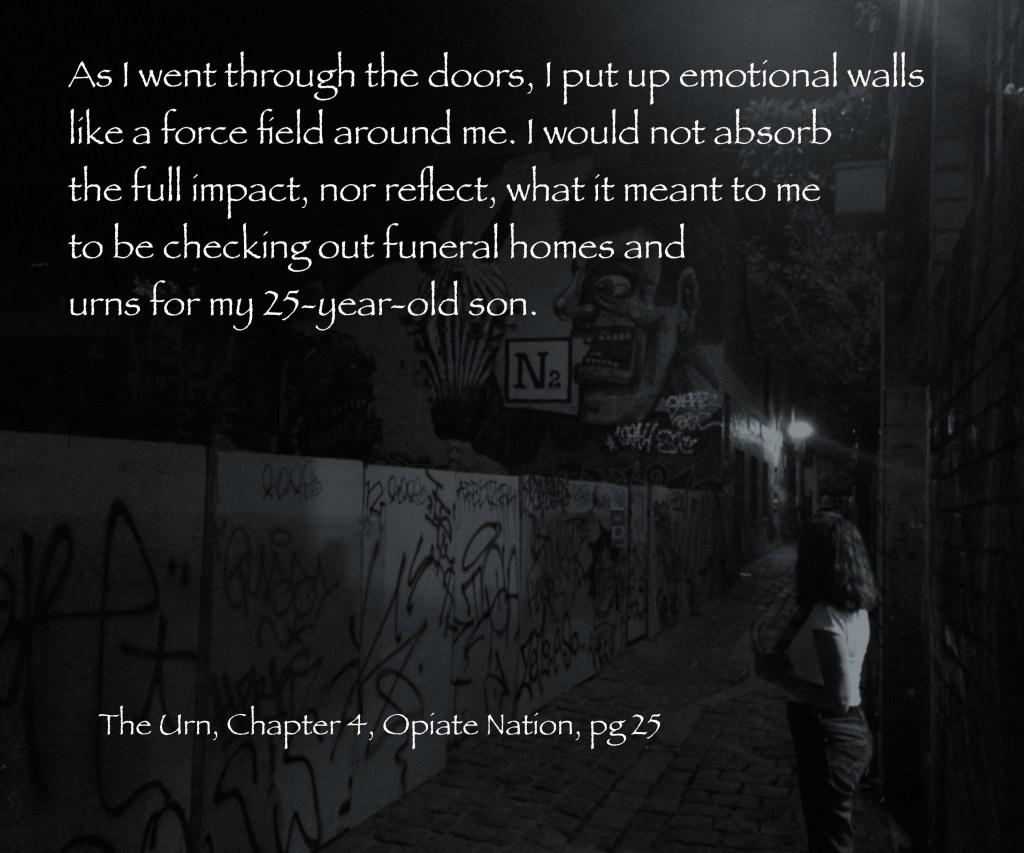
Then in 2014, John and I experienced the most painful event of our lives. Our 25-year-old son died of an accidental heroin overdose. Today, he would have been 37. For this, we needed survival skills that went beyond the love and care of family and friends. Thankfully, we were introduced to On Grief and Grieving: Finding the Meaning of Grief Through the Five Stages of Loss by Elisabeth Kübler-Ross and David Kessler.(1,2) Knowing that everything we were feeling was normal was a comfort in and of itself. It is a guide for the process of grieving that has helped millions of people understand that grieving well takes time and cannot be rushed. These five stages follow a predictable pattern but are not necessarily linear or progressive because each response to loss is as unique as each loss. I wrote in detail about how we navigated the grief from our son’s death in Opiate Nation: A Memoir of Love, Loss and Acceptance. (3)
The Five Stages of Loss are: denial, anger, bargaining, depression, and acceptance. Disbelief was perhaps a better way to describe our denial – feeling paralyzed by this sudden shock, and an inability and unwillingness to face what happened. Our bodies and our souls were in so much pain. We didn’t want to believe that our son was really gone from our lives, from this earth. But this stage is where many people get stuck. Moving out of denial and facing the facts will not happen until we feel safe and know that we are ready to handle what really is.
Once we are ready to face reality, anger surfaces. It is part of the process of loss because anger brings a sense of temporary control we once thought we had and that is now gone. Kübler-Ross stresses that to not allow anger may slow down the grieving process. Many people, especially people of faith, avoid anger because isn’t “acceptable” and it is unthinkable to be angry at God. And there is an added sense of unfairness that complicates grief when the young die.
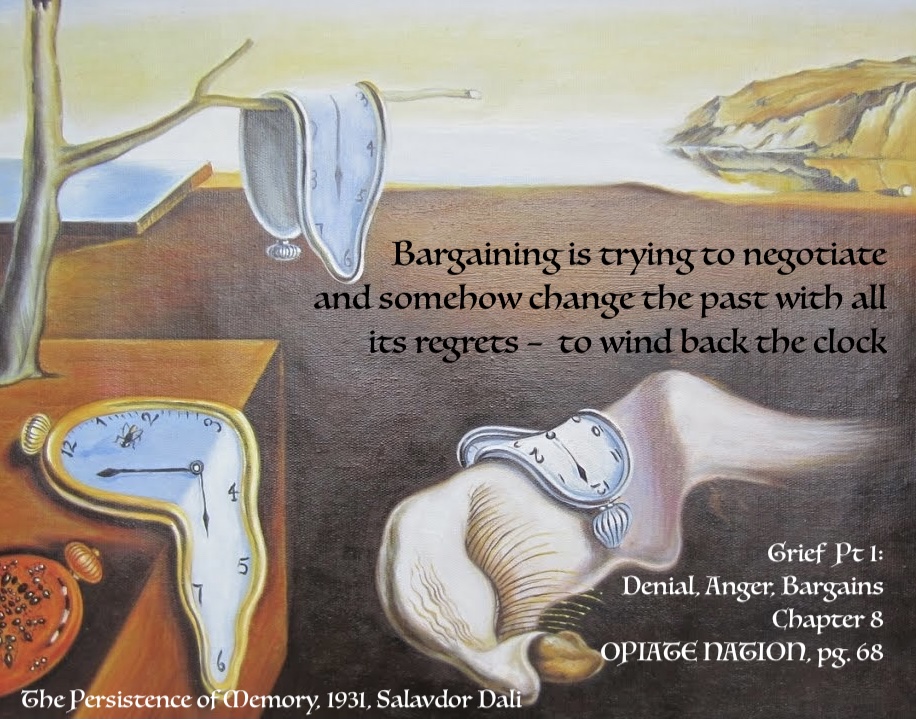
Bargaining is negotiating with reality while we vacillate between thinking there is something we can do and realizing there isn’t. The overwhelming pain involved with accepting reality causes us to alternate between hope and despair. John and my journal entries are full of “if only’s” and regrets, evidence that we tried to negotiate and somehow change the past.
Truly feeling the overwhelming feelings of the reality of the loss leads to depression. This was the most difficult aspect of grief and the longest for us. We had to face the fact that the place our son occupied was now empty. Learning to sit with our feelings of deep sadness was not easy. It was a slow slog through each day and night.
The final stage of grieving is acceptance. It makes change possible and makes our present circumstances bearable and even good. For people of faith, we surrender to God’s ultimate plan and it can bring peace, forgiveness, healing, and a newfound freedom. That allowed us to move forward to a better, although different, future. This is where we begin to see some of the gifts that have accompanied the loss.
Death is part of living as humans on this earth and death brings grief. It is one of life’s equalizers. Our learning to grieve well becomes a gift to others suffering through the death of a loved one as we also model how we mourn, which is the external part of loss. Learning to accept our humanness and our limitations helps us learn about grace and forgiveness, towards ourselves and others. When we experience grief, we have experienced the full cycle of being human. Greif transforms our broken and wounded souls and has the power to heal. Leo Tolstoy said, Only people who are capable of loving strongly can also suffer great sorrow, but this same necessity of loving serves to counteract their grief and heals them. And when we heal and continue to live after the loss of our loved one, this is the gift that grief gives us and that we can share with others.
- The Elizabeth Kübler-Ross Foundation. https://www.ekrfoundation.org/elisabeth-kubler-ross/
- David Kessler https://grief.com/the-five-stages-of-grief/
- www.OpiateNation.com


 Opiate Nation