(Short topical blogs based on Opiate Nation – translation into most languages in tab on right.)
When we hear the phrase “ghost stories” most of us think of scary and spooky stories shared around a campfire with the intended, and predicable, consequence of keeping us awake at night.
But when H Lee (aka Harris Insler) decided to call his new podcast series “These Ghosts Must Be Heard”, it wasn’t because he would be interviewing people with paranormal experiences. And although the stories his guests share aren’t scary in the ghoulish sense, they have kept their narrators awake at night for days, weeks, and months on end. John and I included. (To hear our interview with Harris, see links below for Podbean, Amazon, Spotify.)
These are real-life experiences and these “ghosts” are the spirits of our deceased loved ones: children, friends, partners who have succumbed to premature and preventable deaths from opioid overdoses.
(Short topical blogs based on Opiate Nation – translation into most languages in tab on right.)
While reading Rising Strong by Brené Brown, I was struck by a thought she shared about our American culture and the absence of honest conversation and the hard work it takes for us to rise strong after a fall on our face – a failure. She worries that “this lack of honesty about overcoming adversity has created a Gilded Age of Failure.”
Gilding is a perfect word-picture for this characteristically human behavior: applying a very thin coating of gold to a plain, inexpensive object that gives it the appearance of gold. This is what we do when we are dishonest about our feelings. We are choosing to make our real, plain, and common story appear better than it is.
“We’ve all fallen…but scars are easier to talk about than they are to show with all the remembered feelings laid bare…We much prefer stories about falling and rising to be inspirational and sanitized…We like recovery stories to move quickly through the dark so we can get to the sweeping redemptive ending.” (Rising Strong, Introduction)
(Thirty-first in a series of topical blogs based on chapter by chapter excerpts from Opiate Nation. Translation into most languages is available to the right.)
There is something about the rise of a full moon that I just love. I’m not sure why it holds such fascination for me, but it always has. I’m greedy about it – I wish we had a full moon every night, like we have the sun every day. When I was growing up in Tucson, Arizona, I loved anticipating the moon’s first peek as it came up over the mountains on the eastern edge of our valley, creating a silhouette of Thimble Peak. Then, it was as if the moon just popped up and suddenly the entire valley was bathed in moonlight. I loved walking in the desert under its light. The movie, Under the Same Moon, captures the beautiful thought that regardless of where we are in the world, we can look up and know we are under the same moon as those we love.
Anticipation can bring pleasure or anxiety as we are waiting for or pondering a future event. Expectation – like a child waiting for their birthday. But during the Covid Pandemic, there is a sense of anxiety from there being no known end in sight. The anticipation is open-ended and we are unable to plan ahead, which has caused instability in many areas: our health, jobs, housing, food supply. We may anticipate a not-so-good outcome and the future is not predictable or knowable. Not that any of our futures are predictable or knowable, but there are fairly reasonable assumptions we can make when life is close to “normal”.
(Thirtieth in a series of topical blogs based on chapter by chapter excerpts from Opiate Nation. Translation into most languages is available to the right.)
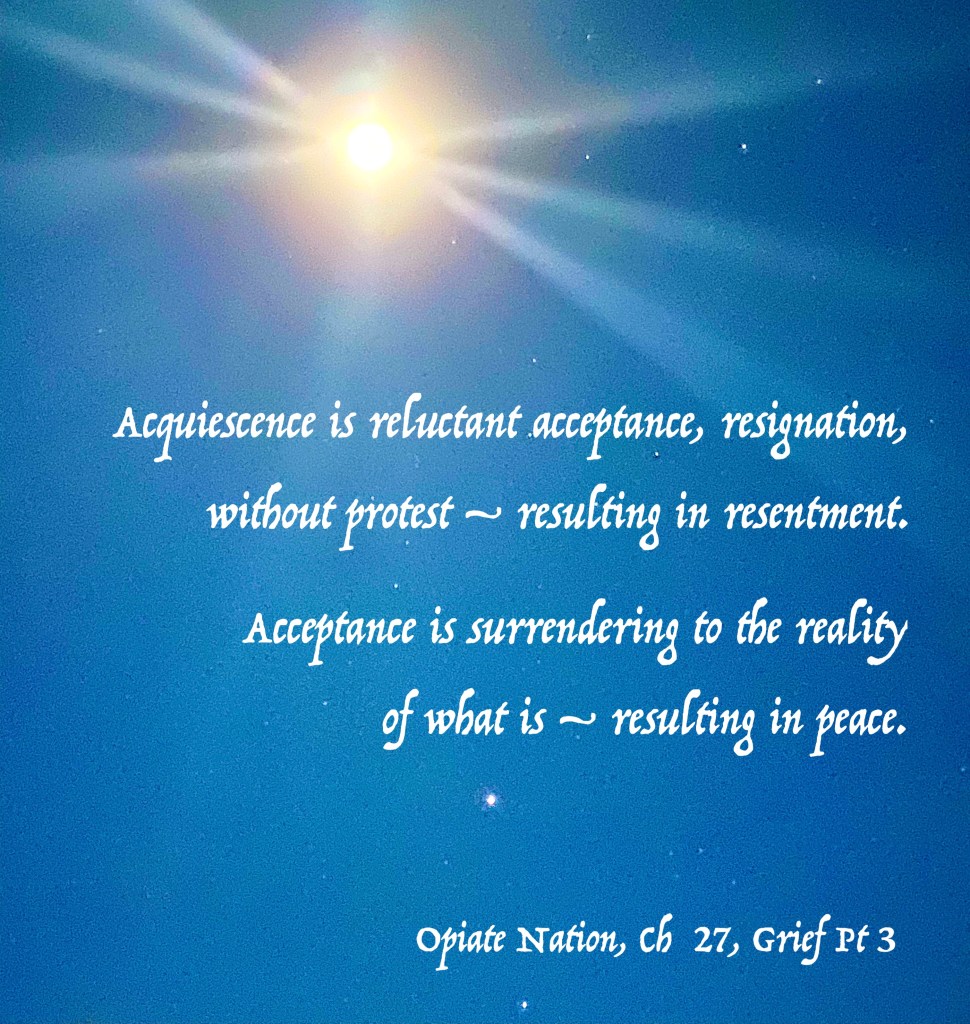
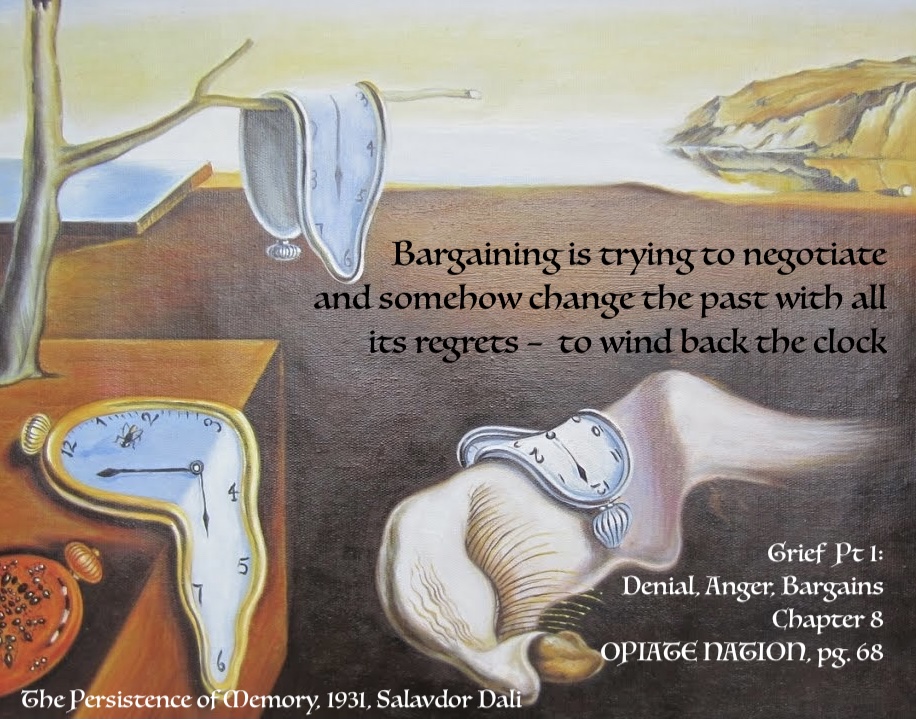
When I finished writing Chapter 27, Grief Part 3: Accepting the Mystery, I didn’t realize what I had actually done. It was four years after our son had died, the pain from the first few years had diminished, I had gone through four of the Five Stages of Grief, and was moving forward in what I thought was the final stage, Acceptance. I was not dealing with denial, anger, bargaining, or depression any longer.
One day I was on a call with a friend. She was telling me her thoughts about the book and asked: “Do you realize what you have done?” No, I guess not. What? “You have gone through the sixth stage of grief: finding meaning. Your book was your way to find, and then share, meaning in the loss of JL’s life.”
She was right. But it wasn’t a goal I set out to accomplish. I think it was intuitive for me, something I had to do. Even after we finally accept the reality of a tragic loss in our lives, many of us want to find meaning. While we can’t find reason in the death, we can choose how we ascribe meaning to the life. I did not want JL’s life to seem meaningless.
(Twenty-ninth in a series of topical blogs based on chapter by chapter excerpts from Opiate Nation. Translation into most languages is available to the right.)
I have never been one to accept something without question – anyone who knows me well, knows this – and they live with the frustration my incessant questions create. But it’s the way I need to process what is happening to or in or around me in order for me to honestly make the decision to accept or reject whatever the issue is at hand. I don’t think I could live with myself if I pretended I agreed or accepted something when I didn’t – the dishonesty would keep me in turmoil. And many times, it is ultimately for self-preservation that I accept something distasteful or painful when I finally understand there is no other option.
Death leaves us no other option – it is not negotiable. For most of us, our survival instinct brings us to the realization that in order to retain our sanity, we must eventually accept death – even of those we love the most in this world – whether we like it or not.
(Twenty-seventh in a series of topical blogs based on chapter by chapter excerpts from Opiate Nation. Translation into most languages is available to the right.)
Death naturally brings up thoughts and questions about existence beyond this life, this earthly existence. I love how John Milton said it: “Death is the golden key that opens the palace of eternity.” For us, after a death so intimate as our son’s, one can imagine how often we thought about it, particularly in the subsequent months.
One thought that continues to captivate John and I is the possibility that others can look into our time while they are in eternity, in heaven, like someone looking into a cell under a microscope at us, the human specimens. Or are they frozen in time, like being in a time capsule?
Six weeks after JL’s death, my journal entry highlights these questionings:
JL,
Mom here. I’ve been wondering, and wishing I knew the answer for sure, if you and others who are gone can hear us and are conscious of what is happening on earth and in our lives. Can you hear when Dad and I talk to you? If you can, I think you would be crying for us many times as you see and hear our pain. I hope we are not causing you any more pain…
Dad and I went out to dinner and talked about this. What he brought up was that eternity, by definition, is the absence of time as we know it here on earth. So, if those of you who are dead are also in “no time,” even though present with the Lord, you may not experience any consciousness between death and the final resurrection we believe in—it may just be a flash. Hmmm…I don’t like that concept. I want to know you hear me and my apologies and love and thoughts towards you.
Singer-songwriter Phil Keaggy’s song “Time” from his album Love Broke Thru expresses the limits in which Father Time exists:
My friend, David Such (a mechanical engineer, writer, artist) wrote a blog about the Elasticity of Time. Here is a relevant thought from that blog:
Most of us human beings are locked into “earth time” so it can sometimes be difficult to understand, but Einstein taught that “time” is elastic depending on one’s position, perspective, and velocity. I am merely a mechanical engineer and do not fully understand all the physics or all the mathematics, but I do understand the concept as follows. As we increase our velocity, we reduce the difference between our own speed and the speed of light. This is insignificant unless our velocity is extremely high. As we approach the speed of light, “time” slows to a standstill (and apparently, even “matter” takes on different shapes and densities).
In 1676, the Danish astronomer, Olaus Roemer, first successfully measured the speed of light: Lightspeed. For those of us who believe in God and that his intelligence designed the Universe, his words “Let there be light” have much significance. Eternity must at least be full of light, beyond time, beyond darkness and death. In death do we instantaneously exist in lightspeed and the absence of time?
If so, is JL zipping and zooming around the universe at lightspeed now, with all the other souls who have left this earthly constraint of time? I have no clue, but I smile at the thought.
(Twenty-third in a series of topical blogs based on chapter by chapter excerpts from Opiate Nation. Translation into most languages is available to the right.)
For generations, the combination of personal shame and public stigma has produced tremendous obstacles to addressing the problem of alcoholism and drug addiction in America. Addiction stigma prevents too many people from getting the help they need.–Hazelden-Betty Ford Institute for Recovery
Historically, the word shame was used interchangeably with guilt – the appropriate pang of conscience that followed doing something wrong. In reality, there is an important distinction between shame and guilt. Shame is about who you think you are; guilt is about what you have done.
Stigmas are linked to shame. In the Greek and Latin worlds, a stigma was a mark or brand, especially for a slave, identifying them as “inferior.” Later, it became known as a mark or stain we can’t see with our eyes: social stigmas that are based on perceivable characteristics, associated with certain behaviors that distinguish a person from other members of society. They convey disapproval and disgrace.
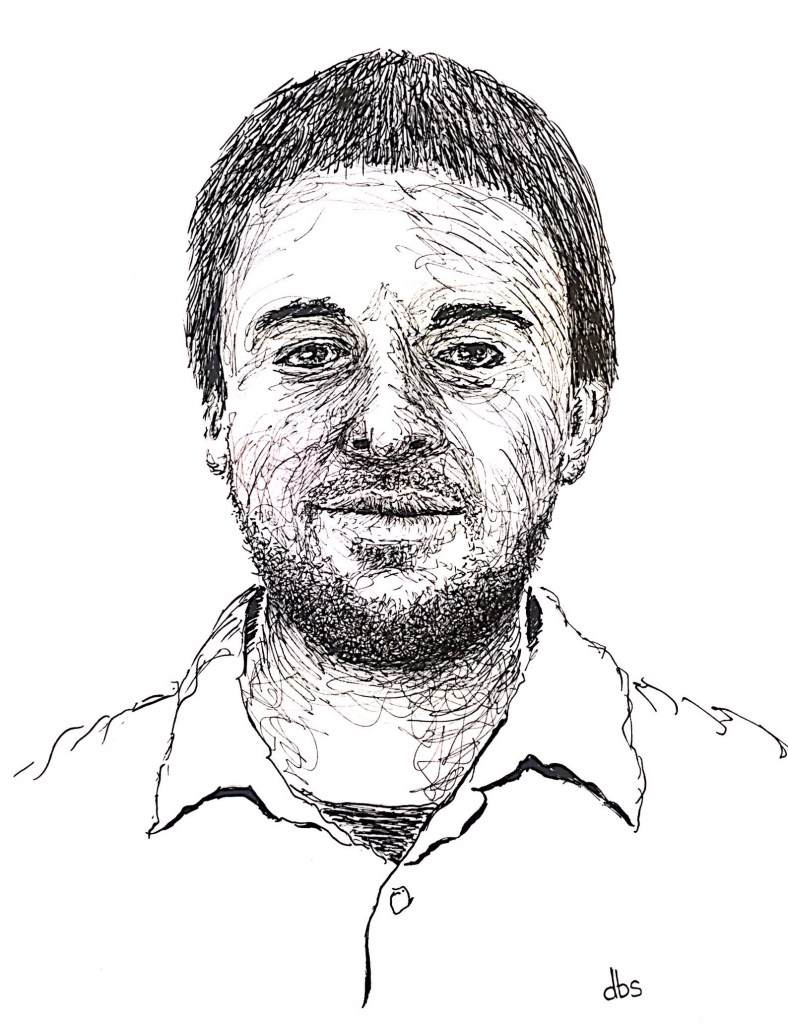
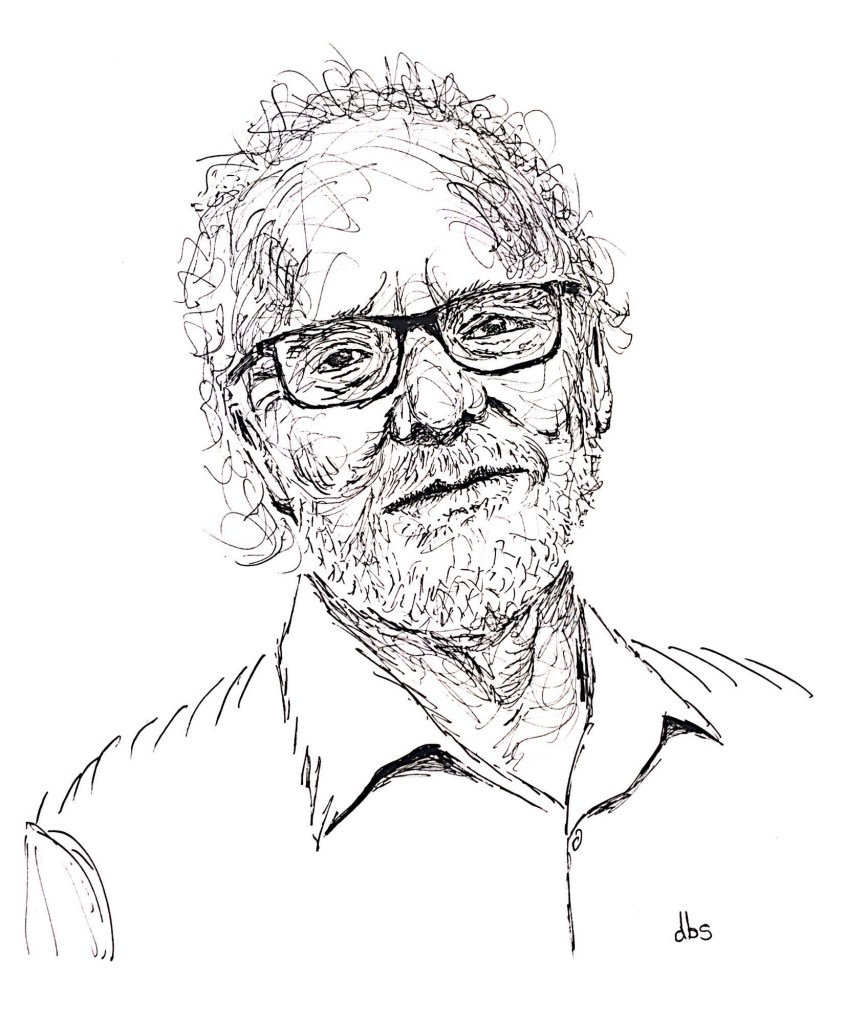
Fellow WordPress blogger, mechanical engineer, artist David Such has written a review of Opiate Nation and posted it on his blog site, Memoirs and Musings. Along with the review, David included some of his pen and ink drawings of our son, JL, and John and me. We feel honored and grateful for David’s desire to help reduce stigma and shame by bringing attention to the opioid epidemic that continues to steal the lives of our sons, daughters and loved ones.
I recently finished reading Opiate Nation: A Memoir of Love, Loss, and Acceptance, by Jude DiMeglio Trang (with John M. Trang). I admit, this book was a difficult journey to travel.
Jude and John’s son, John Leif Trang (“JL”) battled various addictions from his early teen years. This story chronicles JL’s long and difficult struggle in and out of recovery up to his accidental heroin overdose and death at the age of twenty-five, and the long road through grief to emotional recovery for Jude and John that followed. Throughout the book, she includes excerpts from their private journals which provide an extremely personal perspective. She offers comfort and sage advice for others who may find themselves in a similar situation. The book takes you on a strenuous path, but is very well written and places the reader within all the confusion, family dynamics, regrets, and mixed emotions they experienced throughout this journey. The narrative is eloquently written, yet raw and purposefully honest in a bold attempt to shine a bright light on this “secret epidemic” that has destroyed many lives across North America and around the globe.
Jude is no stranger to grief. She had previously lost two brothers and a sister to premature death. The loss of JL would have been the final blow to anyone else who did not have a strong spiritual foundation. Don’t worry, though, she offers none of the trite Christian platitudes. John and Jude’s confusion and frustration are palpable. She is transparently honest about their generational family dysfunction as well as their own perceived failings as parents. Her authenticity is refreshing.
Readers will note that Jude is well-read, quoting relevant wisdom from sages throughout the centuries, from Leonardo da Vinci to C. S. Lewis, and from Beethoven to Bob Dylan. Numerous apt analogies help those not living with addiction to understand the nature of the struggle. I personally appreciated her intellectual rabbit trails into topics like the nature of time, and the physiology of memories. I also like the way she weaves together connected events throughout the years rather than marching through a dry chronological sequence. However, be forewarned, Jude does not hold back in her discussion of reality. Some of it is horrifying, but be reassured that the final chapter, “Stories of Hope,” is the reader’s opportunity to slowly exhale.
This book is a must-read for anyone who knows someone who struggles with drug addiction and/or alcoholism. However, the basic takeaway for all of us, even for those who consider themselves or their loved ones immune from addiction is this: The culture of “pain management at any cost” produces large profits for pharmaceutical companies (“Big Pharma”) at the expense of ruined lives. The default prescription for situations like a wisdom tooth extraction or a broken collar bone is almost always a heavy-duty opiate. Medical doctors “rubber stamp” these prescriptions every day. See the content of the book for details. PLEASE, don’t just fill a prescription because the doctor recommends it, especially if there is any family history of substance abuse or alcoholism. Search for safe alternatives, learn that pain is not an enemy to vanquish, and only reach for the opiate “solution” as the very last option
Opiate Nation was the well-deserved winner of the 2020 “National Indie Excellence Award” for best Addiction/Recovery Book. You will not regret traveling with them through their journey.
(Eleventh in a series of topical blogs based on chapter by chapter excerpts from Opiate Nation. Translation into most languages is available to the right.)
Honesty is one of the main themes that ripple under the surface of “The Blues.” Expressions of honest feelings, whatever they may be at the moment – themes of lost love, painful relationships, dashed hopes, and heartache. The majority of us have or will experience heartache in our lives. Although it seems counterintuitive, most of us feel consoled by songs that express what we are feeling deep inside but may have a hard time putting into words. In order for me to be honest, I have to acknowledge that I am singing The Blues.
(Tenth in a series of topical blogs based on chapter by chapter excerpts from Opiate Nation. Translation into most languages is available to the right.)
When there is a rupture in the earth’s crust it creates a seismic disturbance, the prelude to an earthquake. Something seismic happened deep inside us the day our son died – a fissure opened, and all our energy was expelled. What followed that shock was the onset of grief and, as with earthquakes, the aftershocks. But unlike earthquakes, the aftershocks of grief continue for days and months and even years.
The Ohio Society of Addiction Medicine is a chapter of ASAM - A professional society actively seeking to define and expand the field of addiction medicine.






 Opiate Nation