(Twenty-third in a series of topical blogs based on chapter by chapter excerpts from Opiate Nation. Translation into most languages is available to the right.)
For generations, the combination of personal shame and public stigma has produced tremendous obstacles to addressing the problem of alcoholism and drug addiction in America. Addiction stigma prevents too many people from getting the help they need.–Hazelden-Betty Ford Institute for Recovery
Historically, the word shame was used interchangeably with guilt – the appropriate pang of conscience that followed doing something wrong. In reality, there is an important distinction between shame and guilt. Shame is about who you think you are; guilt is about what you have done.
Stigmas are linked to shame. In the Greek and Latin worlds, a stigma was a mark or brand, especially for a slave, identifying them as “inferior.” Later, it became known as a mark or stain we can’t see with our eyes: social stigmas that are based on perceivable characteristics, associated with certain behaviors that distinguish a person from other members of society. They convey disapproval and disgrace.
(Twentieth in a series of topical blogs based on chapter by chapter excerpts from Opiate Nation. Translation into most languages is available to the right.)
National secrecy. Communal secrecy. Familial secrecy. Cloaked as “Discretion” it perpetuates problems. What it did for us when we found out that our son was addicted to heroin was to create a puzzle that we were forced to try to put together in the dark with many missing pieces. No one was talking – not friends, parents, school leaders. When the drug bust happened at his high school in the spring of 2005, and the administration didn’t call a meeting of all parents to alert us to what was going on, one wonders what motivation was behind that decision? Clearly, it wasn’t what was best for the rest of the students, families, or our community.
Years ago, while working through our angst with the systemic problems in organized Christianity, and continuing to run into absolute resistance, secrets, and denial, we came upon a quote that finally explained why we were not, and never would be, making headway: “If you speak about the problem, you become the problem.” This wisdom came from an important and insightful book, The Subtle Power of Spiritual Abuse. But the subtle power of abuse is not limited to churches: governments, schools, communities, families—no one wants to be seen as part of the problem, especially with drug addiction and alcoholism. So, if we just keep troublesome or messy things secret, if we don’t speak about them, we can all just get along.
(Nineteenth in a series of topical blogs based on chapter by chapter excerpts from Opiate Nation. Translation into most languages is available to the right.)
DNA sequences for any human is approximately 99.9 percent identical to every other human. That means that only 0.1 percent of our genetic makeup is unique to us. Genes are functional units of DNA that make up the human genome. But don’t be fooled into thinking that 0.1 percent variation is insignificant. It is nearly 3 billion base pairs of DNA which boils down to 3 million differences that determine our physical features like hair and eye color and health risks or protection from diseases such as heart disease, diabetes – and addiction. Genes influence the numbers and types of receptors in peoples’ brains, how quickly their bodies metabolize drugs, and how well they respond to different medications.
The National Institute of Drug Abuse (NIDA) reports that family studies that include identical twins, fraternal twins, adoptees, and siblings suggest that as much as half of a person’s risk of becoming addicted to nicotine, alcohol, or other drugs depends on his or her genetic makeup. Scientists estimate that genes – including the effects environmental factors have on a person’s gene expression, called epigenetics – account for between 40 and 60 percent of a person’s risk of addiction.
Epigenetics – epi meaning “above” – is the study of functional, and sometimes inherited, changes in the regulation of gene activity and expression that are not dependent on gene sequence. This means exposures or choices people make can actually “mark” (remodel) the structure of DNA at the cell level. So epigenetic regulatory systems enable the development of different cell types (e.g., skin, liver, or nerve cells) in response to the environment. These epigenetic marks can affect health and even the expression of the traits passed to children. For example, when a person uses cocaine, it can “mark” the DNA, increasing the production of proteins common in addiction which is believed to correspond with drug-seeking behaviors.
(Eighteenth in a series of topical blogs based on chapter by chapter excerpts from Opiate Nation. Translation into most languages is available to the right.)
In 1735, Benjamin Franklin wrote a letter to his own newspaper, The Pennsylvania Gazette, where he used this now-famous phrase: An ounce of prevention is worth a pound of cure. He wasn’t referring to a pandemic or keeping your roof in good condition so it won’t leak or changing the oil in your car so you won’t ruin your engine or, my personal example, brushing your teeth to avoid tooth decay and gum disease.
When I was growing up in the 1960’s, brushing our teeth every day was a new habit for most Americans. Even though the toothbrush was invented in 1857, it wasn’t until after WWII that we got in the habit of regularly brushing our teeth. When I was young, I didn’t give much thought to personal care and it seems I didn’t brush my teeth often – I was too busy living life – which is why my two older sisters gave me the endearing nick-name “moss-mouth”. (FYI, I must have good teeth genetics because I didn’t have my first cavity until I was 30.)
(Fifteenth in a series of topical blogs based on chapter by chapter excerpts from Opiate Nation. Translation into most languages is available to the right.)
(This blog was posted on December 27, 2020, but due to technical glitches, it was not shared on some platforms – here it is again for those who missed it.)
For much of the world, Christmas and the holiday season this year has been nothing like our normal times of celebrating with family and friends. Togetherness is dangerous in most countries due to Covid-19. Yet, despite all the health and safety warnings, many have travelled and gathered with their loved ones. Why would people risk the well-being of themselves and their beloveds just to spend a few hours or days together?
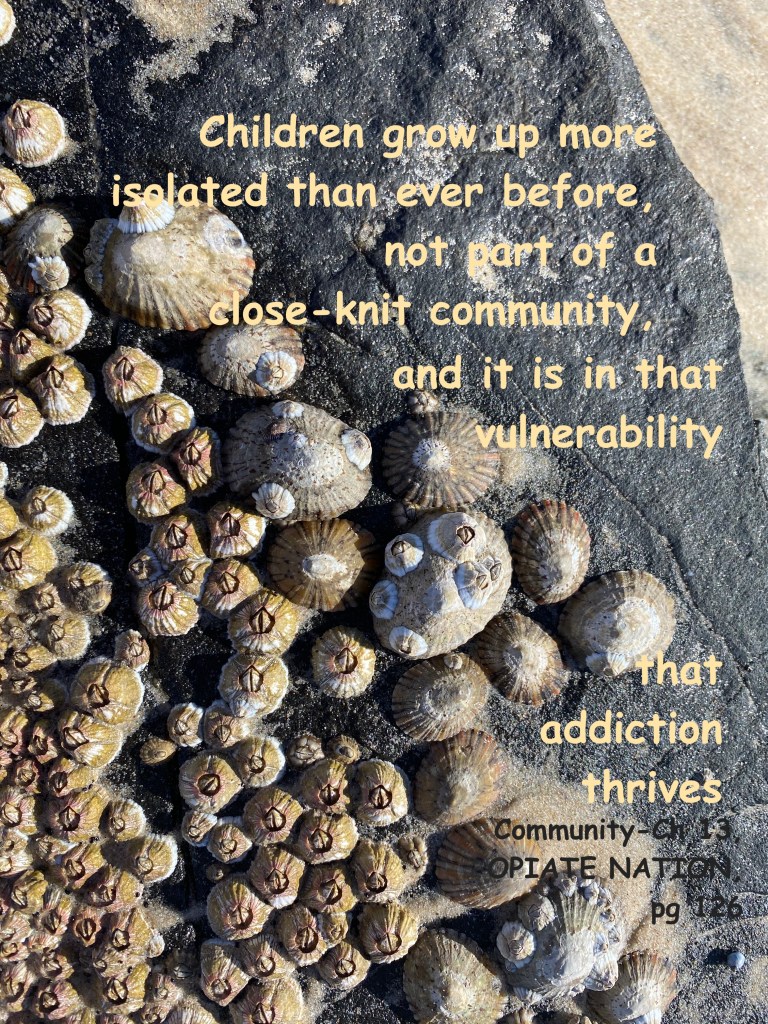
Community. We all need it and ultimately cannot live without it. Communities may seem optional when all is well, but they become indispensable during hard times, whether personally or corporately. They can be small or large and most of us have several different sizes and types that we are part of: our family, school, sports, church, work, etc. What communities have in common are shared interests, beliefs, and needs, even while the individuals may have diverse characteristics. They are united and working towards a common goal and understand that they can achieve it because of, and with, the support and encouragement of others.
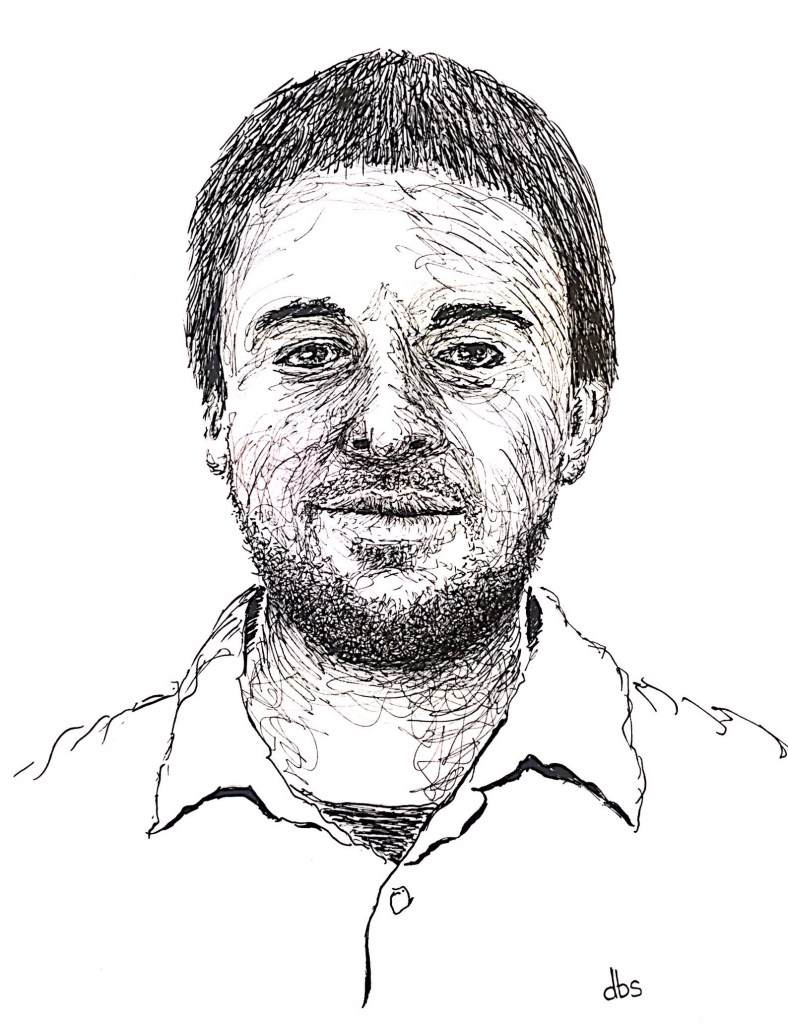
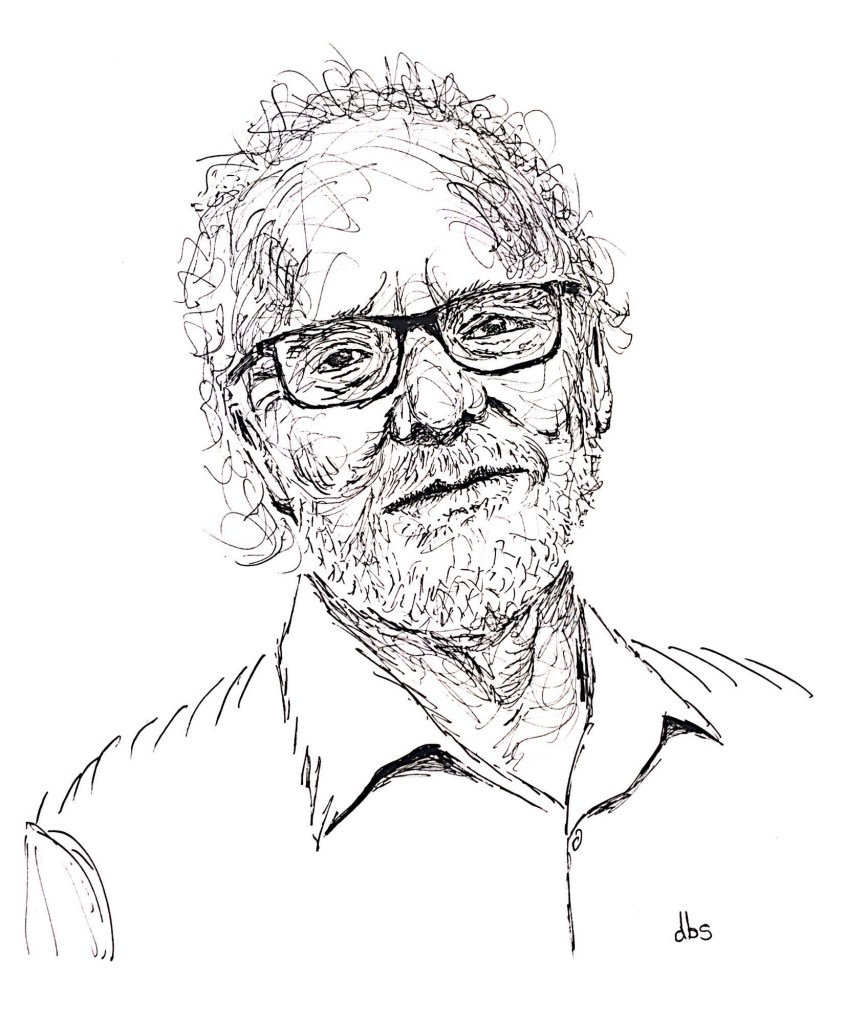
Fellow WordPress blogger, mechanical engineer, artist David Such has written a review of Opiate Nation and posted it on his blog site, Memoirs and Musings. Along with the review, David included some of his pen and ink drawings of our son, JL, and John and me. We feel honored and grateful for David’s desire to help reduce stigma and shame by bringing attention to the opioid epidemic that continues to steal the lives of our sons, daughters and loved ones.
I recently finished reading Opiate Nation: A Memoir of Love, Loss, and Acceptance, by Jude DiMeglio Trang (with John M. Trang). I admit, this book was a difficult journey to travel.
Jude and John’s son, John Leif Trang (“JL”) battled various addictions from his early teen years. This story chronicles JL’s long and difficult struggle in and out of recovery up to his accidental heroin overdose and death at the age of twenty-five, and the long road through grief to emotional recovery for Jude and John that followed. Throughout the book, she includes excerpts from their private journals which provide an extremely personal perspective. She offers comfort and sage advice for others who may find themselves in a similar situation. The book takes you on a strenuous path, but is very well written and places the reader within all the confusion, family dynamics, regrets, and mixed emotions they experienced throughout this journey. The narrative is eloquently written, yet raw and purposefully honest in a bold attempt to shine a bright light on this “secret epidemic” that has destroyed many lives across North America and around the globe.
Jude is no stranger to grief. She had previously lost two brothers and a sister to premature death. The loss of JL would have been the final blow to anyone else who did not have a strong spiritual foundation. Don’t worry, though, she offers none of the trite Christian platitudes. John and Jude’s confusion and frustration are palpable. She is transparently honest about their generational family dysfunction as well as their own perceived failings as parents. Her authenticity is refreshing.
Readers will note that Jude is well-read, quoting relevant wisdom from sages throughout the centuries, from Leonardo da Vinci to C. S. Lewis, and from Beethoven to Bob Dylan. Numerous apt analogies help those not living with addiction to understand the nature of the struggle. I personally appreciated her intellectual rabbit trails into topics like the nature of time, and the physiology of memories. I also like the way she weaves together connected events throughout the years rather than marching through a dry chronological sequence. However, be forewarned, Jude does not hold back in her discussion of reality. Some of it is horrifying, but be reassured that the final chapter, “Stories of Hope,” is the reader’s opportunity to slowly exhale.
This book is a must-read for anyone who knows someone who struggles with drug addiction and/or alcoholism. However, the basic takeaway for all of us, even for those who consider themselves or their loved ones immune from addiction is this: The culture of “pain management at any cost” produces large profits for pharmaceutical companies (“Big Pharma”) at the expense of ruined lives. The default prescription for situations like a wisdom tooth extraction or a broken collar bone is almost always a heavy-duty opiate. Medical doctors “rubber stamp” these prescriptions every day. See the content of the book for details. PLEASE, don’t just fill a prescription because the doctor recommends it, especially if there is any family history of substance abuse or alcoholism. Search for safe alternatives, learn that pain is not an enemy to vanquish, and only reach for the opiate “solution” as the very last option
Opiate Nation was the well-deserved winner of the 2020 “National Indie Excellence Award” for best Addiction/Recovery Book. You will not regret traveling with them through their journey.
(Ninth in a series of topical blogs based on chapter by chapter excerpts from Opiate Nation. Translation into most languages is available to the right.)
Shells are beautiful and fascinating to me. Each and every one is unique, differing from others just like our fingerprints. John and I just spent time at the central eastern coast of Australia and on our daily walks on the beach I just couldn’t stop picking up shells – especially the Nautilus shells with their logarithmic spirals of every size, shape, and color. These are empty shells that were once the home of a sea creature.
The exoskeleton of mollusks is the hard, outer layer that protects the tender creature inside. As the creature grows, layers are added to accommodate it. One day, as I was picking up shells in the surf, the inhabitant was still inside. It immediately retreated as far back into its shell as possible.
(Eighth in a series of topical blogs based on chapter by chapter excerpts from Opiate Nation. Translation into most languages is available to the right.)
When I was young, I only went to one funeral. I can’t remember who it was for or where it was, but it must have been for a close relative or I wouldn’t have been there. I do remember seeing everyone dressed in black. It was a very somber setting, people talking in hushed voices, and I didn’t comprehend what was happening. I just knew everyone was sad. After that day, I never thought about that person again – and even if my parents thought about him or her, their acts of mourning seemed to stop with the funeral. And I had no knowledge of any grieving on their part because at that time and in their cultural setting, people kept feelings regarding their grief to themselves.
It wasn’t until 20 years ago when my younger brother died from AIDS that I was faced with a death that was so close I felt a personal loss that tore at my heart. There was no way to just quickly plan a funeral and burial and then move on. My life as I had known it, now had a gaping chasm where my brother had once been and it was not going to close up anytime in the near future. I needed someone who had travelled this path before me to guide me through the overwhelmingly disturbing and depressing feelings. None of my friends had experienced a close loss like this. So, I looked to the books that were most recommended: On Grief and Grieving by Elisabeth Kübler-Ross and A Grief Observed by C. S. Lewis.
(Seventh in a series of topical blogs based on chapter by chapter excerpts from Opiate Nation. Translation into most languages is available to the right.)
When public health is at risk, one can only wonder about the motives behind politicians’ decisions – our “public servants” as they used to be referred to – regardless of what they may say. But we don’t have to guess their motives because actions speak louder than words and the actions of the US Department of Justice (DOJ) this week regarding Purdue Pharma and the Sackler family are unconscionable. This deal is not justice for the victims and their families for this pervasive and criminal corporate greed.
(Fifth in a series of topical blogs based on chapter by chapter excerpts from Opiate Nation. Translation into most languages is available to the right.)
After many years of not having a dog, we decided to adopt one from our local shelter. We found a beautiful German-shepherd/wolf mix who was 18 months old. Bella was docile, sweet and quiet. The next day, as I headed out to the grocery store, I gave her a hug and saw her watch me through the window as I got into the car.
When I returned an hour later, I was met with a shock. I found her, panting rapidly and pacing nervously in our bedroom where our wooden shutters were open and had bite marks. She had tried to escape while I was gone. I had no idea why. I immediately called the shelter. “She is having separation anxiety: she needed to escape being left alone.” We found out that she had been with two families previously when she was dumped at the shelter because she continued to try to escape when she was left alone for hours on end. They gave us the name of a dog behaviorist and we started down the long road of helping Bella manage her fear when we had to leave her at home.
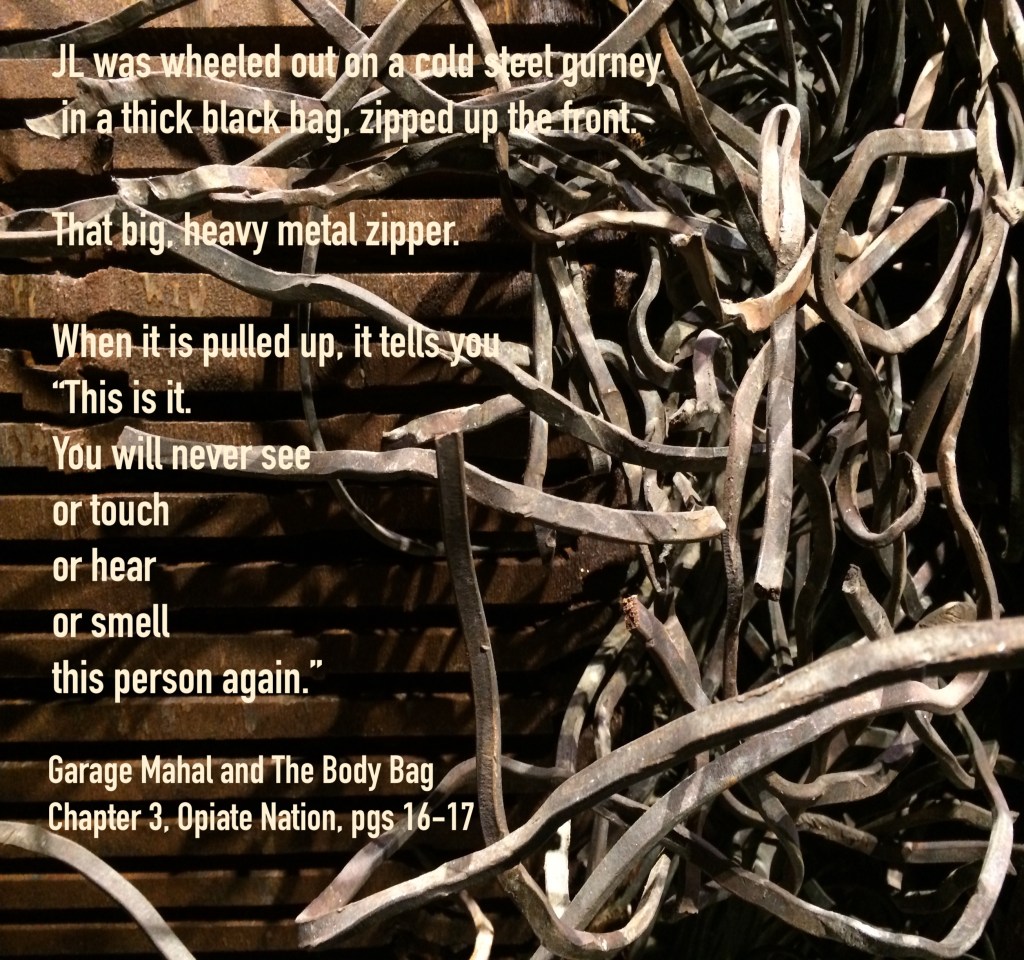
Children and adults can experience separation anxiety when someone they are attached to leaves them. They can have recurrent and excessive distress just anticipating being separated from loved ones and the anxiety can be so intense that it is hard to function in everyday life. Panic attacks and physical symptoms such as nausea and headaches can occur. For me and my husband, on the morning of our son’s death from overdose, standing over our son in that body bag we experienced the ultimate separation anxiety. The overriding emotion we felt was fear: fear of the unknown future we were facing. We couldn’t visualize how we would survive without our son as part of our lives and the future we thought we all had together. He had not only been an integral part of our lives for 25 years but he was literally a part of us–the combination of our DNA that formed him as a particular and unique human being. To say that it was like having part of you taken away doesn’t describe it. This was having our hearts torn out.
We would never embrace or kiss or stroke the cheek of our son again. We were facing an existential crisis, shaken to the core, questioning our reason for living. Regardless of our strong faith that had seen us through many other deaths in our families, this separation seemed incomprehensible and cruel. It was only by falling down on our faces and waiting for Mercy to gradually pick us up that we were able to survive this traumatic separation from our son and move forward again in life.
The Ohio Society of Addiction Medicine is a chapter of ASAM - A professional society actively seeking to define and expand the field of addiction medicine.





 Opiate Nation