(Translation into most languages at tab to the right.)
It’s a new year around the world. Most developed and industrialized nations have similar hopes and concerns. Yet when one travels outside of the USA, we find some striking differences in how other leading countries in the world govern themselves. This is obvious in one particular area – when it comes to what substances are legal, allowed, or illegal.
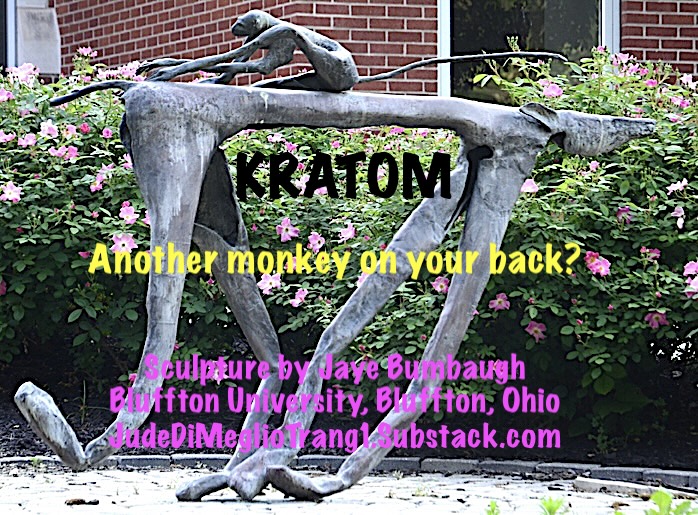
Kratom is a good example. It is a Thai traditional medicine. The plant is in the coffee family and when used traditionally – i.e., chewed or dried for tea – it can produce mild stimulant or sedative-like effects. (1) But in the last decade, people driven by greed and profit (it is a billion-dollar industry), have once again figured out how to chemically super-charge the derivatives in Kratom in order to create a market with a highly addictive substance in the guise of a “natural” product sold at convenience stores and gas stations in all but six states in the USA. These concentrated derivatives contain 7-hydroxymitragynine (7-OH), a powerful psychoactive compound that occurs naturally in tiny amounts in kratom. 7-OH affects the same receptors in the brain as morphine and heroin – thus, the same effects that people seek in those drugs. And in these new potencies, kratom has the same strong potential for addiction.
If access to health care is considered a human right, who is considered human enough to have that right?
I critique market-based medicine not because I haven’t seen its heights but because I’ve seen its depths.
~Paul Farmer, M.D., Ph.D. (1)
In sorting through bins of old notes and letters, I knew one bin in particular would bring up painful memories. It was our son, JL’s. It was difficult, as I had imagined. And one of the – no, THE – most painful reminder related to his death from an overdose. It was the fact that we played a role in his preventable death. And so does the American capitalistic healthcare debacle.
The previous New Year’s eve, he was with two of his friends who overdosed and one died. It shook him to his core and he came to us and asked for help. We went together to his addiction doctor and after separate sessions, we then talked together. His doctor said: “This young man cannot start using again because if he does, he will die.” This came from his years of experience working with young people who had been inadverntently caught up in the opioid epidemic of the 2000’s. He felt JL would need to be on Suboxone for a long period of time and maybe for the rest of his life.
JL was hesitant because he had been on Suboxone years ago when it was very expensive and being prescribed at 32 mg a day – a huge amount that left patients feeling like they were drugged. And the worse part was trying to get off it. Tapering off was extremely difficult and took forever – like extended withdrawals.
Aside from the physical hurdles was the cost. It was very expensive and, guess what? It was, of course, not covered by our private health insurance (which cost us almost $1000/mo as self-employed workers) because addiction was not considered a healthcare issue. As a matter of fact, if a person said they had an illegal drug addiction, they would likely be dropped from health insurance coverage and be reported to the police.
What is so painful for us now is that we made the decision that January to drop JL from our costly policy and to not cover his getting Suboxone due to the expenses (it would have been hundreds of dollars a month for the Rx). And in the mistaken belief that he just needed to try harder. We thought this would force him to stay clean – good old fashioned will power and hard work. He did go into a detox program for a month and then into a great sober living program where he did so well we thought we had turned the corner in his 10-year struggle with opioid addiction (which had started when he was 14 and experimenting with Oxy’s).
What we didn’t understand at that time was that opioid addiction is not overcome by willpower. The result was after 6 months, he finally had impacted wisdom teeth surgery and weeks of opioid pain meds – because we thought there was no other option and we thought he could handle it. Within 3 weeks he began using heroin again and after a few days, overdosed and died. August 2, 2014.
What our family did not have as an option was what was finally put into law in 2014: The Affordable Care Act (ACA). This law mandates that all new individual and small-group plans cover substance use disorder (SUD) treatment as one of the ten essential health benefits. It also prevents insurers from denying coverage or charging more because of a pre-existing condition, including addiction.
Sadly, there are politicians who want to revoke the ACA or limit much of its coverage. As the supposed leading nation in the developed world, we are the only one without universal health care for every person from cradle to grave. All of our peer nations have it. Some systems work better than others. Regardless, health care is not seen as an option or a privilege for those who can afford it. It is considered part of a healthy and egalitarian society.
But in order for our government to save money (since our elected officials don’t want to tax millionaires and billionaires equitably), there have been significant cuts to Medicaid and SNAP and changes to the Affordable Care Act (ACA), that are projected to increase costs and reduce coverage for millions. There are too many details to go into here, but the bottom line to me is this:
Why are we even debating how much coverage these programs and health insurance companies offer when we should be pressing for complete health care coverage for all Americans – especially for the least of us who can barely afford food?
If we consider ourselves a nation built on Judeo-Christian principles, how can we not believe that as a society it is our responsibility to care for the sick – as people of faith have always done?
If how we viewed health care changed – as a basic need instead of a privilege – then the necessary changes to our taxing structure and health insurance would change. Where there is a will, there is a way.
(Translation into most languages at tab to the right.)
Wastewater monitoring is an effective tool in detecting emerging opioid threats, predicting overdoses, and tailoring treatments, according to new research from Biobot Analytics, Mathematica, and the Washington/Baltimore High Intensity Drug Trafficking Area (W/B HIDTA) program. (1)
My husband and I live in Melbourne, Australia part of the year so we can be close to our daughter and family. We love Australians and their friendly and balanced way of approaching life and politics. It is a federal parliamentary democracy similar to England.
One area where they are ahead of the USA is in their approach to illicit drugs. As a nation with comprehensive health care for all from cradle to grave, they have a more communal attitude than our American individualistic posture. They view caring for each other as part of being a healthy and functioning society.
This necessarily affects how they treat people who use illicit drugs. They aggressively pursue educational and preventative measures while also working to keep those who use drugs as safe as possible until they are ready to seek recovery. While they don’t have a fluid border with a drug-producing country like we do with Mexico, they still have a problem with illicit drugs arriving from China and Asia.
One area that they use as a public health strategy is wastewater surveillance such as was used during the Covid-19 pandemic. Samples are collected from wastewater treatment plants, sewer systems, or targeted populations such as college dorms or prisons. When pooled together, they provide a community view of drugs circulating in the population. The samples are analyzed and the data is calculated through very sophisticated methods. The data then give objective, community-wide information on drug use trends. This is of great benefit in tracking changes and identifying new drug use and outbreaks and as an early warning tool. In the US, Biobot Analytics and Mathematica are leading the way with the “Drug-Surge” algorithm. (1) In a study involving five counties across four states, the algorithm correctly flagged between 71% and 100% of drug overdoses.
The US Drug Enforcement Agency (DEA) uses this wastewater testing to detect trends in illicit substances well in advance of reported overdoses. Xylazine was detectable a month before suspected overdoses from it were reported. Geographic and socioeconomic trends can be tracked also. If put to use, a national alert system would give early warning of at least a week in order to alert the public to a new or more potent drug threat.
In the US, the National Wastewater Surveillance System (NWSS) that is run by the CDC began in response to the Covid-19 pandemic. The CDC coordinates a national system primarily for infectious disease monitoring. While drug consumption can also be targeted, a national program does not yet exist. (3,4) Meanwhile, the National Institute on Drug Abuse (NIDA) is working with Biobot and Mathematica and has regional programs focusing on illicit drug use as a response to the opioid crisis.
With the CDC in the midst of worrisome changes, let’s be vocal proponents for increased national coordinated surveillance of illicit drugs in our wastewater and the use of that information to help prevent overdoses and deaths.
Wastewater Data Offers Powerful Tool in Confronting Opioid Epidemic
(Translation into most langugages at tab to the right.)
Recently, I connected with Christina Dent, Founder & President of End It For Good. The mutual connection came through a drug advocacy organization in Australia where they also promote options other than incarceration for drug addiction.
The End It For Good website is a treasure worth exploring (see below). Although Christina has been mainly focused on her home state of Mississippi, they are now expanding and reaching out across the United States. Their website states:
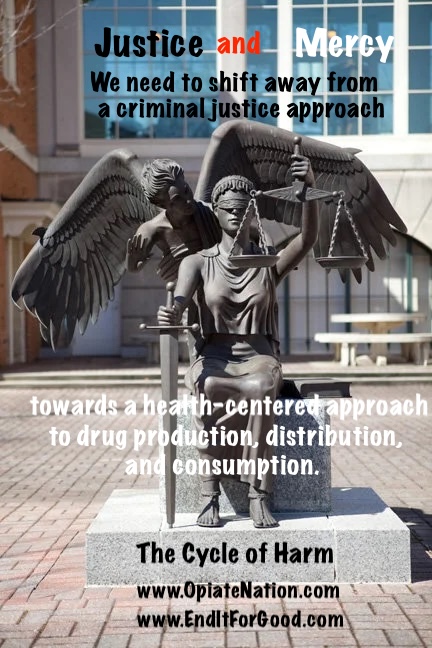
Our goal is a future where fewer people are harmed by drugs. To get there, we need to shift away from a criminal justice approach and towards a health-centered approach to drug production, distribution, and consumption. As a 501(c)(3), we educate citizens, advocates, and policymakers to elevate solutions that prioritize life, health, strong families, and safe communities. This is the path to a world where more people have an opportunity to thrive.
In her TED Talk, Christina shares her learning journey about the destructive impact of a criminal justice approach to drugs and addiction, as well as the mounting evidence that a health-centered approach would be much more effective.
And Christina has written an award winning and very favorably reviewed book:
CURIOUS: A Foster Mom’s Discovery of an Unexpected Solution to Drugs and Addiction. It gives a vision for unexpected solutions that save lives, heal families, and promote public safety.
The reason I used this particular statue for the blog graphic this month relates perfectly to this subject. Justice & Mercy was designed by sculptor L. Glynn Acree III and stands in front of the Cumberland School of Law at Samford University in Birmingham, Alabama. Justice is blindfolded and the scales she holds are perfectly balanced. The angel, Mercy, is whispering in Justice’s ear. An important reminder that in order for justice to be true and impartial, mercy and kindness must temper her decisions – because as humans, we are all imperfect and fail in many ways.
As I was driving home in 105-degree heat last week, I noticed a young man carrying a plastic bag stumble to a bus stop bench and sit down. It was clear he was homeless and it was equally clear that he was on drugs. I felt compelled to pull over. I rolled down the window and asked, “Are you ok?” He said, “No.” I asked if he needed help, and he wept and said “Yes.” When he came over to the truck, I asked if he was on drugs, and he said “No.” I said “I think you are on drugs and you don’t need to be ashamed.” He said he was, so I asked if I could sit with him and talk.
As we sat on the bench in the heat I asked what drug Julian (not his real name) was using. Fentanyl in the form of street Oxy’s that sell for $2 and come from Mexico. He is homeless, has never known his father, his mother is out of state and done with him. He is 23 years old and has been struggling with alcohol and addiction for 5 years – fentanyl for the past 1½ years. I told him about my son and said Julian was on the same path to the morgue unless he could get clean. He had gone to rehab in March with a predictably miserable 5-day detox and then was supposed to go to a sober home, but said they never got him there – probably not true. I offered to take Julian for something to eat and to try to connect him with a program to help him. While I drove and he nodded off, I called a few of the directors I knew from programs our son went to, but had to leave messages. I decided to take him home for a shower and a rest as we tried to find him a place.
My husband John prayed with this sweet and troubled young man and encouraged him to know there was hope and that he wasn’t a bad person, or less-than, but had a powerful war waging in his brain that needed medical help and emotional support. We drove him to the public behavioral health service, where he had gone in March, and got him signed in. It was an hour wait for him to go through intake again, so we left him with our names and phone numbers to give as his contacts for help so that we could follow up on how he was doing.
When we tried to follow up the next day, we found he had done a runner and never went through the intake. I would guess the fear of excruciating withdrawal was stronger than the fear of a potential or eventual death. This is so common, especially for those who have tried many times to get clean. Addiction specialist, Dr. Richard Whitney said, “Once people get addicted, they really lose the power of choice.” (1) Even with medication, the drugs need to be out of your system first. On average, it takes 4-5 recovery attempts and 8 years to achieve one year of sobriety. After another 5 years in recovery, the relapse rate drops to 15%.(2)That is 13 years to try to undo what most commonly started as trying something fun as a young person. The chemistry in our brains needs more time to recover than a few weeks or months from the damage done by opiates.
In 2015, Sam Quinones released his award-winning book Dreamland: The True Tale of America’s Opiate Epidemic documenting how Purdue Pharma – with a monopoly on the market on pain in the 1990’s with its new highly addictive drug, Oxycontin – deceptively promoted it as a non-addictive solution for every ache and pain. Then, with the lure of easy money, young men in Mexico, independent of the drug cartels, trafficked black-tar heroin to neighborhoods in America as a cheap alternative to Oxy’s. Its powerful long-lasting high then became the go-to drug for millions of young people who could heat and smoke it – our son included. Quinones states that the perfect storm was created when the pursuit of prosperity, pain avoidance, and the breakdown of close-knit family and community life, beginning in the 1960’s, created the void that those easily available opiates filled.
Quinones has recently released The Least of Us: True Tales of America and Hope in the Time of Fentanyl and Meth. It is the second most important book written on addiction and American society. In my next blog, I will delve into this new book and discuss where we are in the drug epidemic and where we can go from here. I personally need some hope as I see the thousands of homeless young people on the streets of my city and struggle with the tension of wanting to help prevent one more life from a literal “dead end” and feeling frustrated with the lack of effective programs to help these addicted individuals get the long-term recovery care they need. This – in a country where the majority of people seem to think that health care is a privilege for those who can afford it instead of a basic service for all Americans, including the least of us.
(Short topical blog based on Opiate Nation – translation into most languages in tab on right.)
August 2nd is the seventh anniversary of our son’s death. JL died of a heroin overdose in the early morning hours of that Saturday in 2014. He was 25 years old.
In 2020 alone, 93,000 people died of drug overdoses in the USA – hundreds of thousands more worldwide. Millions in the past few decades. These were beloved daughters, sons, partners, parents, friends, relatives. I think I can confidently say they did not want to be addicted and if they could have turned back the clock to the time before they began using drugs, they would have.
(Twenty-ninth in a series of topical blogs based on chapter by chapter excerpts from Opiate Nation. Translation into most languages is available to the right.)
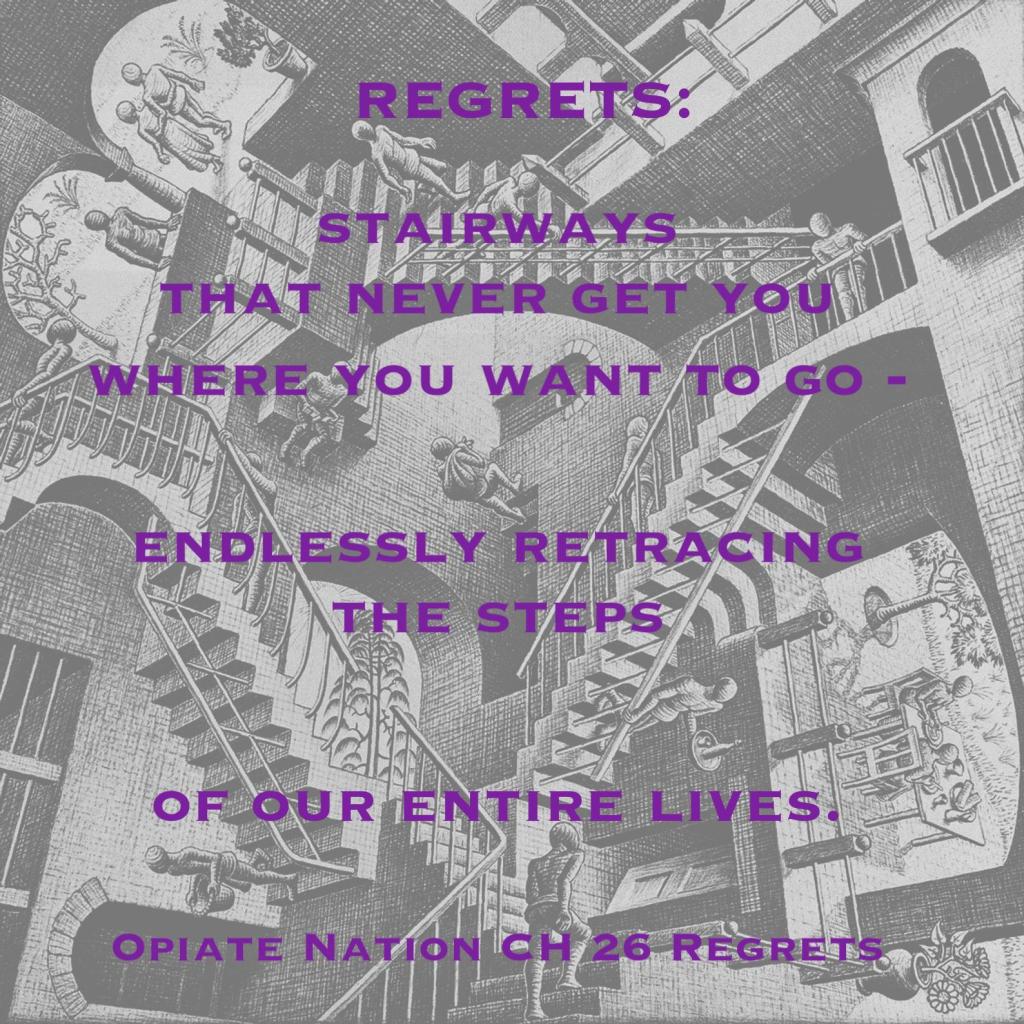
Our family loves the art of Dutch mathematician and artist M. C. Escher: the buildings that open into themselves, the school of fish that become a flock of birds, the circuitous stairways that go up and down throughout multiple buildings without an end point. Yes, stairways that never get you where you want to go, but keep you endlessly retracing your steps. They are no longer interesting art to wonder at. They now mirror how John and I have felt many times since August 2nd—regrets—retracing the steps of our entire lives.
(I am taking a break from the chapter by chapter topics from Opiate Nation to focus on the significance of this holy week. Translations into most languages available at tab to the right.)
Spring is the season of regeneration, freedom, new life. The time of year when the whole earth seems excited to be alive after being dormant all winter. For the northern hemisphere, March and April are Spring – for our friends and family in Australia, right now it is Autumn. Regardless of what season it is where you live on this planet, it is Easter Sunday and the end of Passover week. Both the Christian and Jewish traditions celebrate the freedom from bondage and the beginning of a new life, although from differing perspectives and beliefs. Both begin the time with reflection and prayer. (I don’t understand Islamic tradition well enough to comment on it except to say that Ramadan is observed around this same time of year with introspection and fasting in remembrance of Muhammad receiving the Quran.)
For Christians, the freedom is from the bondage to sin in one’s life; for Jews, it is the freedom from bondage that the Israelites suffered under in Egypt. Both faiths look to an historical event in the past. They also remind us that while bondage was dealt with symbolically once – whether personally or communally – it is an ongoing problem in this imperfect world.
(Sixteenth in a series of topical blogs based on chapter by chapter excerpts from Opiate Nation. Translation into most languages is available to the right.)
(I am re-posting this blog due to a glitch on some platforms in January)
In 2020, overdose deaths have increased worldwide, and by as much as 25% in the US. Deaths from acute intoxication have also increased dramatically. People are isolated and anxious, their treatment and recovery programs have been disrupted, and the illicit drug supply has become dangerous. Health officials believe that the majority of these deaths have occurred because hospitals are full and emergency services are overwhelmed with Covid-19 patients, thus removing the urgent, lifesaving care of overdose reversal that has been established in the past few years. Funding for all mental health services has also been diverted to pandemic care, which has complicated access to basic resources. Suicides are rising at an alarming rate.
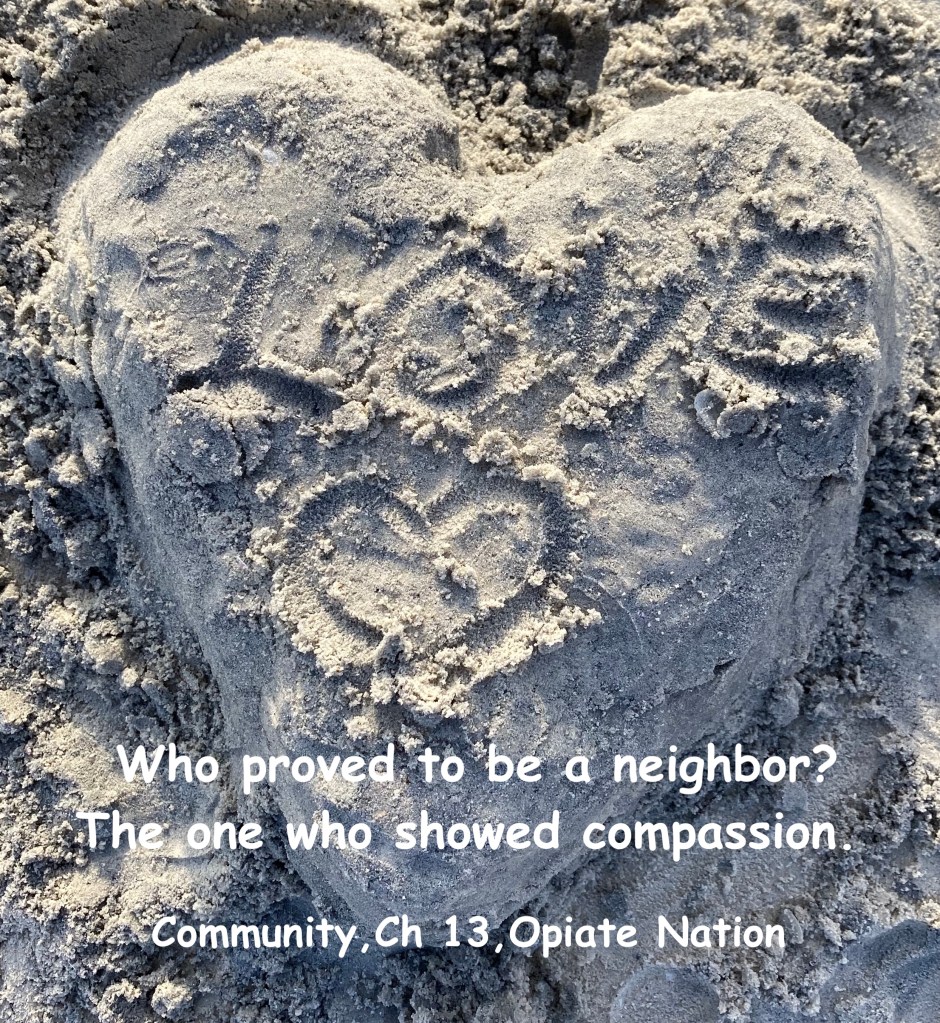
A conversation that I believe is relevant to the current times came to mind this week. A lawyer asked Jesus “Who is my neighbor?” as he was trying to wriggle out of the command to “Love your neighbor as yourself.” Jesus told him about a man beaten and robbed while on a journey. As the man lay almost dead on the road, he was passed by several religious leaders who refused to help him. Then a man, who was not the same nationality or religion, came and bandaged and rescued him and paid for his care until he was well. Jesus asked the lawyer, “Which of these men proved to be a neighbor?” The lawyer replied, “The one who showed compassion.” Jesus responded, “Go and do the same.” *
(Seventh in a series of topical blogs based on chapter by chapter excerpts from Opiate Nation. Translation into most languages is available to the right.)
When public health is at risk, one can only wonder about the motives behind politicians’ decisions – our “public servants” as they used to be referred to – regardless of what they may say. But we don’t have to guess their motives because actions speak louder than words and the actions of the US Department of Justice (DOJ) this week regarding Purdue Pharma and the Sackler family are unconscionable. This deal is not justice for the victims and their families for this pervasive and criminal corporate greed.
The Ohio Society of Addiction Medicine is a chapter of ASAM - A professional society actively seeking to define and expand the field of addiction medicine.






 Opiate Nation