All Souls, All Saints, All of Us

(Translation into most languages at tab to the right.)

This year, the All-Souls’ Procession in Tucson, where I live, is today. The traditional date for celebrating All Souls’ Day (the Day of the Dead) is November 2nd. It was delayed this year because Halloween was on the same weekend. Tucson has one of the largest processions in the country with several hundred thousand people participating. Preceding this is All Saints Day on November 1st.

All Saints Day had its beginnings in Roman Church tradition dating back to the early centuries when Christians were martyred for their faith or who had publicly confessed and somehow survived the Roman persecution. The belief was that they were saints and immediately taken up into heaven. By the mid 800’s, Pope Gregory IV assigned Nov. 1st as the holy feast of All Saints.

All Souls’ Day evolved sometime around 1000 as a time to pray for the souls of all who had died. This is tied in directly with the Catholic Church belief in purgatory and those who are awaiting the joys of heaven. In pleading for them, we are reminded of our own offenses and so inspired to lead purer lives.

My husband, John, and I have walked many times in the procession here in Tucson although we are not Catholics and we believe that all those who have faith in and follow Jesus are saints, as the New Testament teaches.(1) Many Evangelical Christians think it is wrong to participate in All Souls’ events because it is not biblical to pray for the dead and they reject the concept of purgatory because nothing we do can alter ones destination in the afterlife. (2)

While we hold to basic New Testament beliefs, we do not find it contradictory to be part of the All-Souls’ procession in remembrance of our son, John Leif. The procession is a public ceremony to honor the dead and celebrate their lives, allowing participants to release and integrate their grief. Our son’s death from a heroin overdose – a reason many others are there – continues to be a source of sadness and regret. To remember and celebrate him as a person worthy of love is important for us. We do not want to shame him and do not want him to be forgotten. 

What is sad to us is the way in which this holiday is treated with similar vitriol that partisan politics infiltrates so many areas of American life these days. There are “Christians” who stand along the procession route shouting out ugly and sinful – yes, sinful – rebukes to those walking in remembrance of their loved ones. Sadly, many people feel it necessary to take a side on almost every issue – and supposed Christians are some of the leading voices. The unholy mixture of politics and “faith” in our country is deeply disturbing to us and absolutely un-Biblical. 

While we hold that our beliefs are true and worthy of sharing with others, we also feel it imperative that we respect others’ beliefs and faith traditions without mocking or denigrating them as all New Testament writing demonstrates. This is especially important when it comes to how people choose to remember and honor their loved ones who have died. 

In the past several decades, opioid addiction has taken the lives of hundreds of thousands of beautiful young people. We believe they are worthy of being remembered without shame and with love in whatever way their loved ones choose. And in so doing, we hope their lives stand as a warning for other young people tempted into experimenting with increasingly deadly drugs.

  1. I Corinthians 1:2, Romans 1:7, Philippians 1:1, Ephesians 2:19
  2. Hebrews 9:27
  3. History behind All Saints and All Souls:

HEALTHCARE – Privilege or Basic Need?

(Translation into most languages at tab to right)

If access to health care is considered a human right, who is considered human enough to have that right?

I critique market-based medicine not because I haven’t seen its heights but because I’ve seen its depths.

~Paul Farmer, M.D., Ph.D. (1)

In sorting through bins of old notes and letters, I knew one bin in particular would bring up painful memories. It was our son, JL’s. It was difficult, as I had imagined. And one of the – no, THE – most painful reminder related to his death from an overdose. It was the fact that we played a role in his preventable death. And so does the American capitalistic healthcare debacle.

The previous New Year’s eve, he was with two of his friends who overdosed and one died. It shook him to his core and he came to us and asked for help. We went together to his addiction doctor and after separate sessions, we then talked together. His doctor said: “This young man cannot start using again because if he does, he will die.” This came from his years of experience working with young people who had been inadverntently caught up in the opioid epidemic of the 2000’s. He felt JL would need to be on Suboxone for a long period of time and maybe for the rest of his life.

JL was hesitant because he had been on Suboxone years ago when it was very expensive and being prescribed at 32 mg a day – a huge amount that left patients feeling like they were drugged. And the worse part was trying to get off it. Tapering off was extremely difficult and took forever – like extended withdrawals.

Aside from the physical hurdles was the cost. It was very expensive and, guess what? It was, of course, not covered by our private health insurance (which cost us almost $1000/mo as self-employed workers) because addiction was not considered a healthcare issue. As a matter of fact, if a person said they had an illegal drug addiction, they would likely be dropped from health insurance coverage and be reported to the police.

What is so painful for us now is that we made the decision that January to drop JL from our costly policy and to not cover his getting Suboxone due to the expenses (it would have been hundreds of dollars a month for the Rx). And in the mistaken belief that he just needed to try harder. We thought this would force him to stay clean – good old fashioned will power and hard work. He did go into a detox program for a month and then into a great sober living program where he did so well we thought we had turned the corner in his 10-year struggle with opioid addiction (which had started when he was 14 and experimenting with Oxy’s).

What we didn’t understand at that time was that opioid addiction is not overcome by willpower. The result was after 6 months, he finally had impacted wisdom teeth surgery and weeks of opioid pain meds – because we thought there was no other option and we thought he could handle it. Within 3 weeks he began using heroin again and after a few days, overdosed and died. August 2, 2014.

What our family did not have as an option was what was finally put into law in 2014: The Affordable Care Act (ACA). This law mandates that all new individual and small-group plans cover substance use disorder (SUD) treatment as one of the ten essential health benefits. It also prevents insurers from denying coverage or charging more because of a pre-existing condition, including addiction.

Sadly, there are politicians who want to revoke the ACA or limit much of its coverage. As the supposed leading nation in the developed world, we are the only one without universal health care for every person from cradle to grave. All of our peer nations have it. Some systems work better than others. Regardless, health care is not seen as an option or a privilege for those who can afford it. It is considered part of a healthy and egalitarian society.

But in order for our government to save money (since our elected officials don’t want to tax millionaires and billionaires equitably), there have been significant cuts to Medicaid and SNAP and changes to the Affordable Care Act (ACA), that are projected to increase costs and reduce coverage for millions. There are too many details to go into here, but the bottom line to me is this:

Why are we even debating how much coverage these programs and health insurance companies offer when we should be pressing for complete health care coverage for all Americans – especially for the least of us who can barely afford food?

If we consider ourselves a nation built on Judeo-Christian principles, how can we not believe that as a society it is our responsibility to care for the sick – as people of faith have always done?

 If how we viewed health care changed – as a basic need instead of a privilege –  then the necessary changes to our taxing structure and health insurance would change. Where there is a will, there is a way.

  1. Dr. Paul Farmer. https://www.pih.org/paul

Just Normal

(Translation into most languages at tab to the right.)

Eleven years ago today my husband John and I woke up thinking it would be just another normal, hot August Saturday morning. But when the sheriff knocked on the door, the day – and our lives – were no longer normal. It is surprising how quickly our lives can go from normal to abnormal.

         I was sorting through some files and found a drawing that our son, John Leif (JL) had done when he was around nine. It was obviously of Van Gogh’s “Starry Night” but it was also obviously done by a normal nine-year-old – not an artistic prodigy. And it made me think about how JL was just like any other normal kid growing up in middle-class America in the 1990’s-2000’s. He learned to ride a 2-wheel bike at around five, he played with Lego’s, he took swimming lessons, he loved monster trucks and lasagna and macaroni & cheese with ketchup. But something so abnormal for normal young teenagers ended up ruining some of what should have been the best years of his life and ultimately taking his life – and the lives of many of his friends and hundreds of thousand other normal kids.

         What was abnormal was the criminal promotion and availability of highly addictive medicine to young kids by Purdue Pharmaceuticals and the Sackler family. Never before had American kids been exposed to legal drugs (that were promoted as “non-addictive”) that they experimented with as if they were simply trying a joint. And the results were the devastation of the Opioid Epidemic. Which is not over, especially for the once normal kids who are still alive and living with the cancer of addictions. We see many of them on the street corners and under bridges, living from hand to mouth, barely surviving, living anything but a normal life.

         Sadly, seeing these shells of once normal kids has become a “new normal” as our society doesn’t seem to agree on how to best provide lasting recovery options with a continuum of care – or whether we even should. In my last Substack podcast and article with special guest Sam Quinones we discuss some ideas from his book “The Least of Us” for how to help get these once normal kids from normal families the help they need to try to return to something like a normal life. (1) Let’s not forget that those addicted people were once normal kids.

  1. JudeDiMeglioTrang1.substack.com

Not the Time to Rest on Our Laurels

(Translation into most languages a tab to the right.)

Resting on your laurels is as dangerous as resting when you are walking in the snow. You doze off and die in your sleep.

― Ludwig Wittgenstein, Culture and Value

In ancient Greece, when athletes competed and won, they were given a laurel wreath as a crown to show off their success. The idiom “resting on one’s laurels” refers to being content with our past accomplishments and not working towards any further improvement. Not exerting any effort and becoming complacent. 

         I am concerned that we might become complacent after hearing the recent encouraging news from the CDC that drug-related deaths among young people under the age of 35 are finally declining. This after more than two decades of year after year grim news about young people dying from opioid overdoses. And especially from the last 10 years from fentanyl. “Provisional data from the CDC’s National Center for Health Statistics indicate there were an estimated 80,391 drug overdose deaths in the United States during 2024—a decrease of 26.9% from the 110,037 deaths estimated in 2023.Annual drug overdose deaths are projected to reach their lowest level since 2019.” (1)

         NPR’s Morning Edition discussed the possible reasons for this decline. (2) In Gen Z young people, the fear of overdose has caused a change in what they experiment with as opposed to Millennials like my son. When he was at the age of experimentation in middle school, highly addictive prescription opioids were the drug of choice. Now, Gen Z experimentation is mostly with weed and psychoactive drugs which normally won’t cause death, although they can be laced with fentanyl which may lead to a new and more deadly addiction. But those age 35 and older who are still living desperate lives addicted to ever-stronger synthetic opioids and/or meth are still dying from overdoses.

         And then there is Narcan, the opioid overdose reversal medication that is now widely available and is attributed with saving thousands of lives. Parents and advocates have been working for a decade to make it easy to obtain and administer. But it is not the silver bullet many people hail it as. For opioid addicted people, many have been brought back from overdose only to continue using drugs and thinking they have a quick solution to their long-term problem. But repeated overdoses are causing serious brain injuries from oxygen deprivation, as Sam Quinones writes (3).

Author of Dreamland: True Tales of America’s Opiate Epidemic (2015) and The Least of Us: True Tales of America and Hope in the Time of Fentanyl and Meth (2022), Sam says, “By leaving people on the street to suffer more overdoses, believing that with Narcan they’ll be revived and return to ‘normal,’ we are creating a population of people less able to make rational decisions, more given to erratic behavior, and more at the mercy of the street and its trauma…(Narcan) has great benefits, but also serious limits, particularly in a time of fentanyl and meth, and particularly when it is used virtually without any other tool.”

What’s the answer to this blight that was unleashed on our young people?

Sam continues, “After reporting on this for more than a decade, I believe the solution must start with getting people off those lethal streets and — crucially — into places they cannot leave when the drugs insist that they must. That way, their brains will have a fighting chance to heal. When that happens, readiness for treatment is far more likely to emerge than it will on those streets, where drugs and brain injury so easily conspire and lead to death.” 

         I encourage you to read Sam’s article for other great insights and pass it along to others. We need to be informed with a perspective gained from all the facts and then work for comprehensive reforms in policies and health care.

  1. U.S. Overdose Deaths Decrease Almost 27% in 2024. May 14, 2025

https://www.cdc.gov/nchs/pressroom/nchs_press_releases/2025/20250514.htm

2. Drug deaths plummet among young Americans as fentanyl carnage eases.

Morning Edition June 10, 2025

3. Sam Quinones. The Limits of Narcan Alone. June 04, 2025.

https://samquinones.substack.com/p/the-limits-of-narcan-alone

An Entire Generation

Translation into most languages at tab to the right.

A generation is usually considered the years during which children are born, grow up, become adults, and begin to have children of their own. Approximately  20-30 years, averaging 25 years. Each generation becomes known by what characterizes the lives of those in it – what they do and how they impact society.

I’ve been thinking about my son, who would be 36 this year – if he had survived the opioid plague that began in the 1990’s with the prescribing of opioids for every ache and pain. What Purdue Pharma did is old news and well documented. But the effect of the immorality of the Sackler family set a course  that destroyed the lives of an entire generation – the “Millennials” generation of my son and his contemporaries. 

Far more than a million Americans have died due to a drug overdose in the past 25 years and the majority of those deaths are from opioids. (1) Initially it was prescription opioids, then heroin, then fentanyl. And now a daily variation of synthetic opioids mixed in with every variety of street drug. These are made from precursor chemicals from China and shipped around the globe where they are “formulated” into fake prescription pills or street drugs in jungle or backyard labs. Quality control is non-existent. 

Beyond the deaths, there are millions of Americans who are suffering from life-threatening addiction. They will either be another statistic or live the life of an empty shell surviving from one fix to the next just to not feel “dope sick.” Many are homeless and jobless. All experience despair and hopelessness. It will take years to gain long-term recovery if they can access health care and programs.

There has been some good news. After the peak years of the Covid pandemic, when the rates of addiction and deaths from overdoses rose substantially, the statistics for 2024 finally show a decline in both. (2) It may be due to less anxiety and depression since the pandemic ended. It may also be due to more awareness of Medicated Assisted Treatment and better access to Harm Reduction tools such as pill testing and overdose reversal medication naloxone.

I think the best area for hope is the common knowledge the “Gen Z” kids are growing up with about the deadly dangers of drug addiction. That their parents are also more aware of the drug supply than parents of Millennials like me. The 2023 National Survey on Drug Use & Health found that the majority of adolescents (12-17 yrs. old) in the USA are not using substances, alcohol, tobacco products or vaping. (3) But ongoing effort is imperative. “Continued prevention programming, education, and public messaging focused on adolescents can delay or prevent substance use and avoid the negative impacts of substance use that have been widely documented.”  

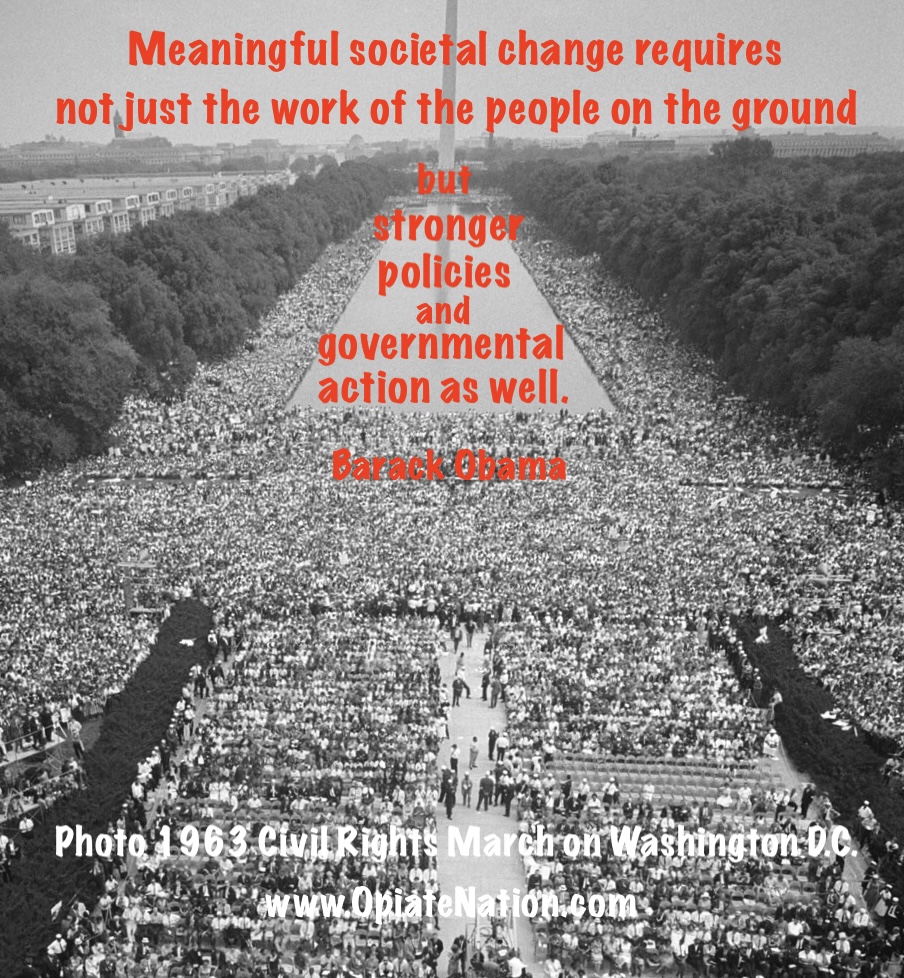
If we truly want to see future generations of children have the opportunity to grow up without the continual pull to use drugs, we need to keep our relationships with them open and healthy. Every year we can delay experimentation with addictive substances allows children’s brains to develop more fully in the area of judgment. We must all stay informed and aware and work in whatever arena we are able. As Barack Obama told Michelle when he was working for her as an intern, that he was in law school because grass roots organizing had shown him that meaningful societal change requires not just the work of the people on the ground, but stronger policies and governmental action as well. (4)

  1. Fentanyl and the U.S. Opioid Epidemic

https://www.cfr.org/backgrounder/fentanyl-and-us-opioid-epidemic

2. The Opioid Crises and The Pandemic

3. NSDUH Data Show Most Adolescents in the US Are Not Using Substances

    4. Becoming, by Michelle Obama, Chapter 8

    The Importance of Friends – Part 1

    (Translation into most language at tab to the right.)

    Approaching what would be my son’s 36th birthday, I thought about the last year of his life. I don’t think about it often because it is painful – so many wishes that things had gone differently for him.

    One sadness is that when in active addiction, he was very alone. It’s not that JL didn’t have lots of friends – he did. He was friendly and likeable and the large group of friends who came to his memorial is a testament to that. But most of his high school and university-era friends were not involved in his life during the last few years of his life, and the last year in particular. After his accidental fall and relapse to opiates in 2008 and the next seven years in and out of recovery programs, his life became narrower and something he was ashamed of.

    An event that stands out was during a time of heroin use that we were not fully aware of as he lived in our rental house, and we thought he was attending his classes at university. We received an urgent call from two of his friends telling us that they knew he was back to spending all his time with his friend that used heroin with him and they were not getting an answer to their calls. They were at his house and he wasn’t responding to their knocks on his door – did they have our permission to break his door down? Our frightened response was “Yes!” They found him deep in drugged sleep and alive but very startled when they burst in. They confronted him with what they knew and their concern about his drug use. He of course was defensive and pretended that nothing was wrong.

    Gradually, these friends, along with others, were no longer part of his life. JL did make a good friend or two in his recovery programs, but he always kept his addicted friends and dealers separate from his sober friends who were mostly not aware of his use and relapses – he had a pretty good poker face. Most of them were shocked to hear of his overdose death because he had been in a sober living house for six months and doing well.

    Many of the friends who had such good times together when JL was clean (although not necessarily sober, as they enjoyed drinking with him not realizing how that always led back to drugs for JL) felt guilt after his death. Guilt because he called several of them the week before his death when he had just relapsed. It seems he wanted a friend to talk to and perhaps perceive that he was struggling. And guilt because they wished they had stayed in touch with JL and not distanced themselves from him when he continued to struggle with addiction. 

    But there’s the rub: How do sober friends stay involved with a friend who is in active addiction? I think it is especially difficult for young people, who don’t know what they can do, who may be more concerned with their own lives and issues, and who are not yet mature. This is not to suggest that any human is ever totally selfless regardless of how old we are – I know myself too well to hold this delusion. But the passing of years does bring relational experience and can help us focus more on those around us.

    Next month I will try to share some insights and ideas for teens and young adults for how to truly be a friend to someone who is struggling with addiction and sobriety. Just remember: 

    Don’t ever give up on your friends or family who are trapped in addiction. They need good friends more than ever. King Solomon gave this wise insight 3,000 years ago: Two are better than one, because they have a good return for their labor: If either of them falls down, one can help the other up. But pity anyone who falls and has no one to help them up. (1)

    Many people will walk in and out of your life,

     but only true friends will leave footprints in your heart.

    —Eleanor Roosevelt

    1. Ecclesiastes 4:9-10

    Frankenstein Opioids

    (Translation into most languages at tab to right)

    Just when we thought everyone was aware of the fatal danger of fentanyl and it being mixed into every drug of abuse available on the street, a new threat arises. Nitazene or Isotonitazene (ISO) or Protonitazene, new lab-made opioids, are showing up at hospitals and morgues around the world in the bodies of people thinking they were taking their drug-of-choice only to find it was laced with one more deadly drug. It is being mixed in with cocaine, or formulated into fake Oxy’s and other pills. In the US, it first showed up in 2019 in the Midwest and spread rapidly.

    Nitazenes were developed in the 1950’s by pharmaceutical companies as an alternative to morphine but shelved due to the risks of overdose. There is still no approved medical use for nitazenes today. Another ‘Designer Drug’ being made in illicit labs around the world, Nitazenes are up to 40 times stronger than fentanyl. Fentanyl is already 50 times more powerful than heroin and up to 800 times more powerful than morphine.

    No wonder these drugs are referred to as ‘Frankenstein Opioids’ – only an insane, evil intentioned scientist would work to create such a drug. But in reality, the motivation is greed more than insanity because synthetic drugs are cheap to make and easy to ship and deliver – and highly profitable. But evil is the correct description for the immoral heads of the drug syndicates and cartels around the world whose entire life and business is dealing death. 

    What can be done?

    For parents with children still at home, community connection and education are the best preventative measures. As I have said before, my husband and I were totally unaware of what substances were readily available to our middle school son in the early 2000’s. Our concern was smoking and marijuana. Little did we know. General discussions about drug abuse were the extent of our educational conversations. But we would have been much better prepared and had much more information if we had been involved with our kids’ school community. Instead, we were insulated from vital resources because we spent so much time with our church community. But make no mistake. Many of the families at church with kids in youth group were just like us – unaware and ill prepared and sadly many of them suffered the same loss as we did.

    There are other important aspects in raising self-reliant kids who are not subject to the lures of the “cool” kids or “in” crowd. Below is a link to a previous blog dedicated to the perils modern teens and their parents face with important resources. I hope it will be helpful to you and those you love.

    https://www.dea.gov/stories/2022/2022-06/2022-06-01/new-dangerous-synthetic-opioid-dc-emerging-tri-state-area

    SCOTUS Decision on Purdue Pharma and the Sackler Family

    Can money compensate for a life destroyed by a greedy family and their products?

    (Translation available in most languages at tab on the right)

    My husband and I recently returned from visiting his relatives in Norway. Even in that enviable nation, a mother shared her anguish about the 45 yr old son who is still “living” with addiction to prescription opioids. He is not really living – he is just surviving with little hope for his future as rehab failures mount up.

    On Thursday, June 27 the Supreme Court handed down their decision on the Purdue Pharma bankruptcy case in which it would have paid billions for victims and states BUT would have shielded the Sackler family from any future liability. 

    The majority (5-4) ruled that the bankruptcy court did not have the authority to release the Sackler family members from opioid victims’ legal claims. The Biden administration had argued the bankruptcy court could not release the Sacklers from the claims.

    The U.S. Trustee, which oversees bankruptcies under the Justice Department, as well as eight states, Washington, D.C., and the city of Seattle, objected to the Purdue Pharma deal. The trustee argued that the liability the Sacklers face could induce voluntary settlements more favorable than those under the plan and that a win for the Sacklers “would provide a ‘roadmap for corporations and wealthy individuals to misuse the bankruptcy system’ in future cases,” Gorsuch wrote in the opinion.(1)

    Continue reading “SCOTUS Decision on Purdue Pharma and the Sackler Family”

    Adrenaline Junkie or High Sensation Seeker? Part 2

    (Translation into most languages at tab to the right)

    In Part One, the May 2024 blog, I discussed the characteristics of an Adrenaline Junkie: those who seek out activities that give them an adrenaline rush. Now I’d like to look at High Sensation Seekers (HSS): those who look for thrills in all areas of their lives. It’s a compulsive need for sensation. (1) Being addicted to stimulation in our everyday lives. 

    Characteristics of HSS can masquerade as something other than pursuing “a thrill.” It can be an unconscious need for stimulation, but sensation seeking is there, nonetheless. Perhaps it is how we live without margins in our daily lives or manage our time and deadlines or the people we choose to regularly interact with. It will certainly influence the type of career we choose.

    As I shared in the last blog, my husband fits the HSS descriptors rather than those of the adrenaline junkie. What helped me zero in on this were two things: his career choice and his tendency to procrastinate. John chose to leave the safety of a tenured professorship to begin independent research and consulting, which brought with it a lot of daily stress. And, as he diligently strives to meet his business deadlines, he consistently ends up working feverishly to finish his projects at the eleventh hour. I’ve never understood this – as someone who works to finish ahead of schedule – because it seems so self-defeating. But now I understand. He gets something out of it – the surge of adrenaline as he races to completion and then the elation of finishing. He is also a life-long motorcycle rider.

    Some people may create drama or crises in their family or professional lives just for the sensation of adrenaline and stress – which releases the hormones that bring excitement and dispel negative moods. This rang a bell with me as I have pondered for decades why some families like mine seem to always have some type of drama emanating from them while others don’t. Although sensation-seeking types of behaviors are not currently listed as a mental disorder, they are related to many mental health conditions.

    Let’s consider HSS addictions to regular, repeated, high-risk behaviors such as gambling, shoplifting, pornography, illicit dalliances, etc. Why engage in such behaviors, usually done in secret, when there is every likelihood of eventually being caught? The thrill of avoiding discovery is part of what keeps the up the behavior. Remember, it is a compulsive need for continual sensation that drives the HSS person. But we need to also remember that addiction in a medical/chemical sense is a distinct diagnosis separate from personality types. Our personality may lead us into addictions that others would wisely see as dangerous and avoid, but the addiction itself with its underlying issues and resultant mental and physical complications can develop in any person regardless of personality type. 

    Nathan Falde, a freelance writer on personality-types, has an excellent article on HSS (1). In it he says,

    “The concept of the high sensation-seeking (HSS) person was conceived by University of Delaware psychologist Marvin Zuckerman. He identified four distinct personality traits these people shared:

    •        Thrill and adventure seeking

    •        Disinhibition

    •        Experience seeking

    •        Boredom susceptibility

    The need to be stimulated is a normal human characteristic. However, it can get HSS personalities in trouble if they indulge their urges too readily and with little or no reflection. Research shows that unhealthy HSS’s are prone to developing substance addictions and self-destructive behaviors. Well-adjusted sensation-seekers, on the other hand, are known for their bold, daring and inventive initiatives. They bring an infectious sense of possibility to their environment – and that can be a very good thing.” John is a great example of this last HSS. My life has been enriched by his sense of adventure and spontaneity. 

    Falde goes on to discuss how personality tests and typing will reveal HSS people in several significant areas. The important take away is to be self-aware and well-informed so that you can live your life wisely and avoid the pitfalls that your natural inclinations for stimulation could steer you towards. 

    Warning bells should be ringing if your life, and the lives of those close to you, is chaotic or unstable or always on the verge of emotional or physical disaster. Partners, children, families need physical and emotional stability to thrive. 

    If you, or a loved one, are dealing with HSS behaviors that are negatively impacting your life and the lives of those around you, review the list of suggestions from the last blog for ways to respond to unhealthy urges or stress in our lives and to help restore our sense of well-being and peace.

    1. https://www.truity.com/blog/what-are-high-sensation-seeking-personalities#:~:text=An%20adrenaline%20junkie%20seeks%20out,high%2Drisk%20hobbies%20and%20sports

    Dis-Couraged or En-Couraged?

    Discouragement is the opposite of having the heart, the courage to face something. It’s when the heart has been sucked out of you. But the en in encouragement means “into”, the process of putting courage into someone. Giving them the heart and hope to go on. 

    (Translation into most languages at tab to the right.)

    It’s time for a confession. I have not been writing many blogs for Opiate Nation in the past two years – not because I haven’t had time but because I have felt discouraged. Decades into the Opioid Epidemic and all the information and media coverage, the hope that addiction and deaths from drug overdoses would decrease has proven unfounded. It seems that people in general are just tired of hearing about it, especially if it doesn’t particularly concern them. And I have felt that I didn’t have anything helpful to add to the conversation and wondered: what more needs to be said?

    But I felt reprimanded in my heart and soul for being one more person who is fatigued by the persistence of a problem that seems to never get better, let alone go away. What about all the people living in active addiction? And what about their friends and family who spend sleepless nights and anxious days worried about them? And what of those who have lost loved ones to addiction and are living in debilitating grief?

    I started thinking about discouragement and how to “snap out of it”? For me, there is no snapping out of it on my own. Once I’m dis-couraged, I have found that only being en-couraged changes things. And encouragement usually comes to me through two avenues: a few intimate friends and God, both of whom know me well. The words spoken out loud by friends and the ones directly into my soul by God are what lift my troubled and discouraged heart and bring hope and courage.

    Courage comes from Latin cor meaning “heart”. The dis in discouragement means “opposite of”. Discouragement is the opposite of having the heart, the courage to face something. It’s when the heart has been sucked out of you. But the en in encouragement means “into”, the process of putting courage into someone. Giving them the heart and hope to go on. 

    Although my life has not been characterized by addiction personally, encouragement has been important in my life, especially after my son died from addiction. How much more important would encouragement be to those struggling with addiction? And for the families and loved ones of those struggling or already lost? And how can we encourage without enabling?

    So, I have been reminded of the importance of an encouraging word. Knowing this, how can I offer encouragement in the arena of addiction and Harm Reduction? Although people do recover from addiction and live full lives, there will always be people struggling with addiction and using drugs. When we acknowledge and accept this, we must try our best to help minimize the harm from that use in the ways we can. For me, that has been through writing to offer information, comfort, and encouragement. 

    Malcolm Guite

    Blog for poet and singer-songwriter Malcolm Guite

    The Gift of Need

    How Need Can Strengthen Individuals and Communities

    Memoirs and Musings

    David Bradley Such

    Dave Barnhart

    Church planter, pastor, author, coach

    RecoveryLife101

    Just another WordPress.com site

    Abbie In Wondrland

    life...on Gods' terms.

    Living In Graceland

    "..learn the unforced rhythms of grace" matt 11:28

    Janaburson's Blog

    All about opioid addiction and its treatment with medication

    Breaking In News Network

    Seeking the truth and bypassing the MSM

    Junkbox Diaries

    Trauma, PTSD, Mental Health, Addiction, and Recovery

    Ohio Society of Addiction Medicine

    The Ohio Society of Addiction Medicine is a chapter of ASAM - A professional society actively seeking to define and expand the field of addiction medicine.

    traceyh415

    Addiction, Recovery, Loss, Grief

    WordPress.com News

    The latest news on WordPress.com and the WordPress community.