All Souls, All Saints, All of Us

(Translation into most languages at tab to the right.)

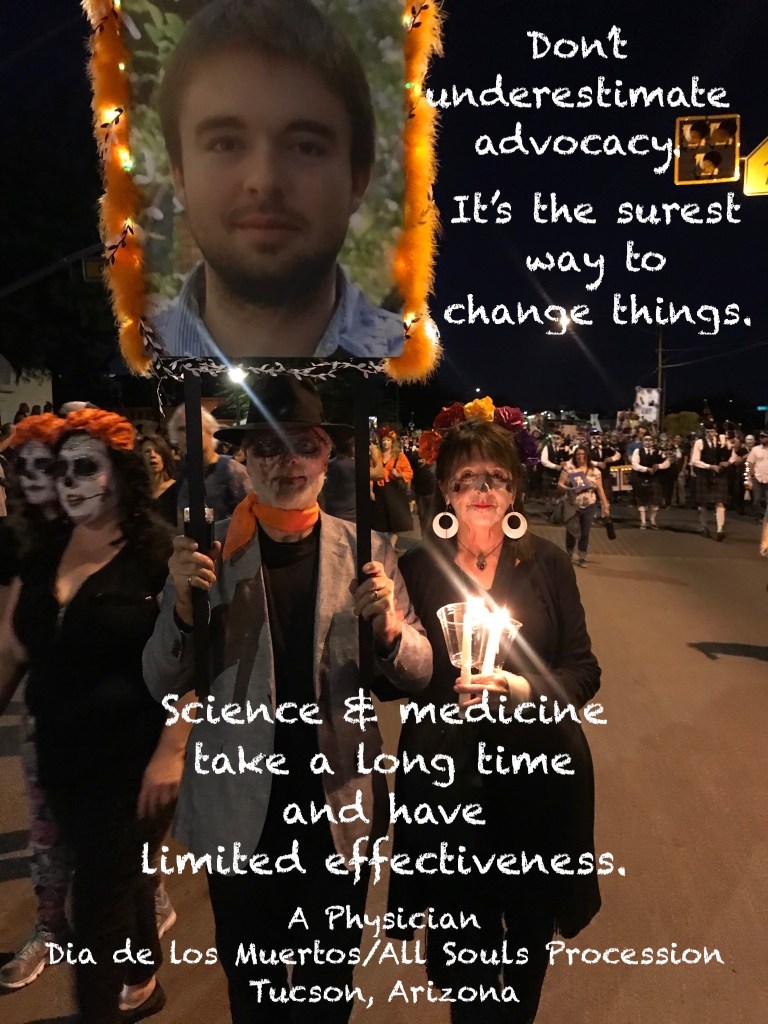
This year, the All-Souls’ Procession in Tucson, where I live, is today. The traditional date for celebrating All Souls’ Day (the Day of the Dead) is November 2nd. It was delayed this year because Halloween was on the same weekend. Tucson has one of the largest processions in the country with several hundred thousand people participating. Preceding this is All Saints Day on November 1st.

All Saints Day had its beginnings in Roman Church tradition dating back to the early centuries when Christians were martyred for their faith or who had publicly confessed and somehow survived the Roman persecution. The belief was that they were saints and immediately taken up into heaven. By the mid 800’s, Pope Gregory IV assigned Nov. 1st as the holy feast of All Saints.

All Souls’ Day evolved sometime around 1000 as a time to pray for the souls of all who had died. This is tied in directly with the Catholic Church belief in purgatory and those who are awaiting the joys of heaven. In pleading for them, we are reminded of our own offenses and so inspired to lead purer lives.

My husband, John, and I have walked many times in the procession here in Tucson although we are not Catholics and we believe that all those who have faith in and follow Jesus are saints, as the New Testament teaches.(1) Many Evangelical Christians think it is wrong to participate in All Souls’ events because it is not biblical to pray for the dead and they reject the concept of purgatory because nothing we do can alter ones destination in the afterlife. (2)

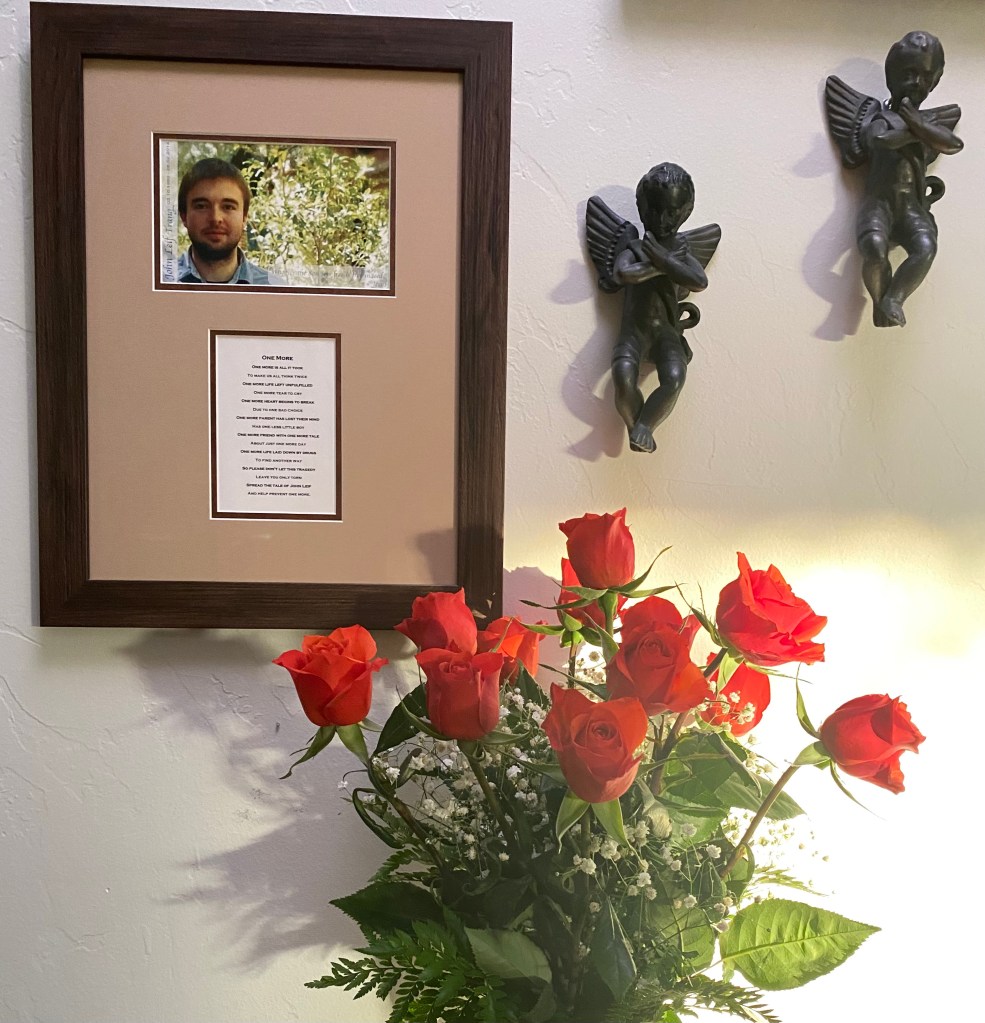
While we hold to basic New Testament beliefs, we do not find it contradictory to be part of the All-Souls’ procession in remembrance of our son, John Leif. The procession is a public ceremony to honor the dead and celebrate their lives, allowing participants to release and integrate their grief. Our son’s death from a heroin overdose – a reason many others are there – continues to be a source of sadness and regret. To remember and celebrate him as a person worthy of love is important for us. We do not want to shame him and do not want him to be forgotten. 

What is sad to us is the way in which this holiday is treated with similar vitriol that partisan politics infiltrates so many areas of American life these days. There are “Christians” who stand along the procession route shouting out ugly and sinful – yes, sinful – rebukes to those walking in remembrance of their loved ones. Sadly, many people feel it necessary to take a side on almost every issue – and supposed Christians are some of the leading voices. The unholy mixture of politics and “faith” in our country is deeply disturbing to us and absolutely un-Biblical. 

While we hold that our beliefs are true and worthy of sharing with others, we also feel it imperative that we respect others’ beliefs and faith traditions without mocking or denigrating them as all New Testament writing demonstrates. This is especially important when it comes to how people choose to remember and honor their loved ones who have died. 

In the past several decades, opioid addiction has taken the lives of hundreds of thousands of beautiful young people. We believe they are worthy of being remembered without shame and with love in whatever way their loved ones choose. And in so doing, we hope their lives stand as a warning for other young people tempted into experimenting with increasingly deadly drugs.

  1. I Corinthians 1:2, Romans 1:7, Philippians 1:1, Ephesians 2:19
  2. Hebrews 9:27
  3. History behind All Saints and All Souls:

Dis-Couraged or En-Couraged?

Discouragement is the opposite of having the heart, the courage to face something. It’s when the heart has been sucked out of you. But the en in encouragement means “into”, the process of putting courage into someone. Giving them the heart and hope to go on. 

(Translation into most languages at tab to the right.)

It’s time for a confession. I have not been writing many blogs for Opiate Nation in the past two years – not because I haven’t had time but because I have felt discouraged. Decades into the Opioid Epidemic and all the information and media coverage, the hope that addiction and deaths from drug overdoses would decrease has proven unfounded. It seems that people in general are just tired of hearing about it, especially if it doesn’t particularly concern them. And I have felt that I didn’t have anything helpful to add to the conversation and wondered: what more needs to be said?

But I felt reprimanded in my heart and soul for being one more person who is fatigued by the persistence of a problem that seems to never get better, let alone go away. What about all the people living in active addiction? And what about their friends and family who spend sleepless nights and anxious days worried about them? And what of those who have lost loved ones to addiction and are living in debilitating grief?

I started thinking about discouragement and how to “snap out of it”? For me, there is no snapping out of it on my own. Once I’m dis-couraged, I have found that only being en-couraged changes things. And encouragement usually comes to me through two avenues: a few intimate friends and God, both of whom know me well. The words spoken out loud by friends and the ones directly into my soul by God are what lift my troubled and discouraged heart and bring hope and courage.

Courage comes from Latin cor meaning “heart”. The dis in discouragement means “opposite of”. Discouragement is the opposite of having the heart, the courage to face something. It’s when the heart has been sucked out of you. But the en in encouragement means “into”, the process of putting courage into someone. Giving them the heart and hope to go on. 

Although my life has not been characterized by addiction personally, encouragement has been important in my life, especially after my son died from addiction. How much more important would encouragement be to those struggling with addiction? And for the families and loved ones of those struggling or already lost? And how can we encourage without enabling?

So, I have been reminded of the importance of an encouraging word. Knowing this, how can I offer encouragement in the arena of addiction and Harm Reduction? Although people do recover from addiction and live full lives, there will always be people struggling with addiction and using drugs. When we acknowledge and accept this, we must try our best to help minimize the harm from that use in the ways we can. For me, that has been through writing to offer information, comfort, and encouragement. 

Death: Painful or Beautiful?

(Translation into most languages at tab to right)

My husband and I recently watched the streaming memorial service for his niece who died of cancer at 51 years old. Her mother, husband, children, sister and extended family all mourning the inescapable truth that there is now a gaping hole in their hearts and lives where once a beautiful woman had lived. She has been torn from their lives like when a thief grabs a bag from your hand and you struggle and try to hang on to it but, in the end, it’s gone. Weeping is the only thing that feels appropriate.

Although it’s been nine years since our son JL died from an accidental heroin overdose, the sense of him being torn away from us remains. Whether it was the death of our son, my siblings, our parents, or friends, the undeniable fact remains that death is painful. Almost always painful for the person dying, especially with a protracted illness or debilitating condition. But always painful for those left to live with the empty space where the person they knew and loved used to reside. We will never forget the Sherriff’s knock at our door that Saturday morning and hearing him say, “I’m sorry to have to tell you…”

We all naturally focus on our loved one’s beautiful life and the memories we have of them. This is only right and good. And there can be beauty in the way someone dies – this I have seen, and this has been recorded throughout history. Regardless of the kind of death – whether by illness, accident, torture, or plain old age – history tells us about those who have faced pain and death with grace. How? Because they saw beyond this world and had hope for life in the next.

What I bristle against is the thought that death is somehow beautiful. There is nothing beautiful about the tearing away and finality of death. Sentimental and romanticized thoughts about death have never helped me when I have had to stare into the cold face of a dead loved one. I have watched people facing the intense and unpredictable emotions after the death of a loved one as they try to make sense of something senseless. Those who have no hope of seeing their loved one again and who do not have the hope of existence in another realm, often try to transform death into something else – as if the only way to survive their pain is to imbue death itself with beauty. Or perhaps attempt to ignore it altogether.

For me, I believe that there is a good God who will one day put this world back to the way he created it. In my view, death and the tearing separation and sadness that accompany it are a temporary condition of living in a fallen world. We are told that death is an enemy and that one day it will be abolished. Yet, knowing I will see my son and siblings and parents and beloved friends again one day, where there will be no more sickness or pain or tears, doesn’t change the sorrow and grief that I feel now. I am a mortal living in a physical body in a physical world facing real physical triumphs and tragedies. And until this life is over and this world is made new, death will be painful. Our response to pain, suffering, and death is what concerns us now. And comforting those who mourn and offering compassion, regardless of the circumstances surrounding their death, is something tangible that does not minimize or romanticize the pain of death.

UPDATE:

This morning, August 2nd, I just happened to find and listen to an affirming podcast on Hope In The Face of Death by Dr. Timothy Keller. It is well worth the 40 minutes of your time. He says what I am trying to communicate more eloquently and thoroughly.

https://podcast.gospelinlife.com/e/hope-in-the-face-of-death/

Learning Compassion

(Translation into most languages at tab to the right.)

The other day, I was thinking back over the tragic deaths of many of my family members. And I thought about how I felt towards people a few decades ago when they suffered various illnesses or struggled with disease or addiction. I didn’t have much compassion because I hadn’t ever experienced those types of painful and heart-wrenching needs myself or in anyone I loved.

But in 2000, when my younger brother was in intensive care for two months on a ventilator and in a coma, I began to learn about the sorrow and desperation that hover around situations like this – for the one who is ill and for those who love them and who cannot do a thing to help or change the outcome. His diagnosis of HIV/AIDS and slow but impending death broke my heart – maybe for the first time in my life.

Continue reading “Learning Compassion”

Enjoying the Ride or Reaching the Destination?

(Translation into most languages available at tab on the right.)

My husband and I learned years ago that in many areas, we see and experience the world in very opposite ways. I live in the future, he enjoys the present. I am content with less, he needs more. I want to get to the destination, he enjoys the ride. Our theme song is The Beatles Hello Goodbye: ‘You say Goodbye, and I say Hello’. After living together so many years, some of our ingrained predispositions have begun to change as we have rubbed off on each other – and this is a good thing as I believe it makes us each a more balanced human.

This thought came to mind this week as I began to work on this blog post. Sometimes I am so focused on my destination or goal and being faithful to stick with it that it takes a while for me to realize I am not enjoying the ride. As I wondered why, I realized that it’s not that I don’t feel passionately about advocating for those struggling with addiction and mental health issues. Rather, it’s that I have begun to feel stretched too thin – which is not comfortable or healthy. With the holidays approaching, there are increasing family commitments and events that I want to enjoy and not just endure until they are over. The path to this goal is to be more realistic about what I can and cannot do within my finite energy and allotted time.

This contrast in ideologies applies to recovery strategies as well. When our son was trying to recover from opioid addiction 10-15 years ago, the goal was to complete a recovery program and once and for all become clean and sober – get to the destination. As unrealistic as this seems to us now, it is still a prevailing goal for many recovery programs. Sadly, what it did for our son – and for us – was to set us up for discouragement and shame with every inevitable relapse. Failure.

What I hear from current recovery advocates is that recovery is a goal and a process. If your desire and goal is to become clean and sober, you will embark on a plan of some sort. It is absolutely essential that you get to your destination because with many drugs, continued addiction often leads to death. But it’s also absolutely essential that you understand that it will be a journey with many ups and downs – and that you need to be able to enjoy the ride, the process, as much as possible so that you will have the continued desire to make it to the goal. And that those who are advocating for you, riding with you, will understand and assist you on your journey.

So, in attempting to take my own advice, I am going to discontinue weekly blog posts for a while. Instead, I will write blogs as often as I can and I look forward to your comments and ‘likes’ – every ‘like’ helps with visibility and brings new readers. After almost four years of posts on all aspects of addiction & substances, grief & loss, and mental health, if you search the site, you should find something to bring insight and encouragement for the issues that you are facing today. Let’s enjoy the ride as much as possible as we head toward our destinations.

Advocacy or Cheerleading?

(Translation into most languages at tab to the right.)

A few months ago, John was on a phone call with a physician who was asking his input about a new drug to help with opioid addiction. John shared about our son’s addiction and death and how we hoped that by speaking openly about his life and writing our book and blog we could help in some small way. His response was something I did not expect and will never forget. He said, “Don’t underestimate advocacy because it is the surest way to change things. Science and medicine take a long time and have limited effectiveness.”

An advocate is someone who works by speaking, acting, or writing truthfully on behalf of a person or group in order to promote, protect, and defend their welfare and to seek justice for their rights. To speak out for those who have no voice. But advocacy is not cheerleading. A cheerleader is someone who only supports their team or player – since they are in competition against another team. They are indiscriminate about what their team does or doesn’t do. They don’t necessarily look at the big picture or causes and effects. Their role is to simply cheer on their team or player and boost support from their fans with slogans that may or may not be true.

Serious problems that affect the wellbeing of individuals, communities, and entire societies, such as the Covid-19 pandemic, addictions, and racial prejudice and inequality, are not helped by cheerleading. People in danger and suffering need advocates who have compassion, who are truth-tellers, and who will vigorously and untiringly work for a solution.

When I see a young person on the streets, homeless and struggling, enslaved to a substance that is stealing their life – or anyone living with addiction of any sort – I long to be helpful in a meaningful way and become discouraged at my inability to do so. And if I feel discouraged, how must they feel? What will help bring real, substantive change and hope to these lives and in these circumstances?

As parents of a son with a deadly addiction, we were sometimes cheerleaders when we needed to be advocates. Cheering him on and telling him he could do it without any medical help was not being realistic or being the advocates he needed. I think it is difficult to be an effective advocate for those we love because we are too close to have a clear perspective. Which is why a supportive recovery community – for both the family and the one struggling – is vital. We must try and use whatever resources we have: our voice for those who are not being heard, our writing to bring clarity to public thinking, our physical presence to stand or march with others, and our time, energy, and finances to step in where we can or offer help to find those resources.

There are as many ways to be an advocate as there are needs in this world. I have friends involved in racial justice, in refugee struggles, in stopping sexual exploitation and abuse, homelessness and poverty – the list is endless. The question is: How can each one of us be an advocate for the people and needs we are aware of and that we have a passion for?

Grieving The Living

(Translation into most languages at tab to the right)

In a world where ‘nothing is certain except death and taxes’ and loss is unavoidable, grief is guaranteed to be an emotion each of us will experience in our lives sooner or later. If we have lost a loved one and grieved well, we can understand grief in others and empathize more fully.

But what about those who are living with a loved one with mental health problems, or in active addiction, or in a recovery program for the umpteenth time, or whose whereabouts are unknown? How do they live with the constant flux between hoping against hope, waiting, and praying for a miraculous change, and discouragement and depression as they watch their loved one struggle against an unrelenting enemy no one can see? My husband and I lived in this twilight zone for years – as do millions of others. While he was still living, we were grieving the loss of the son we loved and raised and had hoped to see move successfully into adulthood.

In an excellent article, Grieving the Living, Dr. Susan D. Writer shared insights that are an invaluable help and source of comfort for this all too common situation:

Continue reading “Grieving The Living”

Reaction Recovery

Translation into most languages at tab to the right.

A few weeks ago, John and I were interviewed by Jeff Simone for his Surviving the Opioid Epidemic podcast (see YouTube link). We had a really great conversation about our family living with a teenage son with opioid addiction and how his death from overdose affected us and changed our lives. Jeff serves the addiction community with a coaching service called Reaction Recovery.

https://reactionrecovery.com

Here are some insights into his recovery approach.

Reaction Recovery is a private coaching service designed to help individuals thrive in their life of recovery from substance use disorders. It is a one to one, intensive behavioral approach to help individuals identify areas to make focused and intentional lifestyle modifications. Dr. Simone has been formally trained in clinical pharmaceutical and dietary supplementation advisory and management. He has earned degrees in nutrition, physiology, is a certified life coach, and has personally worked with over 200 people recovering from substance addictions.

Why ‘Reaction’ Recovery? Who is reacting and to what?

Reaction Recovery was started as a “reaction” to the current treatment approach to addiction. The medical community is doing a good job offering short-term acute care crisis management for addictive disorders, but are doing poorly offering long-term treatment for those who have become abstinent but not yet stabilized. This describes our son’s – and most others we know – situation perfectly. Addiction needs long-term care and support.

The basic coaching approach addresses the physiology of the addiction, post-acute withdrawal syndromes, nutritional interventions, dietary supplementation, and how this all can safely integrate with other pharmaceutical treatment strategies that might already be on board.

Based on what Dr. Simone has called the ’12 Daily Rules for Recovery,’ their coaching techniques will systematically and methodically help the individual identify specific areas to be adjusted and then develop individually tailored strategies to affect real change.

The 12 Rules focus on building up a support community – first and foremost – then developing a healthy and consistent morning routine, understanding the importance of full-day nutrition, ensuring the body is receiving all nutrients necessary to support a strong and optimal brain and body, establishing a safe and appropriate dietary supplement regimen, expanding the mind with helpful books and information, developing a realistic exercise routine, carefully auditing the external distractions in our lives, constructing a regular nighttime routine, and more.

When these considerations get repeated across thousands of iterations, and with a little guidance and accountability, they become a foundation upon which the rest of the individual’s recovery will be built. Eventually – through ruthless repetition – new neural pathways begin to form until eventually this life of abstinence doesn’t feel so difficult and a sustainable, meaningful recovery is able to take shape.

Jeff’s approach of community as essential and creating new, healthy habits to replace old, destructive ones has been the topic of several of my blogs (see below). Whatever habits we create will become automatic and will serve us and our life-goals well as we go through each day.  

2021 Aug 15, Connection is Crucial

2021 March 28, The Freedom of Habits

2021 Jan 03, Who is My Neighbor?

2020 Dec 27, Missing Community

2020 Aug 15 & 22, Loneliness

What Would They Say?

(Short topical blog based on Opiate Nation – translation into most languages in tab on right.)

August 2nd is the seventh anniversary of our son’s death. JL died of a heroin overdose in the early morning hours of that Saturday in 2014. He was 25 years old.

In 2020 alone, 93,000 people died of drug overdoses in the USA – hundreds of thousands more worldwide. Millions in the past few decades. These were beloved daughters, sons, partners, parents, friends, relatives. I think I can confidently say they did not want to be addicted and if they could have turned back the clock to the time before they began using drugs, they would have.

Continue reading “What Would They Say?”

Ghost Stories

(Short topical blogs based on Opiate Nation – translation into most languages in tab on right.)

When we hear the phrase “ghost stories” most of us think of scary and spooky stories shared around a campfire with the intended, and predicable, consequence of keeping us awake at night.

But when H Lee (aka Harris Insler) decided to call his new podcast series “These Ghosts Must Be Heard”, it wasn’t because he would be interviewing people with paranormal experiences. And although the stories his guests share aren’t scary in the ghoulish sense, they have kept their narrators awake at night for days, weeks, and months on end. John and I included. (To hear our interview with Harris, see links below for Podbean, Amazon, Spotify.)

https://theseghostsmustbeheard.podbean.com/

https://music.amazon.com/podcasts/3392919b-b8bc-46b4-a486-5e34b7d8dd1d/episodes/580578a3-691f-418a-a179-8bc5f72dd138/these-ghosts-must-be-heard-episode-2-jl

These are real-life experiences and these “ghosts” are the spirits of our deceased loved ones: children, friends, partners who have succumbed to premature and preventable deaths from opioid overdoses.

Continue reading “Ghost Stories”
Malcolm Guite

Blog for poet and singer-songwriter Malcolm Guite

The Gift of Need

How Need Can Strengthen Individuals and Communities

Memoirs and Musings

David Bradley Such

Dave Barnhart

Church planter, pastor, author, coach

RecoveryLife101

Just another WordPress.com site

Abbie In Wondrland

life...on Gods' terms.

Living In Graceland

"..learn the unforced rhythms of grace" matt 11:28

Janaburson's Blog

All about opioid addiction and its treatment with medication

Breaking In News Network

Seeking the truth and bypassing the MSM

Junkbox Diaries

Trauma, PTSD, Mental Health, Addiction, and Recovery

Ohio Society of Addiction Medicine

The Ohio Society of Addiction Medicine is a chapter of ASAM - A professional society actively seeking to define and expand the field of addiction medicine.

traceyh415

Addiction, Recovery, Loss, Grief

WordPress.com News

The latest news on WordPress.com and the WordPress community.