(Translation into most languages at tab to the right.)
Eleven years ago today my husband John and I woke up thinking it would be just another normal, hot August Saturday morning. But when the sheriff knocked on the door, the day – and our lives – were no longer normal. It is surprising how quickly our lives can go from normal to abnormal.
I was sorting through some files and found a drawing that our son, John Leif (JL) had done when he was around nine. It was obviously of Van Gogh’s “Starry Night” but it was also obviously done by a normal nine-year-old – not an artistic prodigy. And it made me think about how JL was just like any other normal kid growing up in middle-class America in the 1990’s-2000’s. He learned to ride a 2-wheel bike at around five, he played with Lego’s, he took swimming lessons, he loved monster trucks and lasagna and macaroni & cheese with ketchup. But something so abnormal for normal young teenagers ended up ruining some of what should have been the best years of his life and ultimately taking his life – and the lives of many of his friends and hundreds of thousand other normal kids.
What was abnormal was the criminal promotion and availability of highly addictive medicine to young kids by Purdue Pharmaceuticals and the Sackler family. Never before had American kids been exposed to legal drugs (that were promoted as “non-addictive”) that they experimented with as if they were simply trying a joint. And the results were the devastation of the Opioid Epidemic. Which is not over, especially for the once normal kids who are still alive and living with the cancer of addictions. We see many of them on the street corners and under bridges, living from hand to mouth, barely surviving, living anything but a normal life.
Sadly, seeing these shells of once normal kids has become a “new normal” as our society doesn’t seem to agree on how to best provide lasting recovery options with a continuum of care – or whether we even should. In my last Substack podcast and article with special guest Sam Quinones we discuss some ideas from his book “The Least of Us” for how to help get these once normal kids from normal families the help they need to try to return to something like a normal life. (1) Let’s not forget that those addicted people were once normal kids.
(Translation into most languages at tab to the right.)
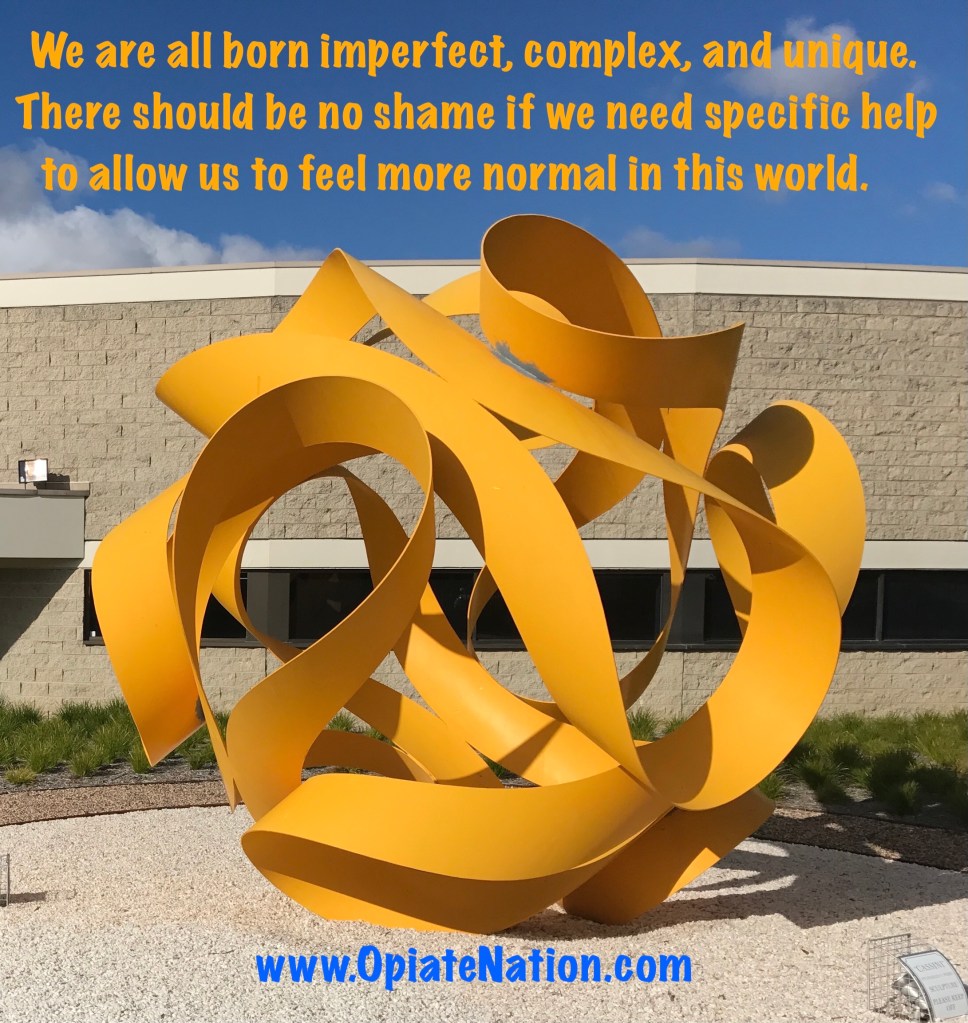
I think we would all agree that each and every one of us is born imperfect. There are so many complex and unique aspects to the human body which generations of genes have contributed. The things that make up our physical and mental attributes. One example is our face. It is estimated that only 2% of the world’s population has a truly symmetrical face. The right side usually appears larger than the left and eyes, nose and ears are not perfectly aligned. When you see a photo of a face with both sides exactly the same, its actually creepy. They lack character and look like AI.
Some of us are born with deficiencies that make life difficult and challenging, like being born blind, or deaf, or with a physical deformity. Because of amazing advances in science and medicine in the last century, many of these problems can be corrected. I had crowded teeth when I was young and am so thankful I was able to get braces and have a normal smile. We would not understand if someone had the opportunity to receive this kind of help and didn’t access it because they or others in their community thought they should just live as they are. We all want to feel comfortable and that we belong, are ‘normal’ in this world.
What about when someone is born with an internal deficiency such as a heart condition or kidney problem or blood disorder? We never think twice about having medical help or drugs and lifestyle changes to remediate the problem if it is possible. So why is there any discussion on whether someone who is born with an imbalance of normal brain chemicals or hormones should live in constant struggle and not access medication?
This thought came up as I considered the reasons behind why some people seem to need something like drugs to make them feel ‘normal’ to themselves and to the people around them. When everyone else seems to easily roll with the ups and downs of life while they get stuck on the downs. When how they think and process input and information is not the same as others. When their ability to be at peace or sleep is chronically unobtainable.
I’m not at all suggesting that individuals who seek drugs all have legitimate genetic or biochemical voids. As we know, many young people start drug use because of peer pressure and the environment that surrounds them. But underlying mental struggles or health conditions may be the determining factor that pushes them into, rather than away from, repeated use. I found it interesting that among my son’s high school and college friends, many tried all the drugs – uppers, downers, hallucinogenic – and some went on to addiction to uppers like cocaine and meth while others to downers like opioids and benzos and some walked away from all of them.
But once repeated and continual use happens, the chemicals and receptors in the brain are changed and more than ever, medication and therapy are going to be a big part of recovery from use and restoration of normalized brain signals. The need for medication may be short term or lifelong. Regardless, we all need to remember that just like shaming someone because they have a physical deformity is totally unacceptable, shaming someone who is struggling with mental health and/or addiction problems is also unacceptable.
This does not mean we enable destructive behavior or stop supporting someone to get professional medical and psychological help along with a supportive community. Never. If we want to see someone who is struggling become as healthy as possible, our love and support are crucial. And we know that in a country where public health care is a privilege rather than part of a foundation of society, finding the right care can be daunting. Let us be there to help our family, friends, and community receive the care they need by being encouraging and supportive.
Stigma of Addiction: The Effects, The Reasons, and How to Reduce Stigma
(Translation into most languages at tab to the right.)
How do clean and sober friends stay involved with a friend who is in active addiction and/or alcoholism? I ended last month’s blog asking this question. In particular, I want to discuss ways that teens and young adults can deal with this difficult and at times very frustrating problem.
What does being a good friend to someone who is addicted look like?
The first thing is to not pretend you don’t know about their addiction. Talk about it openly but without judgment. Understand that they may deny any problem, so you may have to cite specifics that have made you concerned. Express that you care about them and don’t think less of them as a person because of their struggles. Risk your comfort zone. “Greater love has no one than this: to lay down your life for your friends.” (1)
Be a good listener. A problem with drugs or alcohol may start from just experimenting with drugs at a party or concert. It may then turn into addiction and be fueled by problems at home or with friends or underlying mental health issues. When your friend feels cared for and accepted and not confronted with more guilt or shame, they will be willing to open up. Nobody planned to become addicted and nobody wants to be an addict. Here’s links to good info on how to help someone trapped in addiction. (2,3)
But, if you remain a good friend to someone who is living a self-destructive life, how do you help them without enabling their addiction? For young people who are good friends, enabling might be keeping secrets for them about their problem, especially from adults who may need to know in order to take life-saving action. It may be loaning them money or driving them to get drugs. The pressure would sound something like: “If you’re my real friend, you won’t tell…” Or “If you really want to help me you would…” Basically, when you support their problematic behavior in the name of ‘helping’ them, you are actually keeping them from living with the consequences of their poor choices. And this will only prolong their problems and delay change. (4)
Encourage them to get help through programs like SMART Recovery groups or AA for alcohol and NA for narcotics. Very few people overcome addictive behaviors alone. Community is key. Go with them if you can or drive them. And remember, drug and alcohol recovery take lots of time and most people don’t succeed the first time they try to quit. Dr. John F. Kelly, clinical psychologist and addiction medicine expert, says it can take 8 years and 4-5 treatment attempts at recovery to achieve one year of sobriety from opioid and other drug addiction. It can take years to achieve stable recovery and Medication Assisted Treatment (MAT) is an important aspect. Gone are the times when a 30-day detox/treatment was seen as the solution to addiction. It may be an important first step in the process of ongoing recovery. People can and do recover, but it will likely be a lifetime journey. Here’s a YouTube 2025 video of Dr. Kelly giving a session on: The New Science on Addiction Recovery. (5)
You can encourage your friend with each small step and success, even through relapses. In our son’s recovery program, we ended each session by saying together: “Keep coming back ‘cause it works if you work it.” It takes hard work and it can be very discouraging for your friend to relapse because your friend wants to be free. No one wants to live controlled by addiction. No one. Encouragement to stick with it is vital.
If your friend or family member is using opioids, you should get naloxone (a medicine that can temporarily reverse the effects of an opioid overdose) and keep it handy. Available through local community-based programs or pharmacies.
It’s worth saying again: Friends are SO important for people in active addiction.
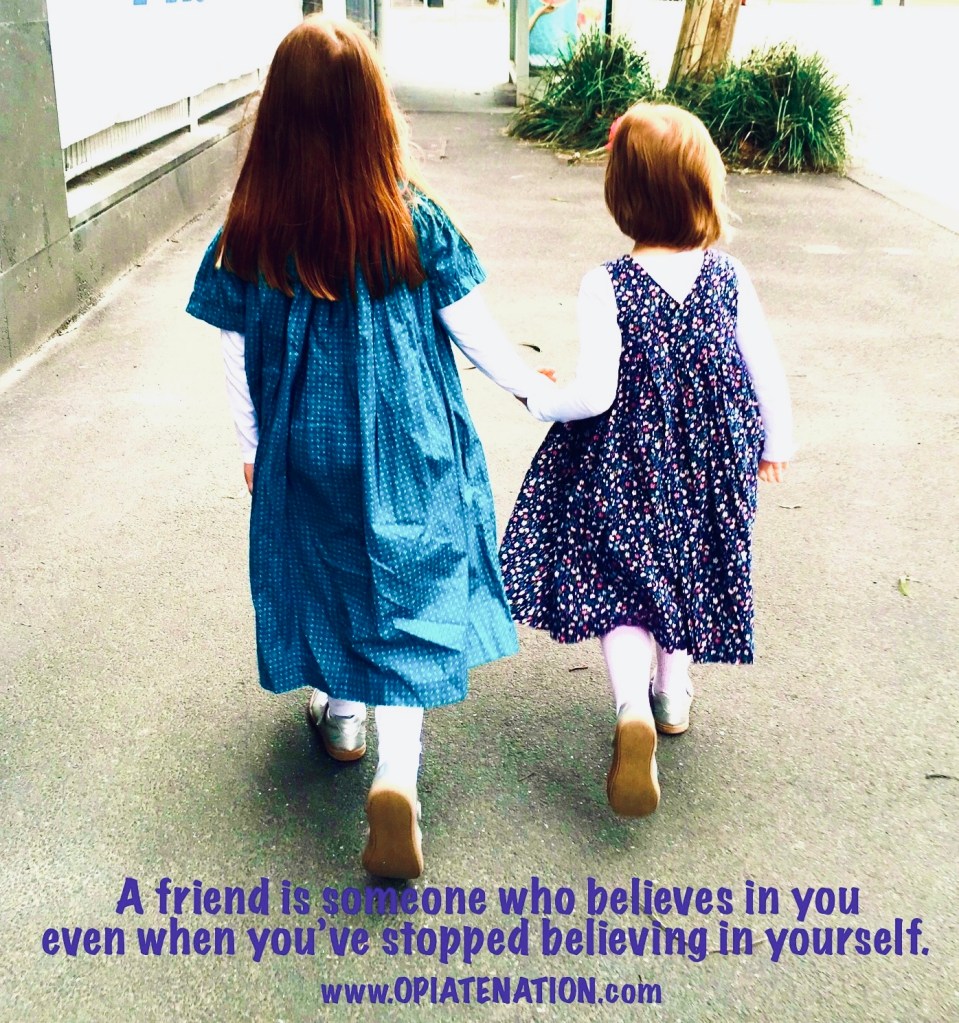
Don’t ever give up on your friends trapped in addiction. They need friends more than ever, friends who love them and will invest in their lives and let them know they are a worthwhile human – while you also need to encourage them to seek help in order to become sober and stable. And to remind them by example of what a normal and joy-filled life is like and one that they too can have.
(Translation into most language at tab to the right.)
Approaching what would be my son’s 36th birthday, I thought about the last year of his life. I don’t think about it often because it is painful – so many wishes that things had gone differently for him.
One sadness is that when in active addiction, he was very alone. It’s not that JL didn’t have lots of friends – he did. He was friendly and likeable and the large group of friends who came to his memorial is a testament to that. But most of his high school and university-era friends were not involved in his life during the last few years of his life, and the last year in particular. After his accidental fall and relapse to opiates in 2008 and the next seven years in and out of recovery programs, his life became narrower and something he was ashamed of.
An event that stands out was during a time of heroin use that we were not fully aware of as he lived in our rental house, and we thought he was attending his classes at university. We received an urgent call from two of his friends telling us that they knew he was back to spending all his time with his friend that used heroin with him and they were not getting an answer to their calls. They were at his house and he wasn’t responding to their knocks on his door – did they have our permission to break his door down? Our frightened response was “Yes!” They found him deep in drugged sleep and alive but very startled when they burst in. They confronted him with what they knew and their concern about his drug use. He of course was defensive and pretended that nothing was wrong.
Gradually, these friends, along with others, were no longer part of his life. JL did make a good friend or two in his recovery programs, but he always kept his addicted friends and dealers separate from his sober friends who were mostly not aware of his use and relapses – he had a pretty good poker face. Most of them were shocked to hear of his overdose death because he had been in a sober living house for six months and doing well.
Many of the friends who had such good times together when JL was clean (although not necessarily sober, as they enjoyed drinking with him not realizing how that always led back to drugs for JL) felt guilt after his death. Guilt because he called several of them the week before his death when he had just relapsed. It seems he wanted a friend to talk to and perhaps perceive that he was struggling. And guilt because they wished they had stayed in touch with JL and not distanced themselves from him when he continued to struggle with addiction.
But there’s the rub: How do sober friends stay involved with a friend who is in active addiction? I think it is especially difficult for young people, who don’t know what they can do, who may be more concerned with their own lives and issues, and who are not yet mature. This is not to suggest that any human is ever totally selfless regardless of how old we are – I know myself too well to hold this delusion. But the passing of years does bring relational experience and can help us focus more on those around us.
Next month I will try to share some insights and ideas for teens and young adults for how to truly be a friend to someone who is struggling with addiction and sobriety. Just remember:
Don’t ever give up on your friends or family who are trapped in addiction. They need good friends more than ever. King Solomon gave this wise insight 3,000 years ago: Two are better than one, because they have a good return for their labor: If either of them falls down, one can help the other up. But pity anyone who falls and has no one to help them up. (1)
Many people will walk in and out of your life,
but only true friends will leave footprints in your heart.
Statue by Gustav Vigeland, Vigeland Park in Oslo, Norway.
(Translation into most languages at tab to the right.)
Understanding the teenage brain was the topic of my last post: Is Teenage Turmoil Inevitable? It is important to digest before parents consider a recovery program for their teen. Knowing that adolescents and teens feel and process information differently than adults is why they require a different approach to addiction and recovery.
Regardless of the type of program considered, the one absolute necessity is that the family be involved in the process – because family dynamics are an integral part of a young persons’ sober and addicted life. And the best place to start this discussion is to focus on the CRAFT model.
The American Psychological Association has an informative article, below. (1) In it they point to studies discussing how programs like Al-Anon for family members with an addicted loved one “may improve the well-being of friends and family members, they are not effective in getting the addicted person into treatment.”
Intervention programs, designed to help “family and friends work with a counselor to confront a substance user and urge him or her to get treatment” is only used by 30 percent of families due to discomfort with confrontation. And treatment is only the first step on the long road to recovery. After that, the family still needs other tools.
CRAFT (Community Reinforcement Approach to Family Training) originated at the University of New Mexico and was developed by Robert Meyers, Ph.D. and colleagues. Research on CRAFT shows that approximately 70% of families who receive CRAFT are able to help their loved ones start treatment within a year (Miller, Meyers, & Tonigan, 1999). CRAFT also helps family members improve their own lives, whether their loved one ends up seeking treatment or not.
CRAFT teaches real life skills to use connection to encourage positive change, because CRAFT is rooted in the belief that connection is the opposite of addiction. It teaches positive communications skills to foster the connection that is desired by the person who is struggling with addiction and their loved ones.
Helping Families Help is a great non-profit website resource for CRAFT information. (2)
SMART Recovery was established in 1994, here in the USA, to meet the increasing demand of those seeking a secular and evidence-informed alternative to the widespread 12-Step addiction recovery program. It is intended for adults over 18 and those seeking flexibility and independence, while AA offers structure and strong community support. It may be best for young adults in their 20’s, as most 18- to 25-year-olds who struggle with addiction are not yet “adult” in their thinking and coping skills. Smart Recovery is now in 23 countries. See info below. (3)
Basically, the steps in helping your teen who is addicted are this:
Getting them into treatment
Choose a program – inpatient or outpatient
Detox
Individual Therapy
Family Therapy
Contingency Management
Getting your loved one into treatment: sign up for CRAFT 10-week email training course through Helping Families Help or investigate other options.
Choose a program: based on the drugs involved and length of time used.
Detox: Most drugs will still be in your child’s system. Detox flushes them out. Detoxing under the care of professionals ensures that it’s done safely out of reach from harmful substances. Your teen will likely experience withdrawal symptoms as well.
Individual Therapy: To understand a teen’s problem and to address it comprehensively. The first course of action in rehab is one or more types of therapy, both one-on-one and group settings. Motivational Interviewing uses a person-centered, non-confrontational style where the teen is encouraged to examine the pros and cons of their use and to create goals to help them achieve a healthier lifestyle. This helps them gradually realize the consequences of their actions. Cognitive Behavioral Therapy (CBT) is goal-oriented therapy that helps teens express and understand their feelings and cope with difficult emotions. They learn to replace negative behaviors (such as using substances) with positive ones (like sports or art or service endeavors).
Family Therapy: Based on the premise that family carries the most profound and long-lasting influence on development, and in modeling both good and bad behaviors and beliefs. These sessions bring together those closest to an addicted teen and address issues such as poor family communication, cohesiveness and problem solving. Again, CRAFT is crucial here.
Contingency Management: This form of therapy tracks each patient’s progress in rehab, including each day they succeed in staying sober, and rewards them with a prize. The more teens feel satisfied with their rewards, not only will they continue striving to stay sober, but their brain will relearn how to appreciate rewards that aren’t drugs or alcohol. Following rehab, a teenager is thrust back into the world. Temptations lie around every corner and their problem stays with them for years after treatment. After you’ve helped your child kick their habit you must help prepare them with a plan to prevent relapse – or for all of you to know what to do when relapse occurs, which is likely especially for certain drugs like opioids. MAT (Medication Assisted Treatment) is vital for opioid addiction and the long-lasting changes in the brain that will continue to undermine all the best plans and determination to stay clean and sober. Our son and many of the hundreds of thousands of young people who died from opioids are the sad evidence of this truth.
I do not offer these steps and advice as a medical or addiction professional. I can only offer my opinion based on our personal experience and the stories from others, along with the research I’ve done over the past 20 years since my husband and I first discovered that our 15 year old son was using heroin. What we wish we had known I share with you in the hope that your story will end differently than ours.
1. An underappreciated intervention
The CRAFT model is giving family and friends the skills they need to help get loved one’s treatment for substance use problems By Katherine Lee – December 2017, Vol 48, No. 11
(Translation into most langugages at tab to the right.)
Recently, I connected with Christina Dent, Founder & President of End It For Good. The mutual connection came through a drug advocacy organization in Australia where they also promote options other than incarceration for drug addiction.
The End It For Good website is a treasure worth exploring (see below). Although Christina has been mainly focused on her home state of Mississippi, they are now expanding and reaching out across the United States. Their website states:
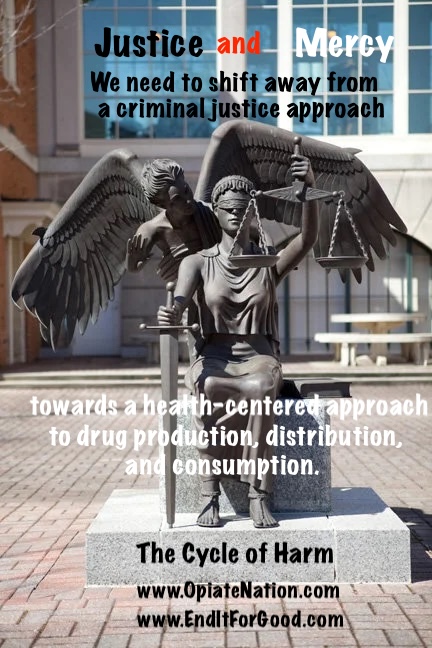
Our goal is a future where fewer people are harmed by drugs. To get there, we need to shift away from a criminal justice approach and towards a health-centered approach to drug production, distribution, and consumption. As a 501(c)(3), we educate citizens, advocates, and policymakers to elevate solutions that prioritize life, health, strong families, and safe communities. This is the path to a world where more people have an opportunity to thrive.
In her TED Talk, Christina shares her learning journey about the destructive impact of a criminal justice approach to drugs and addiction, as well as the mounting evidence that a health-centered approach would be much more effective.
And Christina has written an award winning and very favorably reviewed book:
CURIOUS: A Foster Mom’s Discovery of an Unexpected Solution to Drugs and Addiction. It gives a vision for unexpected solutions that save lives, heal families, and promote public safety.
The reason I used this particular statue for the blog graphic this month relates perfectly to this subject. Justice & Mercy was designed by sculptor L. Glynn Acree III and stands in front of the Cumberland School of Law at Samford University in Birmingham, Alabama. Justice is blindfolded and the scales she holds are perfectly balanced. The angel, Mercy, is whispering in Justice’s ear. An important reminder that in order for justice to be true and impartial, mercy and kindness must temper her decisions – because as humans, we are all imperfect and fail in many ways.
Discouragement is the opposite of having the heart, the courage to face something. It’s when the heart has been sucked out of you. But the en in encouragement means “into”, the process of putting courage into someone. Giving them the heart and hope to go on.
(Translation into most languages at tab to the right.)
It’s time for a confession. I have not been writing many blogs for Opiate Nation in the past two years – not because I haven’t had time but because I have felt discouraged. Decades into the Opioid Epidemic and all the information and media coverage, the hope that addiction and deaths from drug overdoses would decrease has proven unfounded. It seems that people in general are just tired of hearing about it, especially if it doesn’t particularly concern them. And I have felt that I didn’t have anything helpful to add to the conversation and wondered: what more needs to be said?
But I felt reprimanded in my heart and soul for being one more person who is fatigued by the persistence of a problem that seems to never get better, let alone go away. What about all the people living in active addiction? And what about their friends and family who spend sleepless nights and anxious days worried about them? And what of those who have lost loved ones to addiction and are living in debilitating grief?
I started thinking about discouragement and how to “snap out of it”? For me, there is no snapping out of it on my own. Once I’m dis-couraged, I have found that only being en-couraged changes things. And encouragement usually comes to me through two avenues: a few intimate friends and God, both of whom know me well. The words spoken out loud by friends and the ones directly into my soul by God are what lift my troubled and discouraged heart and bring hope and courage.
Courage comes from Latin cor meaning “heart”. The dis in discouragement means “opposite of”. Discouragement is the opposite of having the heart, the courage to face something. It’s when the heart has been sucked out of you. But the en in encouragement means “into”, the process of putting courage into someone. Giving them the heart and hope to go on.
Although my life has not been characterized by addiction personally, encouragement has been important in my life, especially after my son died from addiction. How much more important would encouragement be to those struggling with addiction? And for the families and loved ones of those struggling or already lost? And how can we encourage without enabling?
So, I have been reminded of the importance of an encouraging word. Knowing this, how can I offer encouragement in the arena of addiction and Harm Reduction? Although people do recover from addiction and live full lives, there will always be people struggling with addiction and using drugs. When we acknowledge and accept this, we must try our best to help minimize the harm from that use in the ways we can. For me, that has been through writing to offer information, comfort, and encouragement.
(Translation into most language at tab to the right)
Sam Quinones is a quintessential storyteller in an investigative journalists’ body. And he uses his skill to weave in stories from families and communities along with the “true tales” from recent history of greed, corruption, deceit, and the politics surrounding the drug epidemic we are living with today. It is his reason for hope that I want to focus on now. Heaven knows we need some hope for The Least of Us… In the Time of Fentanyl and Meth. (1)
Part of the hope he feels comes from positive changes beginning in how drugs and addiction are viewed now compared to previous decades. ‘…greatly expanded drug treatment is part of what America needs…recovering addicts face scary odds as long as the drugs that torment them are widely available, potent, and almost free. The now-cliché is “We can’t arrest our way out of this.” We can’t treat our way out of it, either, as long as supply is so potent and cheap.’ (2) He discusses the mistake of drug criminalization, the possibilities and problems associated with drug legalization and drug decriminalization – all very well thought through and discussed. He traveled across America and interviewed professionals in every field to gain insights into this nightmare that is swallowing lives from every socio-economic group. (For those unclear about what opiates or meth do to our brains, there are detailed explanations woven in throughout the book.)
But his biggest reason for hope came from when Quinones traveled and also extensively interviewed another segment of American society: the addicted, their families, and those working in the many fields who are trying to restore the lives of those taken captive by these powerful substances. I have to say, many of the stories were hard to read, but it is from these people in the trenches and their stories that Quinones began to have hope.
Drug courts are one reason to hope. Because synthetic dope today does not allow users to hit rock bottom before seeking treatment – because ‘Today, rock bottom is death. We can use arrests – but not as a reason to send someone to prison. Instead, criminal charges are leverage we can use to pry users from the dope that will consume them otherwise.’ (3) It helps to put some space between their brain and dope so they can embrace sobriety where life repair can begin. Drug courts are not a luxury – they are a necessity.
Yet Quinones found that ‘…our best defense, perhaps our only defense, lies in bolstering community. America is strongest when we understand that we cannot succeed alone, and weakest when it’s every man for himself…That’s why the lesson we must learn is that we’re only as strong as the most vulnerable, as people who are in pain.’ (4)
As he traveled and listened, Quinones saw that it was people who loved those who are ‘the least of us’ who were making the sacrifices on a daily basis to help in ways they could. But they need help and support – from others and from the policies that are in place in our country.
Recently, I was sharing with a woman the contrast we experienced while we lived in Australia with our daughter and family for two years from the beginning of the Covid pandemic. I said that we were struck by the self-centered mentality – in private life and politics – we encountered when we returned to America and how different it is from the sense of being part of a community and responsibility to others that pervades Australian society. She responded: ‘I’d rather be selfish and self-centered than have my rights and freedoms taken away.’ I was literally speechless. What have we become?
Bolstering community will take a change from our self-centered culture where we who have plenty think we don’t have enough. Where we at the top of the food chain, instead of helping to maintain our communities, have corroded them in isolating and insulating ourselves by abandoning the places where we used to come together like neighborhood parks and community gatherings. ‘We need to again make policy of the belief that we can’t go it alone. The spirit of community needs to be built out, collectively, not just a shift of heart, which is necessary, but in taxation, in health care, in improved infrastructure – in other words, a shift in where the resources go…much of what neuroscience has learned about our brain confirms religion’s truths:humans need love, purpose, compassion, patience, forgiveness, and engagement with others. We’re built for simple things – for empathy and community. That is our defense.’ (5)
He ends his book, his plea to all of us, with this:
‘Community reconstruction doesn’t have to always be complex. It comes down to the unnoticed “constant habit of kindness” that French observer Alexis de Tocqueville, in the mid-1800’s, saw strengthened us locally and kept Americans from destructive isolation and the worst of individualism…The lessons are that we are strongest in community, as weak as our most vulnerable, and the least of us lie within us all.’ (6)
Thank you, Sam.
The Least of Us: True Tales of America and Hope in the Time of Fentanyl and Meth by Sam Quinones
(Twenty-fifth in a series of topical blogs based on chapter by chapter excerpts from Opiate Nation. Translation into most languages is available to the right.)
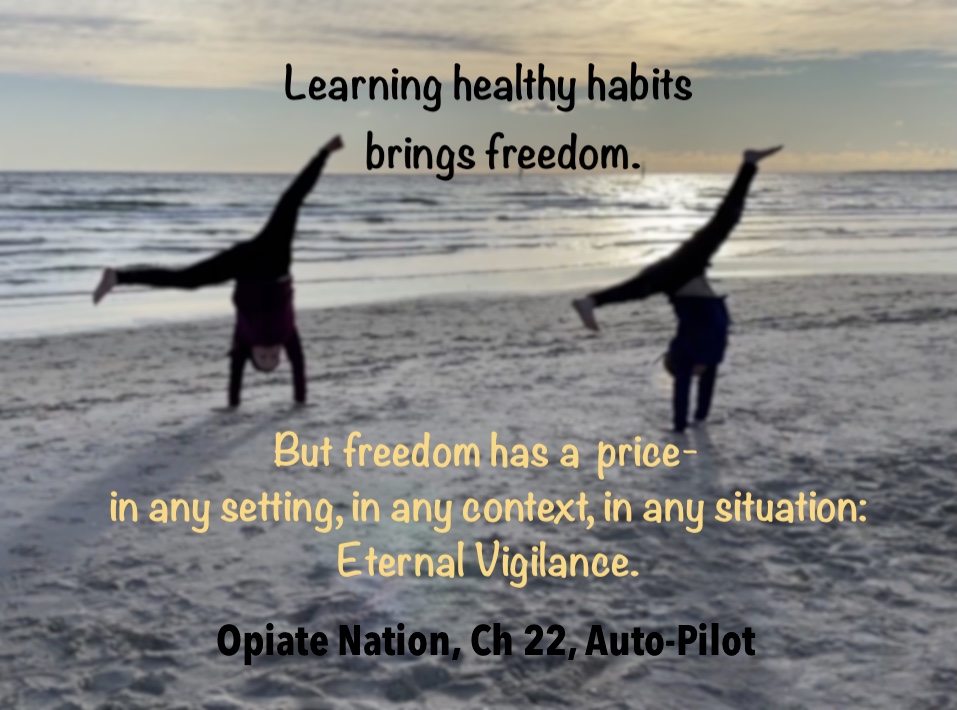
I’ve heard a saying: “The chains of habit are too weak to be felt until they are too strong to be broken.” And just like chains, some habits are stronger and deadlier than others. Conversely, healthy habits can be just as strong and powerful – but instead of bondage, they bring freedom to live our lives to the fullest.
In The Power of Habit, Charles Duhigg says, “Habits are a three-step loop: The cue, the routine, the reward. They become automatic beginning with a cue that triggers a routine and a craving for a clear reward. Craving is an essential part of the formula for creating new habits…You can never truly extinguish bad habits. So in order to change a habit, you must keep the old cue and deliver the old reward (that you are craving), BUT insert a new routine.”
Lament for a Son is an intensely personal tribute by Nicholas Wolterstorff to his 25-yr-old son who died in a climbing accident. It is eloquent and unforgettable as he gives voice to a grief that is both unique and universal: the tortured pain of losing an individual, a child, your child.
We lost our 25-yr-old son to a heroin overdose six years ago on August 2, 2014. Lament for a Son has been one of our go-to books since that time. Wolterstorff expresses the incomprehension and sense of unfairness that, I believe, parents worldwide feel when they lose a child – someone who is supposed to bury you, not the other way around. It doesn’t fit with the cycle of life we expect – it is jarring, unsettling, bewildering, frustrating, disquieting.
In the Preface he relates:
A friend told me he gave a copy of Lament to all of his children. “Why?” I asked. “Because it’s a love song,” he said. That took me aback. But, Yes, it is a love-song. Every lament is a love song. Will love-songs one day no longer be laments?
Yet, while the book expresses the common feelings brought on by sudden unexpected death, what he doesn’t share with those of us who have lost a child to drug/alcohol addiction are the previous long years, sometimes decades, of turmoil, anxiety, fear, and depression that we experience on top of all the normal grief.
And shame.
There is no glory in being the parent of someone who is an addict or alcoholic.
The Ohio Society of Addiction Medicine is a chapter of ASAM - A professional society actively seeking to define and expand the field of addiction medicine.





 Opiate Nation