(Twenty-eighth in a series of topical blogs based on chapter by chapter excerpts from Opiate Nation. Translation into most languages is available to the right.)
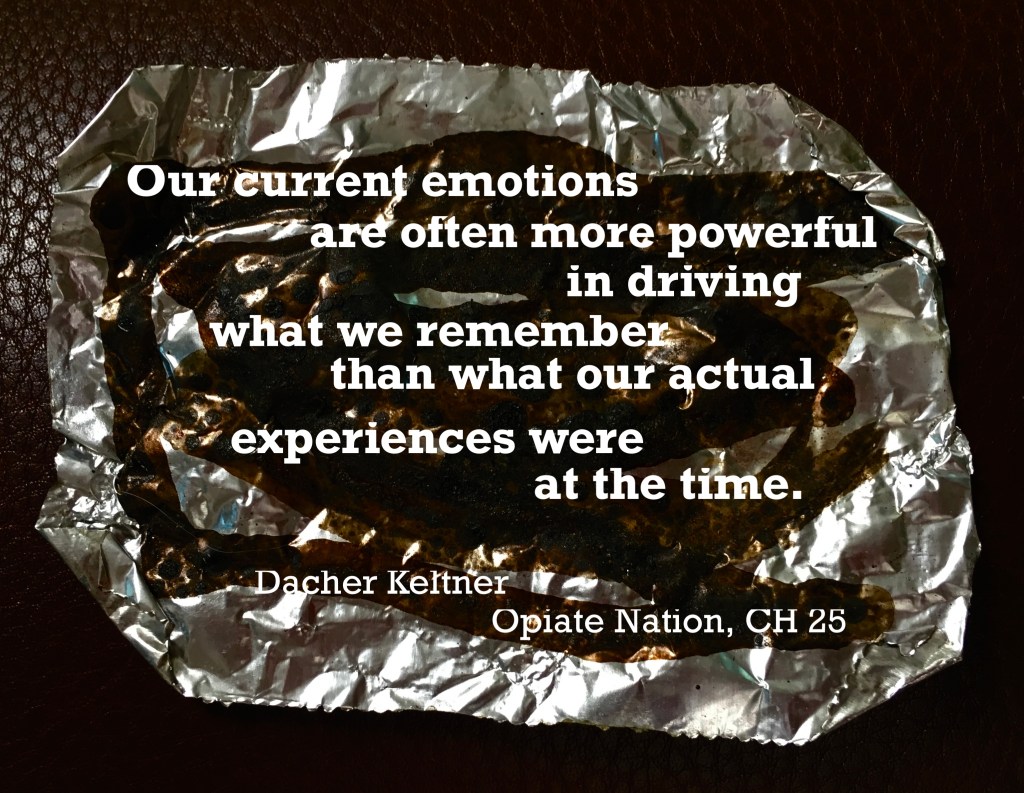
Memories are strange things. How much control do we have over them? What triggers bring up which memories? How do triggers differ with each individual personality? Does grief affect memory? I know it does mine because I continue to experience new associations and memories being formed from what were once familiar items with no particular memory attached before—which now, after my son’s battle with addiction and death, have a specific memory related to him.
(Twenty-seventh in a series of topical blogs based on chapter by chapter excerpts from Opiate Nation. Translation into most languages is available to the right.)
Death naturally brings up thoughts and questions about existence beyond this life, this earthly existence. I love how John Milton said it: “Death is the golden key that opens the palace of eternity.” For us, after a death so intimate as our son’s, one can imagine how often we thought about it, particularly in the subsequent months.
One thought that continues to captivate John and I is the possibility that others can look into our time while they are in eternity, in heaven, like someone looking into a cell under a microscope at us, the human specimens. Or are they frozen in time, like being in a time capsule?
Six weeks after JL’s death, my journal entry highlights these questionings:
JL,
Mom here. I’ve been wondering, and wishing I knew the answer for sure, if you and others who are gone can hear us and are conscious of what is happening on earth and in our lives. Can you hear when Dad and I talk to you? If you can, I think you would be crying for us many times as you see and hear our pain. I hope we are not causing you any more pain…
Dad and I went out to dinner and talked about this. What he brought up was that eternity, by definition, is the absence of time as we know it here on earth. So, if those of you who are dead are also in “no time,” even though present with the Lord, you may not experience any consciousness between death and the final resurrection we believe in—it may just be a flash. Hmmm…I don’t like that concept. I want to know you hear me and my apologies and love and thoughts towards you.
Singer-songwriter Phil Keaggy’s song “Time” from his album Love Broke Thru expresses the limits in which Father Time exists:
My friend, David Such (a mechanical engineer, writer, artist) wrote a blog about the Elasticity of Time. Here is a relevant thought from that blog:
Most of us human beings are locked into “earth time” so it can sometimes be difficult to understand, but Einstein taught that “time” is elastic depending on one’s position, perspective, and velocity. I am merely a mechanical engineer and do not fully understand all the physics or all the mathematics, but I do understand the concept as follows. As we increase our velocity, we reduce the difference between our own speed and the speed of light. This is insignificant unless our velocity is extremely high. As we approach the speed of light, “time” slows to a standstill (and apparently, even “matter” takes on different shapes and densities).
In 1676, the Danish astronomer, Olaus Roemer, first successfully measured the speed of light: Lightspeed. For those of us who believe in God and that his intelligence designed the Universe, his words “Let there be light” have much significance. Eternity must at least be full of light, beyond time, beyond darkness and death. In death do we instantaneously exist in lightspeed and the absence of time?
If so, is JL zipping and zooming around the universe at lightspeed now, with all the other souls who have left this earthly constraint of time? I have no clue, but I smile at the thought.
(Twenty-sixth in a series of topical blogs based on chapter by chapter excerpts from Opiate Nation. Translation into most languages is available to the right.)
Nine months after our son, JL’s, sudden death, we were gradually unearthing our grief, as we gradually unearthed pieces of his life. We were miners searching for something precious, digging through the layers of years as if through layers of rock. Or perhaps we were more like survivors of an earthquake. Our entire earth, with everything we had built on it, was suddenly shaken to the point of collapse, and we were sifting through the remaining buildings and rubble to see what was left. Deciding what to keep and what to dispose of. “Dispose of” has new and unwelcome meanings now. Clothing, personal belongings, furniture, files, photos, childhood toys, keys, memorabilia.
John’s journal entry on May 12, 2015 expresses some of our feelings:
Dear JL,
It’s dad again. We are going through more of your things and I spent a half-day shredding your old papers and notes. It is so odd that much of our lives comes down to boxes of paper to shred. This is very, very hard for me. Shredding your life.
I love you – Dad
Grief is about what is going on inside us after a loss—how we feel. We have no more control over it than we have control over other feelings. Our choice involves how we deal with it.
Mourning is the action of dealing with our loss—what we do, the common rituals, the external part of the tragedy. Again, we choose how we mourn.
Some people put acts of mourning off indefinitely – leaving a deceased loved one’s belongings just as they were when they died until they die themselves. Others, urged on by society or their own distraught emotions, will almost immediately begin sorting and throwing. For us, there were some natural milestones when deep inside we seemed to know it was time to face the loss of another part of our son’s life. The grief-work we were engaged in – being aware of the various stages of grief and facing them as they surfaced – was our internal guide. We never let societal custom or any external pressure guide us, while we did read and listen to other’s experiences.
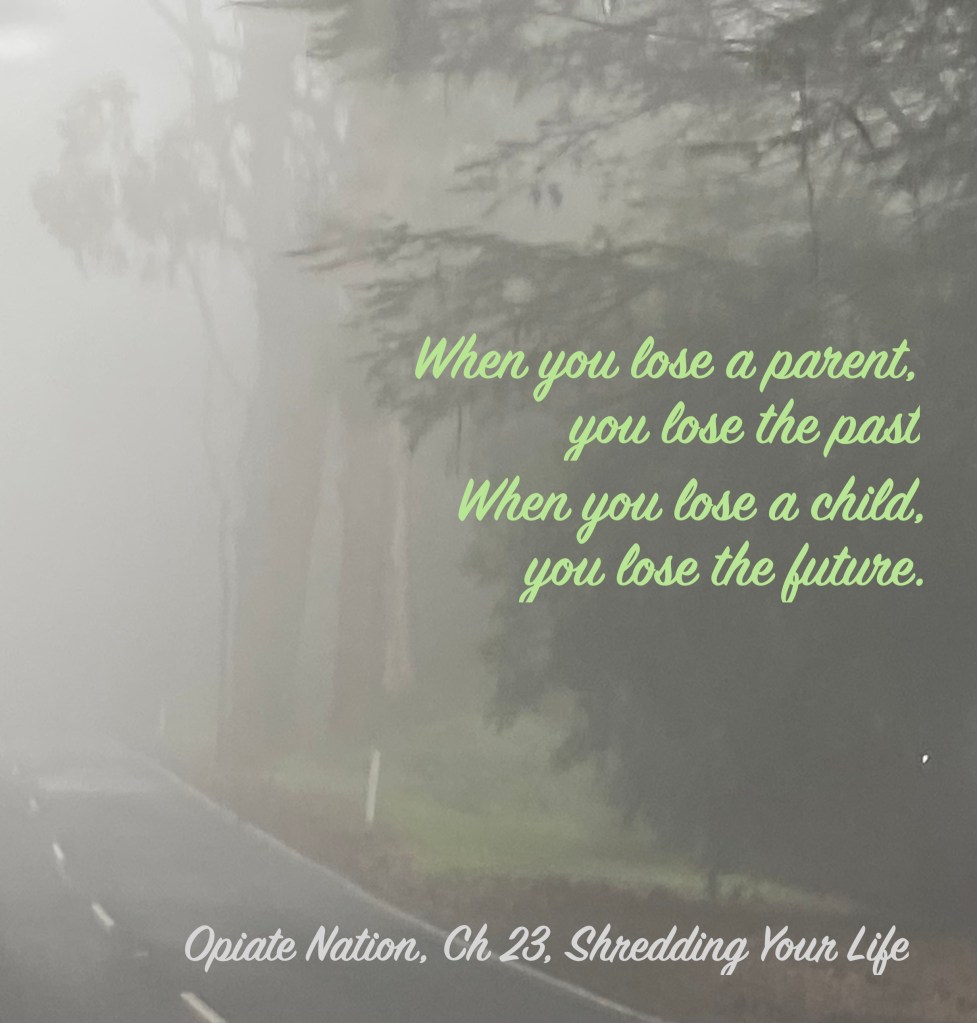
One thing became clear: this loss of our child was very, very different than the loss of our parents or siblings. Although each of those were difficult in their own distinct ways, the level of personal pain with our son’s death was unique. He was an intimate part of who we are – of course – he came from us. As he grew and became his own person, he yet remained a part of our life and more significantly, our future. All is engulfed in a thick fog. Which is why the quote in the photo is so poignant:
When you lose a parent, you lose the past. When you lose a child, you lose the future.
(Eighteenth in a series of topical blogs based on chapter by chapter excerpts from Opiate Nation. Translation into most languages is available to the right.)
In 1735, Benjamin Franklin wrote a letter to his own newspaper, The Pennsylvania Gazette, where he used this now-famous phrase: An ounce of prevention is worth a pound of cure. He wasn’t referring to a pandemic or keeping your roof in good condition so it won’t leak or changing the oil in your car so you won’t ruin your engine or, my personal example, brushing your teeth to avoid tooth decay and gum disease.
When I was growing up in the 1960’s, brushing our teeth every day was a new habit for most Americans. Even though the toothbrush was invented in 1857, it wasn’t until after WWII that we got in the habit of regularly brushing our teeth. When I was young, I didn’t give much thought to personal care and it seems I didn’t brush my teeth often – I was too busy living life – which is why my two older sisters gave me the endearing nick-name “moss-mouth”. (FYI, I must have good teeth genetics because I didn’t have my first cavity until I was 30.)
(Eleventh in a series of topical blogs based on chapter by chapter excerpts from Opiate Nation. Translation into most languages is available to the right.)
Honesty is one of the main themes that ripple under the surface of “The Blues.” Expressions of honest feelings, whatever they may be at the moment – themes of lost love, painful relationships, dashed hopes, and heartache. The majority of us have or will experience heartache in our lives. Although it seems counterintuitive, most of us feel consoled by songs that express what we are feeling deep inside but may have a hard time putting into words. In order for me to be honest, I have to acknowledge that I am singing The Blues.
(Eighth in a series of topical blogs based on chapter by chapter excerpts from Opiate Nation. Translation into most languages is available to the right.)
When I was young, I only went to one funeral. I can’t remember who it was for or where it was, but it must have been for a close relative or I wouldn’t have been there. I do remember seeing everyone dressed in black. It was a very somber setting, people talking in hushed voices, and I didn’t comprehend what was happening. I just knew everyone was sad. After that day, I never thought about that person again – and even if my parents thought about him or her, their acts of mourning seemed to stop with the funeral. And I had no knowledge of any grieving on their part because at that time and in their cultural setting, people kept feelings regarding their grief to themselves.
It wasn’t until 20 years ago when my younger brother died from AIDS that I was faced with a death that was so close I felt a personal loss that tore at my heart. There was no way to just quickly plan a funeral and burial and then move on. My life as I had known it, now had a gaping chasm where my brother had once been and it was not going to close up anytime in the near future. I needed someone who had travelled this path before me to guide me through the overwhelmingly disturbing and depressing feelings. None of my friends had experienced a close loss like this. So, I looked to the books that were most recommended: On Grief and Grieving by Elisabeth Kübler-Ross and A Grief Observed by C. S. Lewis.
(Seventh in a series of topical blogs based on chapter by chapter excerpts from Opiate Nation. Translation into most languages is available to the right.)
When public health is at risk, one can only wonder about the motives behind politicians’ decisions – our “public servants” as they used to be referred to – regardless of what they may say. But we don’t have to guess their motives because actions speak louder than words and the actions of the US Department of Justice (DOJ) this week regarding Purdue Pharma and the Sackler family are unconscionable. This deal is not justice for the victims and their families for this pervasive and criminal corporate greed.
(Sixth in a series of topical blogs based on chapter by chapter excerpts from Opiate Nation. Translation into most languages is available to the right.)
I have always loved Star Trek. From the early 1960’s shows with the corny scripts and goofy hairdos to the 21st century high-tech and high-stakes extravaganzas. Science fiction envisions the future for us and pushes inventions and technology from getting “beamed-up” in a flash to having a force field to deflect foreign objects.
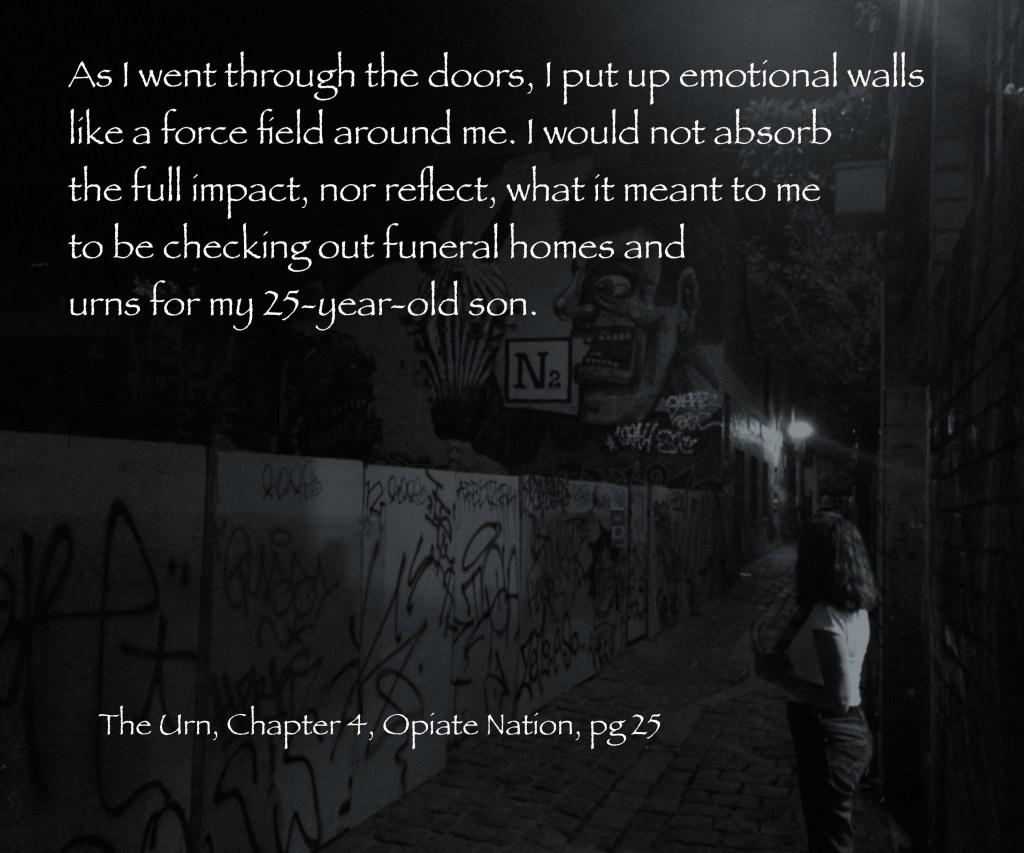
The concept of a force field would be an incredible tool to have at our disposal – to be able to switch it on and off at will. And I can think of no better time to employ an emotional force field than during the early days and weeks after a sudden death. When it takes all your energy just to exist, to wake up and to face the next moment. An invisible barrier for self-protection.
(Fifth in a series of topical blogs based on chapter by chapter excerpts from Opiate Nation. Translation into most languages is available to the right.)
After many years of not having a dog, we decided to adopt one from our local shelter. We found a beautiful German-shepherd/wolf mix who was 18 months old. Bella was docile, sweet and quiet. The next day, as I headed out to the grocery store, I gave her a hug and saw her watch me through the window as I got into the car.
When I returned an hour later, I was met with a shock. I found her, panting rapidly and pacing nervously in our bedroom where our wooden shutters were open and had bite marks. She had tried to escape while I was gone. I had no idea why. I immediately called the shelter. “She is having separation anxiety: she needed to escape being left alone.” We found out that she had been with two families previously when she was dumped at the shelter because she continued to try to escape when she was left alone for hours on end. They gave us the name of a dog behaviorist and we started down the long road of helping Bella manage her fear when we had to leave her at home.
Children and adults can experience separation anxiety when someone they are attached to leaves them. They can have recurrent and excessive distress just anticipating being separated from loved ones and the anxiety can be so intense that it is hard to function in everyday life. Panic attacks and physical symptoms such as nausea and headaches can occur. For me and my husband, on the morning of our son’s death from overdose, standing over our son in that body bag we experienced the ultimate separation anxiety. The overriding emotion we felt was fear: fear of the unknown future we were facing. We couldn’t visualize how we would survive without our son as part of our lives and the future we thought we all had together. He had not only been an integral part of our lives for 25 years but he was literally a part of us–the combination of our DNA that formed him as a particular and unique human being. To say that it was like having part of you taken away doesn’t describe it. This was having our hearts torn out.
We would never embrace or kiss or stroke the cheek of our son again. We were facing an existential crisis, shaken to the core, questioning our reason for living. Regardless of our strong faith that had seen us through many other deaths in our families, this separation seemed incomprehensible and cruel. It was only by falling down on our faces and waiting for Mercy to gradually pick us up that we were able to survive this traumatic separation from our son and move forward again in life.
(Second in a series of topical blogs based on chapter by chapter excerpts from Opiate Nation. Translation into most languages is available to the right. If you feel this blog is important, please repost to your social media using the buttons below. Thank You!)
When our 25 yr old son died of a heroin overdose in 2014, the statistics for the average life-span of a heroin addict was 5 years. Five years. Not very long if you are 15 or 20 or even 30, the age when most young adults’ nowadays are just getting in gear with their career, a long-term relationship, and planning a family. To have your life swept away before you have a chance to experience some of the most wonderful years of living on this earth is painful to consider.
The Ohio Society of Addiction Medicine is a chapter of ASAM - A professional society actively seeking to define and expand the field of addiction medicine.




 Opiate Nation