Discouragement is the opposite of having the heart, the courage to face something. It’s when the heart has been sucked out of you. But the en in encouragement means “into”, the process of putting courage into someone. Giving them the heart and hope to go on.
(Translation into most languages at tab to the right.)
It’s time for a confession. I have not been writing many blogs for Opiate Nation in the past two years – not because I haven’t had time but because I have felt discouraged. Decades into the Opioid Epidemic and all the information and media coverage, the hope that addiction and deaths from drug overdoses would decrease has proven unfounded. It seems that people in general are just tired of hearing about it, especially if it doesn’t particularly concern them. And I have felt that I didn’t have anything helpful to add to the conversation and wondered: what more needs to be said?
But I felt reprimanded in my heart and soul for being one more person who is fatigued by the persistence of a problem that seems to never get better, let alone go away. What about all the people living in active addiction? And what about their friends and family who spend sleepless nights and anxious days worried about them? And what of those who have lost loved ones to addiction and are living in debilitating grief?
I started thinking about discouragement and how to “snap out of it”? For me, there is no snapping out of it on my own. Once I’m dis-couraged, I have found that only being en-couraged changes things. And encouragement usually comes to me through two avenues: a few intimate friends and God, both of whom know me well. The words spoken out loud by friends and the ones directly into my soul by God are what lift my troubled and discouraged heart and bring hope and courage.
Courage comes from Latin cor meaning “heart”. The dis in discouragement means “opposite of”. Discouragement is the opposite of having the heart, the courage to face something. It’s when the heart has been sucked out of you. But the en in encouragement means “into”, the process of putting courage into someone. Giving them the heart and hope to go on.
Although my life has not been characterized by addiction personally, encouragement has been important in my life, especially after my son died from addiction. How much more important would encouragement be to those struggling with addiction? And for the families and loved ones of those struggling or already lost? And how can we encourage without enabling?
So, I have been reminded of the importance of an encouraging word. Knowing this, how can I offer encouragement in the arena of addiction and Harm Reduction? Although people do recover from addiction and live full lives, there will always be people struggling with addiction and using drugs. When we acknowledge and accept this, we must try our best to help minimize the harm from that use in the ways we can. For me, that has been through writing to offer information, comfort, and encouragement.
(Translation into most languages at tab to the right)
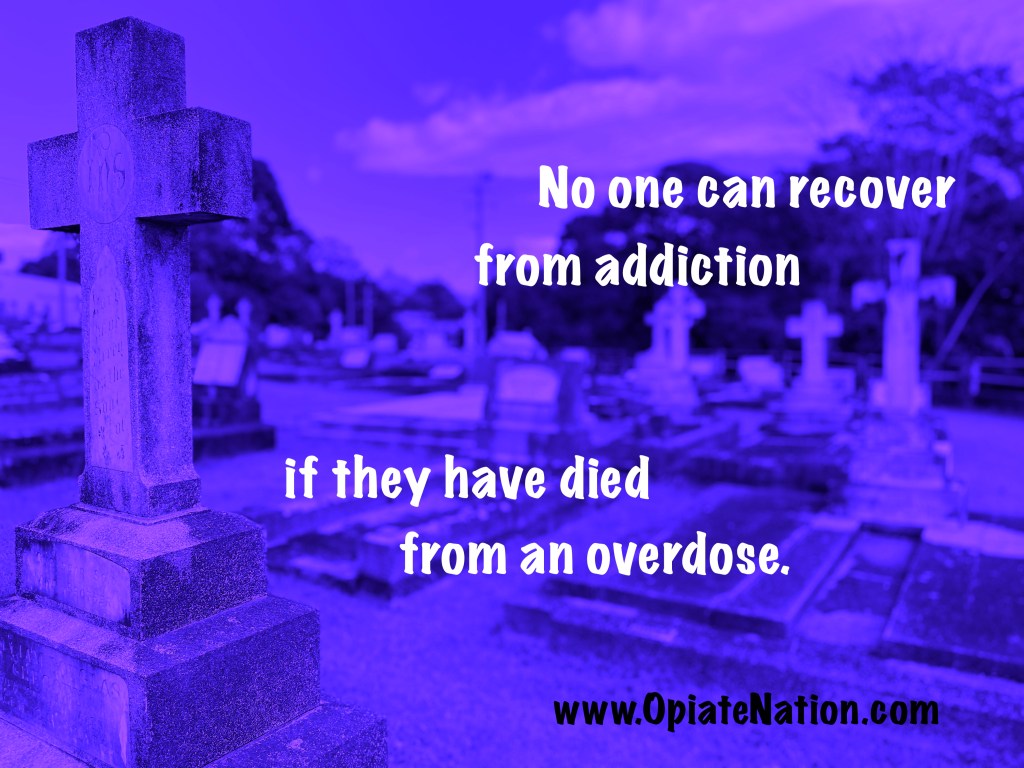
No one can recover from addiction if they have died from an overdose.
International Overdose Awareness Day (IOAD) is the world’s largest annual campaign to end overdose. It is a day to raise awareness about the risks of overdose, honor the individuals whose lives have been lost, and acknowledge the grief felt by families, friends, and the community
With synthetic drugs made from chemicals in China and added into illicit drugs around the world, the need has never been more urgent to alert us all to the risk of overdose facing millions of people worldwide. What can we do to help prevent further loss of lives for those already struggling with addiction?
Prof. Dan Lubman (Australia) shared a thought that stuck in my mind because it brought up memories of conversations I had with my son while he was addicted. Instead of asking, “Why are you taking drugs?” A more engaging question would be, “What put you in this vulnerable position?”
This question shows the understanding that addiction is not just a matter of choice or will-power but that it is a complex problem that will not be helped with simplistic answers such as “Just Say No.” When a person feels less stigma, that they are not being judged, and that there is hope for them, they are increasingly likely to consider treatment.
So, what does put people into the vulnerable position where drugs/alcohol are helping them cope with life? The 5 main factors that contribute to addiction are: genetics, mental illness, home and social environment, stress, trauma/abuse. We can’t do anything about our genes although if you know there is alcoholism/addiction in your family tree there is need for extra awareness and precautions. Mental illness once recognized and diagnosed properly, can be treated with therapy, education, and medication. Home and social environments, stress, and trauma and abuse are absolutely within parents, extended family, and society’s control. This is where raising our children as “a village” is so important, but it is in peril with our upwardly-mobile lifestyles of frequently moving house, not enough time together, and not engaging with our community. Educating our families and involvement in healthy and safe support networks such as service organizations and faith and school communities are a good place to start.
Once someone is using substances to self-medicate, what can we do? First, we need to look for, and reach out to, people struggling with addiction. There may be some in your circle of friends – even in affluent communities. If we truly understand that those individuals will shrivel in shame from stigma, we can start by changing how we speak about them and to them – we’ve changed our language for things a lot less deadly. Building trust over time is critical to someone feeling they can openly discuss their problems. We can find out more about what is being done in our community to support recovery efforts and get involved with clean needle exchanges, Narcan training and distribution, opioid substitution therapy, food distribution, safe injection and health facilities, etc.
In a report from Norway discussing housing for people who are addicted, Jon Storaas, manager of RIO, an organization in Norway working to help substance abusers, said, “We need to provide residences to ensure that addicts can live with neighbors who don’t share their drug problems…meet with them, talk about their problems…this kind of experience and openness can strip people of their ordinary prejudices. You need to create these encounters so people can see that drug addicts are human, too. Extreme examples of ordinary people, you might say. But ordinary nevertheless.” (1)
In 2018 Time reported that in the 1990’s, Portugal was in the grip of heroin addiction. An estimated 1% of the population—bankers, students, socialites—were hooked on heroin and Portugal had the highest rate of HIV infection in the entire EU. But in 2001, Portugal took a radical step. It became the first country in the world to decriminalize the consumption of all drugs… while drug dealers still go to prison.
The results? The drug-induced death rate has plummeted to five times lower than the EU average and stands at one-fiftieth of the United States’. Its rate of HIV infection has dropped dramatically. Drug use has declined overall among 15-24 yr-olds, those most at risk of initiating drug use.And, by eliminating the threat of criminal penalties—and along with it, a great deal of stigma—it has become easier for people to seek treatment.
“What America and other countries can learn from Portugal is to treat people with more dignity.” Portugal has showed that, without spending significant sums, governments can give drug users the tools to put their lives back on track. But to do so, it will have to stop treating them like criminals. (2)
Ultimately, what IOAD is about, what this blog is about, is Awareness: Becoming aware of a problem is the first step towards solving that problem. For this August 31st, I want to remember all those who have died from drug or alcohol overdose, my son included. Remember that they were precious individuals who were loved by their parents, family, friends and God. And although we live in a world where death is something that happens to every person who is born, premature and preventable death is a tragedy that each and every one of us should work diligently to prevent. Let’s find our arena and fight for the lives of those we love.
No one can recover from addiction if they have died from an overdose.
My husband and I recently watched the streaming memorial service for his niece who died of cancer at 51 years old. Her mother, husband, children, sister and extended family all mourning the inescapable truth that there is now a gaping hole in their hearts and lives where once a beautiful woman had lived. She has been torn from their lives like when a thief grabs a bag from your hand and you struggle and try to hang on to it but, in the end, it’s gone. Weeping is the only thing that feels appropriate.
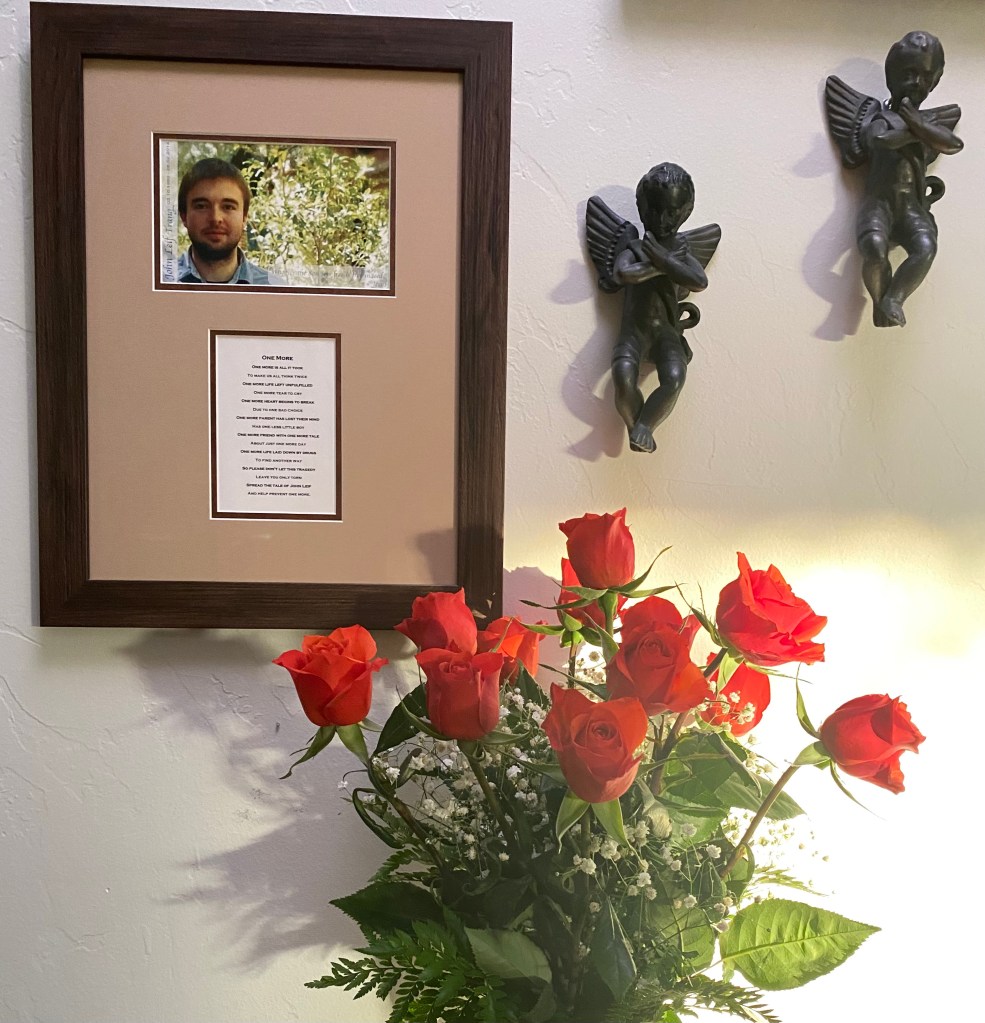
Although it’s been nine years since our son JL died from an accidental heroin overdose, the sense of him being torn away from us remains. Whether it was the death of our son, my siblings, our parents, or friends, the undeniable fact remains that death is painful. Almost always painful for the person dying, especially with a protracted illness or debilitating condition. But always painful for those left to live with the empty space where the person they knew and loved used to reside. We will never forget the Sherriff’s knock at our door that Saturday morning and hearing him say, “I’m sorry to have to tell you…”
We all naturally focus on our loved one’s beautiful life and the memories we have of them. This is only right and good. And there can be beauty in the way someone dies – this I have seen, and this has been recorded throughout history. Regardless of the kind of death – whether by illness, accident, torture, or plain old age – history tells us about those who have faced pain and death with grace. How? Because they saw beyond this world and had hope for life in the next.
What I bristle against is the thought that death is somehow beautiful. There is nothing beautiful about the tearing away and finality of death. Sentimental and romanticized thoughts about death have never helped me when I have had to stare into the cold face of a dead loved one. I have watched people facing the intense and unpredictable emotions after the death of a loved one as they try to make sense of something senseless. Those who have no hope of seeing their loved one again and who do not have the hope of existence in another realm, often try to transform death into something else – as if the only way to survive their pain is to imbue death itself with beauty. Or perhaps attempt to ignore it altogether.
For me, I believe that there is a good God who will one day put this world back to the way he created it. In my view, death and the tearing separation and sadness that accompany it are a temporary condition of living in a fallen world. We are told that death is an enemy and that one day it will be abolished. Yet, knowing I will see my son and siblings and parents and beloved friends again one day, where there will be no more sickness or pain or tears, doesn’t change the sorrow and grief that I feel now. I am a mortal living in a physical body in a physical world facing real physical triumphs and tragedies. And until this life is over and this world is made new, death will be painful. Our response to pain, suffering, and death is what concerns us now. And comforting those who mourn and offering compassion, regardless of the circumstances surrounding their death, is something tangible that does not minimize or romanticize the pain of death.
UPDATE:
This morning, August 2nd, I just happened to find and listen to an affirming podcast on Hope In The Face of Death by Dr. Timothy Keller. It is well worth the 40 minutes of your time. He says what I am trying to communicate more eloquently and thoroughly.
(Translation into most languages at tab to the right)
I wish everyone could read the penultimate chapter of The Least of Us by Sam Quinones. Its title is the same as that of the book. I have almost every line underlined and starred. In it, he describes the dire state we in Western society are in with addiction, the well-thought out reasons many of our public policies are still getting it wrong, and the slivers of hope that encourage us that the world could look differently for the next generation of young people. Some poignant quotes:
“Underground chemists seem to be searching the chemistry literature for drugs that might be molecularly modified to be more potent…The world Gary Henderson predicted when he coined the term ‘designer drugs’ in 1988 is now with us. Counterfeit pills laced with fentanyl (and new synthetics every day) and made in Mexico now dominate the market…There seems now no way to stop all the bizarre drugs devised by those whose own brain chemistry has been twisted by the profits of the underworld’s free market…recovering addicts face scary odds as long as the drugs that torment them are widely available, potent, and almost free. The now-cliché is ‘We can’t arrest our way out of this.’ We can’t treat our way out of it either, as long as supply is so potent and cheap.”
(Translation into most languages at tab to the right.)
The other day, I was thinking back over the tragic deaths of many of my family members. And I thought about how I felt towards people a few decades ago when they suffered various illnesses or struggled with disease or addiction. I didn’t have much compassion because I hadn’t ever experienced those types of painful and heart-wrenching needs myself or in anyone I loved.
But in 2000, when my younger brother was in intensive care for two months on a ventilator and in a coma, I began to learn about the sorrow and desperation that hover around situations like this – for the one who is ill and for those who love them and who cannot do a thing to help or change the outcome. His diagnosis of HIV/AIDS and slow but impending death broke my heart – maybe for the first time in my life.
On March 10th, our son would have been celebrating his 33rd birthday. That day is now a painful reminder of all the potentials and possibilities that a young person should be experiencing in the 4th decade of their life.
After JL died of a heroin overdose in 2014, I began the dreaded process of sorting through his belongings – which included his computer and phone. Many of the photos on his phone I had never seen and some have now become permanently seared into my visual memory. One is of JL with a Boa wrapped around his shoulders and neck.
Boas are constrictors. Constrictors don’t chase their prey. They are ambush hunters. A boa grabs its prey with its teeth, then quickly coils its body around the prey and squeezes. It doesn’t break the bones – it constricts so tightly that its prey can’t breathe. With each exhale, it tightens its coils until its prey dies slowly from an overwhelmed circulatory system due to blood not getting to the brain. Once dead, the snake swallows its prey whole.
(Translation into most languages at tab to the right)
In a world where ‘nothing is certain except death and taxes’ and loss is unavoidable, grief is guaranteed to be an emotion each of us will experience in our lives sooner or later. If we have lost a loved one and grieved well, we can understand grief in others and empathize more fully.
But what about those who are living with a loved one with mental health problems, or in active addiction, or in a recovery program for the umpteenth time, or whose whereabouts are unknown? How do they live with the constant flux between hoping against hope, waiting, and praying for a miraculous change, and discouragement and depression as they watch their loved one struggle against an unrelenting enemy no one can see? My husband and I lived in this twilight zone for years – as do millions of others. While he was still living, we were grieving the loss of the son we loved and raised and had hoped to see move successfully into adulthood.
In an excellent article, Grieving the Living, Dr. Susan D. Writer shared insights that are an invaluable help and source of comfort for this all too common situation:
Translation into most languages at tab to the right.
One of the things I have come to appreciate about the Australian way is their straightforward approach to life. They are easy-going yet they say what they mean and you know where you stand. A lack of pretense – with a large dose of slightly off-color humor added in.
I think that is why they are more advanced in their drug policies and treatments than America – they are more honest and have less taboos. They benefit from having had comprehensive public health for decades which has facilitated progressive drug policies such as clean needle exchanges, safe-injecting sites, and medication assisted treatment.
John and I had an interesting conversation a few weeks ago here in Australia with Jack Nagel. Jack does the “Real Drug Talk” podcast from Melbourne and also runs the Connection Based Living Recovery Programs. We were preparing to record a podcast with Jack – see links below – and were asking about his experiences and what the current trends are here with drugs of abuse.
In discussing opioids, I wondered why methamphetamines seems to be the main drug of choice and why heroin is not as common here as it is in the States. Jack said that in the 1990’s there was a big problem with heroin coming in from the Golden Triangle of SE Asia and lots of overdose deaths. And the heroin use was IV, not smoking. So, there is a collective memory of street people using heroin and dying which created a lot of stigma and fear associated with IV use.
After that trend slowed, people began using meth – young people like Jack –because smoking or snorting meth seems more innocuous and a less intrusive way to take a powerful drug than IV. Jack said that there is a huge cohort of people who don’t live on the streets and who smoke meth for years. Sadly, they don’t seek help because the public messaging that portrays meth addicts as homeless people with sores and missing teeth doesn’t apply to them. But meth addiction will eventually burst that bubble and ruin their lives too.
There is also a growing problem with cocaine. While once considered the drug of the wealthy city dweller with some high-flying users in Australia spending $10-$20K per week, statistics reveal cocaine usage has now spread much further. Consumption has grown in other areas and demographics where prosperity has increased such as middle-class teachers, tradesmen, etc. Australia is now the highest per capita user of the drug in the world. And the rise in use is being driven by men aged in their 20’s, with Sydney leading the country in use. The most recent stats reveal that there are nearly 1 million weekly cocaine users in Australia out of a population of 26 million. (1,2,3)
We also talked with Jack about what the entry drugs are for kids here in Australia. After alcohol and pot, they usually begin with hard “party” drugs used at house parties and concerts like ecstasy/MDMA, benzodiazepines, GHB/GBL. All mood-altering drugs that create different types of euphoria, but which are dangerous because many times they are mixed with alcohol and other drugs, sometimes without the user’s knowledge.
Even though heroin is in the background in Australia, it is still available and becoming more dangerous due to fentanyl being mixed in to the supply of much of the heroin, and all opioids, along with other drugs of abuse. (4)
When our son, JL, began using Oxy’s he never thought he would even try heroin. Then, as Oxy’s became more expensive and heroin was cheaper, he started smoking heroin. He then swore he would never stick a needle in his vein – the danger and stigma to him was clear. Eventually, just like 95% of heroin users, he did just that. He was living under the delusion that smoking opioids – or any drug – would never lead him to become a “junkie”, an IV drug user.
My concern for the young people and families of Australia is that, as The Age reported in 2020, pain management with opioids has increased here too, although not to the degree it had in the States. Opioid-related deaths have increased in the past decade and today at least three people die from opioid harm each day and 150 are hospitalized. (5) Fentanyl is showing up in wastewater testing and drug overdoses of cocaine and meth, drugs where the users are not expecting a potent narcotic. Because it is synthetic and cheaper to produce in China and India, it brings its criminal networks a greater profit margin.
As I’ve said before and will continue to say: We will not treat our way out of the opioid/drug epidemic. Prevention is key. Let’s continue to stay aware and educated about what we all can do to keep our children and their future safe and healthy.
Translation into most languages at tab to the right.
The need has never been more urgent to alert us all to the risk of overdose facing millions of people worldwide. During the 18 months of the Covid-19 pandemic, overdose deaths have risen approximately 30% in many parts of the world due to isolation, unstable drug sources, and lack of reliable medical and recovery help. Even the normal inadequate support services have been seriously disrupted and diverted. And the hope of C19 disappearing sometime soon is now seen as wishful thinking – it is a new deadly virus we will have to learn how to live with.
So, what can we do to help prevent further loss of lives for those already struggling with addiction?
(Translation in most languages available at tab on right)
Int’l Overdose Awareness Day Sale on eBook & Paperback through Sept 1st
Most of us have heard that the category of “teenager” came about after WWII. Before that, in a mostly agrarian society, you were either a child or an adult and the demarcation was when you went from being directed and cared for by your parents to being responsible for yourself and caring for others.
The word “teen” was introduced as early as 1818 referring to a person who was 13-19, “teener” from 1894, and “teen-ager” from 1922 (1). But the terms didn’t stick and didn’t carry a sociological group identity until after WWII. Being a teenager became its own sub-culture that revolved around like-ness, popularity and a fear of being on the outside.
Increasingly, the modern teenager relies more on peer-pressure than family relationships and values. And, peer pressure and group dynamics is known to be one of the highest risks for adolescent drug and alcohol experimentation and use. In one chapter of Hit Makers: The Science of Popularity in an Age of Distraction, Derek Thompson discusses teenagers at length (2). He writes, “Psychologist Laurence Steinberg, put people of various ages in a simulated driving game. Adults drove the same, whether or not they had an audience. But teenagers took twice as many “chances” when their friends were watching. Teenagers are exquisitely sensitive to the influence of their peers.”
The Ohio Society of Addiction Medicine is a chapter of ASAM - A professional society actively seeking to define and expand the field of addiction medicine.