An Entire Generation

Translation into most languages at tab to the right.

A generation is usually considered the years during which children are born, grow up, become adults, and begin to have children of their own. Approximately  20-30 years, averaging 25 years. Each generation becomes known by what characterizes the lives of those in it – what they do and how they impact society.

I’ve been thinking about my son, who would be 36 this year – if he had survived the opioid plague that began in the 1990’s with the prescribing of opioids for every ache and pain. What Purdue Pharma did is old news and well documented. But the effect of the immorality of the Sackler family set a course  that destroyed the lives of an entire generation – the “Millennials” generation of my son and his contemporaries. 

Far more than a million Americans have died due to a drug overdose in the past 25 years and the majority of those deaths are from opioids. (1) Initially it was prescription opioids, then heroin, then fentanyl. And now a daily variation of synthetic opioids mixed in with every variety of street drug. These are made from precursor chemicals from China and shipped around the globe where they are “formulated” into fake prescription pills or street drugs in jungle or backyard labs. Quality control is non-existent. 

Beyond the deaths, there are millions of Americans who are suffering from life-threatening addiction. They will either be another statistic or live the life of an empty shell surviving from one fix to the next just to not feel “dope sick.” Many are homeless and jobless. All experience despair and hopelessness. It will take years to gain long-term recovery if they can access health care and programs.

There has been some good news. After the peak years of the Covid pandemic, when the rates of addiction and deaths from overdoses rose substantially, the statistics for 2024 finally show a decline in both. (2) It may be due to less anxiety and depression since the pandemic ended. It may also be due to more awareness of Medicated Assisted Treatment and better access to Harm Reduction tools such as pill testing and overdose reversal medication naloxone.

I think the best area for hope is the common knowledge the “Gen Z” kids are growing up with about the deadly dangers of drug addiction. That their parents are also more aware of the drug supply than parents of Millennials like me. The 2023 National Survey on Drug Use & Health found that the majority of adolescents (12-17 yrs. old) in the USA are not using substances, alcohol, tobacco products or vaping. (3) But ongoing effort is imperative. “Continued prevention programming, education, and public messaging focused on adolescents can delay or prevent substance use and avoid the negative impacts of substance use that have been widely documented.”  

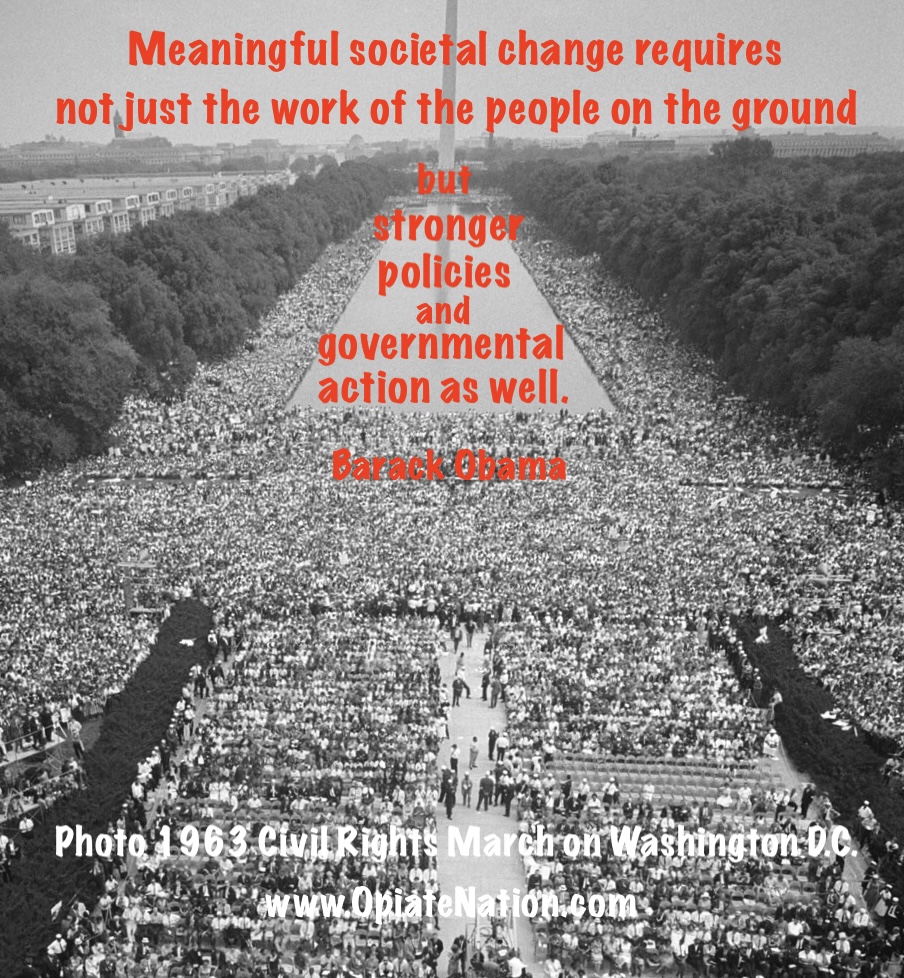
If we truly want to see future generations of children have the opportunity to grow up without the continual pull to use drugs, we need to keep our relationships with them open and healthy. Every year we can delay experimentation with addictive substances allows children’s brains to develop more fully in the area of judgment. We must all stay informed and aware and work in whatever arena we are able. As Barack Obama told Michelle when he was working for her as an intern, that he was in law school because grass roots organizing had shown him that meaningful societal change requires not just the work of the people on the ground, but stronger policies and governmental action as well. (4)

  1. Fentanyl and the U.S. Opioid Epidemic

https://www.cfr.org/backgrounder/fentanyl-and-us-opioid-epidemic

2. The Opioid Crises and The Pandemic

3. NSDUH Data Show Most Adolescents in the US Are Not Using Substances

    4. Becoming, by Michelle Obama, Chapter 8
    The Cycle of Harm – End It For Good 

    (Translation into most langugages at tab to the right.)

    Recently, I connected with Christina Dent, Founder & President of End It For Good. The mutual connection came through a drug advocacy organization in Australia where they also promote options other than incarceration for drug addiction.

    The End It For Good website is a treasure worth exploring (see below). Although Christina has been mainly focused on her home state of Mississippi, they are now expanding and reaching out across the United States. Their website states:

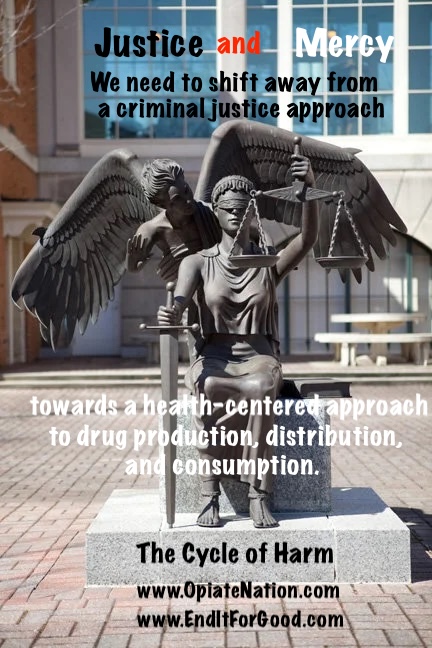
    Our goal is a future where fewer people are harmed by drugs. To get there, we need to shift away from a criminal justice approach and towards a health-centered approach to drug production, distribution, and consumption. As a 501(c)(3), we educate citizens, advocates, and policymakers to elevate solutions that prioritize life, health, strong families, and safe communities. This is the path to a world where more people have an opportunity to thrive.

    In her TED Talk, Christina shares her learning journey about the destructive impact of a criminal justice approach to drugs and addiction, as well as the mounting evidence that a health-centered approach would be much more effective.

    And Christina has written an award winning and very favorably reviewed book: 

    CURIOUS: A Foster Mom’s Discovery of an Unexpected Solution to Drugs and Addiction. It gives a vision for unexpected solutions that save lives, heal families, and promote public safety.

    The reason I used this particular statue for the blog graphic this month relates perfectly to this subject. Justice & Mercy was designed by sculptor L. Glynn Acree III and stands in front of the Cumberland School of Law at Samford University in Birmingham, Alabama. Justice is blindfolded and the scales she holds are perfectly balanced. The angel, Mercy, is whispering in Justice’s ear. An important reminder that in order for justice to be true and impartial, mercy and kindness must temper her decisions – because as humans, we are all imperfect and fail in many ways. 

    Dis-Couraged or En-Couraged?

    Discouragement is the opposite of having the heart, the courage to face something. It’s when the heart has been sucked out of you. But the en in encouragement means “into”, the process of putting courage into someone. Giving them the heart and hope to go on. 

    (Translation into most languages at tab to the right.)

    It’s time for a confession. I have not been writing many blogs for Opiate Nation in the past two years – not because I haven’t had time but because I have felt discouraged. Decades into the Opioid Epidemic and all the information and media coverage, the hope that addiction and deaths from drug overdoses would decrease has proven unfounded. It seems that people in general are just tired of hearing about it, especially if it doesn’t particularly concern them. And I have felt that I didn’t have anything helpful to add to the conversation and wondered: what more needs to be said?

    But I felt reprimanded in my heart and soul for being one more person who is fatigued by the persistence of a problem that seems to never get better, let alone go away. What about all the people living in active addiction? And what about their friends and family who spend sleepless nights and anxious days worried about them? And what of those who have lost loved ones to addiction and are living in debilitating grief?

    I started thinking about discouragement and how to “snap out of it”? For me, there is no snapping out of it on my own. Once I’m dis-couraged, I have found that only being en-couraged changes things. And encouragement usually comes to me through two avenues: a few intimate friends and God, both of whom know me well. The words spoken out loud by friends and the ones directly into my soul by God are what lift my troubled and discouraged heart and bring hope and courage.

    Courage comes from Latin cor meaning “heart”. The dis in discouragement means “opposite of”. Discouragement is the opposite of having the heart, the courage to face something. It’s when the heart has been sucked out of you. But the en in encouragement means “into”, the process of putting courage into someone. Giving them the heart and hope to go on. 

    Although my life has not been characterized by addiction personally, encouragement has been important in my life, especially after my son died from addiction. How much more important would encouragement be to those struggling with addiction? And for the families and loved ones of those struggling or already lost? And how can we encourage without enabling?

    So, I have been reminded of the importance of an encouraging word. Knowing this, how can I offer encouragement in the arena of addiction and Harm Reduction? Although people do recover from addiction and live full lives, there will always be people struggling with addiction and using drugs. When we acknowledge and accept this, we must try our best to help minimize the harm from that use in the ways we can. For me, that has been through writing to offer information, comfort, and encouragement. 

    International Overdose Awareness Day – August 31, 2023

    (Translation into most languages at tab to the right)

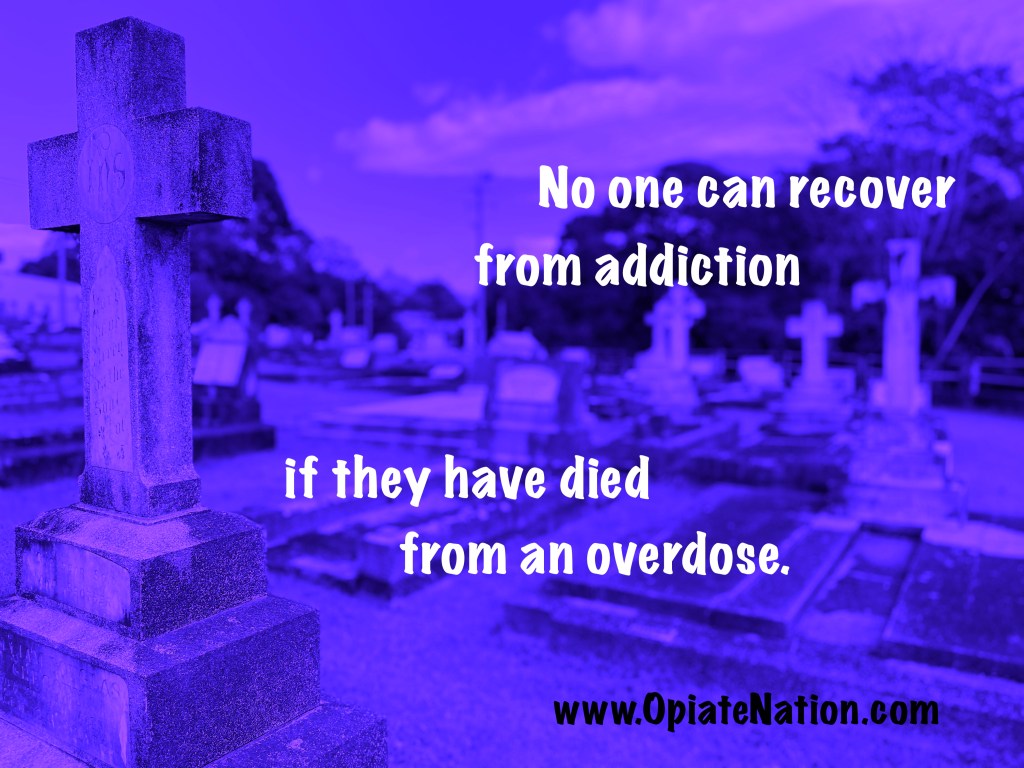
    No one can recover from addiction if they have died from an overdose.

    International Overdose Awareness Day (IOAD) is the world’s largest annual campaign to end overdose. It is a day to raise awareness about the risks of overdose, honor the individuals whose lives have been lost, and acknowledge the grief felt by families, friends, and the community

    With synthetic drugs made from chemicals in China and added into illicit drugs around the world, the need has never been more urgent to alert us all to the risk of overdose facing millions of people worldwide. What can we do to help prevent further loss of lives for those already struggling with addiction?

    Prof. Dan Lubman (Australia) shared a thought that stuck in my mind because it brought up memories of conversations I had with my son while he was addicted. Instead of asking, “Why are you taking drugs?” A more engaging question would be, “What put you in this vulnerable position?”

    This question shows the understanding that addiction is not just a matter of choice or will-power but that it is a complex problem that will not be helped with simplistic answers such as “Just Say No.” When a person feels less stigma, that they are not being judged, and that there is hope for them, they are increasingly likely to consider treatment.

    So, what does put people into the vulnerable position where drugs/alcohol are helping them cope with life? The 5 main factors that contribute to addiction are:
    genetics, mental illness, home and social environment, stress, trauma/abuse.

    We can’t do anything about our genes although if you know there is alcoholism/addiction in your family tree there is need for extra awareness and precautions. Mental illness once recognized and diagnosed properly, can be treated with therapy, education, and medication. Home and social environments, stress, and trauma and abuse are absolutely within parents, extended family, and society’s control. This is where raising our children as “a village” is so important, but it is in peril with our upwardly-mobile lifestyles of frequently moving house, not enough time together, and not engaging with our community. Educating our families and involvement in healthy and safe support networks such as service organizations and faith and school communities are a good place to start.

    Once someone is using substances to self-medicate, what can we do? First, we need to look for, and reach out to, people struggling with addiction. There may be some in your circle of friends – even in affluent communities. If we truly understand that those individuals will shrivel in shame from stigma, we can start by changing how we speak about them and to them – we’ve changed our language for things a lot less deadly. Building trust over time is critical to someone feeling they can openly discuss their problems. We can find out more about what is being done in our community to support recovery efforts and get involved with clean needle exchanges, Narcan training and distribution, opioid substitution therapy, food distribution, safe injection and health facilities, etc.

    In a report from Norway discussing housing for people who are addicted, Jon Storaas, manager of RIO, an organization in Norway working to help substance abusers, said, “We need to provide residences to ensure that addicts can live with neighbors who don’t share their drug problems…meet with them, talk about their problems…this kind of experience and openness can strip people of their ordinary prejudices. You need to create these encounters so people can see that drug addicts are human, too. Extreme examples of ordinary people, you might say. But ordinary nevertheless.” (1)

    In 2018 Time reported that in the 1990’s, Portugal was in the grip of heroin addiction. An estimated 1% of the population—bankers, students, socialites—were hooked on heroin and Portugal had the highest rate of HIV infection in the entire EU. But in 2001, Portugal took a radical step. It became the first country in the world to decriminalize the consumption of all drugs… while drug dealers still go to prison.

    The results? The drug-induced death rate has plummeted to five times lower than the EU average and stands at one-fiftieth of the United States’. Its rate of HIV infection has dropped dramatically. Drug use has declined overall among 15-24 yr-olds, those most at risk of initiating drug use. And, by eliminating the threat of criminal penalties—and along with it, a great deal of stigma—it has become easier for people to seek treatment.

    “What America and other countries can learn from Portugal is to treat people with more dignity.” Portugal has showed that, without spending significant sums, governments can give drug users the tools to put their lives back on track. But to do so, it will have to stop treating them like criminals. (2)

    Ultimately, what IOAD is about, what this blog is about, is Awareness: Becoming aware of a problem is the first step towards solving that problem. For this August 31st, I want to remember all those who have died from drug or alcohol overdose, my son included. Remember that they were precious individuals who were loved by their parents, family, friends and God. And although we live in a world where death is something that happens to every person who is born, premature and preventable death is a tragedy that each and every one of us should work diligently to prevent. Let’s find our arena and fight for the lives of those we love.

    No one can recover from addiction if they have died from an overdose.

    (1)

    Addicts Want Sober Neighbours by Georg Mathisen
    Saturday 11. January 2014, Norway
    https://sciencenorway.no/addiction-drug-rehab-drug-use/addicts-want-sober-neighbours/1395274

    (2)

    WANT TO WIN THE WAR ON DRUGS? PORTUGAL MIGHT HAVE THE ANSWER By Naina Bajekal | Photos by Gonçalo Fonseca – August 1, 2018
    https://time.com/longform/portugal-drug-use-decriminalization/

    Recovery Communities

    (Translation into most languages at tab to the right)

    What is a recovery community and what should it look like?

    The answer to these questions is not simple – real solutions to real problems rarely are.

    To recover means to return to a normal state of health or strength. When someone is injured in an accident or undergone surgery, they usually recover in hospital for a period of time where they can receive the special medical care that is required to keep them alive. If the injury or illness was severe or life-threatening, after hospitalization they would be moved to a rehabilitation facility where they receive appropriate and specialized care and therapy as they convalesce – they wouldn’t just go home. Convalescing is the recovery process of returning to health.

    Recovery can also refer to the process of regaining possession or control of something lost or stolen. In a real sense, those who have become addicted to a substance or damaging behavior have had something stolen. That’s not a cop-out if we consider what happens to a person’s brain when addiction takes over. The chemical changes that take place in the brain steadily decrease the individual’s original ability to think clearly and make logical choices. Especially with substances, I consider that capacity to have been stolen.

    Continue reading “Recovery Communities”

    What Would They Say?

    (Short topical blog based on Opiate Nation – translation into most languages in tab on right.)

    August 2nd is the seventh anniversary of our son’s death. JL died of a heroin overdose in the early morning hours of that Saturday in 2014. He was 25 years old.

    In 2020 alone, 93,000 people died of drug overdoses in the USA – hundreds of thousands more worldwide. Millions in the past few decades. These were beloved daughters, sons, partners, parents, friends, relatives. I think I can confidently say they did not want to be addicted and if they could have turned back the clock to the time before they began using drugs, they would have.

    Continue reading “What Would They Say?”

    OPIATE NATION WINS NATIONAL INDIE EXCELLENCE® AWARD

    With so much distress in the world with the Covid-19 Pandemic, especially the effects it is having on the weakest and vulnerable members of our societies, I have hesitated to announce a personal accomplishment. Yet, my hope is that as Opiate Nation gains more visibility, it will get into the hands of people who could be most encouraged and benefit from our story.

    I am a member of a group of 35,000 women called “The Addict’s Mom” on Facebook. I confess, I rarely read the posts because it is so depressing: Story after story of mom’s who have been holding out for years to see their daughter or son released from the hell-hold of addiction to drugs, only to then post that “…today I lost my daughter/son…can someone tell me how I will survive this?”  It is for these mom’s and dad’s and siblings and friends that we wrote Opiate Nation, but one of the stipulations of being a member of the group is no self-promotion. So I hope that, with more visibility and more reviews and re-posts on social media, our book will get to these most desperate of people.

    Continue reading “OPIATE NATION WINS NATIONAL INDIE EXCELLENCE® AWARD”

    Choosing to Look Away: Pain avoidance

    In these weeks of living life in a new way with the Coronavirus pandemic, I have found myself doing something I am not normally inclined to do: choosing to look away from the ongoing Opioid Epidemic. Sadly, it has been easy to do. John and I arrived in Melbourne in March on the last flight from LAX allowing non-residents into Australia. When we planned our trip in January to be here for the completion and delivery of our new Tiny Home, Covid-19 was barely in the news.

    After our 14-day quarantine, and during our first few weeks here, we were supposed to speak at two events which were cancelled. When the meetings switched over to Zoom, we were then able to share the story of Opiate Nation. It was well received and appreciated, as it brought to light pitfalls and vulnerabilities that parents and their children face in the 21st century. Since then, we have been busy setting up our new home, arranging installations, and finding furniture and appliances. We are thankful and feel blessed to be able to be here with our daughter and family – and to be in a country where the leaders have been honest and proactive, where the government has a wide social safety net and comprehensive health care for everyone, and where the public is almost uniformly willing to trust and follow their stipulations.

    Meanwhile, in the back of my mind, I have continued to think about people struggling with addiction and wondering what their lives are like during these times that are challenging – even for the rest of us. With the restrictions to help slow the spread of the virus, many rehab and recovery programs are now not an option. For those who have had jobs, many of which are hourly-wage or temporary positions, they may now be unemployed. If they are taking medication as part of their harm reduction/medication assisted treatment, how will they pay for it?

    Continue reading “Choosing to Look Away: Pain avoidance”

    JUST SAY “NO” TO FAILED DRUG POLICIES

    I recently returned from Australia and began to connect with the addiction community there via several agencies and their newsletters and articles. One very thoughtful article published by Family Drug Support Australia (FDS) is excerpted here. Written by an emergency room physician who is on the front line with overdose victims, he is also a parent who is concerned for his children’s future unless drug policies in Australia change sooner rather than later. There, as in the US, bureaucrats spend years discussing options for change while people die in the tens of thousands. However, from people I’ve spoken with there and from all I’ve read, they are ahead of us in some significant areas. May we all learn from each other. Continue reading “JUST SAY “NO” TO FAILED DRUG POLICIES”

    Spring: New Life?

    Spring is the season of regeneration, new life, hope. The time of year when the whole earth seems excited to be alive after being dormant all winter. For those who celebrate Easter, the season begins with introspection through prayer and repentance. As we reflect on our life and behaviors that are destructive to ourselves and our relationships, we hope to shed them like the husk of a seed when it is buried in the ground. We expectantly wait for the transformation that happens deep inside that will spring up as new life, like the sprout from a seed. Yet, as it pushes up through the crusty ground, the process of transformation is not without struggle.
    This is what those who are living with addiction hope for when they go to AA meetings and enter recovery programs: as they surrender control, they’re hoping for a total change from agony and depression into a new life.

    People, Places, Things is a play about addiction and wearing masks by British playwright Duncan MacMillan and director Jeremy Harren. It opened to rave reviews. In an interview with NPR the creators share that at the center of the play is the 12-step process. It shows that for those who have trouble with AA and surrendering to God perhaps it is easier to understand it as acknowledging that you can’t have control over life. We are all powerless over People, Places, Things. It is literally one day at a time. They visited a recovery center in London to get insights for the play. And as one of the actors said after witnessing the daily life-and-death struggle that addicts fight:

    “One day at a time. And Life has to win every single day.
    Death has to only win once.”

    In Tracey Mitchell’s blog (http://traceyh415.blogspot.com/2018/03/) she shares about a young person she has been corresponding with since 2013 and the cycles of opioid addiction and attempted recovery he went through repeatedly. He voiced his utter frustration: “It’s so insane how this drug has taken hold over me.” Tracey heard from him a few more times and then nothing: “I don’t know all the details. I just know I could have written this story. This was my story. Except I did not die at 25. I didn’t need to worry about fentanyl (in the late 1990’s). I got off everything at 27. I consider myself lucky…No one should ever have to die alone like this.”

    Yes, no one, especially a young person, should have to die having failed to experience a new beginning – after so much effort at turning over control and hoping for a normal life. But, with the purity of heroin in America having risen sharply in the last 15 years, and fentanyl now mixed in unbeknownst to users, the physical addiction is beyond comprehension. For those who are overdosing and dying in record numbers, they had no intention that their next use would be their last. This was what happened to our 25-yr-old son. Whatever he bought and used was more potent than what he was expecting and accustomed to. He died alone, with the needle still in his vein. Death only had to win once.

    Prevention is the best way to stop these needless deaths. But once addiction to opioids has taken control, harm reduction with a solid 12-Step program is the best way to help addicts emerge from the darkness and be able to have a truly new life.


    Malcolm Guite

    Blog for poet and singer-songwriter Malcolm Guite

    The Gift of Need

    How Need Can Strengthen Individuals and Communities

    Memoirs and Musings

    David Bradley Such

    Dave Barnhart

    Church planter, pastor, author, coach

    RecoveryLife101

    Just another WordPress.com site

    Abbie In Wondrland

    life...on Gods' terms.

    Living In Graceland

    "..learn the unforced rhythms of grace" matt 11:28

    Janaburson's Blog

    All about opioid addiction and its treatment with medication

    Breaking In News Network

    Seeking the truth and bypassing the MSM

    Junkbox Diaries

    Trauma, PTSD, Mental Health, Addiction, and Recovery

    Ohio Society of Addiction Medicine

    The Ohio Society of Addiction Medicine is a chapter of ASAM - A professional society actively seeking to define and expand the field of addiction medicine.

    traceyh415

    Addiction, Recovery, Loss, Grief

    WordPress.com News

    The latest news on WordPress.com and the WordPress community.