TEMPTATION: Fight it or Heed the warning signs?

(Translation into most languages at tab to the right)

I have been thinking about temptation recently and how differently we each respond when we face something that is hard for us to resist. How do we resist something that is alluring and that we have repeatedly succumbed to in the past? Something that we are addicted to like lying or shoplifting, alcohol or drugs, gossip or gambling, social media or overeating? The list of behaviors that can derail our lives in one way or the other is endless. It’s not just how an addiction can cause us harm, but also how it can debilitate or destroy our relationships, that makes learning how to beat temptation important.

So, when we are tempted to indulge in our pet addiction, what do we do? 

I read an article on Medium about temptation and willpower that supports the thoughts I’ve held throughout my life. Riikka Iivanainen (1) confesses that she has high self-control and discusses her research into why some people succeed at resisting temptation while others don’t. 

She says, High self-control does predict many positive life outcomes: People who’re good at self-control do better in school, have fewer mental health problems, have better relationships with friends and family, and generally exhibit fewer impulsive behaviors like binge eating and alcohol abuseThey’re even happier.

From the many scientific studies she researched, she goes on to say, Having good self-control doesn’t mean a constant battle against temptations. The kind of self-control that gets you all those good outcomes is more effortless than what’s commonly suggested by the term’s “willpower” and “self-discipline.”

Psychologists tell us that constantly resisting temptation is exhausting and will soon leave us with ego-depletion. Relying on self-control in the face of temptation is destined to fail. So what kind of self-control is “more effortless”? Riikka says, The people who reported fewer problematic desires and less conflict related to those desires were good at avoiding temptation, not resisting it.

Isn’t this insight what the basis of what most recovery programs are built upon? The acronym HALT is a tool to remind us to take a moment and avoid temptation by being aware of the primary things that can lead us to it: Hungry, Angry, Lonely, Tired. We are susceptible to self-destructive behaviors, temptations, and relapse when these basic human needs are unmet. HALT is a reminder, an early warning system. Being self-aware helps us recognize our needs and address them in a positive way before turning to harmful habits or destructive people.

Hungry – being hungry can be physical or emotional hunger

Angry – being angry at someone else or at yourself

Lonely – being lonely can be while in a crowd or from self-isolation

Tired – being tired affects our body, mind, and spirit

Some ways to deal with these needs is the subject of my Opiate Nation blog post April 14, 2018, H.A.L.T. https://opiatenation.com/2018/04/14/h-a-l-t/

We need to know ourselves and be honest about what our problematic desires are and avoid them rather than flirt with them. Desires are matters of the heart and we need to do all we can to support the healthy, life-affirming desires we have. I’ll end with pertinent insights from some of my favorite sources: 

There are several good protections against temptation, but the surest is cowardice.(2)

Strength comes prior to temptation, not during it. Overcoming is a prior act. It involves making a decision to remain pure before the temptation comes. (3)

Rather than waiting for temptation to raise its inevitable head and struggling to resist it, researchers at the University of Wyoming say it’s more effective to plan in advance to manage those temptations with well-thought-out self-control strategies. (4)

It is easier to prevent bad habits than to break them. (5)

Paul repeatedly told the early Christians in their very pagan cultures to “flee” temptation. (6)

Learning takes us through many states of life, but it fails utterly in the hour of danger and temptation. Then faith alone saves. (7)

But for persons needlessly to expose themselves to temptation, and to do those things that tend to sin, is unwarrantable, and contrary to that excellent example set before us. (8)

Jesus showed us by example when we are confronted with unavoidable temptation to speak the truth in order to help us resist until we are able to escape. (9)

Temptations, of course, cannot be avoided, but because we cannot prevent the birds from flying over our heads, there is no need that we should let them nest in our hair. (10)

  1. https://riikkaiivanainen.medium.com/the-secret-life-of-people-with-high-self-control-its-easier-than-you-think-7dd26fb5282c
  2. Mark Twain
  3. The Mind of Christ by T.W. Hunt & Claude V. King, 1990
  4. https://www.psychologytoday.com/au/blog/cravings/201911/4-ways-avoid-temptation-and-reach-your-goals
  5. Benjamin Franklin
  6. I Corinthians 10:14; I Timothy 6:11; II Timothy 2:22
  7. Mahatma Gandhi, Mohandas Gandhi, Homer A. Jack (2005). “The Wit and Wisdom of Gandhi”, p.40, Courier Corporation
  8. Jonathan Edwards, https://www.biblebb.com/files/edwards/temptation.htm
  9. Matthew 4:1-11
  10. Martin Luther

Dis-Couraged or En-Couraged?

Discouragement is the opposite of having the heart, the courage to face something. It’s when the heart has been sucked out of you. But the en in encouragement means “into”, the process of putting courage into someone. Giving them the heart and hope to go on. 

(Translation into most languages at tab to the right.)

It’s time for a confession. I have not been writing many blogs for Opiate Nation in the past two years – not because I haven’t had time but because I have felt discouraged. Decades into the Opioid Epidemic and all the information and media coverage, the hope that addiction and deaths from drug overdoses would decrease has proven unfounded. It seems that people in general are just tired of hearing about it, especially if it doesn’t particularly concern them. And I have felt that I didn’t have anything helpful to add to the conversation and wondered: what more needs to be said?

But I felt reprimanded in my heart and soul for being one more person who is fatigued by the persistence of a problem that seems to never get better, let alone go away. What about all the people living in active addiction? And what about their friends and family who spend sleepless nights and anxious days worried about them? And what of those who have lost loved ones to addiction and are living in debilitating grief?

I started thinking about discouragement and how to “snap out of it”? For me, there is no snapping out of it on my own. Once I’m dis-couraged, I have found that only being en-couraged changes things. And encouragement usually comes to me through two avenues: a few intimate friends and God, both of whom know me well. The words spoken out loud by friends and the ones directly into my soul by God are what lift my troubled and discouraged heart and bring hope and courage.

Courage comes from Latin cor meaning “heart”. The dis in discouragement means “opposite of”. Discouragement is the opposite of having the heart, the courage to face something. It’s when the heart has been sucked out of you. But the en in encouragement means “into”, the process of putting courage into someone. Giving them the heart and hope to go on. 

Although my life has not been characterized by addiction personally, encouragement has been important in my life, especially after my son died from addiction. How much more important would encouragement be to those struggling with addiction? And for the families and loved ones of those struggling or already lost? And how can we encourage without enabling?

So, I have been reminded of the importance of an encouraging word. Knowing this, how can I offer encouragement in the arena of addiction and Harm Reduction? Although people do recover from addiction and live full lives, there will always be people struggling with addiction and using drugs. When we acknowledge and accept this, we must try our best to help minimize the harm from that use in the ways we can. For me, that has been through writing to offer information, comfort, and encouragement. 

International Overdose Awareness Day – August 31, 2023

(Translation into most languages at tab to the right)

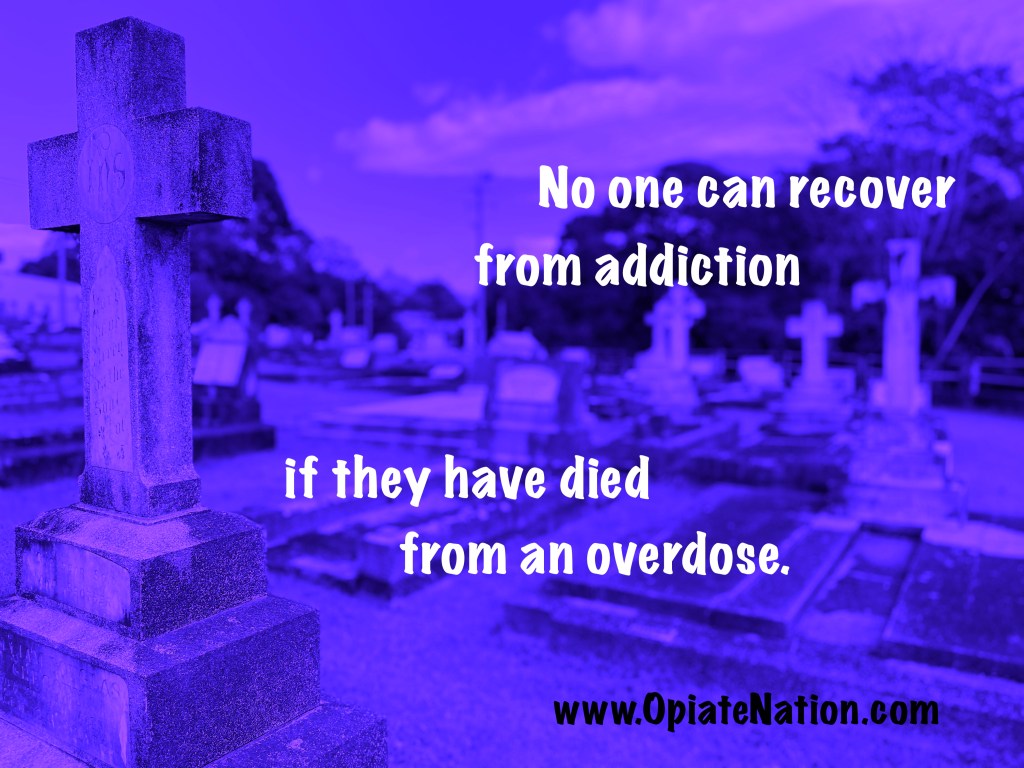
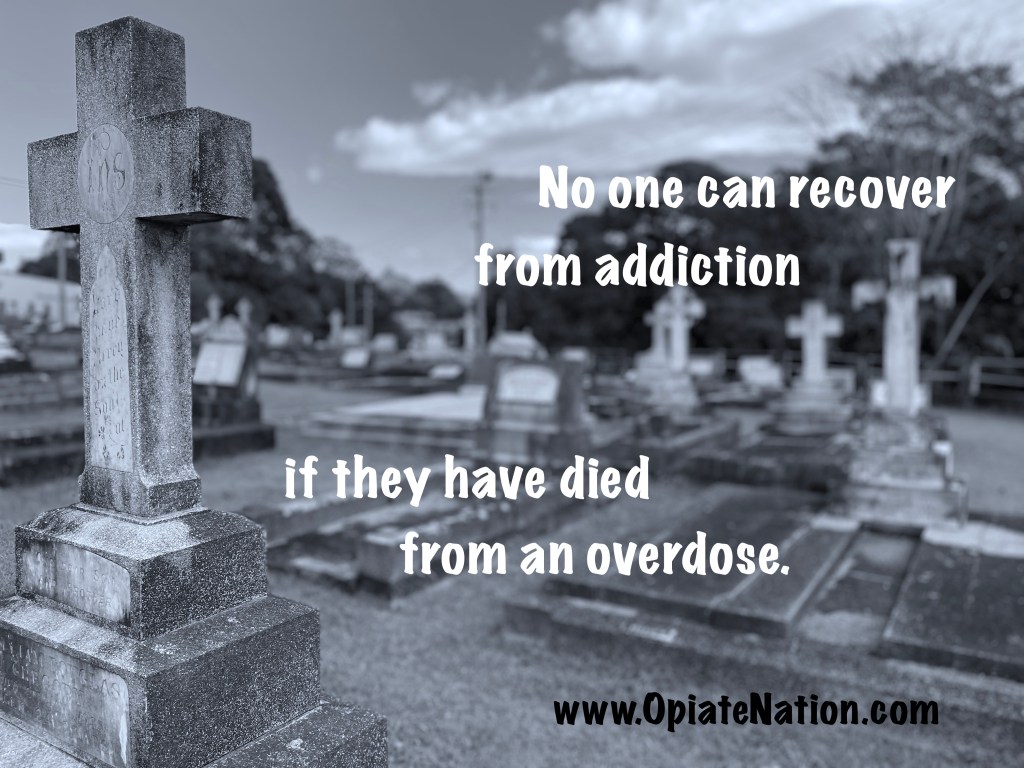
No one can recover from addiction if they have died from an overdose.

International Overdose Awareness Day (IOAD) is the world’s largest annual campaign to end overdose. It is a day to raise awareness about the risks of overdose, honor the individuals whose lives have been lost, and acknowledge the grief felt by families, friends, and the community

With synthetic drugs made from chemicals in China and added into illicit drugs around the world, the need has never been more urgent to alert us all to the risk of overdose facing millions of people worldwide. What can we do to help prevent further loss of lives for those already struggling with addiction?

Prof. Dan Lubman (Australia) shared a thought that stuck in my mind because it brought up memories of conversations I had with my son while he was addicted. Instead of asking, “Why are you taking drugs?” A more engaging question would be, “What put you in this vulnerable position?”

This question shows the understanding that addiction is not just a matter of choice or will-power but that it is a complex problem that will not be helped with simplistic answers such as “Just Say No.” When a person feels less stigma, that they are not being judged, and that there is hope for them, they are increasingly likely to consider treatment.

So, what does put people into the vulnerable position where drugs/alcohol are helping them cope with life? The 5 main factors that contribute to addiction are:
genetics, mental illness, home and social environment, stress, trauma/abuse.

We can’t do anything about our genes although if you know there is alcoholism/addiction in your family tree there is need for extra awareness and precautions. Mental illness once recognized and diagnosed properly, can be treated with therapy, education, and medication. Home and social environments, stress, and trauma and abuse are absolutely within parents, extended family, and society’s control. This is where raising our children as “a village” is so important, but it is in peril with our upwardly-mobile lifestyles of frequently moving house, not enough time together, and not engaging with our community. Educating our families and involvement in healthy and safe support networks such as service organizations and faith and school communities are a good place to start.

Once someone is using substances to self-medicate, what can we do? First, we need to look for, and reach out to, people struggling with addiction. There may be some in your circle of friends – even in affluent communities. If we truly understand that those individuals will shrivel in shame from stigma, we can start by changing how we speak about them and to them – we’ve changed our language for things a lot less deadly. Building trust over time is critical to someone feeling they can openly discuss their problems. We can find out more about what is being done in our community to support recovery efforts and get involved with clean needle exchanges, Narcan training and distribution, opioid substitution therapy, food distribution, safe injection and health facilities, etc.

In a report from Norway discussing housing for people who are addicted, Jon Storaas, manager of RIO, an organization in Norway working to help substance abusers, said, “We need to provide residences to ensure that addicts can live with neighbors who don’t share their drug problems…meet with them, talk about their problems…this kind of experience and openness can strip people of their ordinary prejudices. You need to create these encounters so people can see that drug addicts are human, too. Extreme examples of ordinary people, you might say. But ordinary nevertheless.” (1)

In 2018 Time reported that in the 1990’s, Portugal was in the grip of heroin addiction. An estimated 1% of the population—bankers, students, socialites—were hooked on heroin and Portugal had the highest rate of HIV infection in the entire EU. But in 2001, Portugal took a radical step. It became the first country in the world to decriminalize the consumption of all drugs… while drug dealers still go to prison.

The results? The drug-induced death rate has plummeted to five times lower than the EU average and stands at one-fiftieth of the United States’. Its rate of HIV infection has dropped dramatically. Drug use has declined overall among 15-24 yr-olds, those most at risk of initiating drug use. And, by eliminating the threat of criminal penalties—and along with it, a great deal of stigma—it has become easier for people to seek treatment.

“What America and other countries can learn from Portugal is to treat people with more dignity.” Portugal has showed that, without spending significant sums, governments can give drug users the tools to put their lives back on track. But to do so, it will have to stop treating them like criminals. (2)

Ultimately, what IOAD is about, what this blog is about, is Awareness: Becoming aware of a problem is the first step towards solving that problem. For this August 31st, I want to remember all those who have died from drug or alcohol overdose, my son included. Remember that they were precious individuals who were loved by their parents, family, friends and God. And although we live in a world where death is something that happens to every person who is born, premature and preventable death is a tragedy that each and every one of us should work diligently to prevent. Let’s find our arena and fight for the lives of those we love.

No one can recover from addiction if they have died from an overdose.

(1)

Addicts Want Sober Neighbours by Georg Mathisen
Saturday 11. January 2014, Norway
https://sciencenorway.no/addiction-drug-rehab-drug-use/addicts-want-sober-neighbours/1395274

(2)

WANT TO WIN THE WAR ON DRUGS? PORTUGAL MIGHT HAVE THE ANSWER By Naina Bajekal | Photos by Gonçalo Fonseca – August 1, 2018
https://time.com/longform/portugal-drug-use-decriminalization/

Unwelcome Reminders & Another Anniversary

(Translation into most languages at tab to the right)

“We were trying, all of us, so hard, and he just wanted to live.” (1)

Ursula Rauh said this about her brother, Tommy, after his death from a fentanyl overdose and a dozen stints in rehab in ten years. He became addicted to Oxy’s at 23 after being prescribed an unlimited amount for tendinitis and a year later, another prescription for wisdom teeth extraction. Sam Quinones retells the family story in The Least of Us: True Tales of America and Hope in the Times of Fentanyl and Meth. “The tragedy wasn’t just the death of her brother; it was all the time, effort, love, and pain that the family traversed, the hoping and living for the smallest encouragement.” (1)

When my husband, John, and I returned from Australia in May, we decided that we needed to address the decades of files we had saved and ‘stuff’ we had accumulated and ‘stuffed’ away in closets. We have shredded and recycled dozens of boxes of documents, cleared out half the books in our library, and now I have moved on to scanning and sorting thousands of photos. While I was pulling bins of photos and albums out of closets, I came upon a few more file bins. I sighed out loud to John, “Oh boy…more of JL’s file’s I’d forgotten about.”

Continue reading “Unwelcome Reminders & Another Anniversary”

World Mental Health Day 

(Translation into most languages at tab to the right)

Mental Health and Addiction

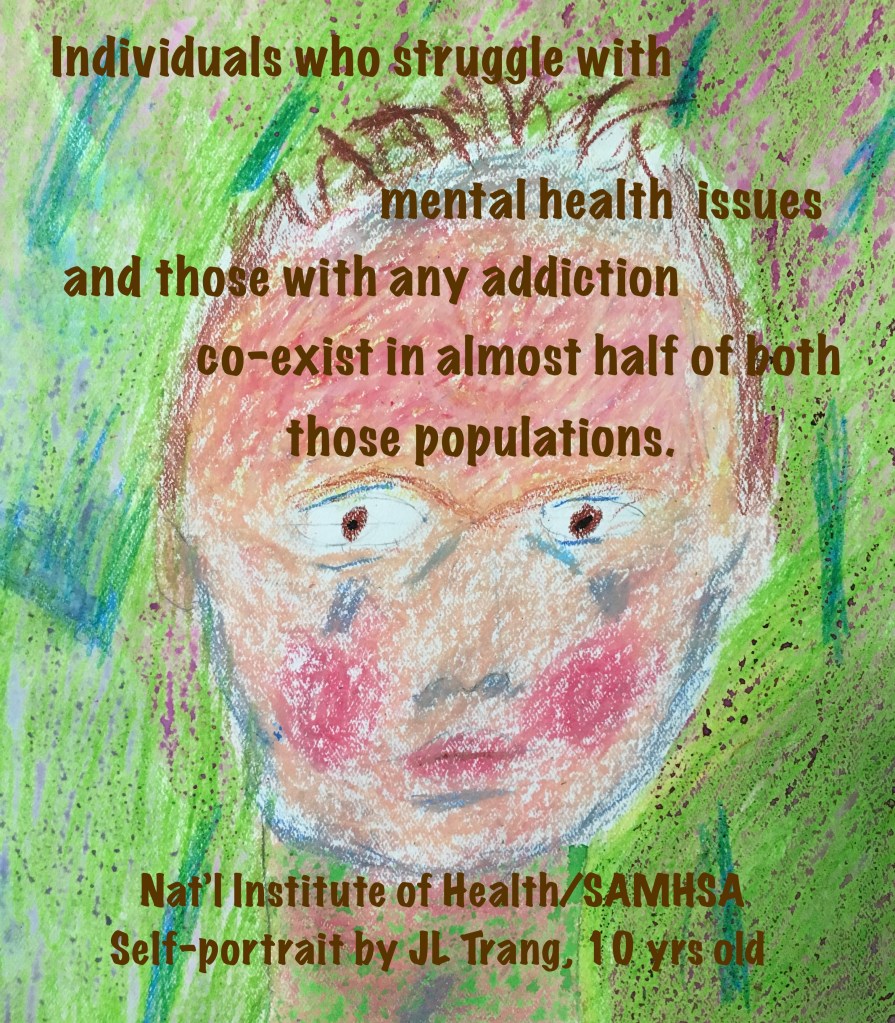
Individuals who struggle with mental health issues and those with any addiction co-exist in almost half of both those populations, as the data shows after decades of research by the National Institutes of Health (NIH). Not surprisingly, individuals who frequently abuse drugs or alcohol are likely to develop a co-occurring behavioral or mental health disorder. There is evidence, for example, that abusers of marijuana have an increased risk of psychosis while those who abuse opioid painkillers are at greater risk for depression. Regular methamphetamine use causes psychosis, anxiety and panic attacks, memory loss and depression. Cocaine users have increased anxiety, paranoia, delusions and depression.

Self-medicating to minimize our inner conflicts is not new, but it has reached new heights in the 21st century – perhaps due to the ease of availability. In Woman of Substances, Jenny Valentish discusses self-medicating at length. She says “In the initial pursuit of partying, people are likely to find themselves drawn to certain families of substances, and they will discover that these additionally offer relief to symptoms of mental illness, distress, or emotional pain.” Why do stimulants calm most people who have ADHD while they have the opposite effect on the rest of us? Why do some antihistamines sedate most people but for some others, cause stimulation?  Clearly, their brain chemistry needs something different than the ‘average’ person. It is for the same reason that for many, their drug of choice is a sedative. Their brains need something to turn off the rapid-fire stimulation that can be almost constant.

Informative and concerning statistics on mental health in the US:

Continue reading “World Mental Health Day ”

Australian Real Drug Talk

Translation into most languages at tab to the right.

One of the things I have come to appreciate about the Australian way is their straightforward approach to life. They are easy-going yet they say what they mean and you know where you stand. A lack of pretense – with a large dose of slightly off-color humor added in.

I think that is why they are more advanced in their drug policies and treatments than America – they are more honest and have less taboos. They benefit from having had comprehensive public health for decades which has facilitated progressive drug policies such as clean needle exchanges, safe-injecting sites, and medication assisted treatment.

John and I had an interesting conversation a few weeks ago here in Australia with Jack Nagel. Jack does the “Real Drug Talk” podcast from Melbourne and also runs the Connection Based Living Recovery Programs. We were preparing to record a podcast with Jack – see links below – and were asking about his experiences and what the current trends are here with drugs of abuse.

https://podcasts.apple.com/us/podcast/saying-goodbye-to-my-son-in-a-body-bag/id1507177011?i=1000533422150

In discussing opioids, I wondered why methamphetamines seems to be the main drug of choice and why heroin is not as common here as it is in the States. Jack said that in the 1990’s there was a big problem with heroin coming in from the Golden Triangle of SE Asia and lots of overdose deaths. And the heroin use was IV, not smoking. So, there is a collective memory of street people using heroin and dying which created a lot of stigma and fear associated with IV use.

After that trend slowed, people began using meth – young people like Jack –because smoking or snorting meth seems more innocuous and a less intrusive way to take a powerful drug than IV. Jack said that there is a huge cohort of people who don’t live on the streets and who smoke meth for years. Sadly, they don’t seek help because the public messaging that portrays meth addicts as homeless people with sores and missing teeth doesn’t apply to them. But meth addiction will eventually burst that bubble and ruin their lives too.

There is also a growing problem with cocaine. While once considered the drug of the wealthy city dweller with some high-flying users in Australia spending $10-$20K per week, statistics reveal cocaine usage has now spread much further. Consumption has grown in other areas and demographics where prosperity has increased such as middle-class teachers, tradesmen, etc. Australia is now the highest per capita user of the drug in the world. And the rise in use is being driven by men aged in their 20’s, with Sydney leading the country in use. The most recent stats reveal that there are nearly 1 million weekly cocaine users in Australia out of a population of 26 million. (1,2,3)

We also talked with Jack about what the entry drugs are for kids here in Australia. After alcohol and pot, they usually begin with hard “party” drugs used at house parties and concerts like ecstasy/MDMA, benzodiazepines, GHB/GBL. All mood-altering drugs that create different types of euphoria, but which are dangerous because many times they are mixed with alcohol and other drugs, sometimes without the user’s knowledge.

Even though heroin is in the background in Australia, it is still available and becoming more dangerous due to fentanyl being mixed in to the supply of much of the heroin, and all opioids, along with other drugs of abuse. (4)

When our son, JL, began using Oxy’s he never thought he would even try heroin. Then, as Oxy’s became more expensive and heroin was cheaper, he started smoking heroin. He then swore he would never stick a needle in his vein – the danger and stigma to him was clear. Eventually, just like 95% of heroin users, he did just that. He was living under the delusion that smoking opioids – or any drug – would never lead him to become a “junkie”, an IV drug user.

My concern for the young people and families of Australia is that, as The Age reported in 2020, pain management with opioids has increased here too, although not to the degree it had in the States. Opioid-related deaths have increased in the past decade and today at least three people die from opioid harm each day and 150 are hospitalized. (5) Fentanyl is showing up in wastewater testing and drug overdoses of cocaine and meth, drugs where the users are not expecting a potent narcotic. Because it is synthetic and cheaper to produce in China and India, it brings its criminal networks a greater profit margin.

As I’ve said before and will continue to say: We will not treat our way out of the opioid/drug epidemic. Prevention is key. Let’s continue to stay aware and educated about what we all can do to keep our children and their future safe and healthy.

http://www.RealDrugTalk.com.au

1. Why cocaine is most used drug in Australia behind cannabis

https://www.heraldsun.com.au/news/national/why-cocaine-is-most-used-drug-in-australia-behind-cannabis/news-story/0fa9bbcec60dfe0ecfb52a5cb58a38f5

2. Australia the highest per capita cocaine user in the world

https://www.news.com.au/national/australia-the-highest-per-capita-cocaine-user-in-the-world/news-story/c91869d4e2b2adeef266917d82f705e0

3. Sydney and cocaine: an illicit love affair for the ages

https://www.smh.com.au/national/nsw/sydney-and-cocaine-an-illicit-love-affair-for-the-ages-20210225-p575uz.html

4. Fentanyl in the Australian illicit drug market

https://adf.org.au/insights/fentanyl-australian-illicit-drug/

5. Australia’s opioid crisis: How pain management got out of control

2021 International Overdose Awareness Day August 31

Translation into most languages at tab to the right.

The need has never been more urgent to alert us all to the risk of overdose facing millions of people worldwide. During the 18 months of the Covid-19 pandemic, overdose deaths have risen approximately 30% in many parts of the world due to isolation, unstable drug sources, and lack of reliable medical and recovery help. Even the normal inadequate support services have been seriously disrupted and diverted. And the hope of C19 disappearing sometime soon is now seen as wishful thinking – it is a new deadly virus we will have to learn how to live with.

So, what can we do to help prevent further loss of lives for those already struggling with addiction?

Continue reading “2021 International Overdose Awareness Day August 31”

Connection is Crucial

(Translation into most languages is available to the right.)

During a recent podcast on Straight from the Source (1), David Higham (founder of The Well, a peer-run alcohol and other drug service in the northwest of England) spoke about his life.

For more than 20 years, David was a habitual heroin user more accustomed to life in prison than the outside world. He joined a 12-step program during his final stint. Upon release, he found that sustained well-being and recovery was rare and he knew he had to help change that. What interested me most from his story was this insight:

“Drug treatment is trying to find a solution for my solution…But what’s the solution for my problem?”

Continue reading “Connection is Crucial”

Mirror Mirror

(I am re-posting this from July 4th for those who were on holiday and missed it.)

Topical blogs taken from OPIATE NATION. Translation into most languages at tab on right.

I was listening to a young man who had been heavily addicted to crystal meth. As he told his story, one of his “ah-ha” moments was walking into a bathroom in his parents’ home and seeing himself in the mirror. As he looked at the vestige of his former self – an emaciated, festered, hollow-eyed man – he remembered who he once was: a happy and carefree young person with good friends, a star athlete, a kind and honest person, a loving son. That moment of realization caused him to reach out and ask for help which eventually led to the beginning of his recovery journey.

As I heard his story, a photo flashed before my eyes of my son, JL – one we found on his phone after he died from a heroin overdose. It was a selfie he had taken after he had relapsed, just days before he died, standing in front of a full-length mirror in a public bathroom. He was dressed for work in slacks and a dress shirt. No smile. I have always wondered why he took that photo. Was it to remind himself of who he really was? To be able to be honest with himself when he might look at it later when he was high? Was he attempting to make himself stop using? To ask someone for help?

Continue reading “Mirror Mirror”

Mirror Mirror

Topical blogs taken from OPIATE NATION. Translation into most languages at tab on right.

I was listening to a young man who had been heavily addicted to crystal meth. As he told his story, one of his “ah-ha” moments was walking into a bathroom in his parents’ home and seeing himself in the mirror. As he looked at the vestige of his former self – an emaciated, festered, hollow-eyed man – he remembered who he once was: a happy and carefree young person with good friends, a star athlete, a kind and honest person, a loving son. That moment of realization caused him to reach out and ask for help which eventually led to the beginning of his recovery journey.

As I heard his story, a photo flashed before my eyes of my son, JL – one we found on his phone after he died from a heroin overdose. It was a selfie he had taken after he had relapsed, just days before he died, standing in front of a full-length mirror in a public bathroom. He was dressed for work in slacks and a dress shirt. No smile. I have always wondered why he took that photo. Was it to remind himself of who he really was? To be able to be honest with himself when he might look at it later when he was high? Was he attempting to make himself stop using? To ask someone for help?

I’ll never know.

But after listening to this other young man, I’m guessing my son had similar thoughts going through his mind. Yet, what seems to have happened is that his addicted mind told himself that he could handle it on his own – that he could just cut down his use and not have to go through withdrawal one more time, not have to be embarrassed by telling us he had relapsed after 6 months of sobriety, not have to start all over again.

Perception refers to how we interpret things and it is the motivation behind our actions and reactions. His perception of his ability to use his willpower was skewed, because our self-perception is influenced by many factors including our perceived needs, our experiences, and our expectations.

Beneath self-perception is our self-concept, our view of our self, which influences our decisions, our feelings, and our judgement. It may include genuine self-knowledge or varying degrees of distortion.

Many times, we choose – albeit unconsciously – to be self-deceived because it is too painful to be honest with ourselves, to interpret what we see in the mirror with unbiased and accurate judgement. There is a saying written in the first century AD that sums this up:

“Those who hear (a clear direction) and don’t act are like those who glance in the mirror, walk away, and two minutes later have no idea who they are or what they look like.”

Because of this very human tendency, we all need a few close friends and a safe community who love us enough to honestly reflect back what we saw in the mirror – which we can so conveniently forget.

Malcolm Guite

Blog for poet and singer-songwriter Malcolm Guite

The Gift of Need

How Need Can Strengthen Individuals and Communities

Memoirs and Musings

David Bradley Such

Dave Barnhart

Church planter, pastor, author, coach

RecoveryLife101

Just another WordPress.com site

Abbie In Wondrland

life...on Gods' terms.

Living In Graceland

"..learn the unforced rhythms of grace" matt 11:28

Janaburson's Blog

All about opioid addiction and its treatment with medication

Breaking In News Network

Seeking the truth and bypassing the MSM

Junkbox Diaries

Trauma, PTSD, Mental Health, Addiction, and Recovery

Ohio Society of Addiction Medicine

The Ohio Society of Addiction Medicine is a chapter of ASAM - A professional society actively seeking to define and expand the field of addiction medicine.

traceyh415

Addiction, Recovery, Loss, Grief

WordPress.com News

The latest news on WordPress.com and the WordPress community.