Separation Anxiety

(Fifth in a series of topical blogs based on chapter by chapter excerpts from Opiate Nation. Translation into most languages is available to the right.)

After many years of not having a dog, we decided to adopt one from our local shelter. We found a beautiful German-shepherd/wolf mix who was 18 months old. Bella was docile, sweet and quiet. The next day, as I headed out to the grocery store, I gave her a hug and saw her watch me through the window as I got into the car.

            When I returned an hour later, I was met with a shock. I found her, panting rapidly and pacing nervously in our bedroom where our wooden shutters were open and had bite marks. She had tried to escape while I was gone. I had no idea why. I immediately called the shelter. “She is having separation anxiety: she needed to escape being left alone.” We found out that she had been with two families previously when she was dumped at the shelter because she continued to try to escape when she was left alone for hours on end. They gave us the name of a dog behaviorist and we started down the long road of helping Bella manage her fear when we had to leave her at home.

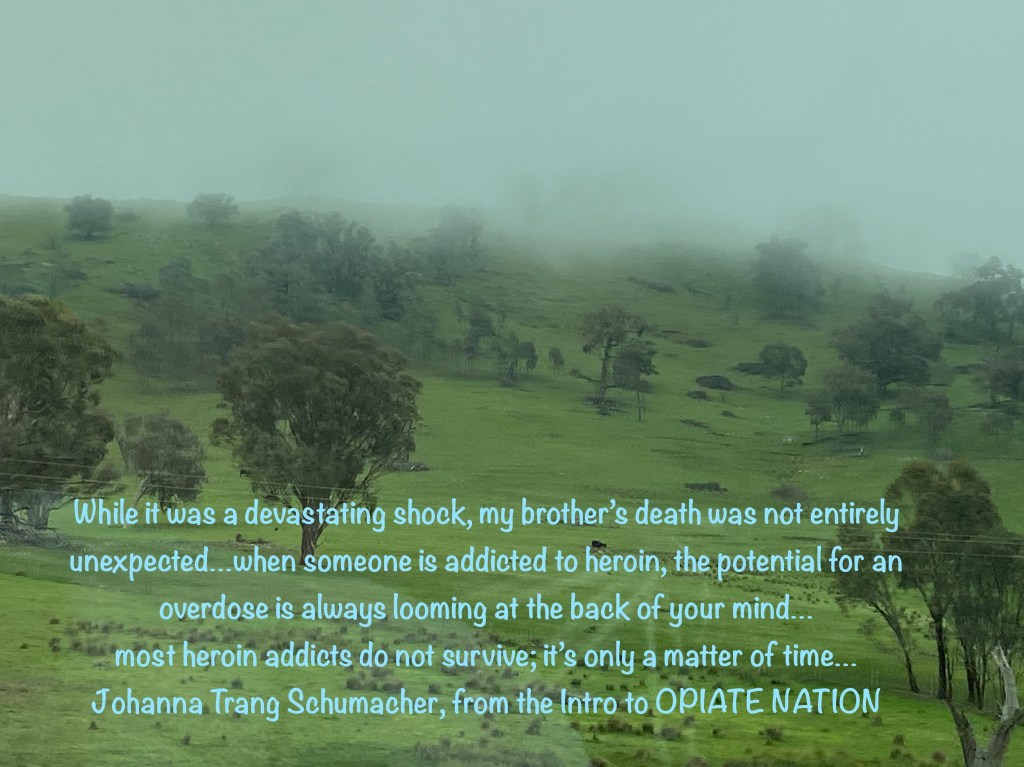
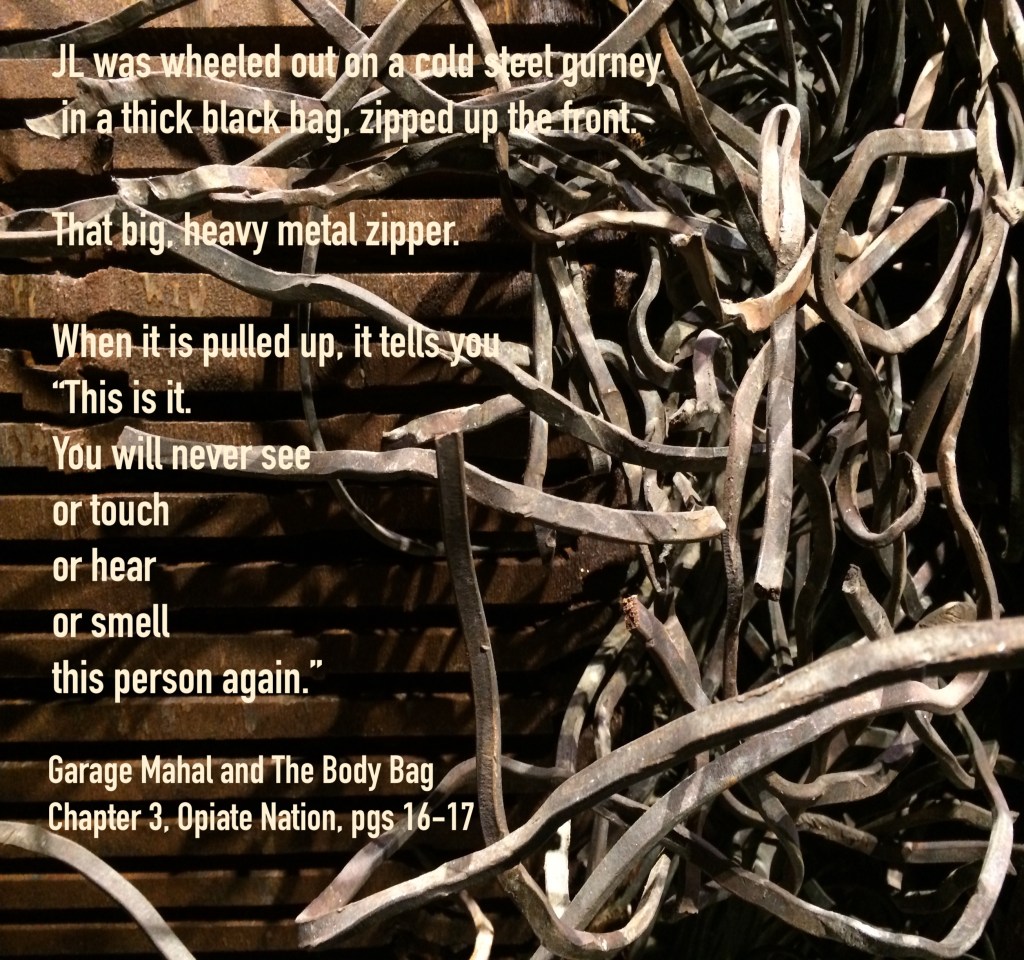
            Children and adults can experience separation anxiety when someone they are attached to leaves them. They can have recurrent and excessive distress just anticipating being separated from loved ones and the anxiety can be so intense that it is hard to function in everyday life. Panic attacks and physical symptoms such as nausea and headaches can occur. For me and my husband, on the morning of our son’s death from overdose, standing over our son in that body bag we experienced the ultimate separation anxiety. The overriding emotion we felt was fear: fear of the unknown future we were facing. We couldn’t visualize how we would survive without our son as part of our lives and the future we thought we all had together. He had not only been an integral part of our lives for 25 years but he was literally a part of us–the combination of our DNA that formed him as a particular and unique human being. To say that it was like having part of you taken away doesn’t describe it. This was having our hearts torn out.

            We would never embrace or kiss or stroke the cheek of our son again. We were facing an existential crisis, shaken to the core, questioning our reason for living. Regardless of our strong faith that had seen us through many other deaths in our families, this separation seemed incomprehensible and cruel. It was only by falling down on our faces and waiting for Mercy to gradually pick us up that we were able to survive this traumatic separation from our son and move forward again in life.

Traumatic News

(Fourth in a series of topical blogs based on chapter by chapter excerpts from Opiate Nation. Translation into most languages is available to the right.)

Distress, disbelief, shock. These are the normal, and actually healthy, responses to sudden traumatic experiences: natural disasters, an accident, assault or death of someone close. Even the risk of a situation that could harm us or someone else can bring fear and the sense of helplessness, which in turn brings on stress. According to the intensity of the event, even these powerful feelings can resolve themselves over time. But what if they don’t? And what if the event is actual, not threatened, and cataclysmic?

Continue reading “Traumatic News”

In Over Your Head

(Third in a series of topical blogs based on chapter by chapter excerpts from Opiate Nation. Translation into most languages is available to the right.)

Chapter 1: The Letter

Most of us have felt like we were “in over our head” at some point in our lives. Maybe it was in a job, or a class, or a relationship. Perhaps in the ocean, or on a steep mountain trail or having made a commitment to an event or project that turns out to be more involved and time consuming than we thought. When we finally realize there are more problems than we can handle or a difficulty that we just can’t surmount, what do we do?

I remember one time when John and I were in Morocco and the friends we were traveling with were gone for the day. We decided to explore a lighthouse we saw ahead. As we walked through an opening in a wall that surrounded it, we started to feel we might not be in a safe place. We felt fearful as we saw trashed looking apartments and expensive cars with black tinted windows. What made us turn and literally run was the sound of mean dogs barking. As we ran back through the opening, several came in view with their spiked collars and bared teeth. Thankfully, as we hit the main street, their owners called them off.

Continue reading “In Over Your Head”

Lifespan of Heroin & Opioid Addicts

(Second in a series of topical blogs based on chapter by chapter excerpts from Opiate Nation. Translation into most languages is available to the right. If you feel this blog is important, please repost to your social media using the buttons below. Thank You!)

When our 25 yr old son died of a heroin overdose in 2014, the statistics for the average life-span of a heroin addict was 5 years. Five years. Not very long if you are 15 or 20 or even 30, the age when most young adults’ nowadays are just getting in gear with their career, a long-term relationship, and planning a family. To have your life swept away before you have a chance to experience some of the most wonderful years of living on this earth is painful to consider.

Continue reading “Lifespan of Heroin & Opioid Addicts”

Woefully Unprepared

(Today begins a series of topical blogs based on excerpts from Opiate Nation, chapter by chapter, that will run for 28 weeks. Translation into most languages is available to the right.)

It’s a bit ironic that as I begin blogging through Opiate Nation we are in the midst of a pandemic. Ironic in several significant ways.

Opiate Nation was written because of the opioid epidemic – which, in reality, is a pandemic. Every industrialized nation, and many emerging and third-world nations too, are dealing with the results from the ease of availability of opioids, whether natural and home-grown, or synthetic and imported. Or both, as is the case in America.

And like the Coronavirus pandemic that crept up on us so gradually that it’s deadliness caught us by surprise and mostly unprepared as nations, the opioid epidemic crept up on us too. In both cases, certain international players were unscrupulous for various reasons, causing delays in awareness when there might have been a chance for all of us to not be caught off balance.

The “inoculation” that should have happened, especially in the United States, by way of accurate scientific information disseminated by responsible leaders, didn’t happen. Instead, false information fueled by political agendas and financial motivation created a scenario that so crippled a timely public health response that, for many nations, it became too little too late.

Continue reading “Woefully Unprepared”

Overdose Awareness Day August 31st

Today is the 20th year of International Overdose Awareness Day with thousands of events now being held in 39 countries. It was started in Melbourne, Australia – our home many months of the year where our daughter and family live. Johanna is our only living child since August 2, 2014 when our son JL died of a heroin overdose.

This day is set aside to commemorate the millions of lives lost to drug overdoses around the world – individuals we all know who have lost their lives. Every time we are asked how many children we have and we share about our son’s death from overdose, we are met with another story about another family member or friend who has lost their battle with addiction and/or alcoholism or who is still struggling.

And remember: these individuals did not want to be addicted, to have their lives controlled by a never-satisfied appetite, replacing all normal joy and satisfaction from life and those they loved. But once their brains and bodies sampled the relief or joy or pleasure or peace that their substance offered, they were hooked.

Let’s all do what we can to bring awareness to the deadly game of drug experimentation and use, especially to our children and young people. Let them not be ashamed of talking to us about their temptations and failures so that we can guide them to early and successful recovery.

Our part of this effort was to write our family’s story in OPIATE NATION. For one week, the eBook will be on sale for $9.99 USD on all platforms worldwide. Our desire is to make it as affordable as possible so that the things we learned and wished we had known might prevent other families from the pain of losing a loved one to overdose.

Loneliness Pt. 2: Unemployment Anxiety & Isolation

We are a global community – like it or not. We are connected down to the minutia of life, from what we breathe, to what we eat, to what we think, to what infects us. And right now, the world, our world is in a life-or-death struggle with a microscopic enemy that seems to keep gaining the upper hand. The result in just one area is massive unemployment and the subsequent loss of access and funding for public and private support services.

I don’t want to get in to the politics of whether economies should be opened up regardless of Covid-19 and suffer the consequences in lives lost, verses lives ruined by no work and massive personal and societal debt. What I am concerned about are the consequences of what so many millions of people are facing from having lost their means of livelihood, and in particular, those whose lives were already balanced on a knife edge on a daily basis.

Continue reading “Loneliness Pt. 2: Unemployment Anxiety & Isolation”

Loneliness in a Lonely Time

It has been said that the opposite of addiction is not sobriety, it is connection – to others, to a community. The Coronavirus pandemic has brought disconnection and magnified loneliness and stress for people the world over due to social isolation, economic instability, reduced access to spiritual communities, and overall national anxiety and fear of the future. “We certainly have data from years of multiple studies showing that social isolation and social stress plays a significant role in relapse…and relapsing to drug use can play a role in overdose.” Dr. Wilson Compton, deputy director NIDA.

The acronym HALT: Hungry, Angry, Lonely, Tired, is used in Alcoholics Anonymous and most recovery programs. It is a simple reminder that when our basic human needs are not met, one is susceptible to toxic thoughts and self-destructive behaviors including relapse and suicide.

Continue reading “Loneliness in a Lonely Time”

A Lament and A Love Song – for Our Son

Lament for a Son is an intensely personal tribute by Nicholas Wolterstorff to his 25-yr-old son who died in a climbing accident. It is eloquent and unforgettable as he gives voice to a grief that is both unique and universal: the tortured pain of losing an individual, a child, your child.

We lost our 25-yr-old son to a heroin overdose six years ago on August 2, 2014. Lament for a Son has been one of our go-to books since that time. Wolterstorff expresses the incomprehension and sense of unfairness that, I believe, parents worldwide feel when they lose a child – someone who is supposed to bury you, not the other way around. It doesn’t fit with the cycle of life we expect – it is jarring, unsettling, bewildering, frustrating, disquieting.

In the Preface he relates:

A friend told me he gave a copy of Lament to all of his children. “Why?” I asked. “Because it’s a love song,” he said. That took me aback. But, Yes, it is a love-song. Every lament is a love song. Will love-songs one day no longer be laments?

Yet, while the book expresses the common feelings brought on by sudden unexpected death, what he doesn’t share with those of us who have lost a child to drug/alcohol addiction are the previous long years, sometimes decades, of turmoil, anxiety, fear, and depression that we experience on top of all the normal grief.

And shame.

There is no glory in being the parent of someone who is an addict or alcoholic.

Continue reading “A Lament and A Love Song – for Our Son”

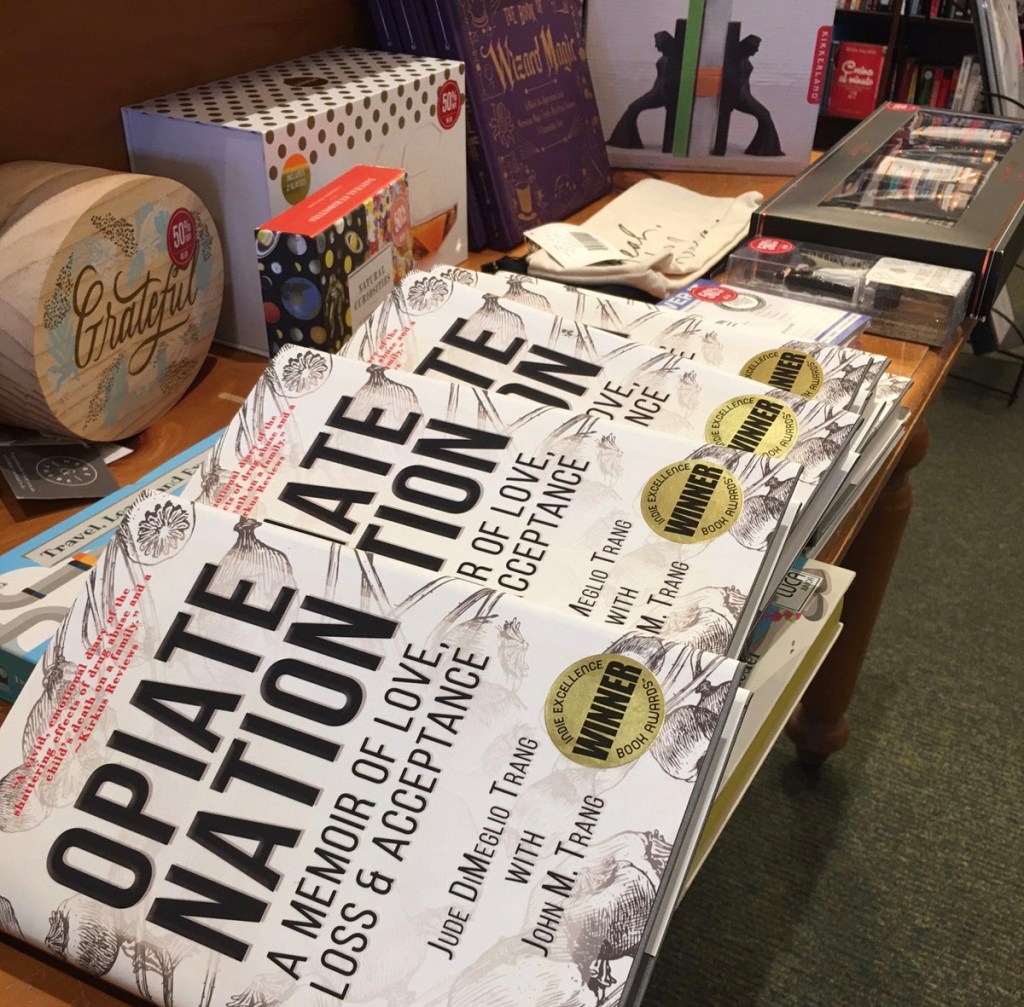
OPIATE NATION WINS NATIONAL INDIE EXCELLENCE® AWARD

With so much distress in the world with the Covid-19 Pandemic, especially the effects it is having on the weakest and vulnerable members of our societies, I have hesitated to announce a personal accomplishment. Yet, my hope is that as Opiate Nation gains more visibility, it will get into the hands of people who could be most encouraged and benefit from our story.

I am a member of a group of 35,000 women called “The Addict’s Mom” on Facebook. I confess, I rarely read the posts because it is so depressing: Story after story of mom’s who have been holding out for years to see their daughter or son released from the hell-hold of addiction to drugs, only to then post that “…today I lost my daughter/son…can someone tell me how I will survive this?”  It is for these mom’s and dad’s and siblings and friends that we wrote Opiate Nation, but one of the stipulations of being a member of the group is no self-promotion. So I hope that, with more visibility and more reviews and re-posts on social media, our book will get to these most desperate of people.

Continue reading “OPIATE NATION WINS NATIONAL INDIE EXCELLENCE® AWARD”
Malcolm Guite

Blog for poet and singer-songwriter Malcolm Guite

The Gift of Need

How Need Can Strengthen Individuals and Communities

Memoirs and Musings

David Bradley Such

Dave Barnhart

Church planter, pastor, author, coach

RecoveryLife101

Just another WordPress.com site

Abbie In Wondrland

life...on Gods' terms.

Living In Graceland

"..learn the unforced rhythms of grace" matt 11:28

Janaburson's Blog

All about opioid addiction and its treatment with medication

Breaking In News Network

Seeking the truth and bypassing the MSM

Junkbox Diaries

Trauma, PTSD, Mental Health, Addiction, and Recovery

Ohio Society of Addiction Medicine

The Ohio Society of Addiction Medicine is a chapter of ASAM - A professional society actively seeking to define and expand the field of addiction medicine.

traceyh415

Addiction, Recovery, Loss, Grief

WordPress.com Blog

News, Tips & Website Tutorials